







Carved Teak Wine Table
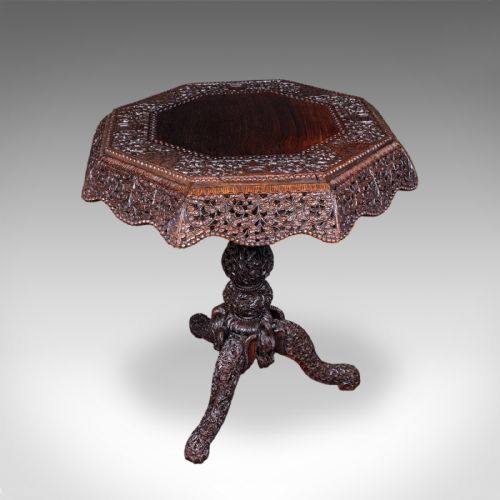
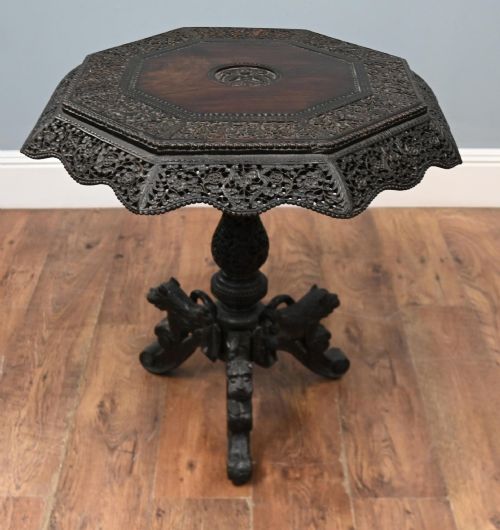
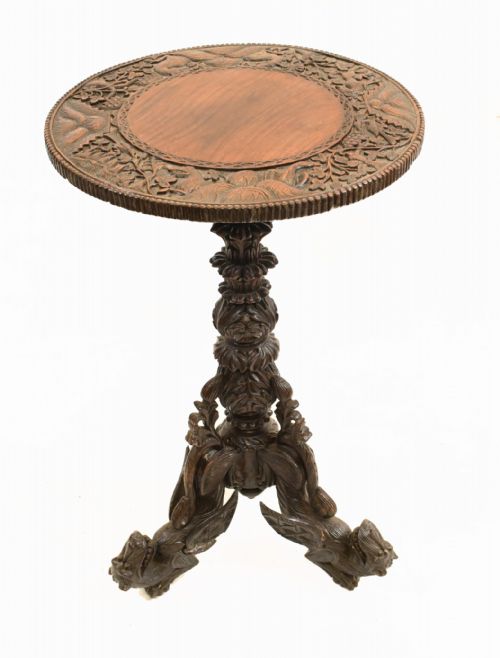
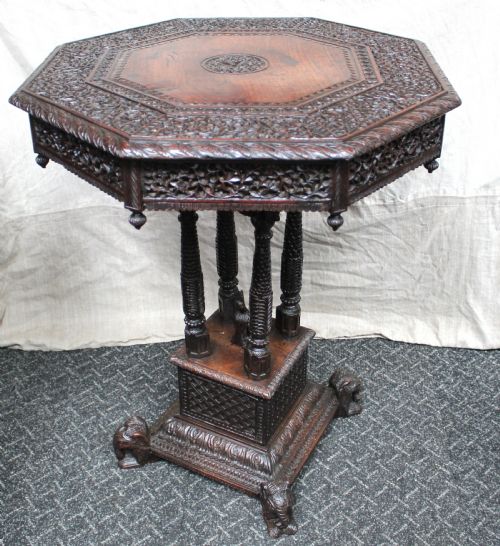
These carved teak wine table pieces bring dense craftsmanship and rich colonial histories straight into a room.
Carved Teak Wine Table
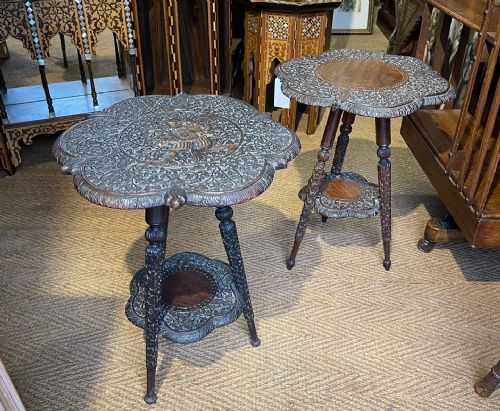
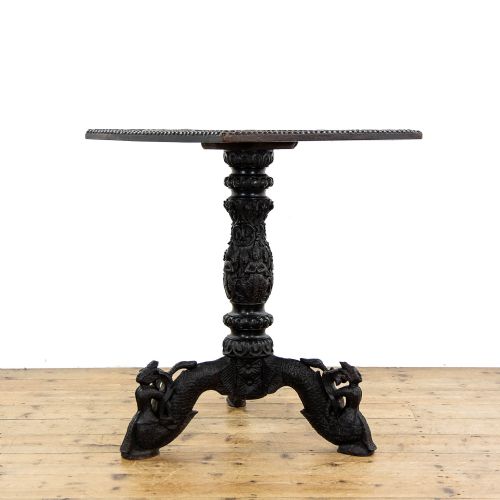
A carved teak wine table takes many forms on this page, appearing as occasional tables, side tables, and pedestal stands originating from India, Burma, and the broader colonial sphere. These pieces serve small drinks or hold lamps, often featuring circular or tilt-top designs well suited for compact spaces.
The aesthetic bridges domestic British utility from the Victorian era and the intricate hand-carved traditions of South and Southeast Asia. Buyers encounter Anglo-Indian and Anglo-Burmese styles, alongside specific regional workshops from Bombay and Hoshiarpur.
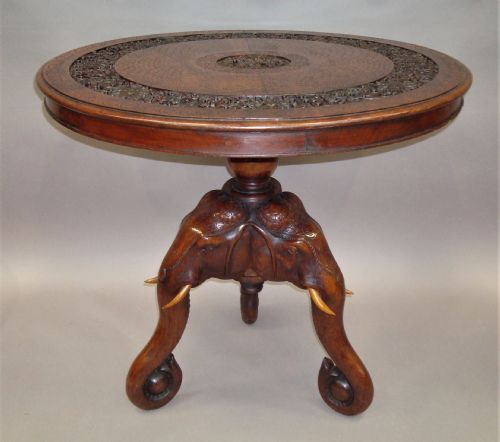
Most examples date across the nineteenth and early twentieth centuries, spanning periods from eighteen-forty to nineteen-thirty. Forms range from simple folding campaign tea tables to heavily carved tripod tables decorated with elephants and floral motifs.
Materials and construction methods
Makers relied principally upon dense tropical timbers, utilising teak, padouk, and rosewood to support deep relief carving. These durable hardwoods provided a stable canvas for elaborate chip carving and figural details.
Inlay work appears frequently, incorporating bone and ebony elements to create contrasting geometric patterns or architectural scenes like the Taj Mahal. Structural joinery includes folding campaign mechanisms, tripod bases, and tilt-top pivots.
Carved Teak Wine Table Retail Price Guide 2026
Typical asking prices for carved teak wine table among the pieces listed under this phrase on Sellingantiques today, from the lower quarter to the upper quarter. They describe what is for sale here now, not the wider market.
Several tables feature hand-carved elephants supporting the top, bringing a touch of nineteenth-century menagerie charm indoors.
Assessing craftsmanship and execution
Quality rests upon the depth, clarity, and precision of the hand carving across the timber surface. Superior examples display crisp relief work without splintering, whilst simpler pieces show softer, shallower incision.
The integration of contrasting materials, such as fine bone or ebony inlay work, dictates the upper tier of execution. Structural stability in tilt-top mechanisms and tripod legs further separates standard production from finer workshop output.
The Carved Teak Wine Table Glossary
- Tilt-top
- A tabletop mechanism featuring a hinged catch that allows the surface to fold vertical when not in use. This design originally saved space in nineteenth-century interiors.
- Campaign furniture
- Portable pieces made for travel, often incorporating folding frames or removable elements. These items were built for colonial officers on the move.
- Chip carving
- A technique where small chips are removed from a wooden surface to create geometric or organic patterns. This method relies entirely on gouges and chisels.
- Tripod base
- A support structure resting on three legs, commonly found beneath pedestal tables and occasional stands. It provides balance on uneven nineteenth-century flooring.
- Padouk
- A heavy tropical hardwood known for its reddish-brown colour and durability. Makers utilised this timber for formal occasional and tea tables.
Carved Teak Wine Table: Frequently Asked Questions
What rooms suit a carved teak wine table?
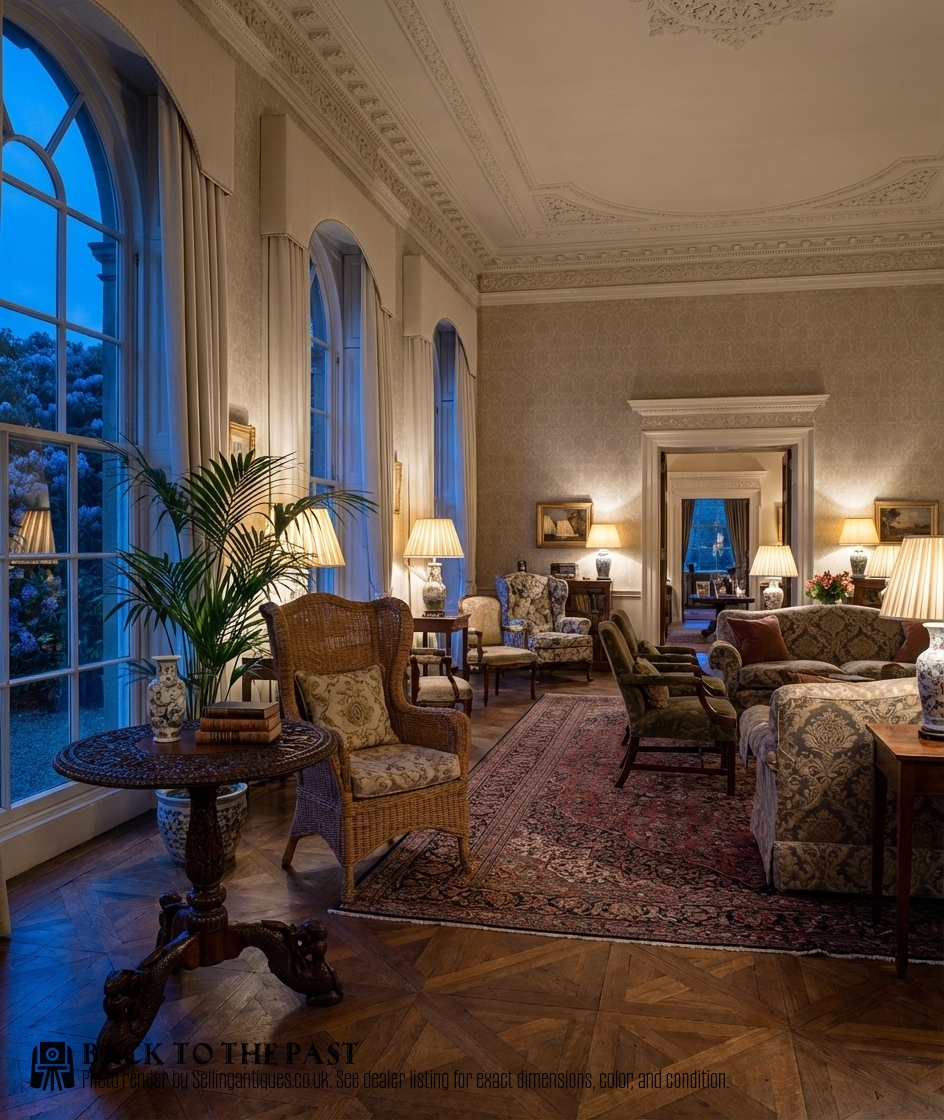
These compact pieces fit easily beside armchairs, sofas, or beds as functional display and serving surfaces.
Their rich timber tones and detailed carvings also allow them to stand alone as sculptural accent pieces in hallways or studies.
How do I care for antique teak furniture?
Maintain the wood by dusting regularly with a dry cloth and avoiding placement near direct heat sources.
Applying occasional natural wax helps nourish the dense timber without building up heavy chemical residues.
Are these tables sturdy enough for daily use?
Solid hardwood construction ensures these tables handle standard items like books, lamps, and cups securely.
Tripod bases and tilt mechanisms require gentle handling to preserve the historic joints over years of use.
How do I distinguish regional styles?
Burmese pieces often display dense, deep-relief floral and figural carving across the entire surface.
Anglo-Indian examples from Bombay or Hoshiarpur frequently incorporate distinct elements like bone inlay or elephant motifs.