


Carved Stone Top Table
These carved stone top table pieces bring substantial marble and inlaid surfaces together with robust wooden bases, offering a durable and striking centrepiece.
Carved Stone Top Table
A carved stone top table combines a heavy, decorative upper surface with a structural wooden or metal base, serving primarily as a centre table, console, or side table. The form appears frequently across nineteenth-century European and Asian traditions, ranging from heavy architectural consoles to lower occasional stands.
Buyers encounter numerous regional variations, including Italian pietra dura works, Anglo-Indian marble designs, and Chinese hardwood stands set with rouge marble or quartz. These pieces suit formal reception rooms or hallways where a durable, decorative surface takes visual priority.
The materials and styles span from Grand Tour specimen marble surfaces to Victorian and Qing Dynasty craftsmanship, reflecting global trade and aesthetic exchanges of the nineteenth and early twentieth centuries.
Materials and construction methods
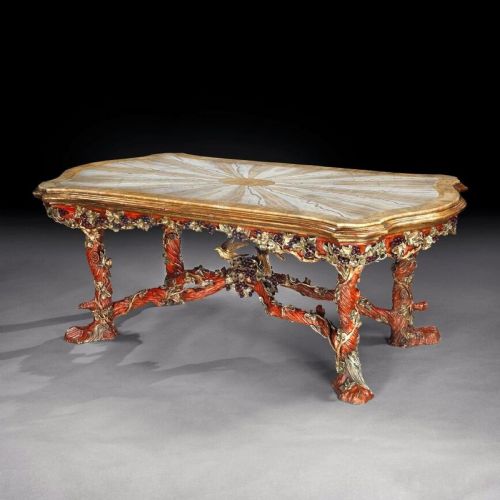
The construction relies on joining a heavy stone upper slab to a supportive wooden framework, utilising dense timbers like walnut and carved hardwoods. Bases often feature extensive hand-carving, polychrome finishes, or lacquered surfaces to support the substantial weight of the stone.
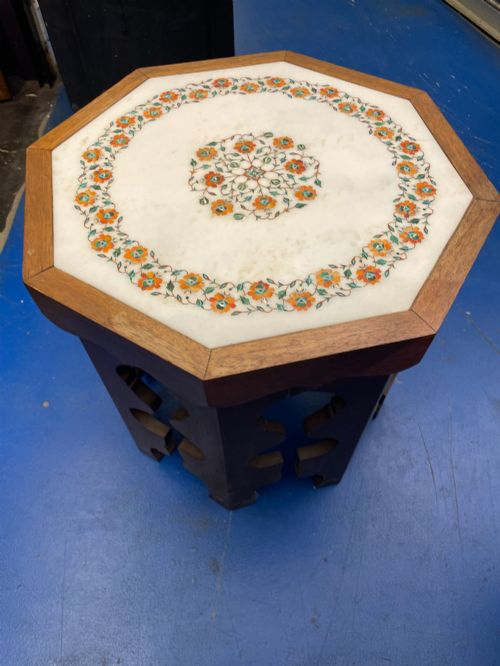
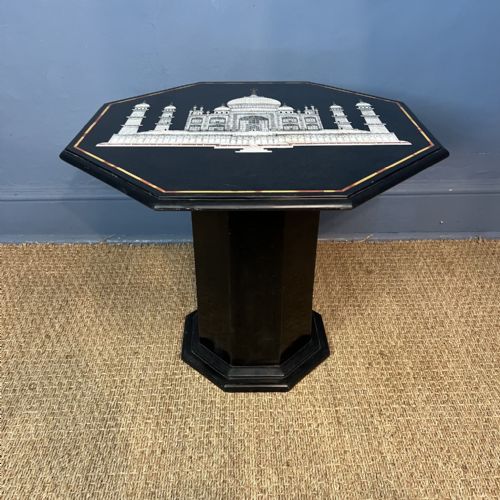
Upper surfaces utilise materials such as white marble, black marble, alabaster, onyx, and slate, frequently decorated through inlay techniques like pietra dura or mosaic work. Artisans cut and fitted semi-precious stones and soapstone reliefs precisely into the recesses of the stone or wood panels.
Listings feature nineteenth-century and early twentieth-century pieces incorporating marble, slate, alabaster, and hardwood.
Assessing quality and execution
Quality separates by the complexity of the stone inlay and the crispness of the base carving, distinguishing standard production from exceptional artisan workshops. Finer examples display meticulous pietra dura work or carefully matched specimen marble mosaics with tight joints.
The integration between the stone top and the supporting frame determines structural stability, as heavier marble and onyx slabs require robust joinery. The selection of materials, such as Derbyshire Fossil marble or semi-precious stones, elevates the overall execution of the piece.
Amleto Bertoni
The Carved Stone Top Table Glossary
- Pietra dura
- An artistic technique of using cut and fitted polished coloured stones to create images or geometric patterns. This method appears frequently on nineteenth-century Italian tables.
- Console table
- A table designed to be fixed against a wall, often supported by ornate brackets or legs. These pieces frequently feature prominent marble or alabaster tops.
- Specimen marble
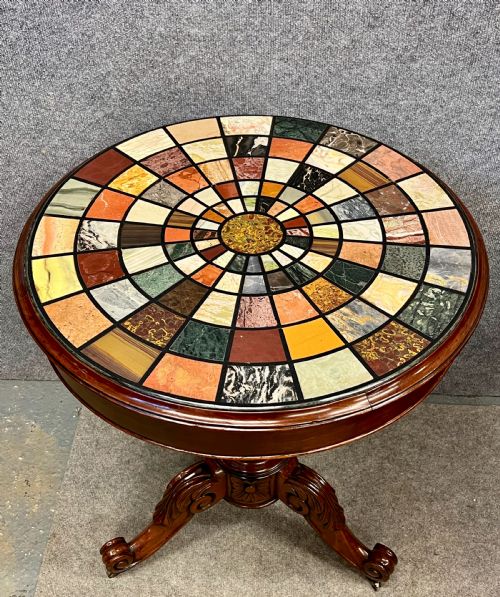
- A tabletop composed of various coloured marbles arranged in geometric or architectural patterns. Such works gained popularity during the Grand Tour period.
- Qing Dynasty
- The last imperial dynasty of China, dating from the seventeenth to the early twentieth century. Pieces from this period often feature carved hardwood frames inset with marble or quartz.
- Onyx
- A banded variety of chalcedony used for decorative tabletops. Its translucent qualities distinguish it from standard marble.
Carved Stone Top Table: Frequently Asked Questions
How do I clean a carved stone top table?
Maintenance requires soft, damp cloths to remove dust without scratching the polished stone surface. Acidic cleaning products should be avoided to protect marble and onyx.
Wooden bases benefit from periodic dusting and gentle polishing suited to the specific finish, whether lacquer or polychrome paint.
Are these tables heavy to move?
The combination of dense stone slabs and solid hardwood frames results in considerable weight. Professional transport is often necessary for larger console and dining formats.
Lifting requires separating the stone top from the base if the design permits, reducing the risk of structural strain.
Where should I place a console table?
Console tables function effectively against hallway walls or beneath large mirrors in reception rooms. Their shallow depth suits circulation spaces without blocking pathways.
Pairing them with lamps or decorative objects highlights the detailed stonework of the top surface.
How do I identify a nineteenth-century piece?
Dating relies on examining joinery methods, tool marks on the underside of the wooden base, and the specific composition of the stone inlay. Victorian and Grand Tour items often display characteristic regional motifs and material combinations.
Consulting historical design styles, such as Aesthetic Movement or Rococo Revival, helps contextualise the period of manufacture.