
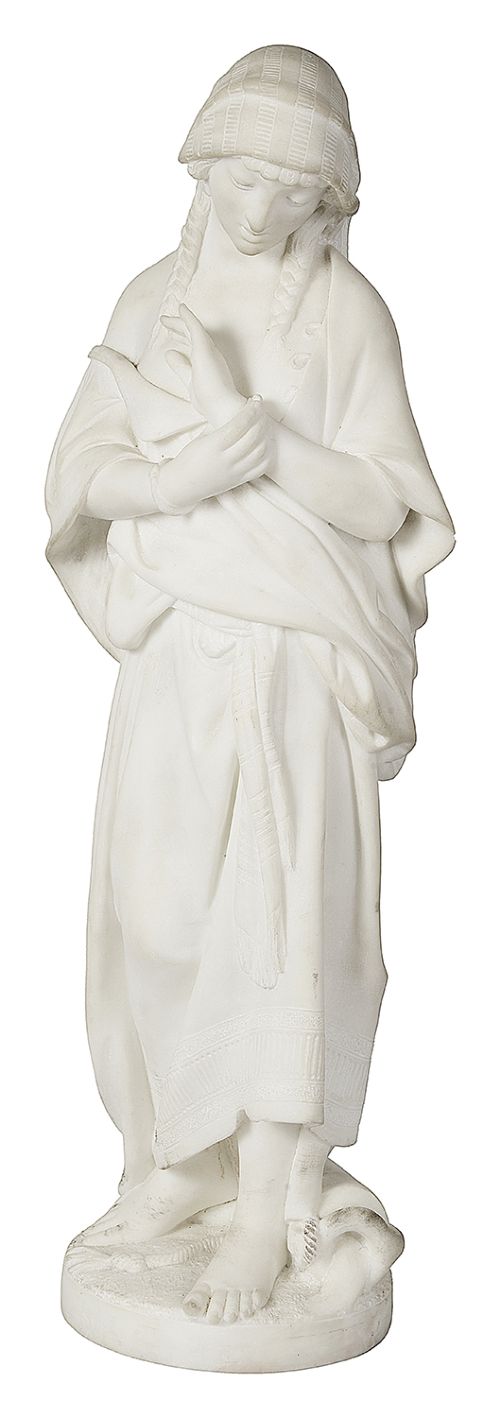
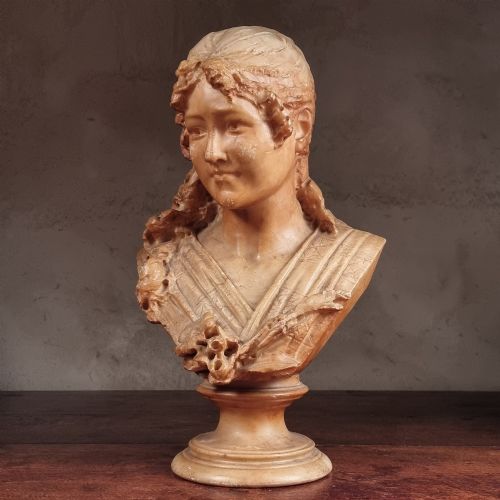
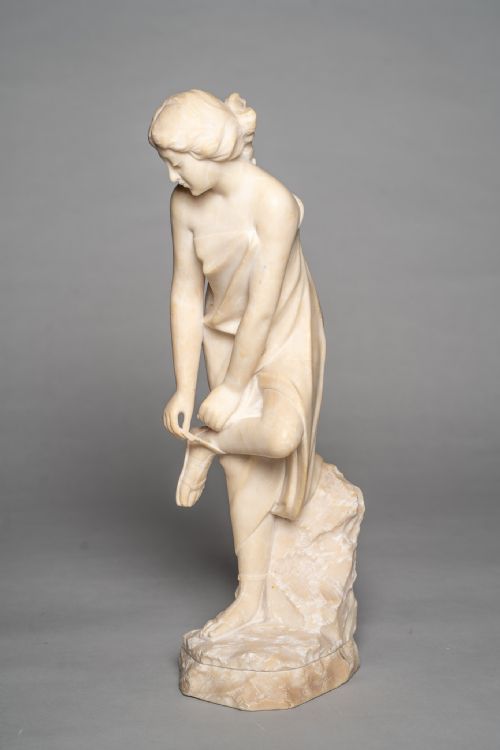
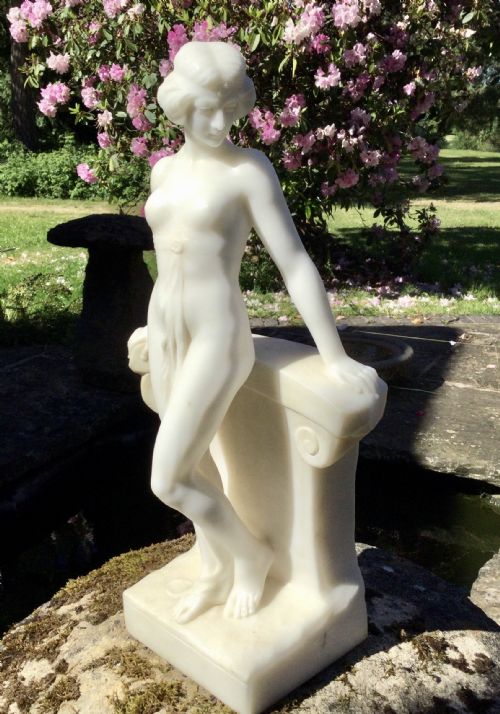
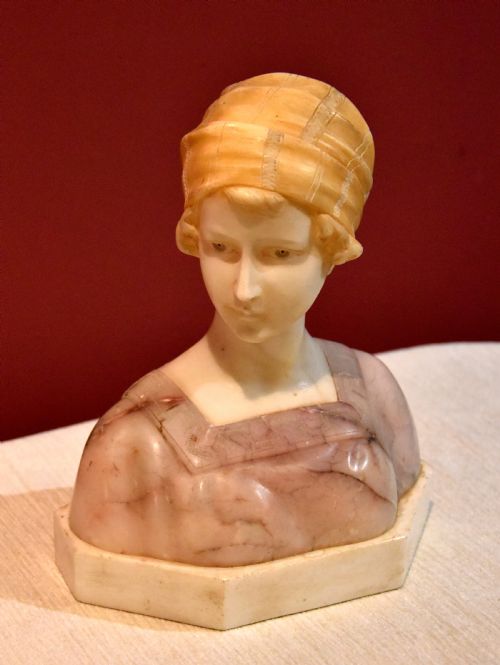
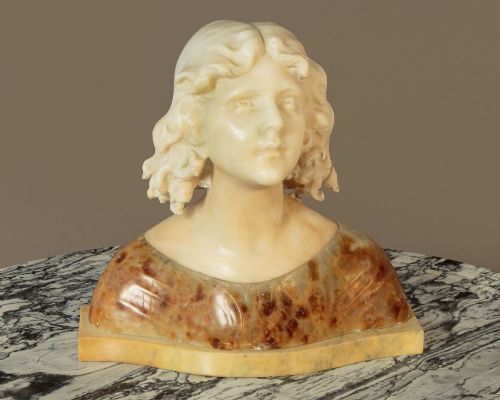


Carved Stone Maiden
These carved stone maiden pieces capture classical forms in marble and alabaster, offering collectors expressive nineteenth and early twentieth century figural sculpture.
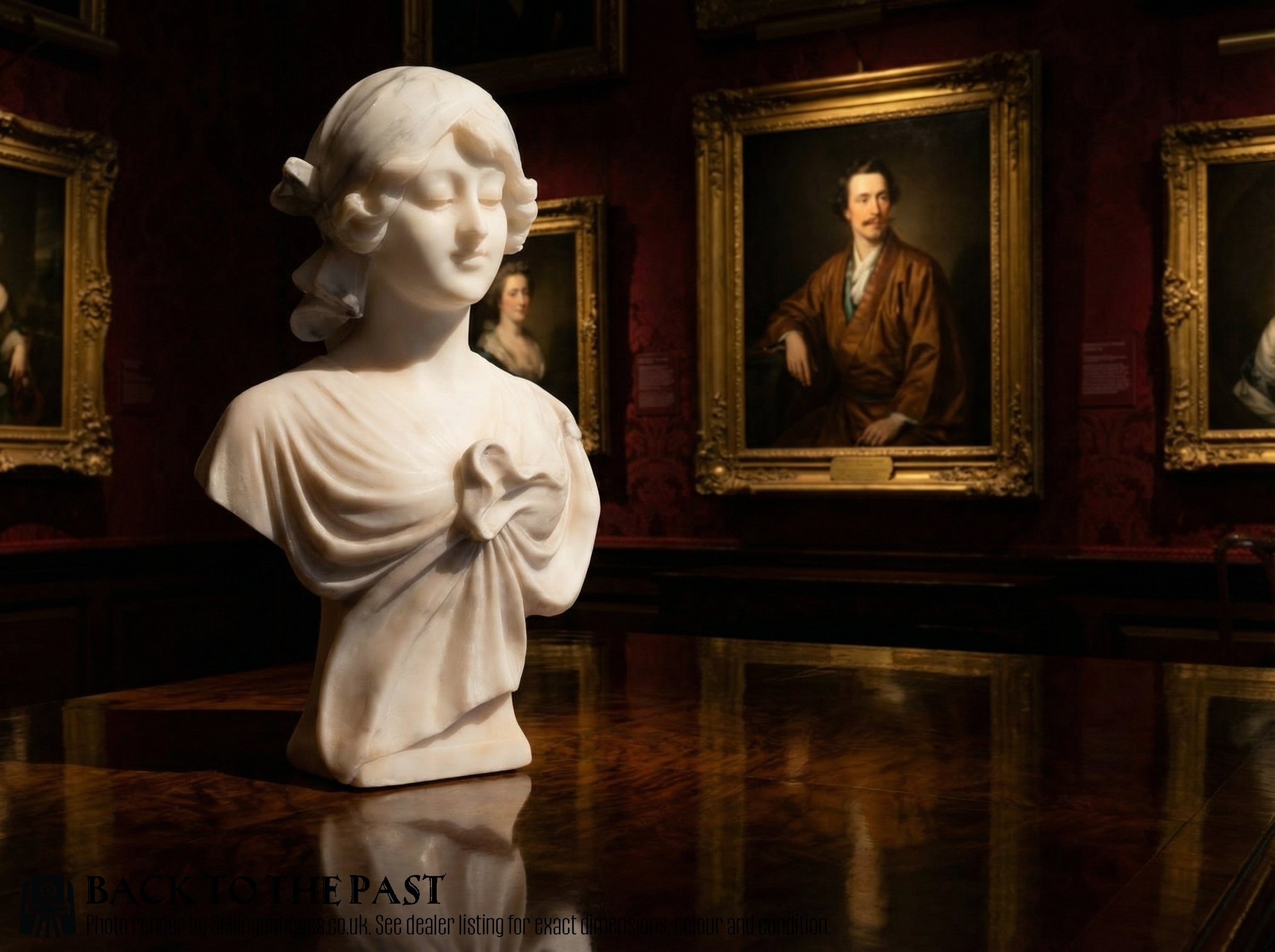
Carved Stone Maiden
A carved stone maiden brings classical and turn of the century figurative art directly into an interior. Collectors searching for a carved stone maiden will mostly encounter nineteenth century Italian school works alongside French and Chinese pieces.
The inventory on this page spans distinct forms including portrait busts, full length statues, and decorative sculptures of young women. These figures often depict classical subjects, allegorical themes like harvest or music, and graceful Art Nouveau compositions.
Most examples originate from European workshops operating between the mid nineteenth century and the early decades of the twentieth century. Alabaster and various types of marble serve as the primary mediums for these sculptural interpretations.
Materials and carving techniques
Artisans shaped these figural works primarily from alabaster, Carrara marble, and standard white marble using traditional hand carving methods. Certain Italian and French pieces utilise two tone alabaster effects to contrast hair, drapery, and skin.
Sculptors employed chisels, rasps, and abrasive stones to achieve smooth flesh tones and intricate textural details like mandolins, wheatsheaves, and floral elements. Signed works often bear the engraved or chiselled signature of the maker directly into the base or rear of the stone.
Several ladies carry unexpected handheld items into battle against plain decor, including botanical wheatsheaves, musical mandolins, and fresh floral bouquets.
Distinctions in artistic execution
The calibre of a carved stone maiden rests on the anatomical precision of the hands, face, and drapery, where master carvers achieved remarkable softness in rigid mineral. Softer, highly translucent alabaster and finely graded Carrara marble generally permit greater subtlety of expression.
Attribution to documented sculptors elevates a piece significantly beyond anonymous studio output. The crispness of the signature and the ambition of the subject, such as complex multi element figures standing in pools, separate standard decorative items from superior gallery examples.
Barranti·A.Gamay·Auguste Henri Carli·Eduardo Giolli·Gugielmo Pugi·Auguste Moreau·A.Cipriani
The Carved Stone Maiden Glossary
- Carrara marble
- A type of white or blue grey marble from the city of Carrara in Tuscany, prized by Italian sculptors for its purity and uniform texture.
- Grand Tour
- A cultural journey undertaken by European elites in the nineteenth century, bringing home small scale classical statues and portrait busts from Italy.
- Art Nouveau
- An international style of art and architecture prominent around 1900, characterised by intricate linear designs and flowing organic motifs often seen in female statues.
Carved Stone Maiden: Frequently Asked Questions
How do I clean an alabaster sculpture?
Dust alabaster gently with a dry, soft microfibre cloth or a soft artist brush. Avoid using water, soap, or chemical cleaners because moisture damages the porous surface of the stone.
Keep these sculptures away from direct sunlight and high humidity areas. Proper placement preserves the natural lustre and delicate translucency of the carved material.
What is the difference between marble and alabaster?
Marble is a metamorphic rock formed from recrystallised carbonate minerals, offering a denser and harder medium with varied veining. Alabaster is softer, composed of gypsum or calcite, and possesses a warm, waxy translucency.
Sculptors favoured alabaster for indoor portrait busts due to its softness and light-transmitting qualities. Marble was frequently chosen for larger statues and grand architectural commissions.
How can I date a stone maiden sculpture?
Examine the stylistic markers, such as the flowing organic lines typical of the 1900 Art Nouveau period versus the stricter symmetry of earlier Victorian neoclassical pieces. Signature styles, clothing details, and hairstyles provide reliable clues to the decade of creation.
Documentation or signatures pointing to specific Italian and French schools help narrow the timeframe. Most listed pieces cluster around the nineteenth century and the early twentieth century.
Where should I display a stone bust?
Place stone busts on sturdy pedestals, heavy wooden consoles, or dedicated mantelpieces that easily support the considerable weight of solid marble or alabaster. Ensure the support surface is completely level to prevent any tipping risk.
Position the piece away from busy walkways where clothing might catch on delicate projections like carved fingers or drapery edges. Adequate side lighting highlights the carved facial expressions and textural contrasts.