




Carved Stem Side Table
These carved stem side table pieces are compact antique tables with shaped supports, offering a practical surface for a lamp or drink.
Carved Stem Side Table
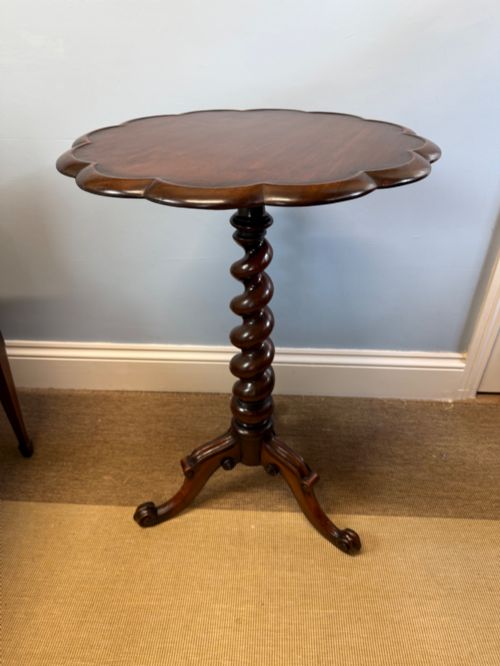
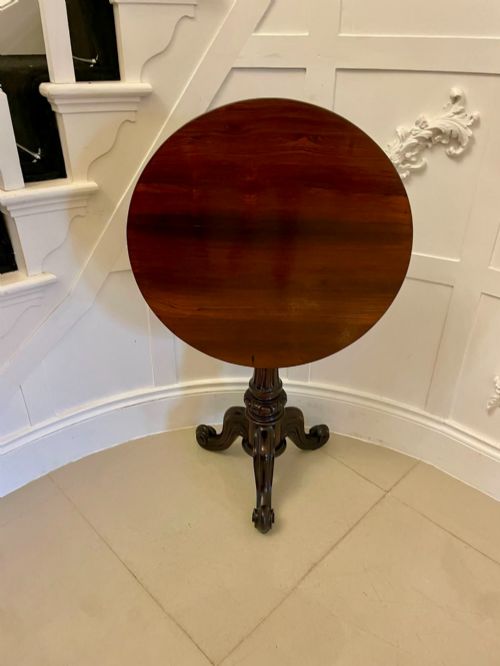
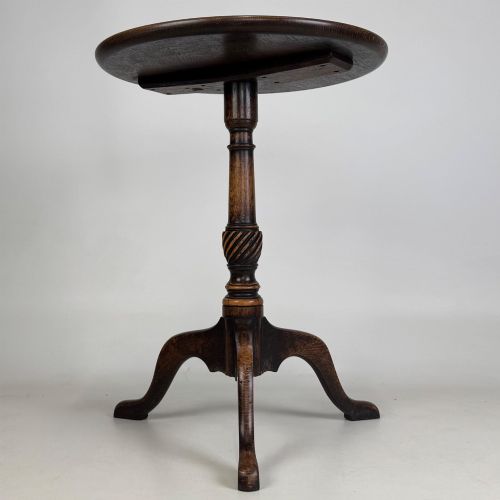
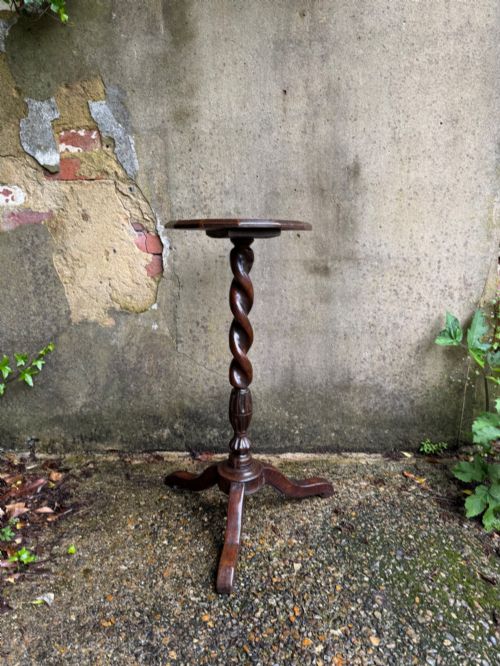
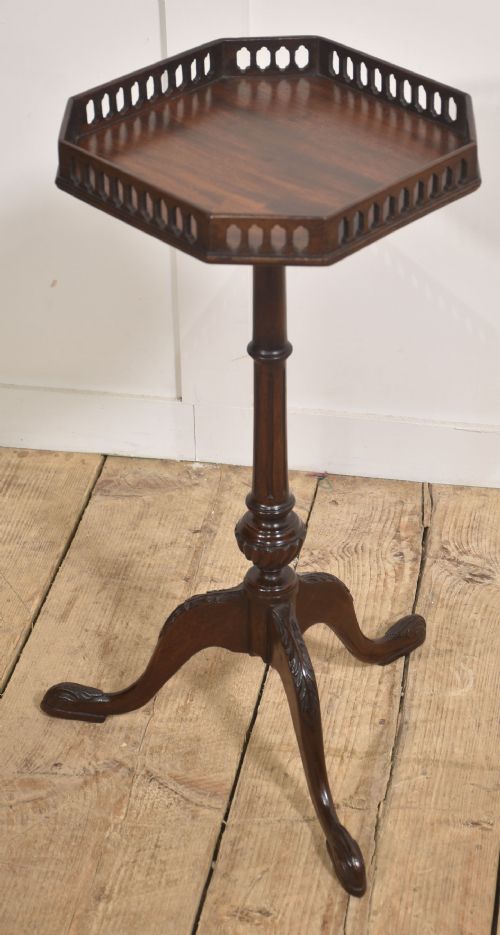
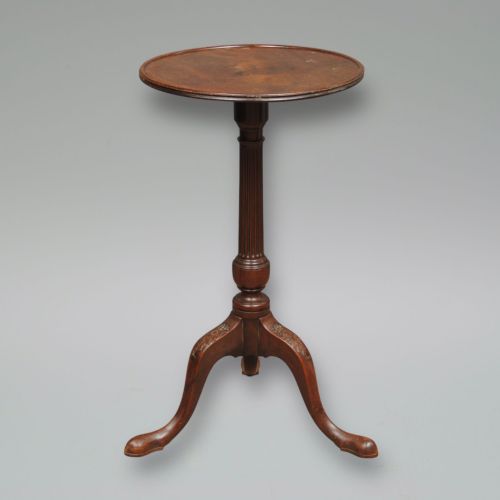
When you search for a carved stem side table, you are looking at small tables designed for occasional use in sitting rooms and parlours. These pieces appear in forms such as wine tables, kettle stands, and lamp tables, usually featuring a central pillar supported by tripod legs.
The versions you are most likely to meet on this page date from the eighteenth century through to the Edwardian period. They span styles including Georgian, Regency, and Victorian, reflecting the shifting tastes of British interior design over two centuries.
Makers produced these tables in various configurations, from simple circular occasional tables to supper tables with tilt tops. Their compact footprints made them easy to move around a room as needed for tea or social gatherings.
How they were made
Cabinet makers utilised dense hardwoods such as mahogany, oak, and walnut to ensure the central pillar and legs could support weight without twisting. Palm wood and pollard oak also appear, offering distinctive grain patterns for finer examples.
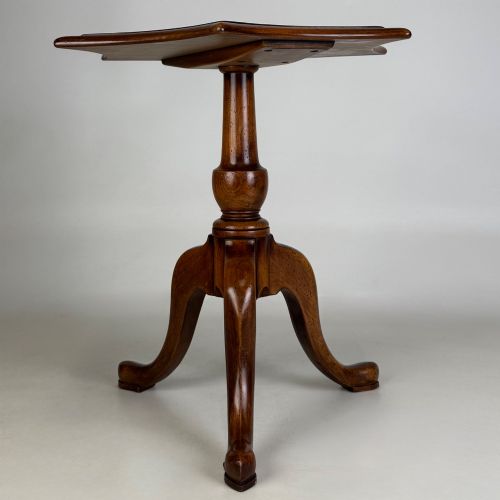
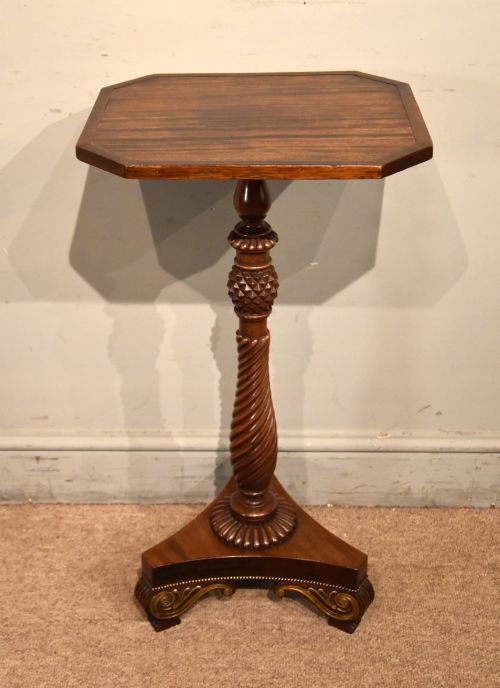
The stems frequently feature detailed turning and carved details, such as spiral fluting, mounted above tripod bases that terminate in pad or spade feet. Joinery relies on traditional pegged mortise and tenon joints or strong turning methods to secure the stem to the top.
Some eighteen-century wine tables feature tilt-tops designed to fold flat and slide discreetly away behind a heavy armchair when the claret was finished.
What varies in quality
The crispness and depth of the carving on the stem and legs separate standard items from superior work. Sharp, well-defined turning and floral motifs indicate a higher level of craftsmanship during production.
Timber selection also dictates the grade of the piece, with figured mahogany, rosewood, and pollard oak commanding attention for their rich grain. The stability of the central column and the tightness of the joints ensure the table remains level and sturdy.
The Carved Stem Side Table Glossary
- Tripod table
- A small freestanding table supported by three legs radiating from a central pillar. These designs became popular during the eighteenth century for serving tea or wine.
- Kettle stand
- A diminutive table designed specifically to hold a heavy tea kettle above a spirit lamp. They sit at a convenient height next to a seating area.
- Pollard oak
- Oak timber taken from trees that have been pollarded, producing dense clusters of branches that create a highly decorative swirling grain pattern. Cabinet makers used this for veneer and solid sections on finer furniture.
- Wine table
- A small circular occasional table intended to hold glasses and decanters. Many feature tilt-top mechanisms to save space when not in use.
Carved Stem Side Table: Frequently Asked Questions
What is a carved stem side table used for?
These tables served primarily as convenient surfaces for small items like tea equipment, lamps, or writing materials in sitting rooms.
Today, they function well as compact accent tables beside armchairs or sofas to hold a drink or a book.
How do I tell an 18th-century table from a Victorian one?
Eighteenth-century examples often exhibit restrained carving, slender proportions, and timbers like early mahogany or oak with deep patina.
Victorian and later revival pieces tend to feature heavier turned stems, bolder mouldings, and sometimes more elaborate applied ornament reflecting nineteenth-century industrial capabilities.
Are these tables sturdy enough for daily use?
Despite their slender profiles and central pillars, well-constructed examples use solid hardwoods and stable tripod bases designed to distribute weight evenly.
Care should be taken not to overload them, but they remain perfectly functional for everyday placement of decorative items or lamps.
What timbers were commonly used for these tables?
Mahogany is the most frequent material seen across these listings, prized by makers for its stability and rich dark colour. Walnut, oak, rosewood, and exotic woods like palm wood also appear in specific regional or period pieces.