

Carved Slipper Chair
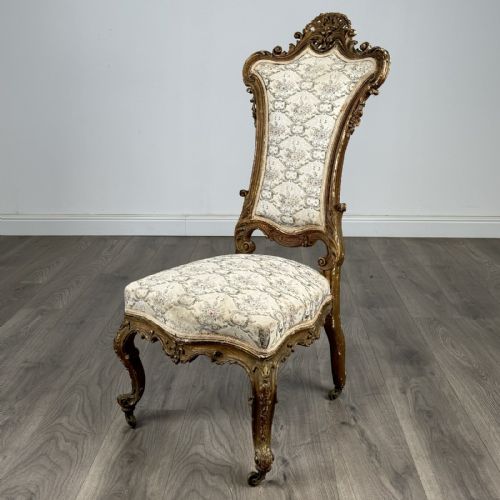
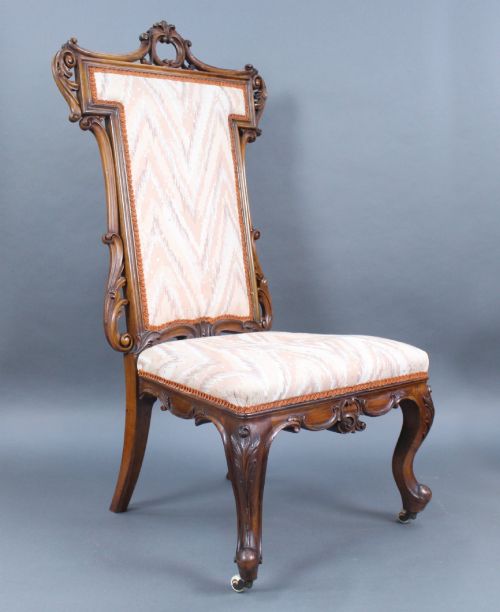
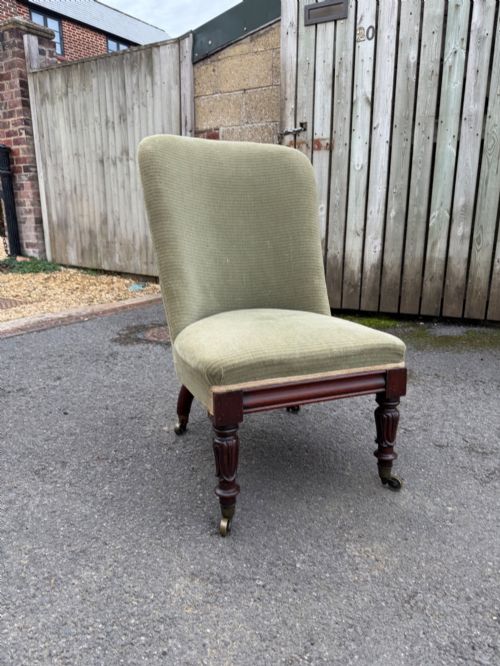
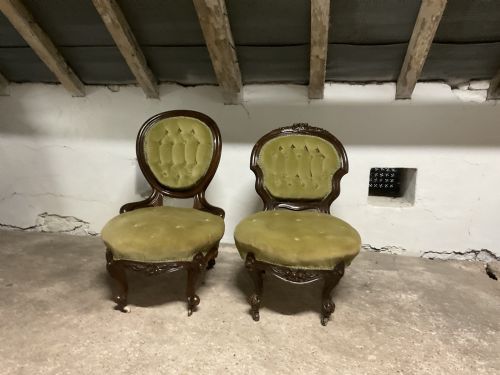
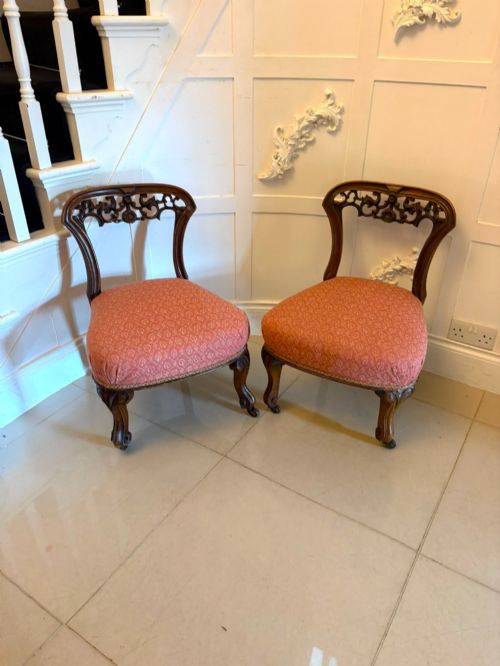
A carved slipper chair is a low-slung seat designed for ease of dress, offering compact proportions and ornate wooden frames.
Carved Slipper Chair
A carved slipper chair provides a low seat designed historically to assist with footwear and formal dressing in bedrooms and boudoirs. The pieces available here emerge principally from the Victorian and Edwardian eras, alongside select Regency and Georgian examples.
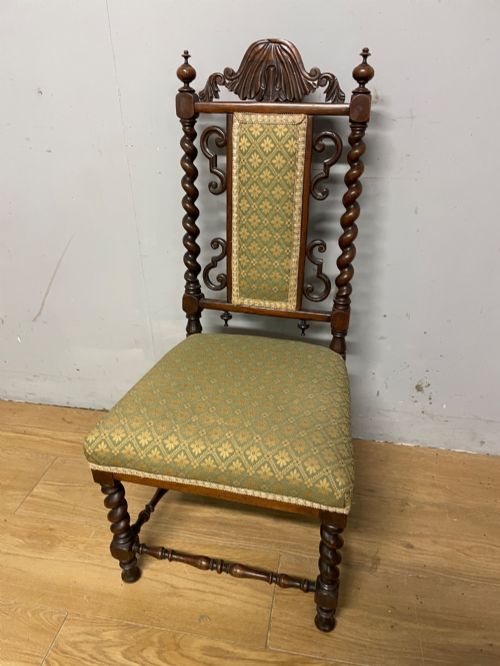
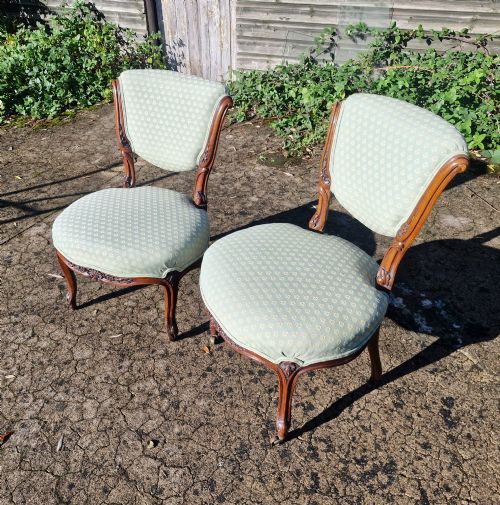
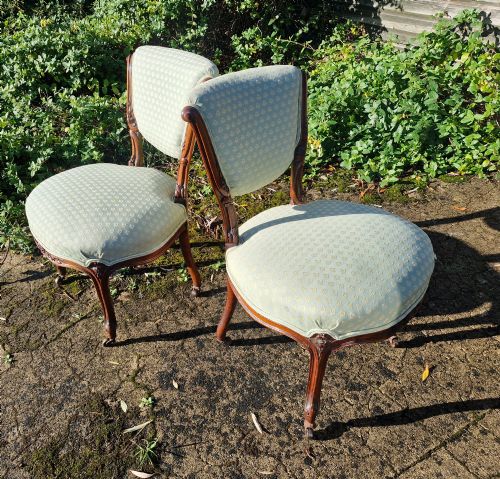
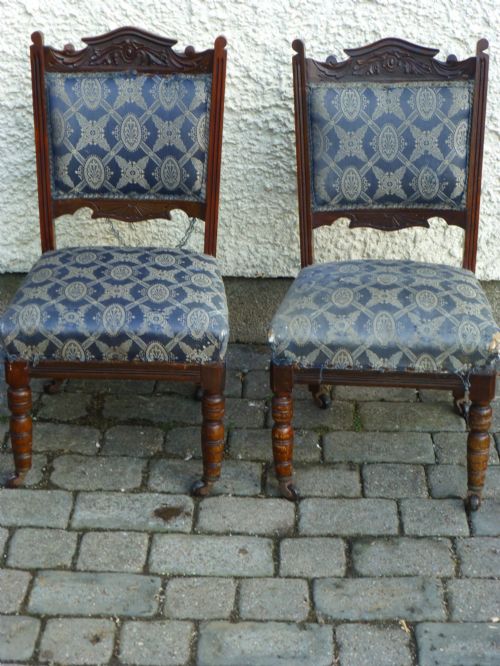
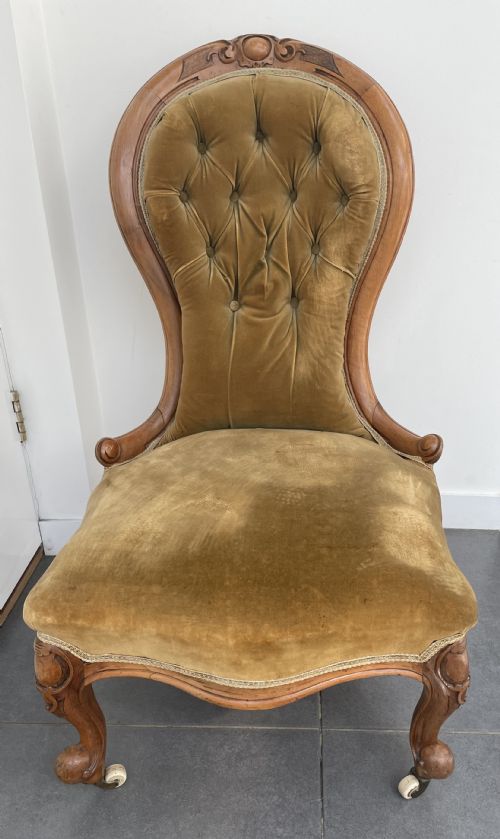
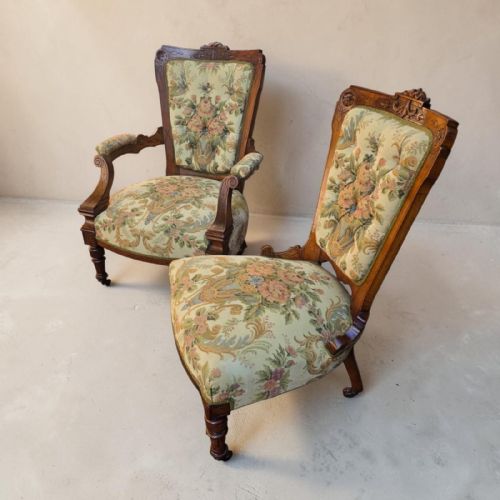
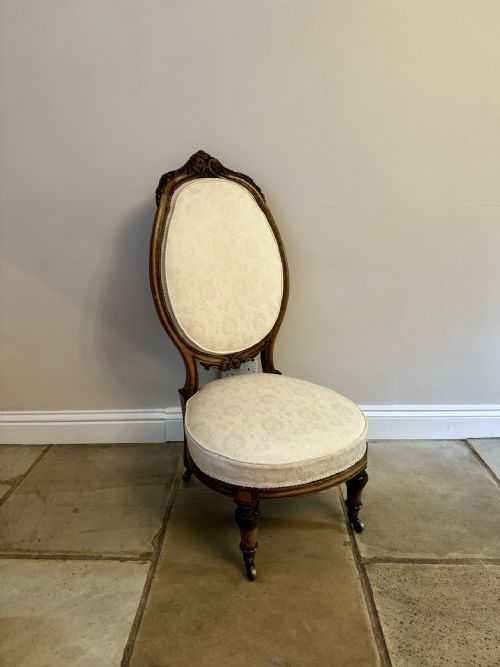
Makers fashioned these low seats in various forms overlapping with nursing chairs, salon chairs, and low bedroom seating. Walnut and mahogany dominate the timber frames, often accompanied by elaborate carvings, spoon backs, and balloon backs.
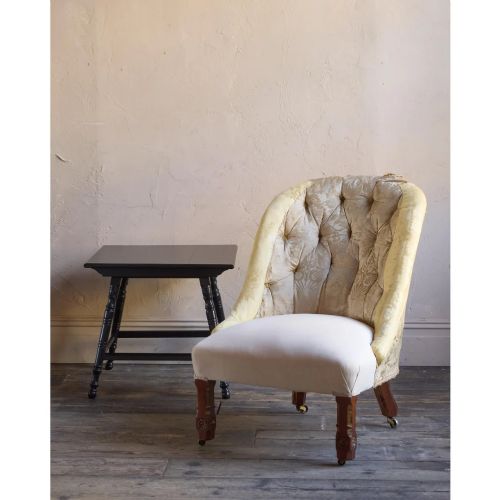
Origins span English workshops as well as occasional continental pieces, showing stylistic shifts from early nineteenth-century Regency lines to late Victorian revivalism. Buyers encounter both restored frames ready for placement and projects requiring new upholstery.
Materials and Construction
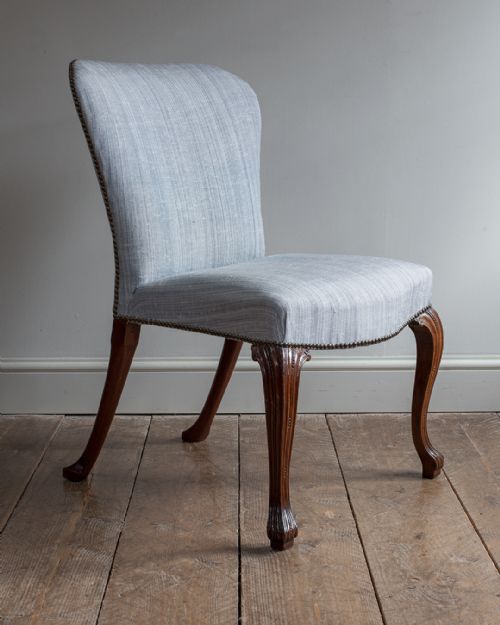
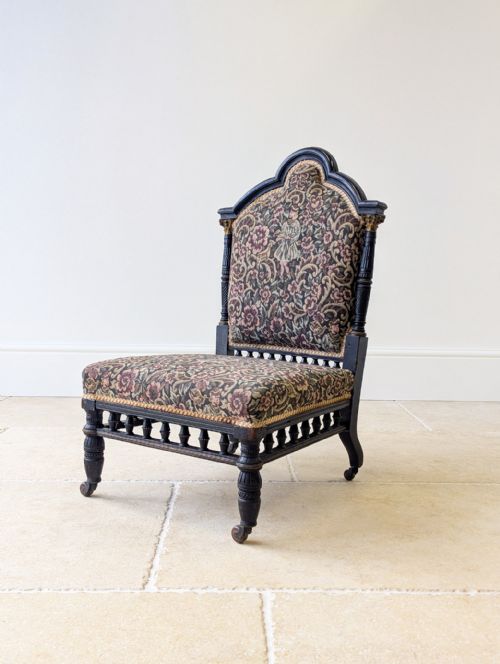
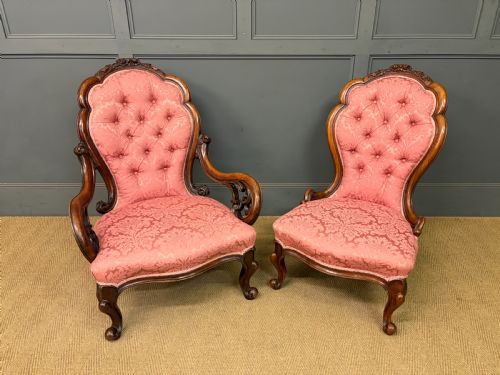
Frames rely heavily on dense hardwoods like walnut, mahogany, and rosewood, chosen for their ability to sustain deep hand-carving along the crest rails and cabriole legs. Ebonised finishes and giltwood appear where makers sought a more decorative finish.
Upholstery techniques involve traditional sprung or webbed foundations paired with textile coverings including velvet, tapestry, and patterned fabrics. Brass castors frequently finish the feet of mid-nineteenth-century examples to aid mobility across carpets.
Carved Slipper Chair Retail Price Guide 2026
Typical asking prices for carved slipper chair among the pieces listed under this phrase on Sellingantiques today, from the lower quarter to the upper quarter. They describe what is for sale here now, not the wider market.
Listings feature walnut and mahogany predominantly, alongside rosewood and oak frames spanning the Georgian to Edwardian periods.
Evaluating Craftsmanship
The crispness and depth of the timber carving separate standard production from superior examples. Sharp definition in floral motifs, scrollwork, and spoon backs indicates skilled hand-carving by competent cabinet makers.
The integrity of the underlying hardwood frame and the quality of historical joinery dictate the longevity of the seat. Pieces retaining original structural stability command greater interest among collectors of period seating.
R Whytock of Edinburgh·Lamb of Manchester·Morison & Co.
The Carved Slipper Chair Glossary
- Spoon back
- A padded chair back shaped in a concave oval resembling the bowl of a spoon. This contour supported the spine comfortably in Victorian ladies' seating.
- Nursing chair
- A low upholstered seat designed for comfort during infant care or dressing. These share identical proportions with many slipper chairs.
- Balloon back
- An oval chair back shaped like a balloon, popular during the mid-nineteenth century. Carved walnut versions frequently employ this silhouette.
- Cabriole leg
- A furniture leg that curves outward and then tapers inward with a pad or scroll foot. This shape derives from classical animal forms.
- Ebonised
- Wood stained or painted black to imitate ebony. This finish gained popularity during the Aesthetic Movement.
Carved Slipper Chair: Frequently Asked Questions
What distinguishes a slipper chair from a nursing chair?
Both forms share a low seat height designed for bedrooms and boudoirs, though historical naming conventions often overlap between the two.
Craftsmen built them for similar domestic tasks relating to dressing and informal sitting.
Are these chairs suitable for daily sitting?
Their compact dimensions and low posture suit occasional use in living rooms or bedrooms rather than extended lounging.
Modern users often place them beside dressing tables or in corners as accent seating.
How do I date a Victorian carved walnut chair?
Stylistic markers such as spoon backs, balloon frames, and floral carvings point toward the middle decades of the nineteenth century.
Turned legs, castors, and specific revival styles help narrow the decade of production.
Should I buy a chair needing upholstery?
Many period frames survive in need of fabric renewal, allowing buyers to select textiles matching their interior scheme.
Original frames benefit from traditional reupholstery methods using appropriate stuffing and springs.