

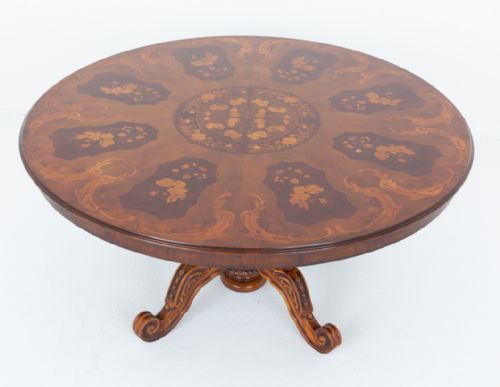


Carved Scroll Feet Table
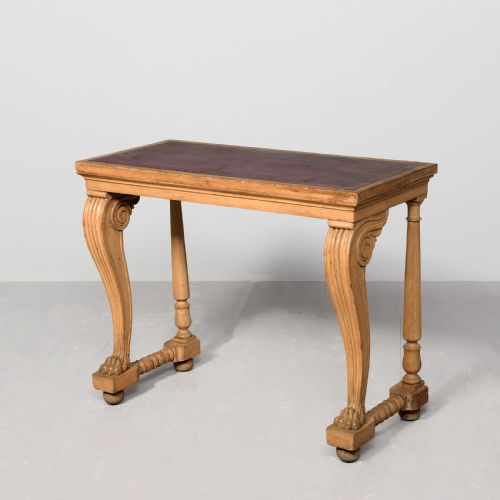
A carved scroll feet table brings period timber work and substantial supports into a room, most often seen in nineteenth century examples.
Carved Scroll Feet Table
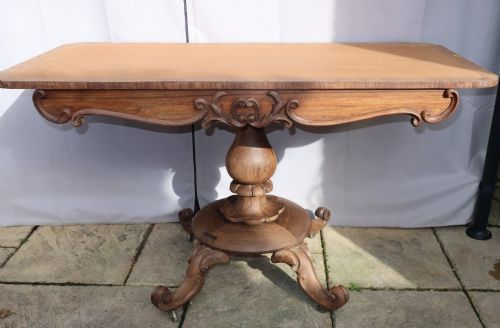
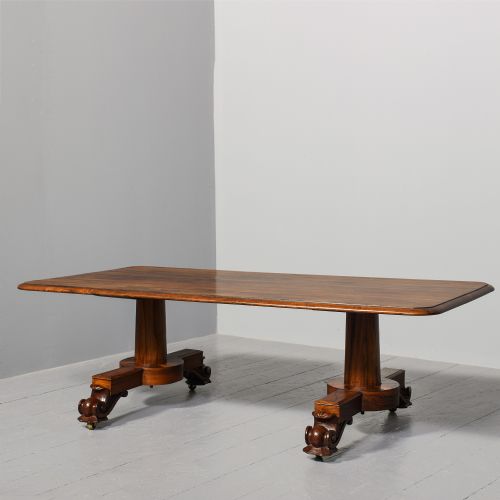
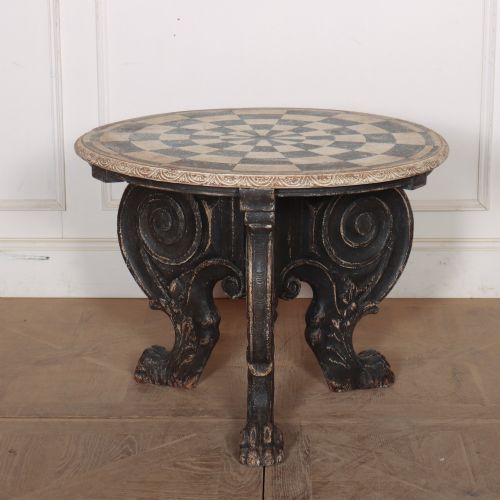
A carved scroll feet table is a piece of furniture defined by its distinct pedestal or leg terminals, which curve inward or outward in a traditional scroll motif. When you search for a carved scroll feet table, you encounter forms ranging from large dining and breakfast tables to compact occasional and centre tables. The pieces on this page span the Georgian, Regency, and Victorian eras, alongside later revivals.
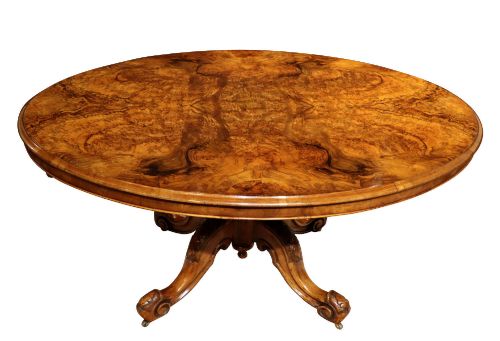
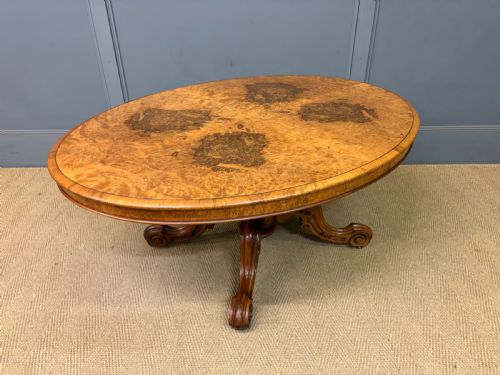
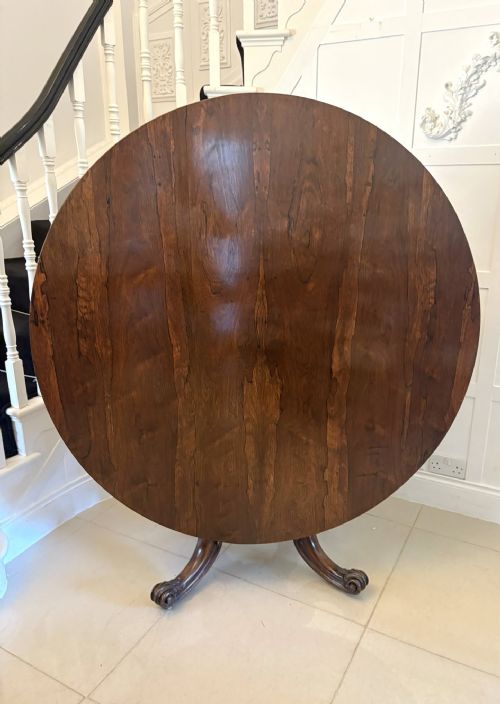
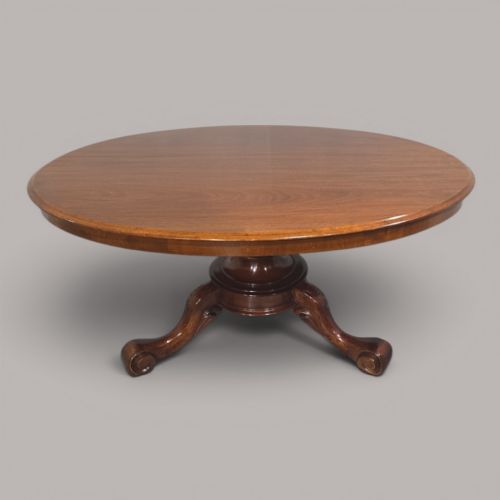
Rosewood, mahogany, and burr walnut dominate the selection, frequently shaped into circular, oval, or rectangular tops. Dining and breakfast tables often feature central pedestals with heavy carved feet, while console and side tables utilise wall-supported or freestanding frames. Occasional and coffee tables appear in both traditional British timbers and imported woods like Gonçalo Alves and huali.
Victorian examples are the most common variants on this page, often built as tilt-top breakfast tables or pedestal centre tables with substantial carved legs. Earlier Regency and Georgian pieces show refined proportions, while Chinese Qing Dynasty and European revival styles bring distinct regional carving traditions to the scroll foot form.
Materials and construction
Makers utilised dense hardwoods such as mahogany, rosewood, and walnut for their structural strength and capacity to hold crisp hand-carved details. Burr walnut and radially laid veneers provided striking decorative grain patterns across table tops, while secondary timbers like oak formed the internal framing.
Carving was executed by hand using gouges and chisels to shape the scroll terminals of pedestals and legs. Solid timber components joined turned columns and platform bases, sometimes reinforced with brass fittings or concealed iron brackets within the central support.
Table forms span dining, centre, coffee, console, side, occasional, tea, card, and lamp tables, incorporating painted wood and leather.
Judging quality and execution
Quality rests in the depth and sharpness of the hand carving on the scroll feet and pedestals, where crisp lines distinguish master joinery from softer, mechanical production. The choice of timber grain, particularly matched veneers on table tops and figured burr walnut, marks the distinction between standard utility furniture and superior pieces.
Construction integrity determines daily utility, visible in the stability of central pillar joints and tilt-top mechanisms that lock true without wobble. The handling of secondary woods and the precision of edge banding and marquetry further separate standard workshop output from finer cabinet work.
James Mein of Kelso·Whytock and Reid
The Carved Scroll Feet Table Glossary
- Tilt-top
- A table top hinged to a pillar base so it can be tipped vertically when not in use. This mechanism allowed large breakfast and centre tables to be stored against walls in period homes.
- Pedestal base
- A central column support rising from a shaped plinth or feet rather than four corner legs. It provides stable weight distribution for heavy dining and centre tables.
- Gonçalo Alves
- A dense, highly figured tropical hardwood with contrasting dark brown and golden stripes. Cabinet makers utilised this timber for striking grain patterns on Regency tables.
- Veneer
- A thin sheet of decorative wood applied to a stable underlying timber base. Radial and burr veneers created intricate geometric patterns across table tops.
- Huali
- A traditional Chinese hardwood prized for its rich grain and durability. It appears in antique Qing Dynasty low tables and opium tables.
Carved Scroll Feet Table: Frequently Asked Questions
What rooms suit a carved scroll feet table?
These tables function well as central pieces in large hallways, libraries, or dining rooms where pedestal bases and carved details remain visible from all sides. Smaller occasional and coffee tables fit easily into sitting rooms as display surfaces.
Because many examples feature substantial timber dimensions and heavy pedestal feet, they anchor a room visually and require adequate floor space around them to appreciate their proportions.
How do I identify a Regency table?
Regency tables typically display restrained classical proportions, dark mahogany or rosewood timbers, and brass mounts or inlay. The carving tends to be crisp and architectural rather than heavily ornate.
Examinations of the underside often reveal traditional hand-cut joinery, pegged joints, and secondary timbers consistent with early nineteenth century workshop practices.
Were tilt top tables used for dining?
Tilt top tables served primarily as breakfast tables or occasional centre tables in domestic interiors. The tipping mechanism allowed the heavy top to be folded flat and moved out of the way when the room required open floor space.
In daily use, the top locked horizontally onto a catch on the pillar, providing a stable surface for morning meals or reading.
How do I care for antique rosewood?
Antique rosewood benefits from minimal intervention, maintaining its natural finish through occasional dusting with a dry, soft cloth. Avoid placing these tables in direct sunlight or near heat sources to prevent timber splitting and veneer lifting.
Applying quality beeswax polish sparingly helps nourish the grain without building up a heavy, sticky residue that attracts dust.