

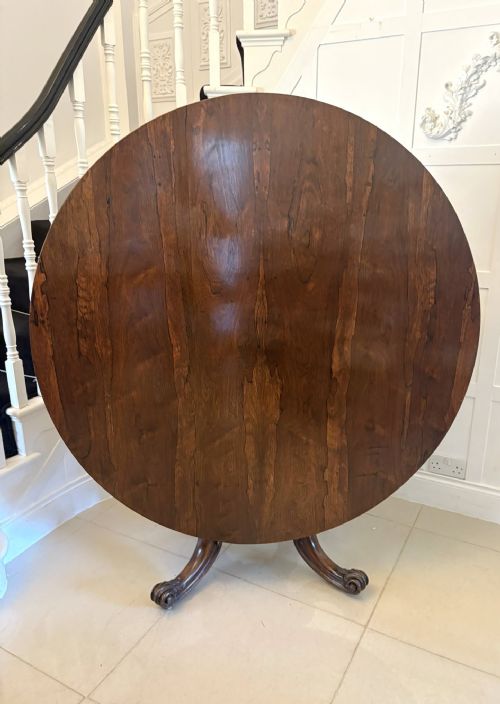
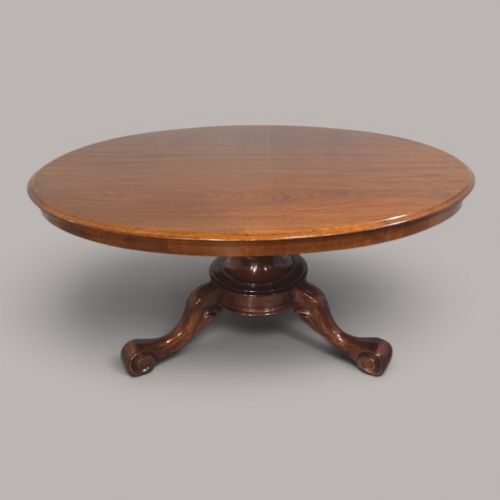


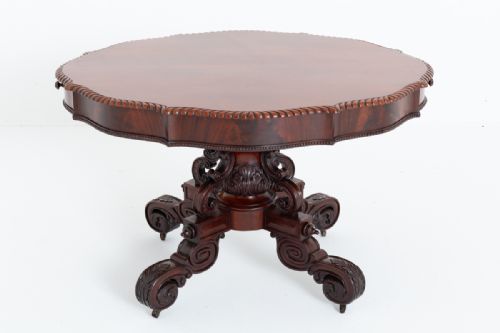
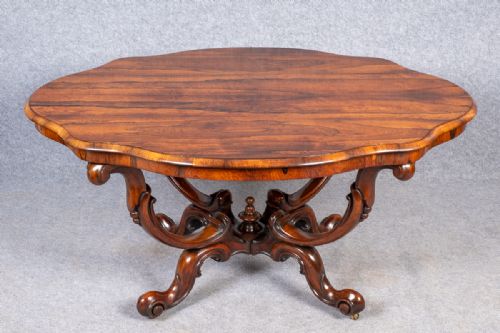

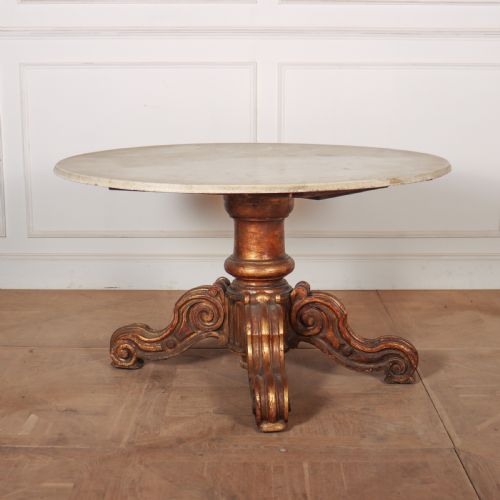

Carved Scroll Base Table
A carved scroll base table brings unmistakable nineteenth-century presence to a room, offering rich timbers and sculptural support.
Carved Scroll Base Table
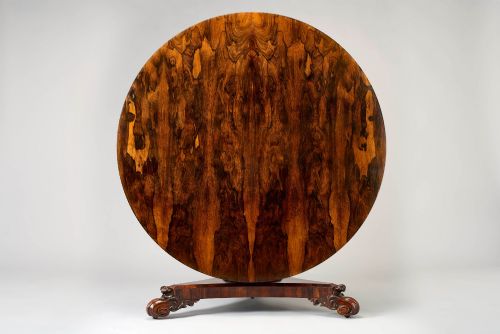
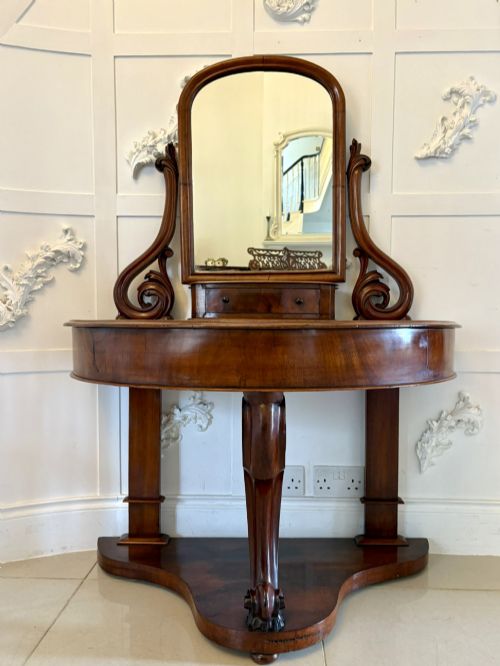
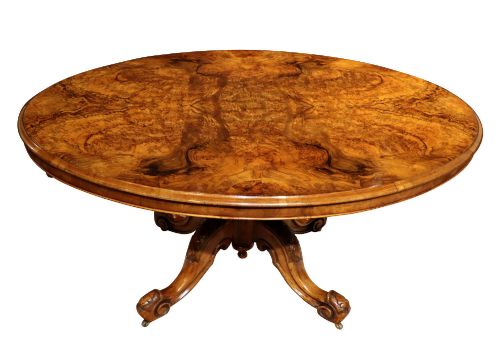
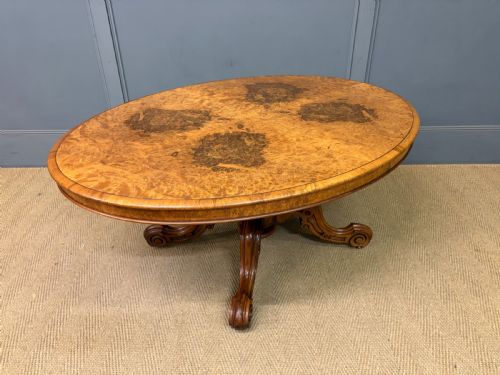
A carved scroll base table is a substantial nineteenth-century furnishing designed for dining, display, or central room placement. These pieces appear across Victorian, William IV, and Regency styles, reflecting the robust cabinet-making traditions of the period. Buyers seeking a carved scroll base table encounter diverse forms including breakfast tables, centre tables, and dining tables.
The most common iterations on this page date from the Victorian era and the mid-nineteenth century, employing rich timbers like mahogany, burr walnut, and rosewood. Makers utilised pedestals, quadrapod bases, and basket supports carved with flowing scroll motifs to anchor large circular, oval, or rectangular tops. Each carved scroll base table demonstrates how nineteenth-century artisans combined structural heft with ornamental grace.
How they were made
Surfaces were frequently finished with marble tops or glass inserts alongside polished wood, requiring careful joinery to support heavy stone or timber slabs. Pedestal and quadrapod constructions demanded precise balancing to ensure stability beneath large circular and oval table tops. Artisans joined bases to pillars using robust traditional tenon and dowel methods capable of withstanding heavy daily use.
Carved Scroll Base Table Retail Price Guide 2026
Typical asking prices for carved scroll base table among the pieces listed under this phrase on Sellingantiques today, from the lower quarter to the upper quarter. They describe what is for sale here now, not the wider market.
Some nineteenth-century breakfast tables tilt completely vertical on their carved pedestals, proving our ancestors knew how to reclaim floor space.
What varies in quality
Quality in a carved scroll base table rests upon the crispness of the hand-carving and the selection of timber veneers. Superior examples display deeply undercut scrolls and thoughtfully matched grain patterns across radially veneered or burr walnut tops, whereas simpler versions rely on plain mahogany with minimal embellishment. The integration of materials, such as fitted marble tops or inlaid brass details, distinguishes finer workshop productions.
Proportion and structural harmony also determine the standing of a piece, separating grand dining or breakfast tables from utilitarian centre tables. A well-balanced quadrapod or pedestal base distributes weight effectively while maintaining clean lines from the floor to the table rim. The depth of the polish and the integrity of the underlying timber framing ultimately dictate the longevity and visual impact of the table.
The Carved Scroll Base Table Glossary
- Burr walnut
- A highly prized timber veneer sourced from walnut tree growths, known for its swirling, mottled grain patterns. Cabinet-makers used it on table tops to create dramatic visual texture.
- Gonçalo Alves
- A dense exotic hardwood sometimes called tigerwood, featuring rich contrasting dark brown and golden stripes. It appears in high-status nineteenth-century British furniture.
- Console table
- A wall-mounted or freestanding side table designed to stand against a vertical surface, frequently topped with marble. These pieces often incorporate elaborate scrollwork along the front apron or legs.
Carved Scroll Base Table: Frequently Asked Questions
What rooms suit a carved scroll base table?
These tables find natural placement in dining rooms, entrance halls, or grand living spaces where their substantial proportions can be fully appreciated. Centre tables and console variants work particularly well in open areas or against flat walls.
Because many examples feature expansive circular or oval tops, they require adequate floor clearance to allow movement around the carved bases. Pairing them with period seating enhances their architectural character within a traditional interior.
How do I care for nineteenth-century wood surfaces?
Nineteenth-century polished wood surfaces benefit from regular dusting with a soft, dry cloth and occasional application of traditional beeswax. Avoiding direct sunlight and sustained moisture prevents timber warping and veneer lifting.
Tables with marble tops require non-abrasive cleaners and prompt wiping of liquid spills to protect the stone. Maintaining stable indoor humidity levels preserves both the solid timbers and the delicate veneers.
What distinguishes a breakfast table from a dining table?
Breakfast tables from the nineteenth century typically feature tilt-top mechanisms supported by a central carved pedestal and tripod or quadrapod base. This design allowed the top to be stored vertically against a wall when not in use.
Standard dining tables generally relied on fixed pedestals or multiple legs without tilting mechanisms to support larger gatherings. Both forms showcase expert carving on the structural supports.
How do I identify a Victorian piece from a Regency one?
Regency pieces generally exhibit classical restraint, drawing inspiration from ancient Greek and Roman motifs with clean architectural lines. Gonçalo Alves and rosewood were frequently employed during this earlier phase.
Victorian furniture tends to feature heavier proportions, more exuberant floral carving, and widespread use of burr walnut and mahogany. The scrollwork on Victorian bases is often deeper and more voluminous than earlier Regency examples.