








Regency Gilt Centre Table
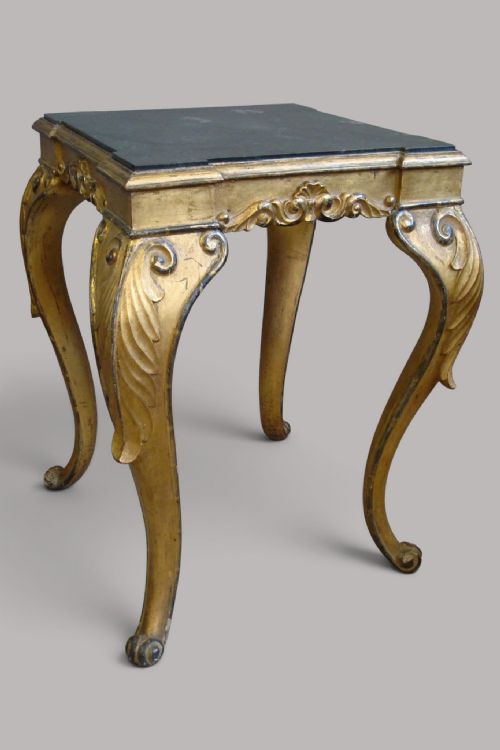
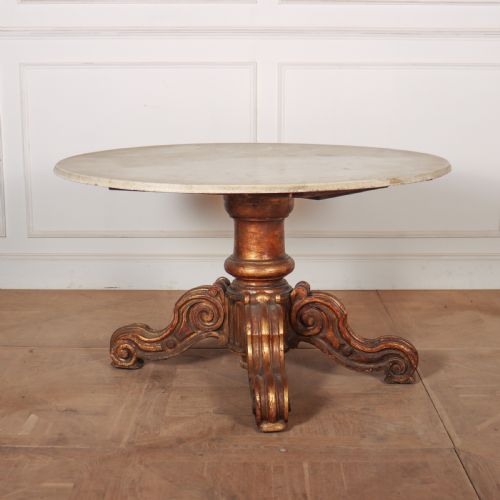
A regency gilt centre table commands the middle of a room with polished stone and gilded wood.
Regency Gilt Centre Table
A regency gilt centre table stands as a centrepiece designed to be viewed from all sides rather than pushed against a wall. When you search for a regency gilt centre table, you encounter forms that span the genuine Regency period alongside later revivals from the nineteenth and twentieth centuries.
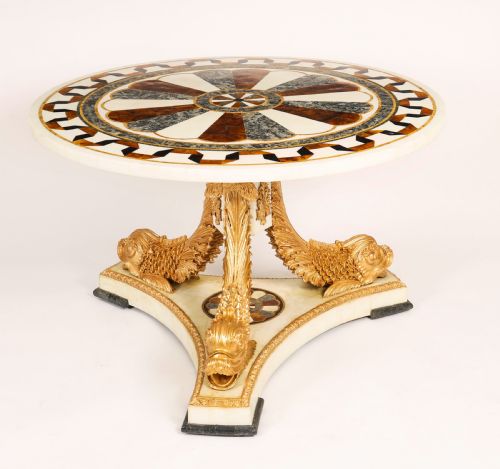
Makers and manufacturers adopted classical motifs, incorporating dolphins, columns and intricate inlays into domestic furniture. These tables served grand reception rooms and libraries, anchoring the surrounding seating arrangements.
Materials and construction
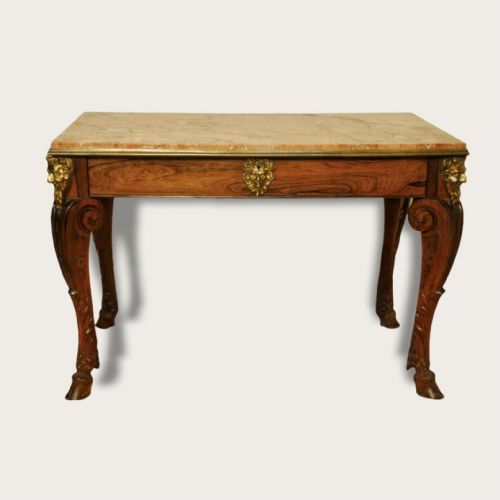
Craftsmen built the structural carcases using dense timbers such as rosewood and walnut, often applying veneers and intricate marquetry. Gilding was applied to carved wooden elements to create bright metallic contrasts against the dark grain of the wood.
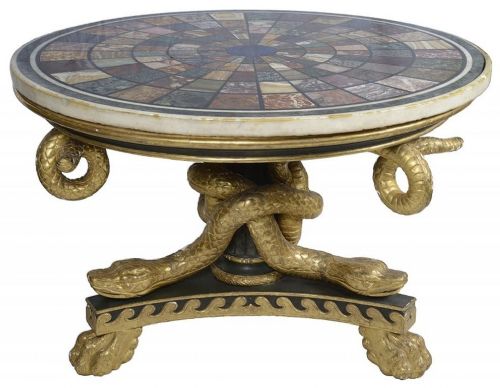
Tops frequently consist of heavy slabs of marble, specimen marble, or inlaid pietra dura panels. Ormolu mounts and brass inlays provide additional metallic detailing, fixed securely to the timber and stone surfaces.
Regency Gilt Centre Table Retail Price Guide 2026
Typical asking prices for regency gilt centre table among the pieces listed under this phrase on Sellingantiques today, from the lower quarter to the upper quarter. They describe what is for sale here now, not the wider market.
The listings show pieces constructed from rosewood, burr walnut, and solid giltwood, paired with marble and pietra dura tops.
The markers of quality
Quality rests in the precision of the carving and the selection of the primary materials. Fine examples display deeply carved wooden elements and tightly fitted stone or micro-mosaic table tops.
The sophistication of the secondary details, such as cast brass mounts and precise parcel gilding, separates standard production from exceptional work. Structural integrity in the heavy pedestals and legs ensures the substantial stone tops remain supported without sagging.
Wilkinsons of Ludgate Hill
The Regency Gilt Centre Table Glossary
- Parcel Gilt
- Partial gilding applied to specific carved details while leaving the underlying wood grain visible elsewhere. This technique highlights architectural ornaments and figural carvings.
- Pietra Dura
- An inlay technique using cut and fitted polished coloured stones to create pictorial or geometric designs. Artisans assemble these hardstone plaques flush into the surface of the table top.
- Specimen Marble
- A table top composed of numerous geometric segments of different antique marbles. Each piece is framed within a main field to display varied geological colours and patterns.
- Ormolu
- Gilded bronze mounts applied to furniture edges and legs for decorative effect. The metal is cast and chased before receiving its gold finish.
- Micro-mosaic
- A detailed decorative technique using tiny coloured glass tesserae to form miniature pictorial scenes. These panels are set directly into stone table tops.
Regency Gilt Centre Table: Frequently Asked Questions
Where do you place a centre table?
A centre table stands in the middle of a room rather than against a perimeter wall. It requires adequate clearance on all sides so people can circulate freely around the piece.
Historically, these tables held lamps, books or decorative objects, serving as a visual anchor for the entire space.
How do you maintain a marble top?
Marble requires gentle cleaning with a damp cloth and mild soap to avoid damaging the polished stone surface. Acidic liquids can etch the stone and must be wiped away immediately.
Polishing with appropriate stone care products helps maintain the lustre over decades of domestic use.
How do you distinguish original Regency from later revivals?
Original Regency pieces date roughly from the early nineteenth century and show period-specific construction methods and timber ageing. Revivals from the Edwardian era or the twentieth century often use different secondary woods and display cleaner, machine-assisted joinery.
Examining the underside and the wear patterns helps determine the actual age of the timber and gilding.