





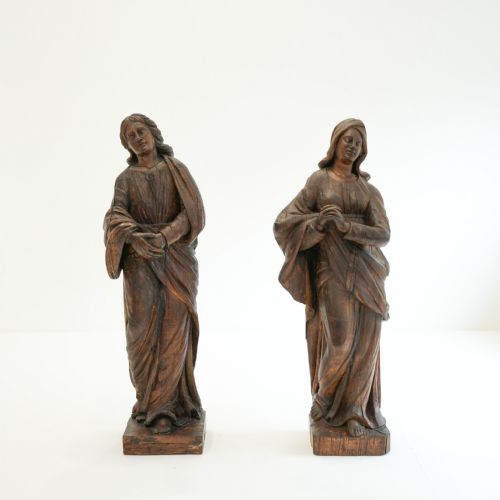


Carved Saint Statue
These carved saint statue pieces bring centuries of devotional craft into domestic spaces through timber and pigment.
Carved Saint Statue
A carved saint statue represents figures from religious history, originating from workshops across Europe in oak, limewood, and fruitwood. Buyers encounter examples spanning the medieval era through the Baroque period, capturing holy figures, bishops, and angels.
The pieces on this page range from small devotional fragments to life-size processional figures. Oak and limewood dominate the older examples, whilst later pieces incorporate gesso and polychrome paint.
Materials and construction methods
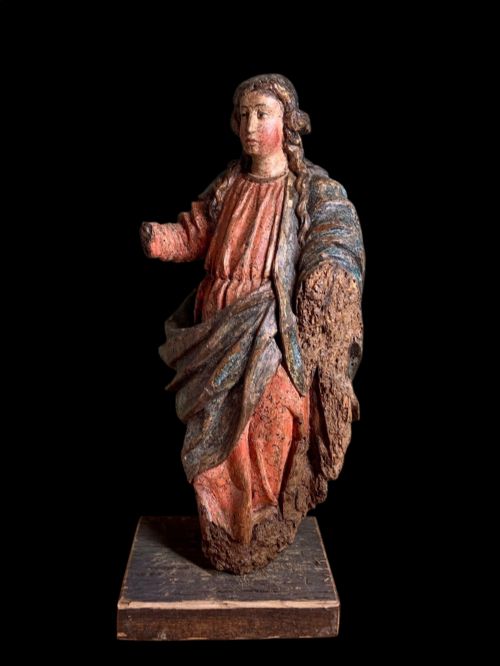
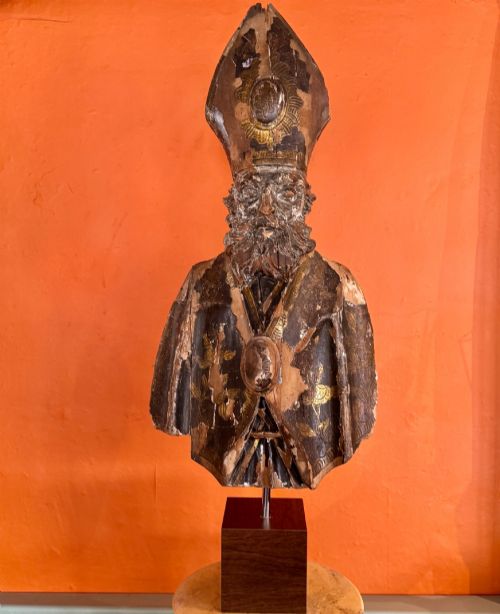
Surfaces frequently received a preparation layer of gesso before painters applied polychrome pigments and gold leaf. This combination of carved wood and layered paint created rich, light-catching finishes for church interiors and home altars.
Among the solemn saints and bishops, a carved wooden Saint Bernard rescue dog stands ready for duty in 1940.
Assessing quality in carved wood
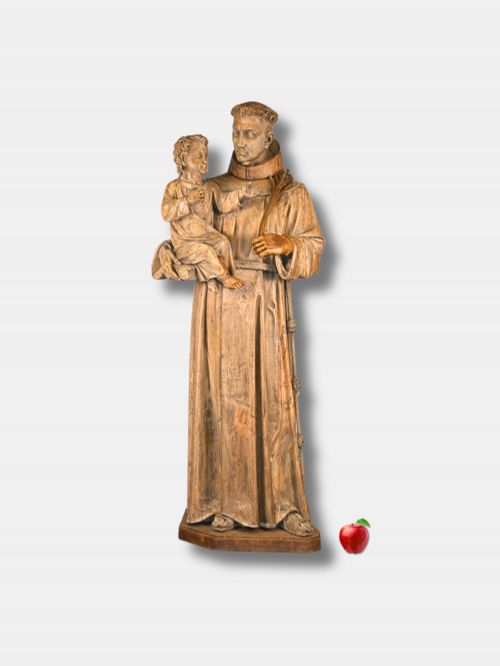
Quality rests in the anatomical precision of the hands and face, alongside the fluid handling of drapery folds. Master carvers achieved depth and natural movement in timber, whereas lesser workshop pieces remain stiff and repetitive.
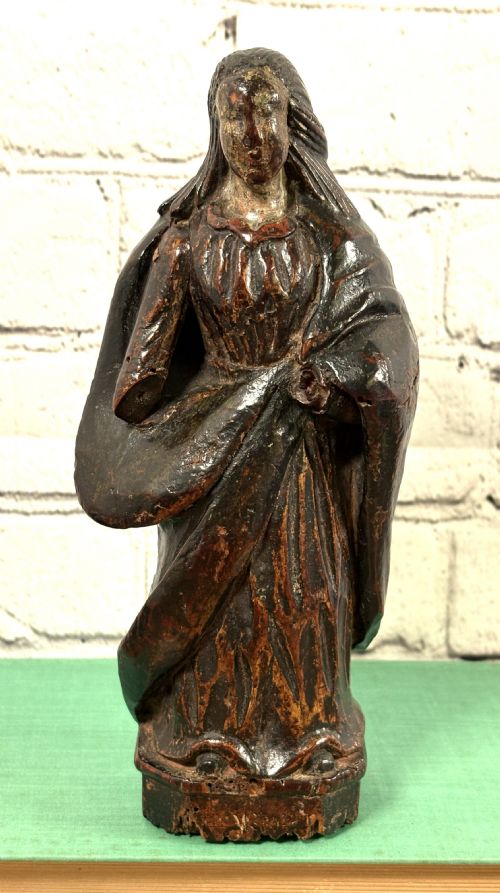
The preservation of original polychrome paint and gilding alters the character of a piece significantly. Retained pigment layers reveal the original aesthetic intent, while heavily stripped or overpainted surfaces lose their historical nuance.
Franz Keller
The Carved Saint Statue Glossary
- Polychrome
- Painted in several colours. This surface treatment was applied over wood or gesso to give statues a lifelike appearance.
- Gesso
- A plaster mixture used as a smooth base for paint or gold leaf on wooden carvings. It sealed the timber and held fine detail.
- Giltwood
- Wood that has been coated with thin sheets of gold leaf. This technique added luminosity to ecclesiastical figures.
- Capipote
- A Spanish devotional figure with a carved head and hands attached to a framework dressed in real fabric robes. These figures often served processional functions.
- Limewood
- A soft, pale timber favoured by northern European carvers for intricate detail. Its fine grain prevents splintering during deep undercutting.
Carved Saint Statue: Frequently Asked Questions
How were these statues used originally?
These statues served as focal points for prayer in churches, private chapels, and home altars. Many were also carried through streets during religious processions.
Over time, surviving figures moved from sacred spaces into secular collections, retaining their contemplative presence.
How do I care for a wooden statue?
Keep wooden sculptures away from direct heat sources and dramatic humidity shifts to prevent the timber from splitting. Dust them gently with a dry, soft brush rather than using wet cloths.
Stable indoor conditions preserve both the carved wood and any fragile historic paint layers.
How can I tell the period of a carving?
Dating relies on stylistic clues such as the angular folds of Gothic drapery versus the dramatic curves of Baroque sculpture. Tool marks, timber species, and the ageing of underlying gesso provide further physical evidence.
Comparing pieces to dated examples helps establish their place within the timeline from the medieval era onwards.
Are these pieces painted originally?
Many figures retain layers of historic polychrome paint and gold leaf applied directly over gesso or bare wood. Some surfaces show multiple campaigns of decoration from different centuries.
Other pieces were left as exposed timber, particularly Renaissance and Gothic oak works intended to show the grain.