

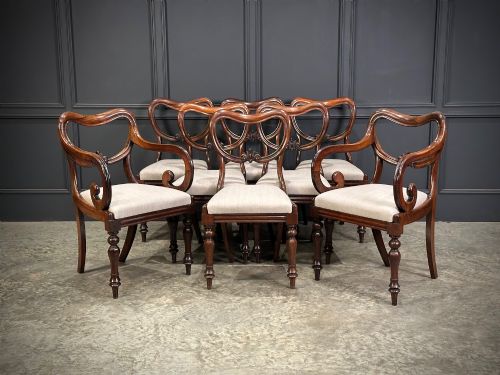

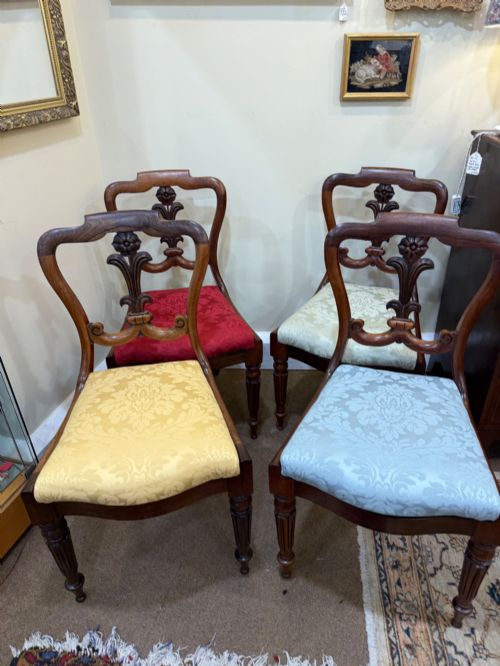
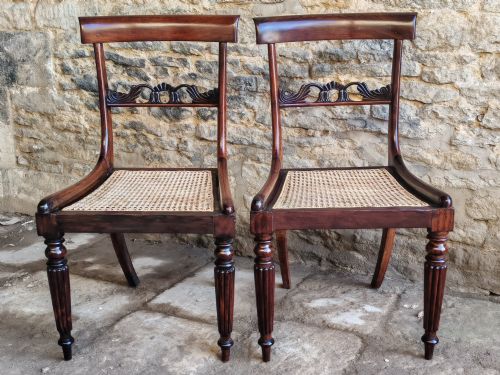
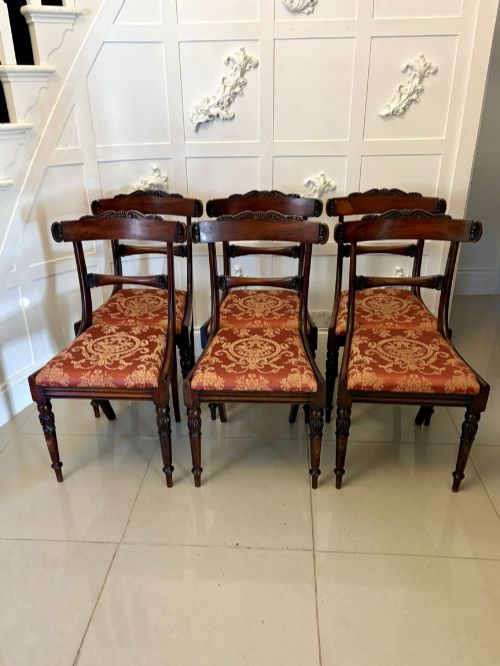

Carved Rosewood Side Chairs
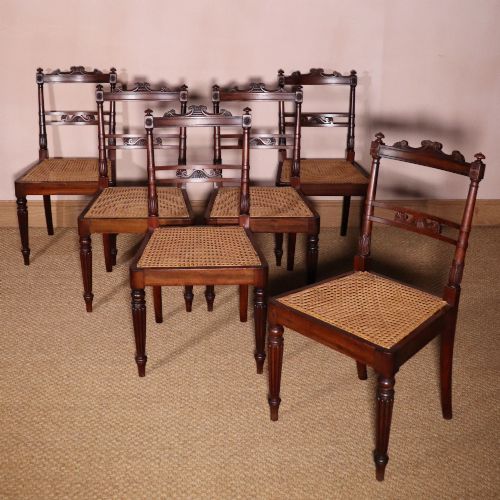
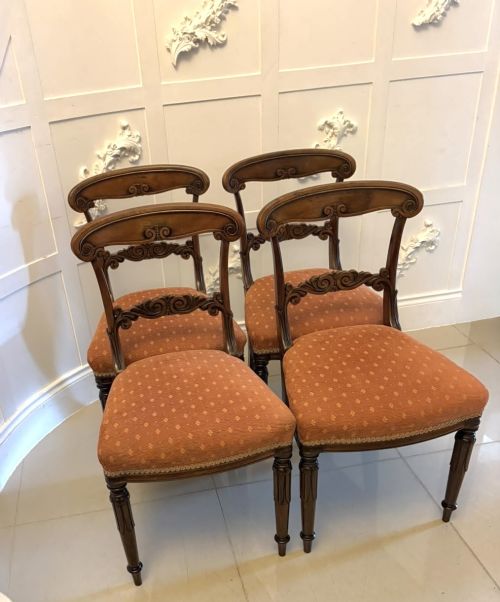
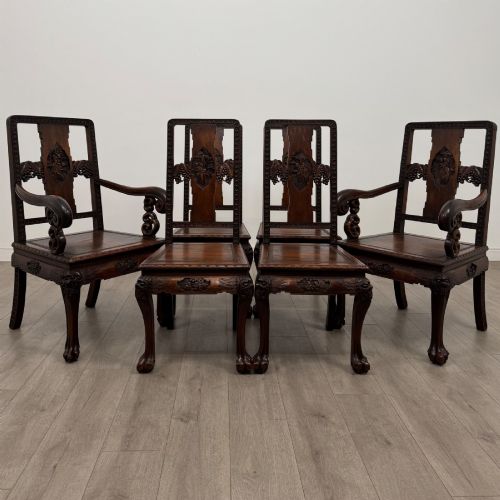
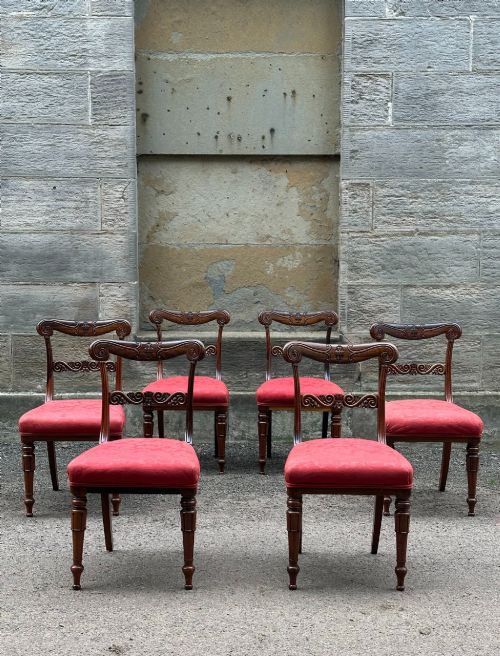
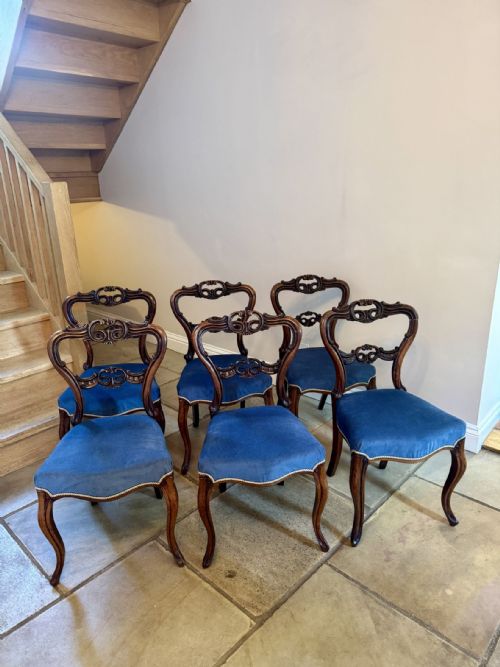
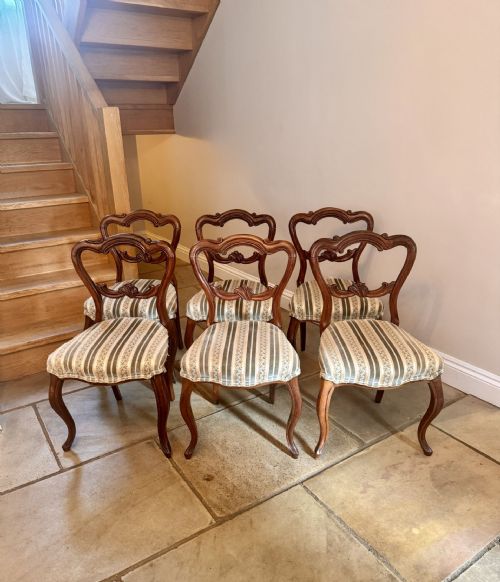
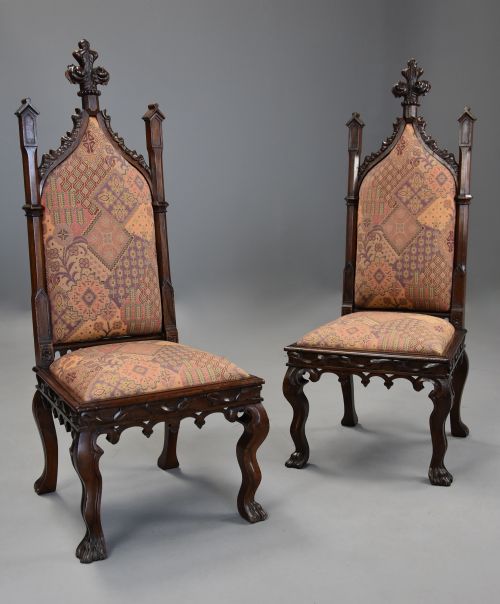
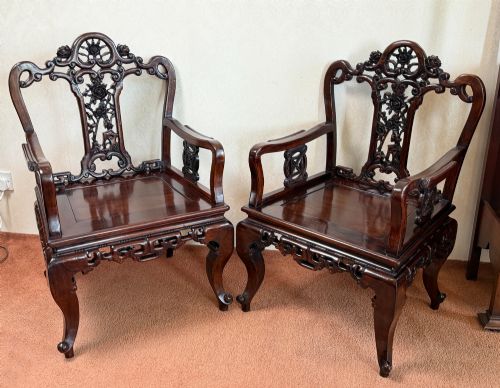
Carved rosewood side chairs bring dense, figured timber and sculptural joinery into a room, spanning the Regency, William IV and Victorian periods.
Carved Rosewood Side Chairs
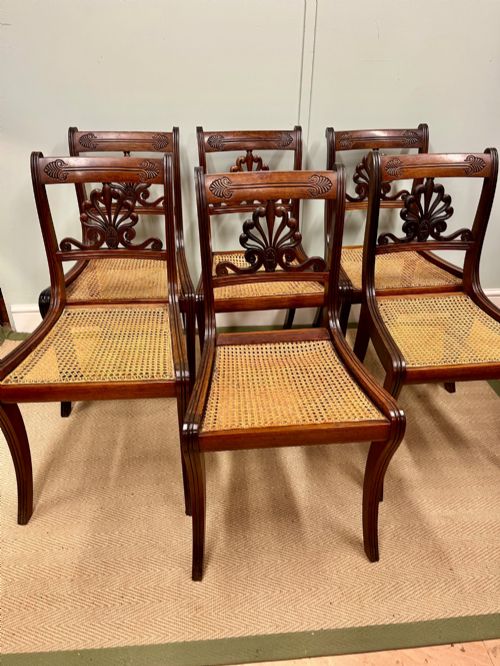
Carved rosewood side chairs comprise seating built primarily during the nineteenth century, encompassing Regency, William IV and Victorian eras. These items appear in formats ranging from single hall seats and bedroom chairs to extensive dining sets.
The most common examples on this page date from the 1850s and 1860s, often displaying balloon backs or scroll-carved frames. Makers designed these pieces for parlours, dining rooms and libraries, utilising sturdy proportions despite their decorative carving.
How they were made
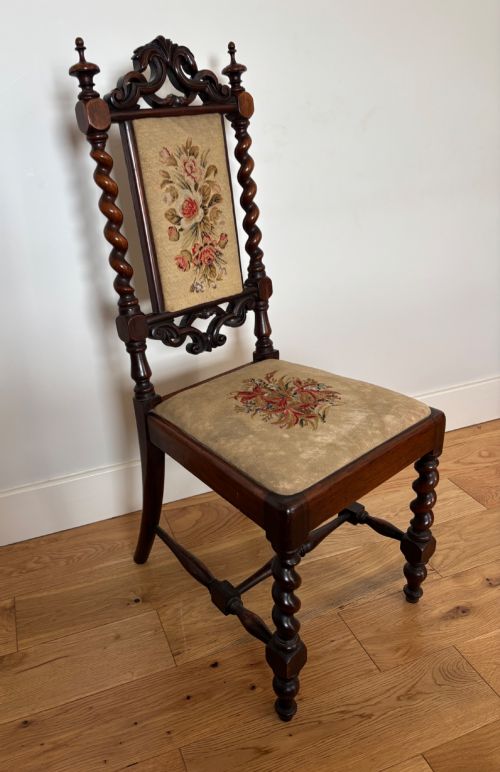
Cabinetmakers constructed these frames using dense tropical rosewood, sometimes selecting simulated alternatives or pairing the timber with brass inlay and barley twist turnings. Workshops shaped the solid wood through steam-bending and hand-carving to achieve intricate floral motifs and curved balloon backs.
Seating portions relied on traditional upholstery methods, incorporating materials such as velvet, cane, textile and needlepoint fabric fixed over webbing. Brass components appeared as structural or decorative elements, particularly on Regency pieces.
Carved Rosewood Side Chairs Retail Price Guide 2026
Typical asking prices for carved rosewood side chairs among the pieces listed under this phrase on Sellingantiques today, from the lower quarter to the upper quarter. They describe what is for sale here now, not the wider market.
One child's chair waits quietly among the full-sized dining sets, offering miniature proportions carved with nineteenth-century seriousness.
What varies in quality
Quality rests in the crispness of the hand-carving and the depth of natural grain figure in the rosewood timber. Superior examples exhibit tightly jointed frames and harmonious proportions rather than mechanical uniformity.
The integrity of the original show wood, the retention of period upholstery materials like needlepoint or velvet, and the weight of the solid timber dictate the distinction between standard workshop production and exceptional cabinetmaking.
W A Willcocks·Gillows
The Carved Rosewood Side Chairs Glossary
- Balloon back
- A rounded, oval-shaped chair back resembling a hot air balloon, popular during the Victorian period. This design allowed for ergonomic support while showcasing the grain of the rosewood.
- Regency
- An English stylistic period spanning the early nineteenth century defined by classical restraint and archaeological influence. Pieces from this era often incorporate brass inlay and saber legs.
- Barley twist
- A type of turning shaped like a spiral rope, frequently used on chair legs and structural supports during the nineteenth century. It added texture and visual movement to heavy timber frames.
- Needlepoint
- A form of canvas embroidery used for historical seat upholstery, commonly worked in wool with floral or geometric patterns. Surviving examples contribute to the decorative character of Victorian chairs.
- William IV
- A transitional design phase bridging the Regency and early Victorian periods, characterised by robust proportions and bold carved details. Chairs from this era utilise heavy rosewood sections.
Carved Rosewood Side Chairs: Frequently Asked Questions
How do I date a rosewood chair?
Dating relies on stylistic markers such as the transition from Regency brass inlay to Victorian balloon backs and heavy carving. Examination of construction techniques and joinery under the seat helps confirm the period.
Changes in timber treatment and upholstery methods across the nineteenth century further narrow the date of manufacture. Comparing the piece to documented examples from the same decade provides additional certainty.
Were these chairs used for dining?
Many rosewood side chairs served as dining seating, often produced in sets ranging from four to twelve pieces. Their sturdy frames accommodated daily use around the formal dining table.
Single chairs and pairs typically functioned as hall chairs, bedroom seating or library furniture rather than dining sets. Their placement depended on the specific decorative style and back height.
How should I care for rosewood?
Rosewood benefits from placement away from direct sunlight and sudden temperature shifts, which can dry out the dense timber. Regular dusting with a soft, dry cloth preserves the polished surface.
Application of appropriate wood waxes helps maintain the moisture and natural sheen of the grain. Avoid chemical cleaners that might degrade historical finishes.
What is the difference between side and hall chairs?
Side chairs generally feature upholstered seats designed for comfort in parlours, bedrooms or dining rooms. They prioritise seated comfort and refined upholstery fabrics like velvet or needlepoint.
Hall chairs usually feature solid wood seats with carved wooden panels rather than padding. They stood in entrance halls and prioritised architectural presence and durability.