



William IV Balloon Back
William IV balloon back chairs offer unmistakable curves and sturdy frames, bringing classic nineteenth century seating directly to the dining room.
William IV Balloon Back
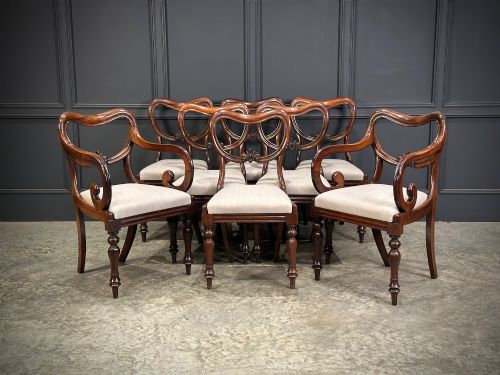
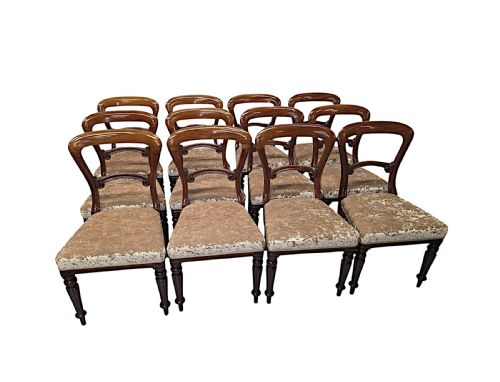
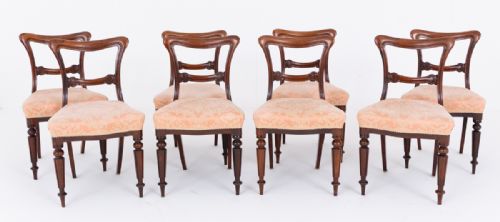
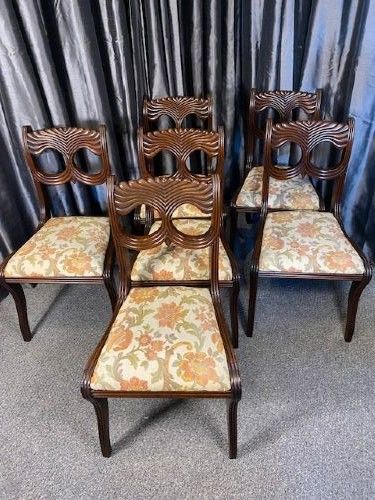
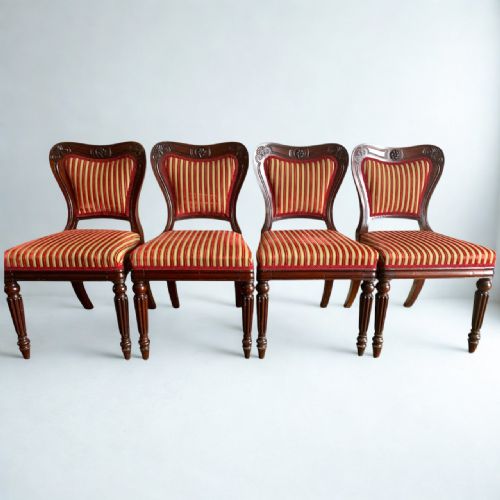
William IV balloon back chairs are nineteenth century dining and side chairs defined by their rounded, open backrests that resemble the silhouette of a balloon. These pieces emerge primarily from the Regency and William IV periods, spanning timber frames designed for formal dining rooms.
Buyers will most frequently encounter sets of four, six, or eight mahogany and rosewood chairs on this page. Single chairs and smaller pairs also appear, often suited for use as occasional or bedroom seating rather than around a large dining table.
Timbers and upholstery methods
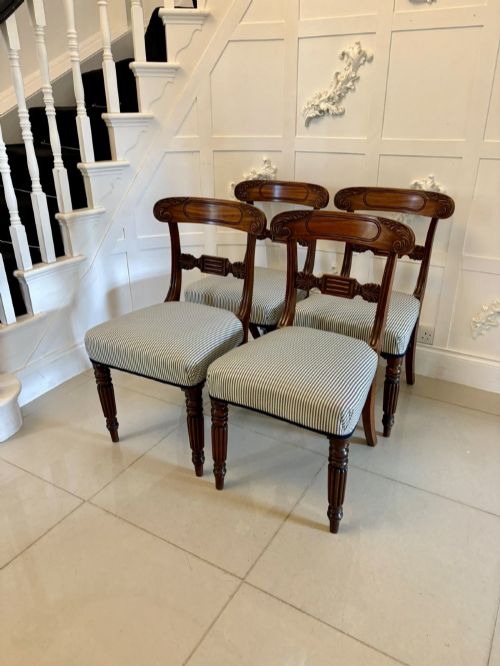
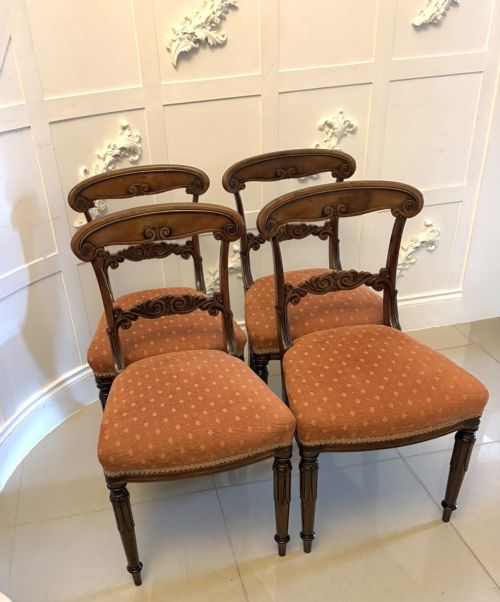
Cabinetmakers constructed these frames using solid mahogany and rosewood, selecting dense timbers that allowed for deep carving on the crest rails and gentle curving along the back splats. Wood components were joined with traditional cabinetry methods to withstand the daily weight and movement at the dining table.
Seats were traditionally built as stuff over structures, padded with stuffing and finished in fabric, velvet, or leather upholstery. Makers secured these coverings with tacks over the wooden rails, creating a firm and supportive surface for seated guests.
William IV Balloon Back Retail Price Guide 2026
Typical asking prices for william iv balloon back among the pieces listed under this phrase on Sellingantiques today, from the lower quarter to the upper quarter. They describe what is for sale here now, not the wider market.
Balloon back chairs ensure guests float through dinner parties on nineteenth century air.
Distinctions in construction and timber selection
The standard of a chair rests heavily on the choice of wood and the crispness of the carved details along the balloon frame. Richly grained rosewood and figured mahogany distinguish finer examples from plain utilitarian seating.
Structural integrity and matched sets dictate the upper tier of the market, particularly when frames retain their original proportions without excessive timber shrinkage or replacement stretchers. Attribution to prominent workshops further elevates specific suites.
Gillows
The William IV Balloon Back Glossary
- Balloon back
- A chair back shaped in a continuous curving loop resembling a balloon. This silhouette became the defining design of seating during the second quarter of the nineteenth century.
- Stuff over
- An upholstery technique where the fabric covers the seat rails entirely and is secured directly to the wooden frame. This method hides the framing timber from view.
- Regency
- An architectural and decorative style spanning the early nineteenth century. It heavily influences the clean lines and classical motifs seen on these chair frames.
- Rosewood
- A dense, heavily figured exotic timber utilised for high status furniture. Its dark grain provides a dramatic contrast in formal dining interiors.
William IV Balloon Back: Frequently Asked Questions
Are these chairs comfortable for daily dining?
The curved balloon back is engineered to support the spine, offering an upright posture suited for formal meals. The padded stuff over seat provides a firm base for sitting over the course of an evening.
Comfort also depends on the current condition of the internal webbing and padding. Many antique sets benefit from professional reupholstery using modern supportive materials while retaining the traditional profile.
How do mahogany and rosewood styles differ?
Mahogany chairs tend to show a straight, reddish brown grain that takes crisp carving extremely well on the crest rails. They represent the standard choice for large dining suites produced during the period.
Rosewood versions feature a darker, heavily variegated grain with purplish black streaks, often reserved for finer drawing room or dining room settings. This dense timber gives the frame a more dramatic visual weight.
Can I mix single chairs with carvers?
Historic dining sets frequently combined a pair of armchairs, known as carvers, with a larger number of single side chairs. Carvers were traditionally placed at the heads of the table while side chairs filled the sides.
Matching the wood and the balloon back profile ensures a cohesive look even when gathering separate pieces into a unified dining arrangement.