


Carved Rosewood Box
A carved rosewood box brings deep-grained warmth and intricate carving to a dressing table or desk, offering a durable home for keepsakes.
Carved Rosewood Box
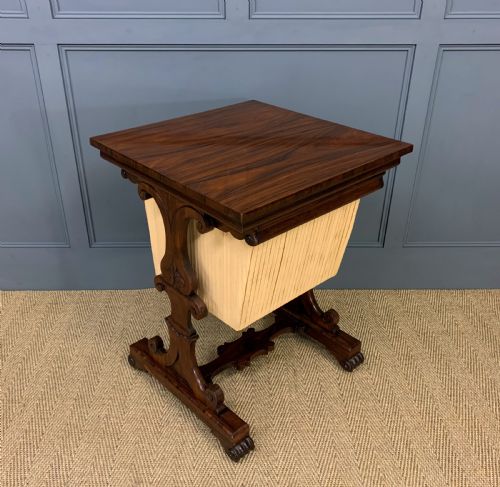
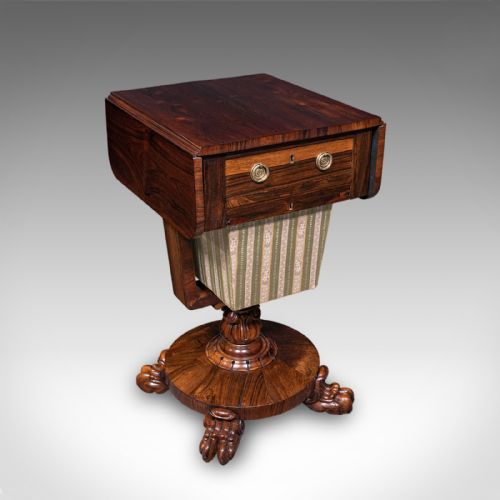
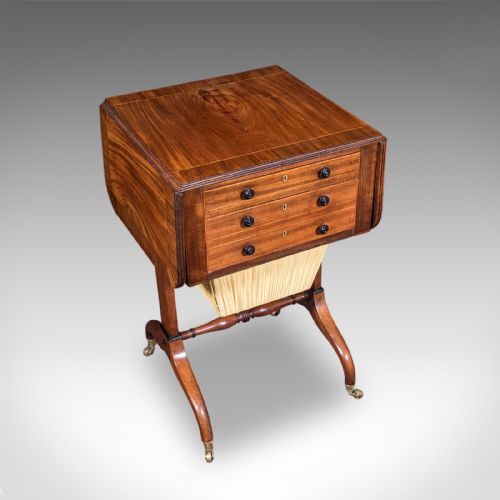
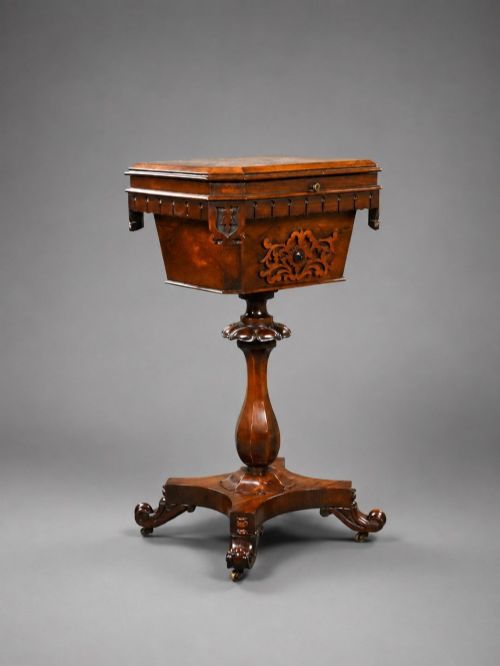
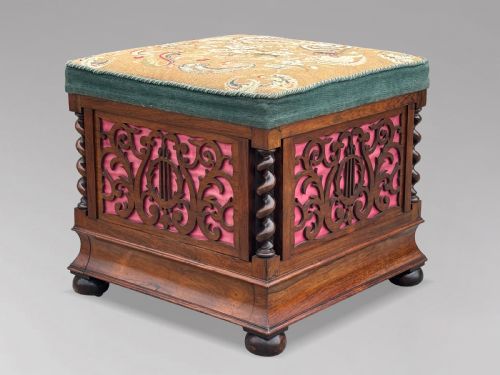
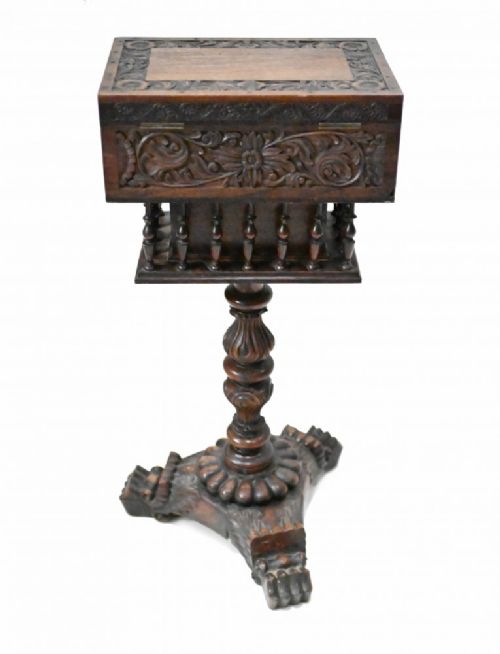
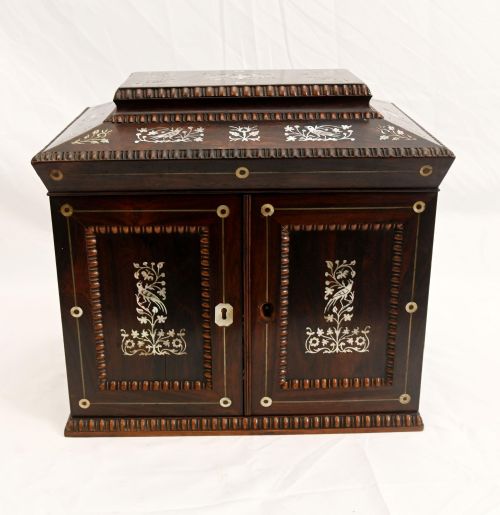
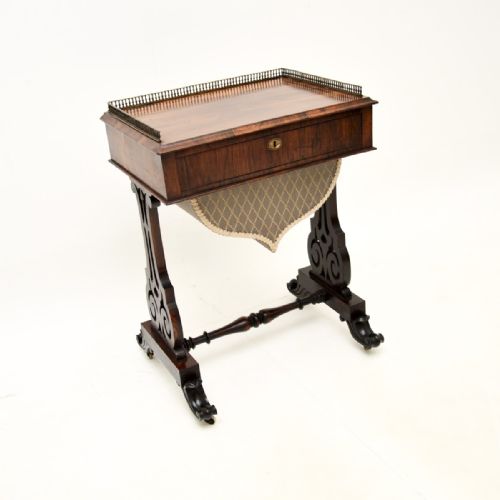
A carved rosewood box encompasses a variety of functional domestic containers originating across the nineteenth century, including tea caddies, jewellery chests, and larger work or sewing tables. Pieces emerge from distinct periods such as the Regency, William IV, and Victorian eras, alongside Anglo-Indian colonial workshops and Chinese production from the early twentieth century.
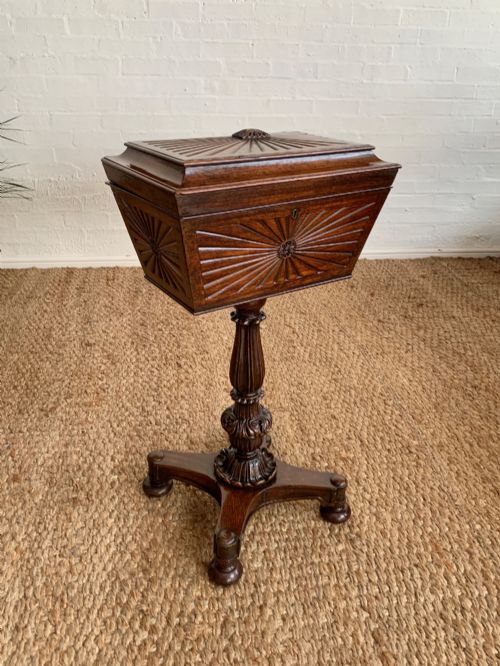
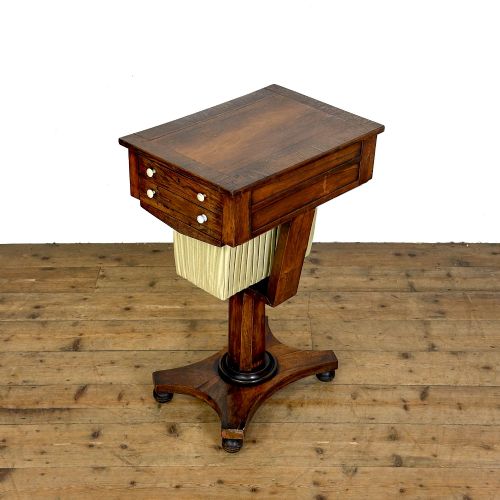
Buyers are most likely to encounter compact tabletop storage vessels featuring hinged lids and compartmented interiors, alongside drop-leaf sewing tables and tea poys supported on turned or carved pedestals. The dense tropical timber lends itself to both crisp geometric mouldings and elaborate floral or sunburst carvings executed by hand.
Materials and construction
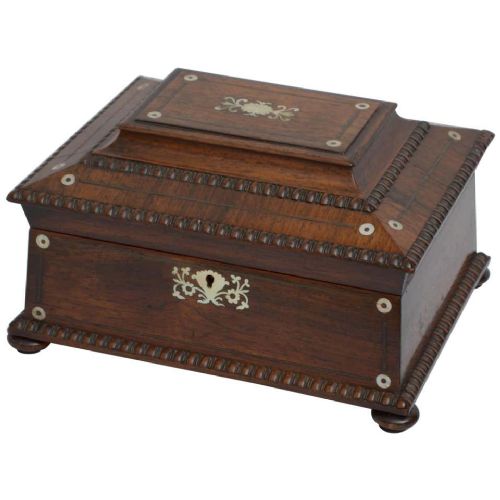
Carpenters utilised dense, heavy rosewood as the primary structural timber, often selecting stock for its rich dark grain and warm reddish-brown hue. Surfaces frequently incorporate contrasting decorative elements such as mother-of-pearl inlay, brass stringing, boxwood banding, and carved bone or ivory details.
Joinery techniques ranged from precise dovetail joints on solid timber boxes to veneered carcases applied over secondary woods. Carved elements were hand-chiselled directly into the solid rosewood or applied as separate mouldings, while interior compartments often retained original silk fabric or velvet linings.
Victorian ladies stored everything from ivory spindles to playing cards inside these densely carved rosewood compartments.
Craftsmanship and design
The standard of carving distinguishes superior pieces, with master carvers producing deep, crisp relief work that retains sharp definition across botanical and geometric motifs. Lesser examples display shallow, mechanical tooling that lacks spatial depth and precision.
Internal arrangement and secondary materials dictate overall merit, with finer pieces retaining complete velvet or silk-lined compartments, working locks with original keys, and meticulous brass stringing or mother-of-pearl marquetry without missing elements.
The Carved Rosewood Box Glossary
- Tea caddy
- A lidded container originally designed to store loose dry tea leaves securely. These boxes frequently feature internal foil-lined compartments and a central locking mechanism.
- Teapoy
- A pedestal table fitted with a lidded box on top, used historically in the parlour for storing and serving tea. They often stand upon a carved pillar with tripod or platform feet.
- Marquetry
- The art of forming decorative patterns on a wooden carcase by applying thin veneers of contrasting timber, shell, or bone. Craftsmen cut these materials to fit flush into prepared recesses.
- Sarcophagus shape
- A distinctive box profile featuring a steep gabled or rounded lid atop a tapered rectangular body, resting on compressed feet. This neoclassical form was popular during the Regency and William IV periods.
- Tunbridge Ware
- Small wooden items decorated with mosaic patterns built from thousands of tiny tinted wood prisms. The technique produces microscopic geometric pictures or borders.
Carved Rosewood Box: Frequently Asked Questions
What is a tea poy?
A tea poy is a small pedestal table featuring a lidded storage box on top, designed for the Victorian drawing room to hold dry tea leaves.
Inside, these boxes often contain lidded canisters and mixing bowls, supported by a central carved pillar and sturdy base.
How do I date a rosewood box?
Dating relies on architectural styles, construction methods, and secondary materials such as brass stringing or mother-of-pearl inlay.
Regency and William IV pieces often display heavy classical proportions, whereas later Victorian examples incorporate more eclectic marquetry and varied internal trays.
Were these boxes lined with fabric?
Many interior compartments and trays originally featured silk fabric, paper, or velvet linings to protect delicate jewellery and sewing tools.
Surviving examples occasionally retain fragments of these original textiles, though many have been relined over the decades.
What is Anglo-Indian colonial furniture?
Anglo-Indian pieces are items made in India by local artisans using indigenous techniques applied to European furniture forms.
They are characterised by deep, dense carving featuring floral and foliage motifs executed in heavy tropical hardwoods like rosewood and padouk.