


Inlaid Workbox
An inlaid workbox is a fitted container for sewing and small treasures, combining fine cabinet-making with decorative veneers to hold daily needlework.
Inlaid Workbox
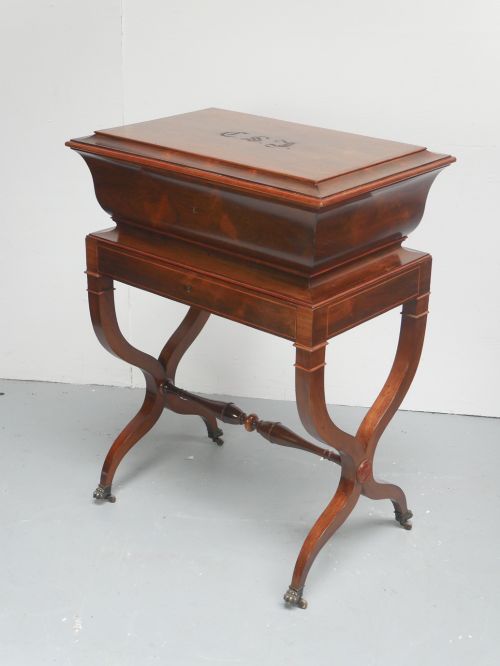
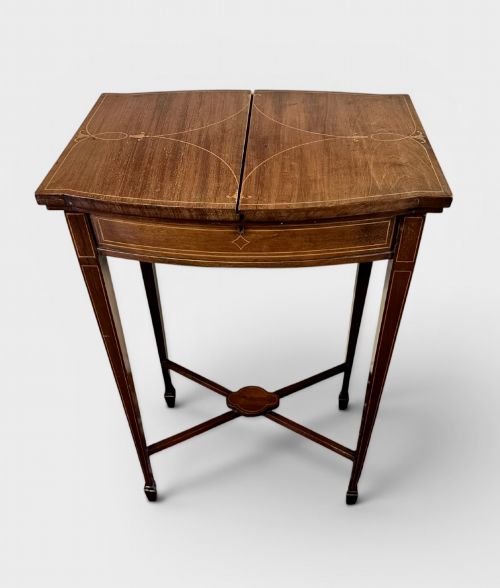
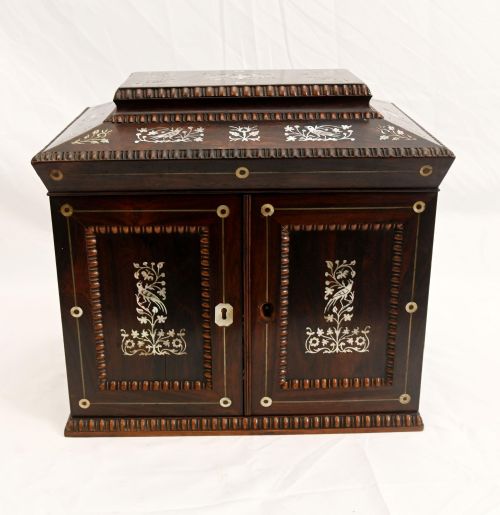
When you search for an inlaid workbox, you encounter pieces spanning the Georgian, Regency, Victorian and Edwardian eras, each reflecting the domestic tastes of its time. The most frequent forms on this page are tabletop boxes and lidded caskets alongside larger freestanding sewing tables and occasional tables with fitted interiors.
Materials range from rich dark timbers like rosewood and mahogany to figured burr walnut and exotic satinwood, frequently embellished with contrasting woods. These objects served as functional companions for ladies' needlework, correspondence and jewellery storage, often housing compartmentalised trays, pincushions and spool holders.
Materials and technique
Cabinet-makers constructed these pieces using solid ground timbers overlaid with decorative veneers including rosewood, walnut, satinwood, burr yew and mahogany. Tunbridge Ware examples display intricate micro-mosaic wood-block patterns, whilst others incorporate contrasting stringing of boxwood and ebony.
Surface ornamentation relied on precision craftsmanship, embedding mother-of-pearl, brass inlay, bone or tortoiseshell into the wood grain. Interiors often featured hand-pleated silk linings, lidded compartments and removable trays designed to organise sewing implements and small trinkets.
Listings feature workboxes constructed from rosewood, walnut, satinwood, burr yew and mahogany across the Regency, Victorian and Edwardian periods.
Judging the work
Quality rests in the crispness of the inlay work and the harmonious selection of wood grain, where superior examples exhibit seamless joints and perfectly flush decorative borders. The complexity of the interior fittings and the retention of original silk linings, trays and compartment lids elevate the standing of a piece.
The refinement of the timber preparation distinguishes the workshop execution, with finer items displaying deeply figured burr walnut or meticulously matched satinwood veneers. Structural integrity and the preservation of original escutcheons, hinges and working locks mark the distinction between standard production and exceptional cabinet-making.
Lesage
The Inlaid Workbox Glossary
- Tunbridge Ware
- A form of woodwork originating from Kent featuring mosaic designs built from thousands of tiny tinted wood blocks to create pictorial or geometric motifs.
- Worktable
- A freestanding piece of furniture incorporating a sewing box or drop bag beneath the tabletop for holding needlework materials.
- Sarcophagus shaped
- Describing a box with a stepped, sloping lid and flared base mirroring the architectural form of a classical stone coffin.
- Stringing
- Thin lines of contrasting wood inlay used to outline panels, drawers or box lids for decorative emphasis.
- Fitted interior
- An organised arrangement of compartments, trays, small lidded boxes and tool slots set inside the main container.
Inlaid Workbox: Frequently Asked Questions
What were inlaid workboxes used for originally?
These boxes served as personal receptacles for sewing equipment, embroidery threads, needles and small valuables used during domestic leisure hours. Ladies kept them on side tables or dressing chests to organise intricate needlework projects.
Many examples included specialised internal trays and pincushions designed to keep delicate tools secure. They functioned both as practical utility items and as decorative decorative accessories in the Victorian parlour.
How do I date an inlaid workbox?
Stylistic cues and wood choices help determine the period, such as the heavy rosewood and brass work of the Regency era versus the figured burr walnut common in the Victorian period. Edwardian pieces often favour lighter mahogany with delicate shell inlay.
Examining internal construction methods, paper linings and hinges provides further chronological evidence. Georgian items tend to feature simpler, rectilinear proportions compared to later revivalist designs.
How should I care for a wooden workbox?
Keep the wood away from direct sunlight and dramatic temperature fluctuations to prevent the delicate veneers and stringing from lifting. Occasional light application of appropriate furniture wax maintains the finish.
Avoid placing damp items inside original silk or paper-lined compartments. Gentle dusting with a soft dry cloth preserves the exterior polish and mother-of-pearl embellishments.