




Carved Red Lacquer Table
A carved red lacquer table brings a rich scarlet surface and deep relief carving into a room, offering both a striking focal point and a functional stage for display.
Carved Red Lacquer Table
A carved red lacquer table is a functional surface finished in layers of coloured resin, frequently displaying intricate low-relief ornamentation across the top and sides. The examples found here span the eighteenth century, nineteenth century, and early twentieth century, taking the form of console tables, altar tables, side tables, and low occasional pieces.
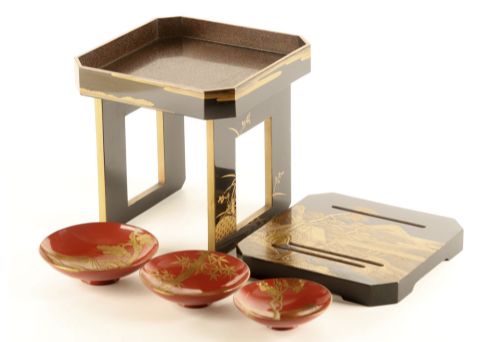
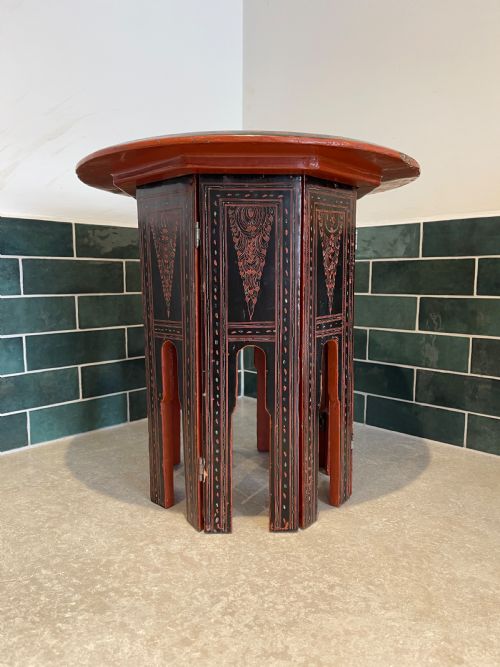
Most pieces encountered on this page originate from Chinese workshops, including Qing Dynasty and export pieces, alongside Japanese Taisho and Anglo-Burmese examples. Forms range from large demi-lune console tables to compact sake sets and low occasional tables designed for specific domestic uses.
Makers and regional artisans adapted traditional techniques across various periods, resulting in forms that function equally well as writing desks, plant stands, or side tables. The overarching character of these pieces relies upon the interplay between the vibrant red pigment and the substantial wood or lacquered wood foundations.
How they were made
Construction begins with a solid wood foundation, utilising elm or general lacquered wood, upon which numerous successive coats of resin are applied. This painstaking buildup of material creates a thick layer capable of sustaining deep, precise carving without compromising the structural integrity of the table.
Artisans carve directly into the hardened red layers while still pliable or through specialised cutting tools, revealing subtle depth within floral, geometric, or figural motifs. Certain pieces incorporate brass mounts or delicate gold leaf highlights to accentuate the primary red lacquer surface.
One unexpected little table even arrives paired with its own matching set of three miniature sake cups.
What varies in quality
Quality rests upon the depth and crispness of the carved relief work, where superior examples exhibit sharp, well-defined edges rather than soft or shallow incisions. The consistency of the underlying lacquer layers and the stability of the timber frame further distinguish finer pieces from simpler domestic variations.
The sophistication of the regional style and the fidelity to historical design periods, such as Kangxi period influences seen on export altars, dictate the standing of an individual table. Preservation of the original red pigment across centuries of use remains a central measure of a piece's integrity.
The Carved Red Lacquer Table Glossary
- Altar table
- A long, rectangular surface traditionally utilised for ceremonial display in Chinese interiors, characterised by upturned flange ends and sturdy joinery.
- Cinnabar lacquer
- A specific variety of red resin derived from mercuric sulphide, yielding the characteristic dense scarlet tone found on carved decorative objects.
- Demi-lune
- A half-moon shape designed to stand flat against a wall, frequently employed for console tables in period rooms.
- Qing Dynasty
- The final imperial dynasty of China, spanning from sixteen forty-four to nineteen twelve, associated with elaborate lacquer carving and export furniture.
- Occasional table
- A small, movable piece of furniture intended for light, flexible use within a reception room or bedroom.
Carved Red Lacquer Table: Frequently Asked Questions
Where should I place a red lacquer table?
These tables sit comfortably as accent pieces in hallways, living rooms, or studies where their vibrant colour can anchor a neutral space.
Because they provide practical surfaces for lamps, plants, or books, they function well in both prominent focal positions and quieter corners.
How do I care for lacquer furniture?
Maintain the surface by dusting gently with a soft, dry cloth and avoiding direct exposure to strong sunlight or excessive moisture.
Keeping the environment stable helps protect the wood and lacquer layers from natural expansion and contraction over time.
Are these tables suitable for daily use?
Most examples function reliably for general display and light writing tasks, provided proper care is taken to protect the surface from sharp impacts.
Using coasters or protective pads prevents accidental scratching of the delicate carved red finish.
How do I identify a Qing Dynasty piece?
Identification relies upon examining the specific structural joinery, the thickness of the lacquer buildup, and traditional decorative motifs associated with the period.
Comparison with documented export and regional styles helps confirm the probable geographic origin and approximate date of manufacture.