
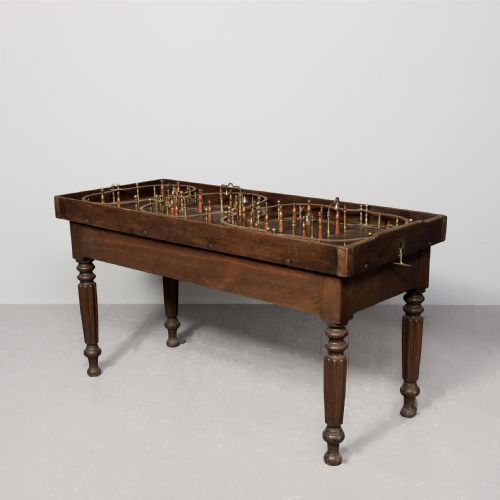
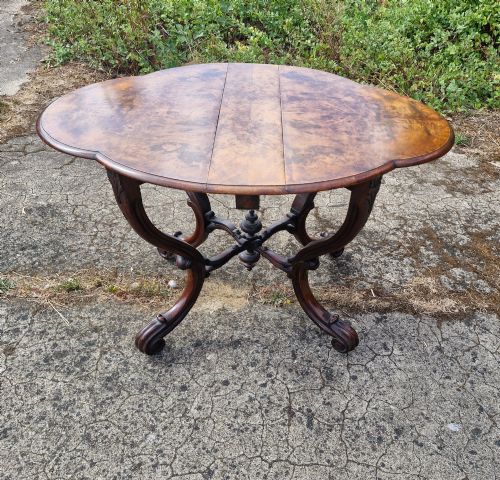
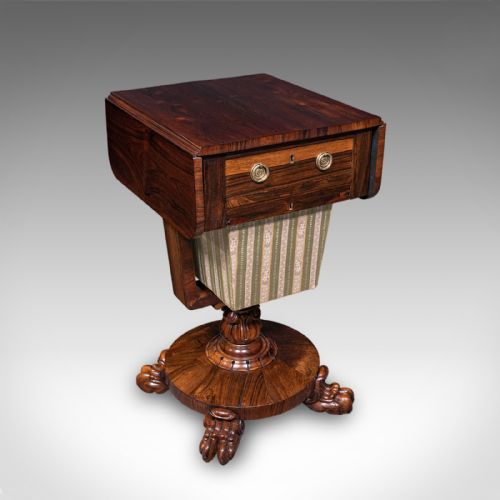
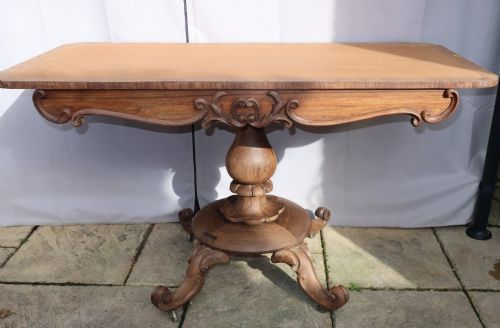
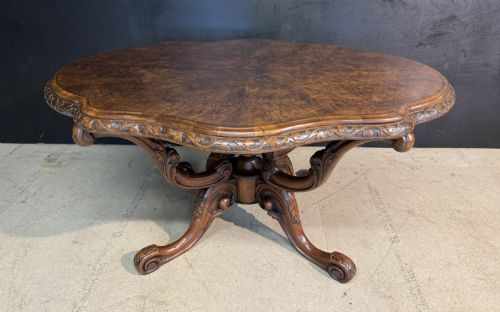
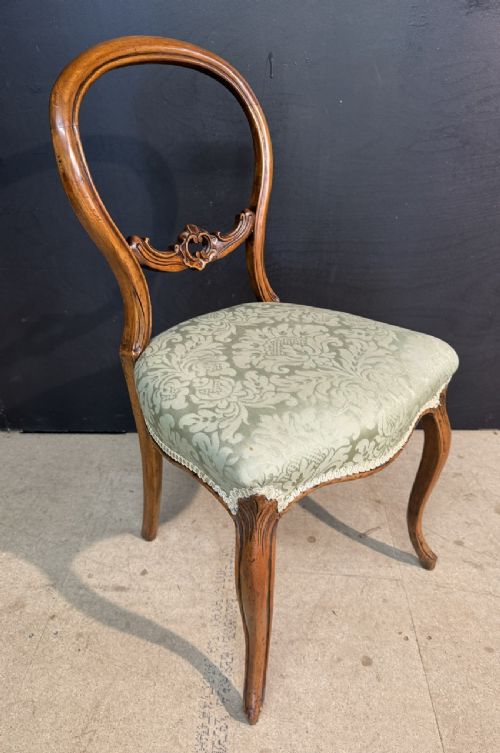
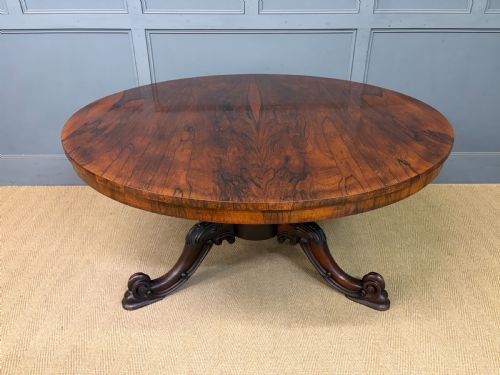
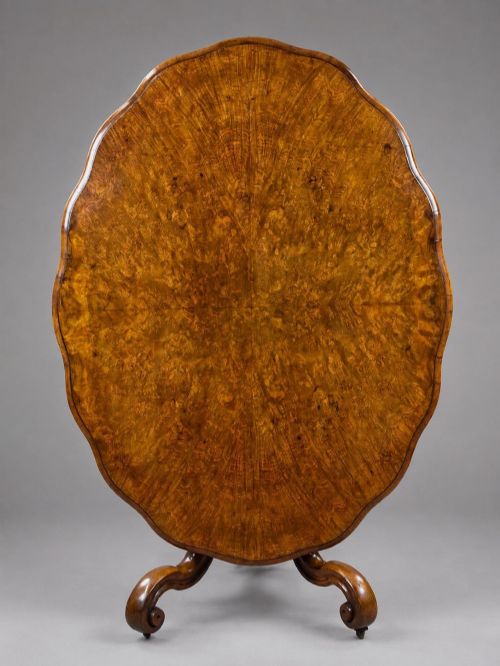
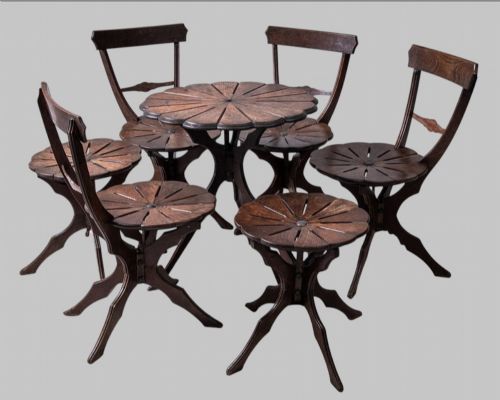
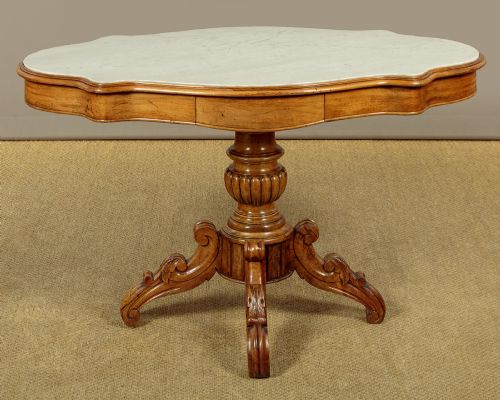
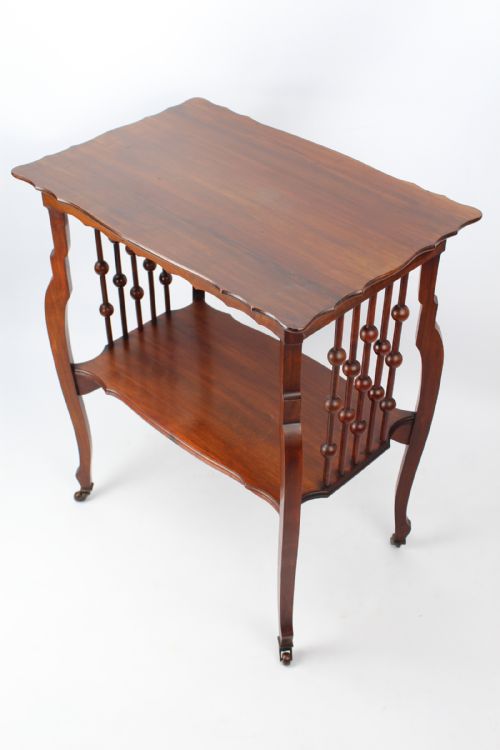

Carved Parlour Table
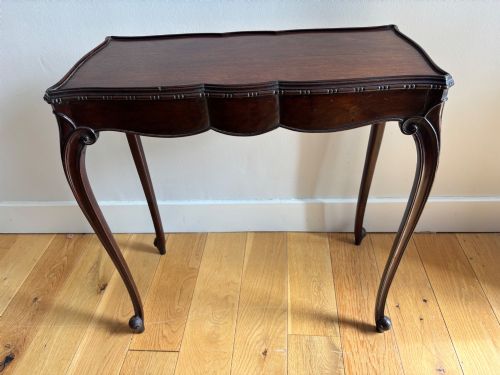
A carved parlour table brings the dark timber and turned legs of the nineteenth century into a modern room.
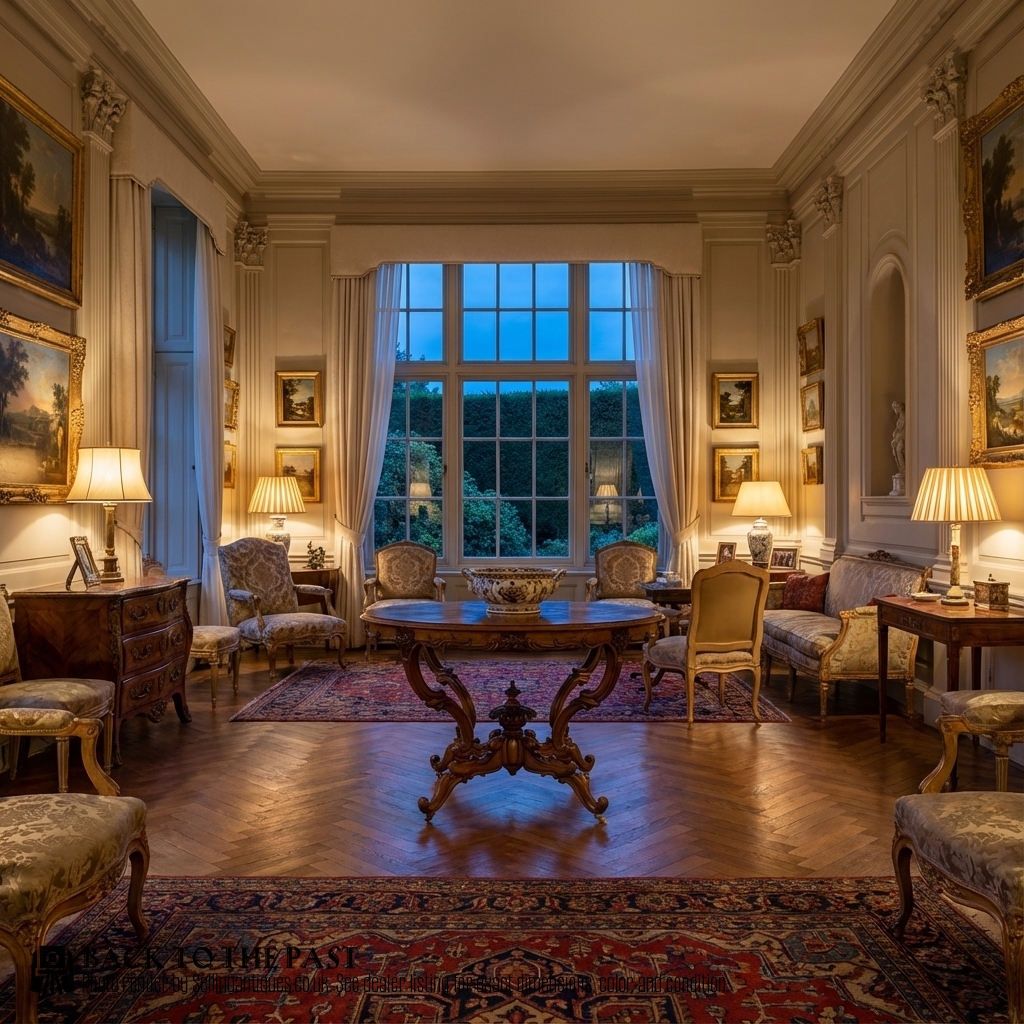
Carved Parlour Table
When you search for a carved parlour table, you are looking at nineteenth-century furniture designed for the formal sitting rooms of Victorian and Edwardian homes. These surfaces served various social domestic functions, ranging from tea and games to needlework and display.
The versions you are most likely to meet on this page belong to the Victorian and Edwardian eras, spanning from the mid nineteenth century to the early twentieth century. They appear in forms such as centre tables, occasional tables, loo tables and tilt-top drinking tables.
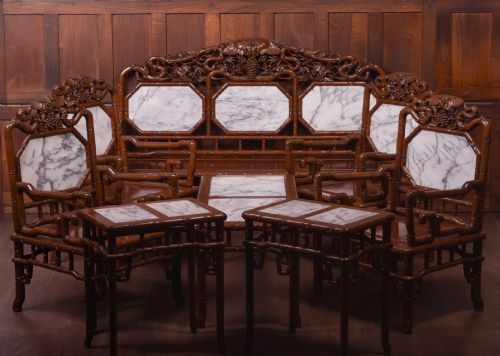
Originating predominantly from English workshops, these pieces also reflect international influences, including Chinese export pieces, French styling, and Anglo-Indian coromandel work. Walnut, rosewood and mahogany form the primary foundation of the surviving examples on this page.
How they were made
Cabinet makers utilised dense hardwoods like walnut, burr walnut, rosewood and mahogany as the structural base for these tables. These timbers were selected for their deep natural grain and ability to hold crisp hand-carved details.
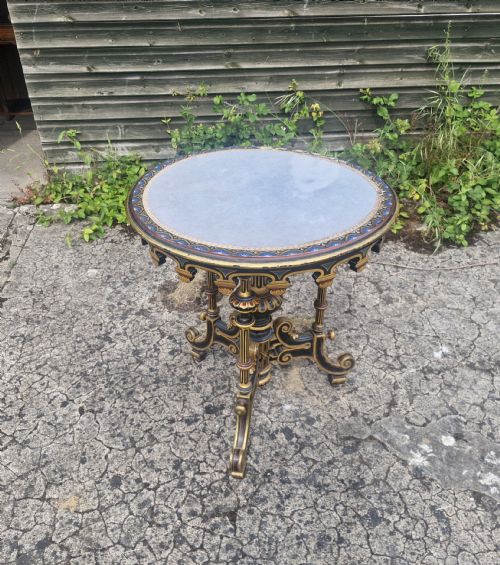
Surface ornamentation often involved marquetry inlay, where contrasting wood veneers were fitted together to form geometric or floral patterns. Marble tops also appeared on specific centre tables, providing a heavy, cool contrast to the timber frames.
Listings here span the Victorian, Edwardian, and Regency periods, utilising walnut, rosewood, mahogany, and oak.
What varies in quality
The depth and crispness of the hand-carving separate standard production from superior work. Sharp foliate details and well-defined mouldings show the hand of a skilled artisan rather than mechanical shaping.
The choice of timber veneer dictates the visual weight of the piece, with richly figured burr walnut and book-matched rosewood marking out the more ambitious commissions. Construction methods, such as stable pedestal bases and original tilt mechanisms, maintain the integrity of the table.
The Carved Parlour Table Glossary
- Centre table
- A freestanding table designed to be viewed from all sides rather than pushed against a wall. These anchor the middle of a room.
- Loo table
- A large nineteenth-century round or oval table with a tilting top, originally used for the card game loo. The top pivots vertically for storage when not in use.
- Marquetry inlay
- Decorative patterns formed by fitting contrasting pieces of wood veneer into a prepared ground. It requires immense precision from the cabinet maker.
- Occasional table
- A small, versatile table used for subsidiary purposes such as holding books or decorative items. They appeared in abundance during the Victorian and Edwardian periods.
- Tilt-top
- A hinged table top that can be turned upright to save space. This mechanism relies on a delicate catch and pivot block beneath the surface.
Carved Parlour Table: Frequently Asked Questions
What is a parlour table?
A parlour table is a nineteenth-century domestic surface used for entertaining guests, holding tea, or displaying ornamental objects in the principal reception room.
These pieces reflect the social rituals of Victorian homes, where furniture was arranged to facilitate conversation and leisure activities.
How do I use one today?
These tables adapt easily to modern rooms as coffee tables, lamp tables, or display surfaces in a hallway or sitting room.
Their rich timbers and turned legs add warmth and historic character to contemporary interior schemes.
What is a loo table?
A loo table is a large round or oval table featuring a tilting top mechanism. They gained popularity for nineteenth-century card games.
When not in use, the top tilts vertically so the table can rest flat against a wall to save floor space.
How do I tell Victorian from Edwardian?
Victorian tables tend to use darker, heavier timbers like rosewood and burr walnut with deep carving and robust pedestal bases. Edwardian examples often feature lighter mahogany and refined inlay work inspired by earlier eighteenth-century designs.
Proportions became lighter and airier as interior tastes shifted toward the end of the nineteenth century.