
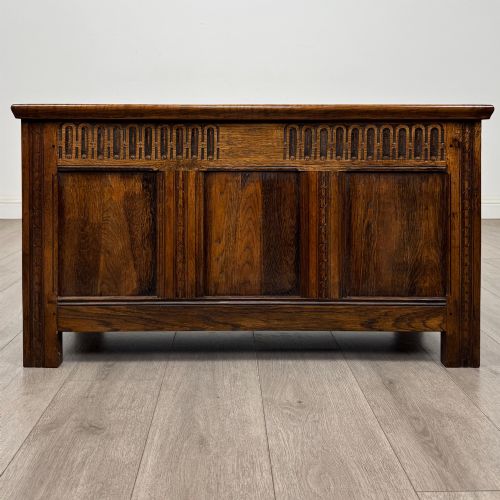
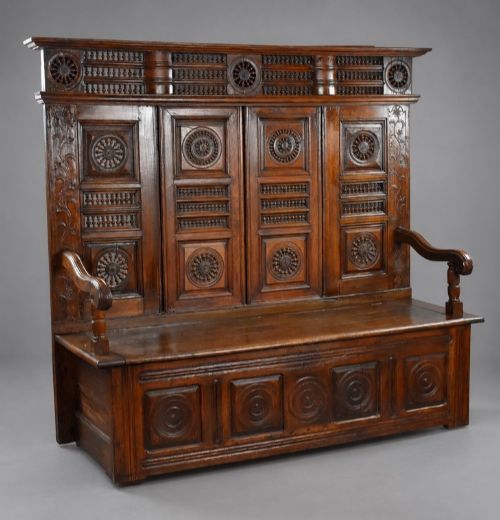
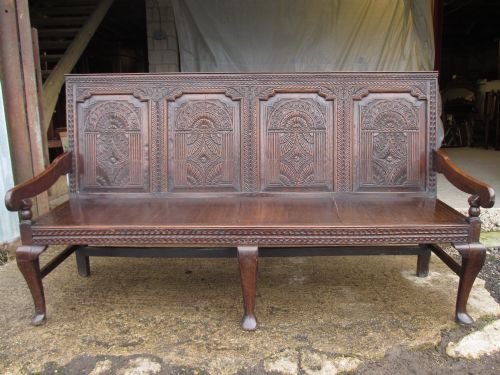
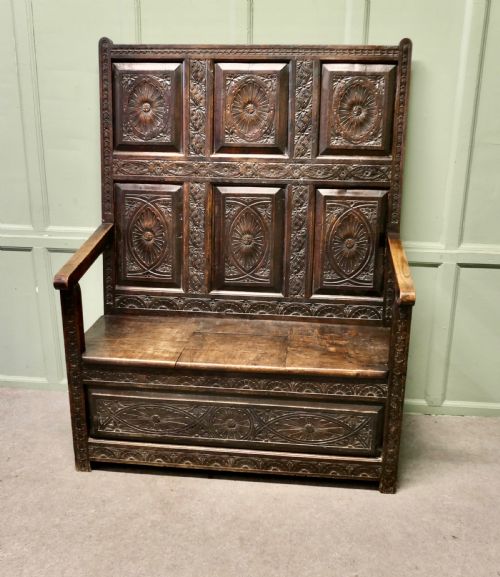
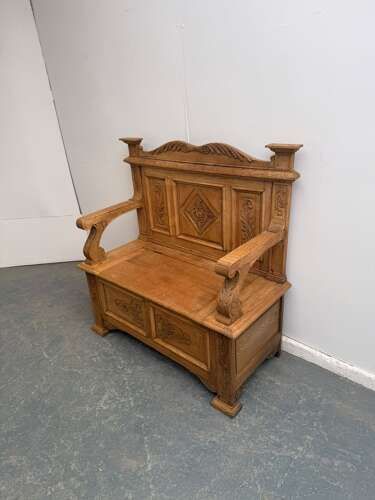
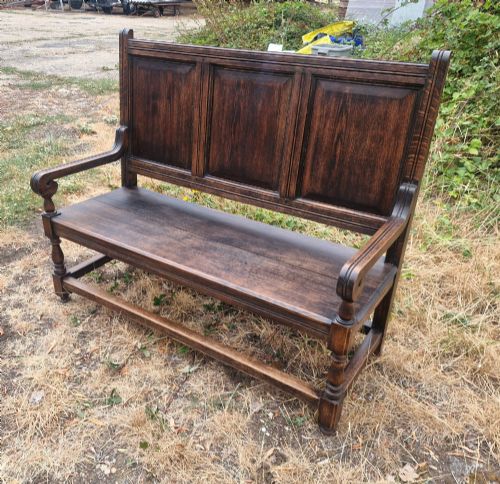
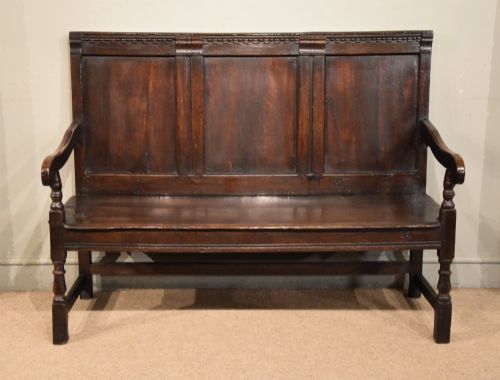
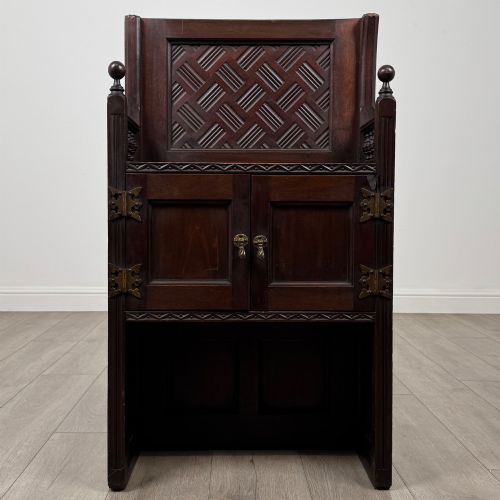


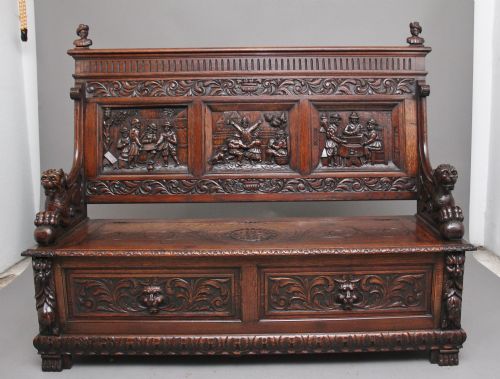

Carved Panel Wooden Bench
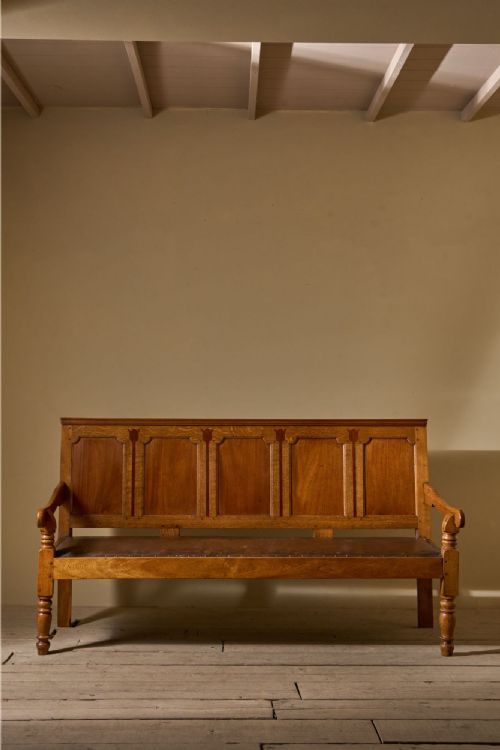
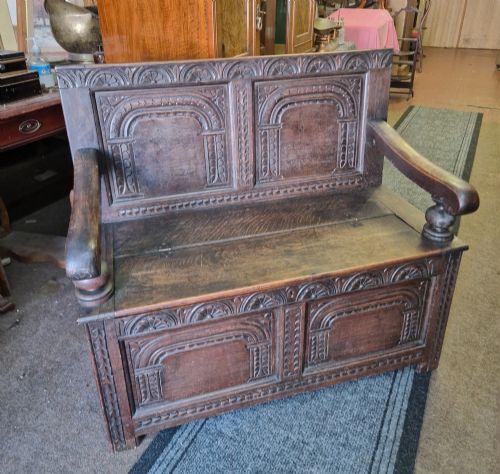
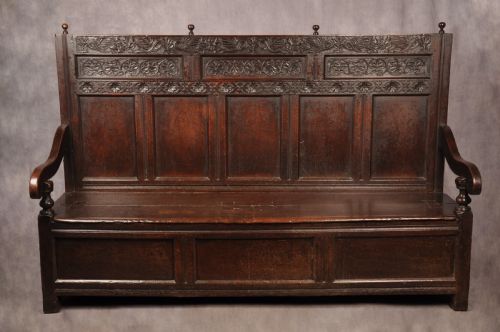
A carved panel wooden bench offers robust seating and storage, bringing historic character into a hallway or living space.
Carved Panel Wooden Bench
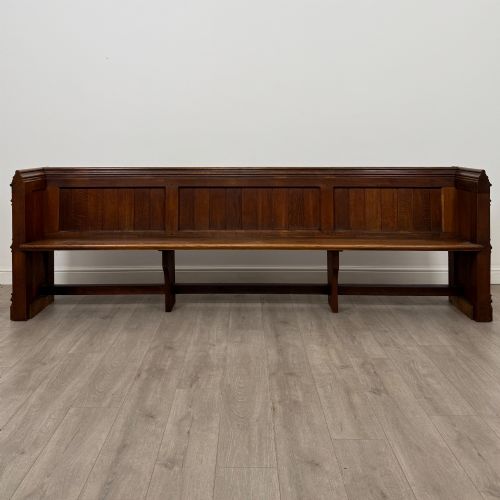
When you search for a carved panel wooden bench, you encounter sturdy seating forms that encompass settles, hall benches, and box settles from various historical eras. These pieces typically serve utility in entrance halls and living rooms, combining high backs or storage boxes with traditional craftsmanship.
You are most likely to meet oak examples originating from the seventeenth, eighteenth, and nineteenth centuries on this page. Common configurations include high back box settles, panelled hall seats, and smaller proportions designed for domestic interiors.
How they were made
Maker-joiners constructed these benches primarily using solid timber such as oak, fruitwood, and pine, frequently reinforced with iron or brass fixings. The panels feature hand-carved ornamentation, geometric motifs, or tulip decoration executed with chisels and gouges.
Finishing techniques rely on traditional waxes and polish to protect the timber while highlighting the grain and the depth of the carved panels. Structural integrity stems from pegged mortise and tenon joints rather than modern mechanical fasteners.
Design styles range from seventeenth-century vernacular and Georgian through to Victorian Gothic and twentieth-century revivals.
What varies in quality
The sophistication and depth of the hand carving distinguish finer examples from simpler provincial work, with crisp detailing reflecting superior artisan skill. The choice of primary timber also dictates quality, as dense, well-figured oak commands greater presence than utilitarian pine.
Proportion and originality of components drive value, particularly where integrated box seats, high backs, and original panelwork remain intact. Pieces retaining their structural stability without extensive timber replacement demonstrate superior preservation.
The Carved Panel Wooden Bench Glossary
- Settle
- A wooden bench with a high back, solid arms, and often a box base for storage. This form kept draughts away from the sitter in older homes.
- Box settle
- A variant of the settle featuring a compartment beneath the seat accessed by lifting the lid or via a hinged panel. It served dual purposes for seating and household storage.
- Panelling
- woodwork composed of flat or carved wooden sheets fitted within a framework of stiles and rails. This construction method accommodated the natural expansion and contraction of timber.
- Jacobean Revival
- A nineteenth-century style imitating seventeenth-century British furniture design. It typically incorporates heavy turned legs, dark polish, and deep geometric carving.
Carved Panel Wooden Bench: Frequently Asked Questions
Where were settles placed in historic homes?
These benches traditionally stood near hearths in the main living rooms of houses to block cold draughts from sweeping across the stone or timber floors.
Over time, homeowners moved them into hallways and entranceways to provide convenient seating for removing coats and boots.
How do I distinguish an eighteenth-century settle?
Eighteenth-century examples often display regional variations in carving style, such as tulip motifs or simpler panel arrangements reflecting local vernacular traditions.
The timber patination on older pieces develops a deep, lustrous surface through generations of handling and waxing.
What is the difference between a bench and a settle?
A standard bench generally provides open seating without significant back support or enclosed storage compartments underneath.
A settle incorporates a tall solid back and wings designed to trap warmth from a nearby fire.
Can I use a hall bench daily?
These solid wooden structures handle everyday use comfortably due to their robust mortise and tenon construction.
Placing them in hallways or kitchens provides functional seating alongside historical character.