
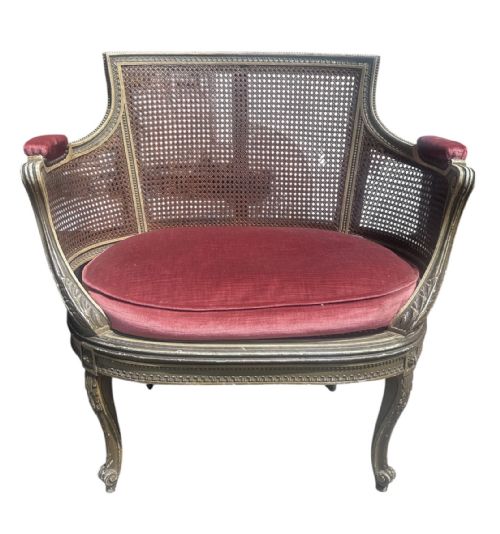
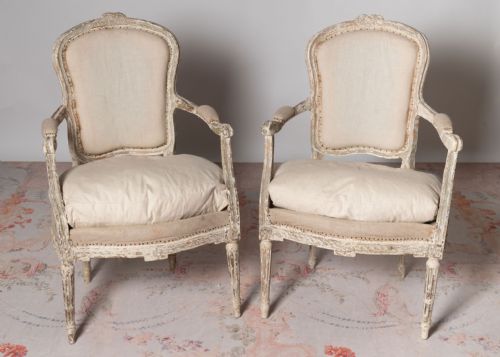


Carved Painted Fauteuil
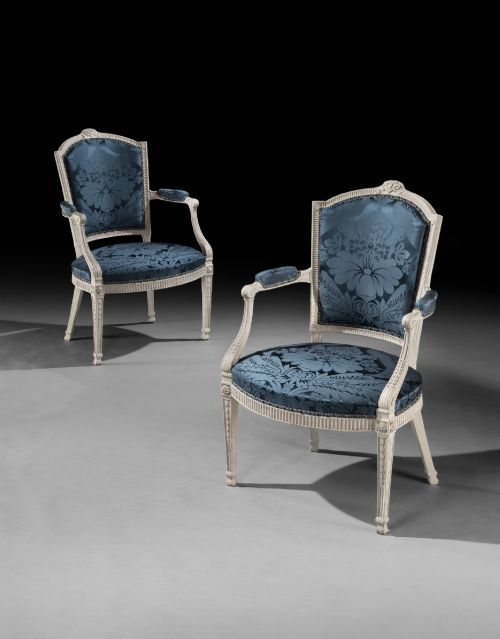
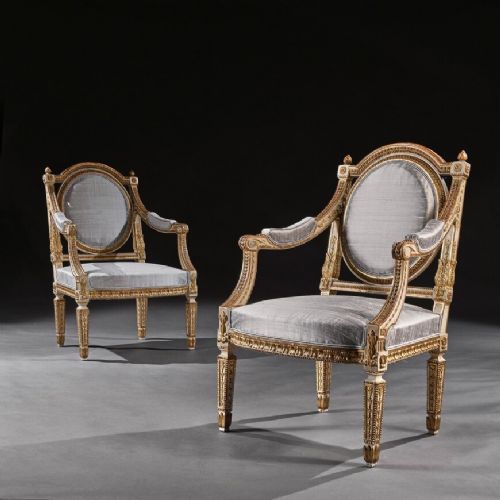
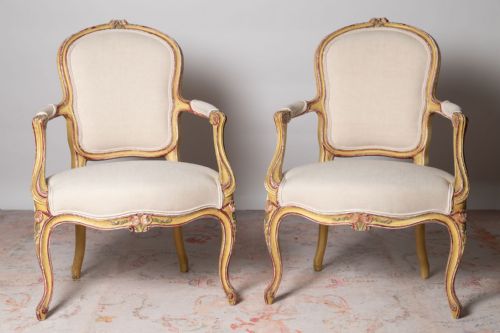
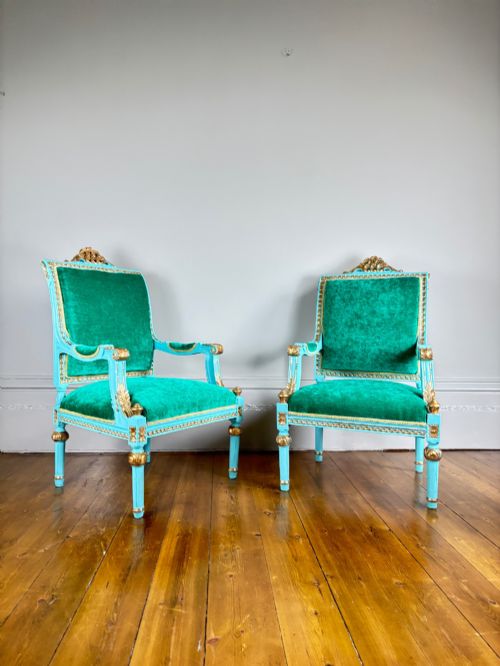
A carved painted fauteuil brings French salon elegance to a room through exposed wooden frames finished in pigment.
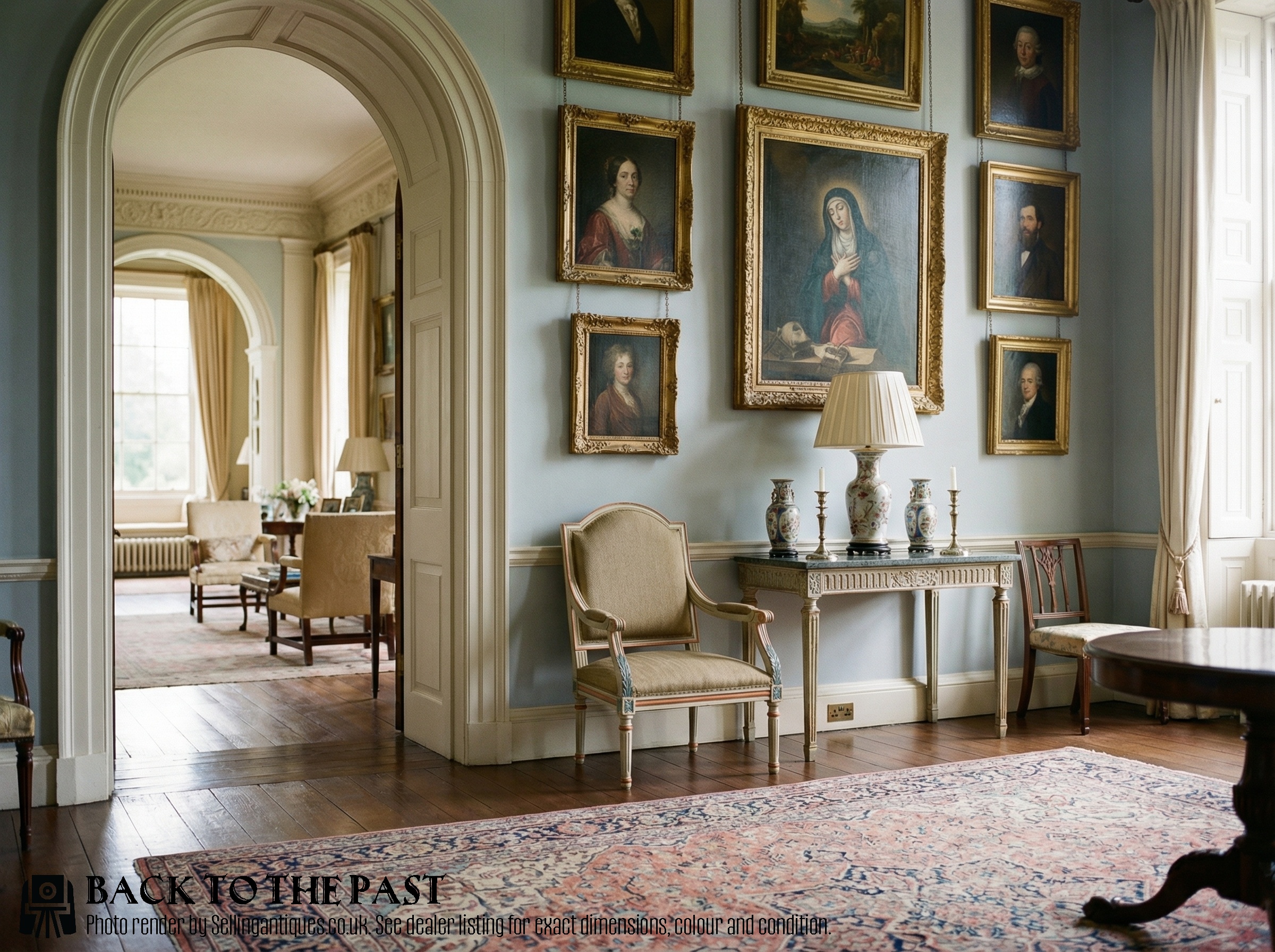
Carved Painted Fauteuil
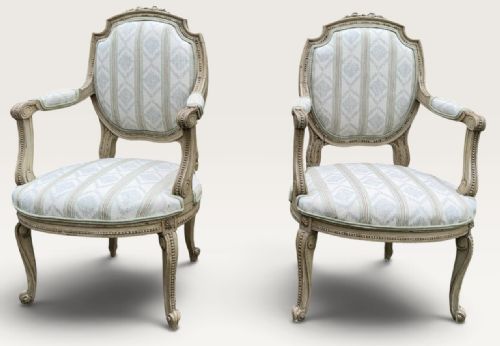
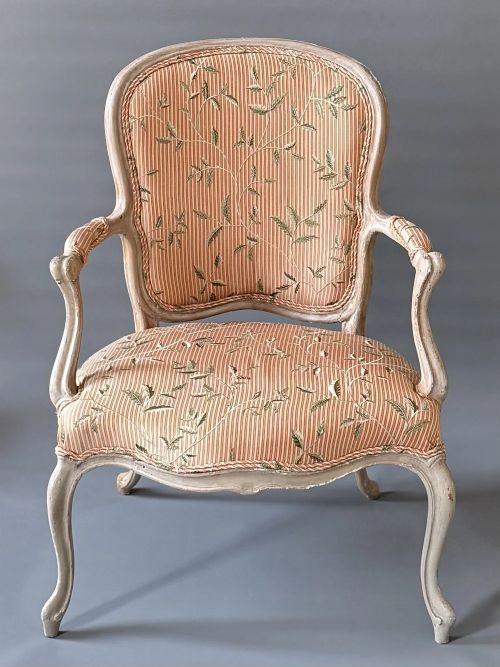
A carved painted fauteuil is an open-arm upholstered seat originating from continental traditions, most frequently seen here in French provincial and revival forms from the eighteenth to the early twentieth century. Buyers seeking this phrase encounter open armchairs and occasional settees constructed with shaped wooden frames designed for formal reception rooms.
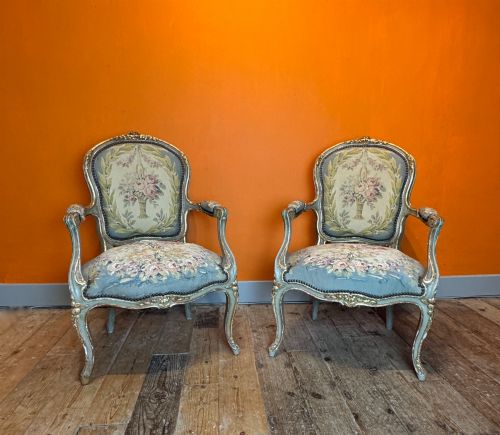
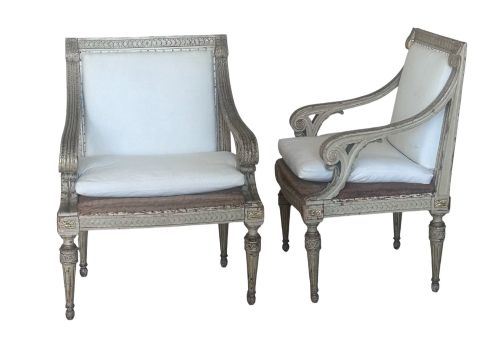
The selection here encompasses eighteenth-century originals alongside nineteenth-century revival pieces executed in Louis XV and Louis XVI tastes. Neoclassical designs with straight fluted legs sit alongside curving rococo frames bearing original or later painted surfaces.
How they were made
Frames are built primarily from beech or walnut, shaped through carving before receiving coats of paint, gesso, or parcel gilt detailing. Artisans applied pigment directly to the wood or layered it over preparation layers to achieve the matte finishes seen on period seating.
Upholstery methods span traditional webbing and stuffing finished with period textiles such as tapestry, needlework, needlepoint panels, linen, and velvet. Caned panels also appear within chair backs, providing a lighter texture to the seated form.
Children join the salon elite through miniature chairs scaled down for youthful nobility.
What varies in quality
The crispness of the hand-carved ornamentation defines the upper tier of these chairs, where floral motifs and scrollwork retain sharp relief beneath the pigment. Softer carving and blurred detail indicate production geared towards decorative volume rather than bespoke joinery.
The integrity of the painted surface significantly alters character, distinguishing pieces retaining original layered paint from those subject to later refinishing. Original finishes display a natural patina and integration with the underlying gesso that modern repainting obscures.
The Carved Painted Fauteuil Glossary
- Fauteuil
- An open-armed upholstered armchair with an exposed wooden frame. This form developed in France during the seventeenth century for domestic comfort.
- Gesso
- A plaster-like mixture applied to wood frames to provide a smooth base for gilding or painting. It allows intricate carved details to hold sharp definition.
- Parcel Gilt
- A surface decoration where specific carved elements receive a thin application of gold leaf while the rest of the frame remains painted. This technique highlights structural details.
- Caning
- Woven rattan or split cane used to form breathable panels within chair backs or seats. It introduces lighter textural contrast to solid wooden frames.
- Needlepoint
- Hand-stitched embroidery executed on canvas mesh, commonly utilised for period seat and back panels. These textile elements often feature floral or figurative pictorial scenes.
Carved Painted Fauteuil: Frequently Asked Questions
What is a carved painted fauteuil?
A carved painted fauteuil is an open-armed chair featuring a visible wooden frame finished with paint and upholstered armrests. These seats functioned as portable, decorative furniture in period salons.
Today, they serve as accent seating in living rooms or bedrooms, combining architectural woodwork with soft textiles.
How do I date a painted fauteuil?
Dating relies on stylistic markers within the woodwork, such as the transition from curved rococo lines to straight neoclassical fluted legs. Tool marks, joinery methods, and the composition of the paint layer provide further indication of age.
Eighty-century pieces display hand-cut joinery and period textiles, while revival pieces from the nineteenth and twentieth centuries utilise later industrial manufacturing techniques.
Where should I place a fauteuil?
These chairs suit drawing rooms, reading corners, or bedrooms where their decorative frames remain visible from multiple angles. Because the arms are open, they occupy less visual space than fully upholstered armchairs.
Pairing two matching armchairs creates a balanced seating arrangement opposite a sofa or fireplace.
How do I care for original paint?
Original painted surfaces require gentle dusting with a dry microfibre cloth to prevent accumulation in carved crevices. Avoid liquid cleaners and modern polishes, which can soften historic pigment layers.
Keep wooden frames away from direct sunlight and heat sources to prevent the gesso and paint from cracking.