





Carved Oak Wall Barometer
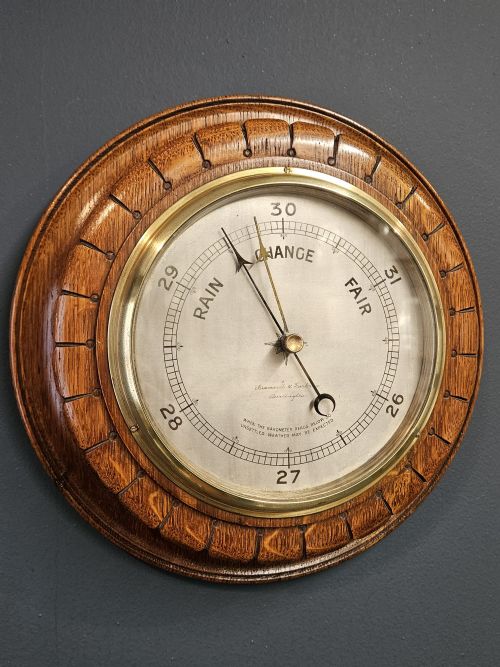
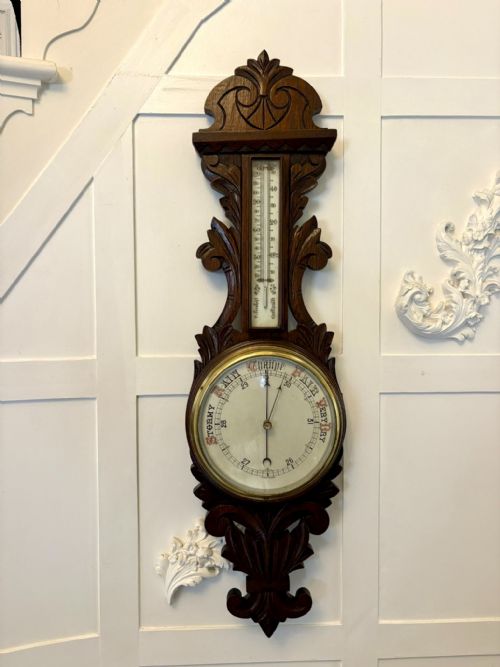
A carved oak wall barometer brings domestic weather tracking into the hall or study with the rich texture of carved timber.
Carved Oak Wall Barometer
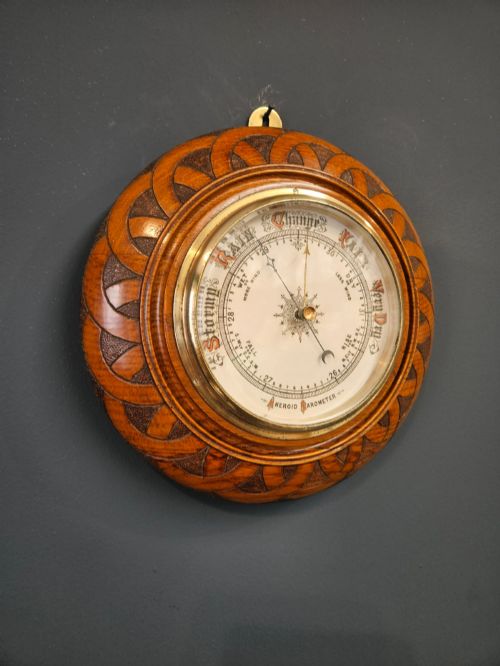
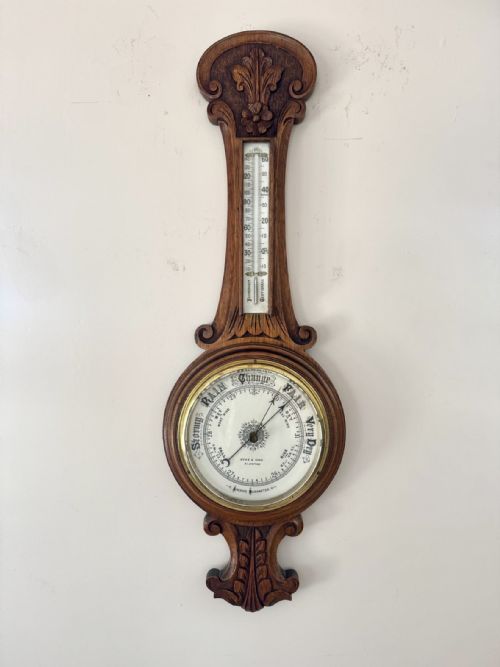
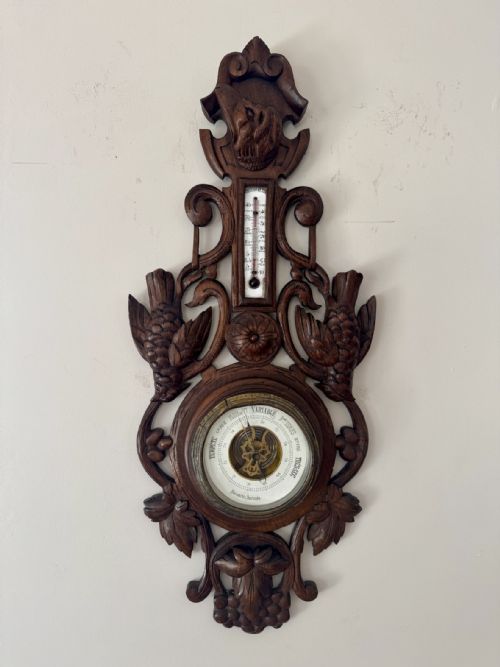
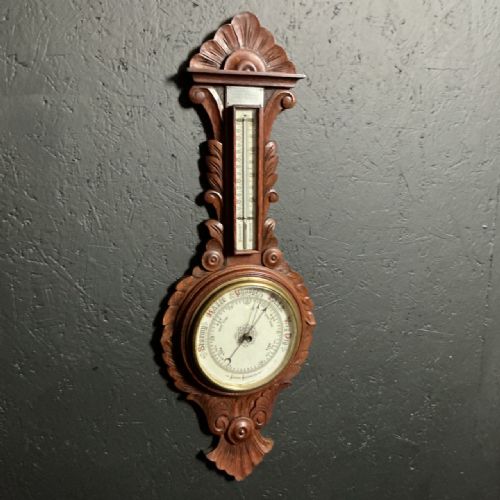
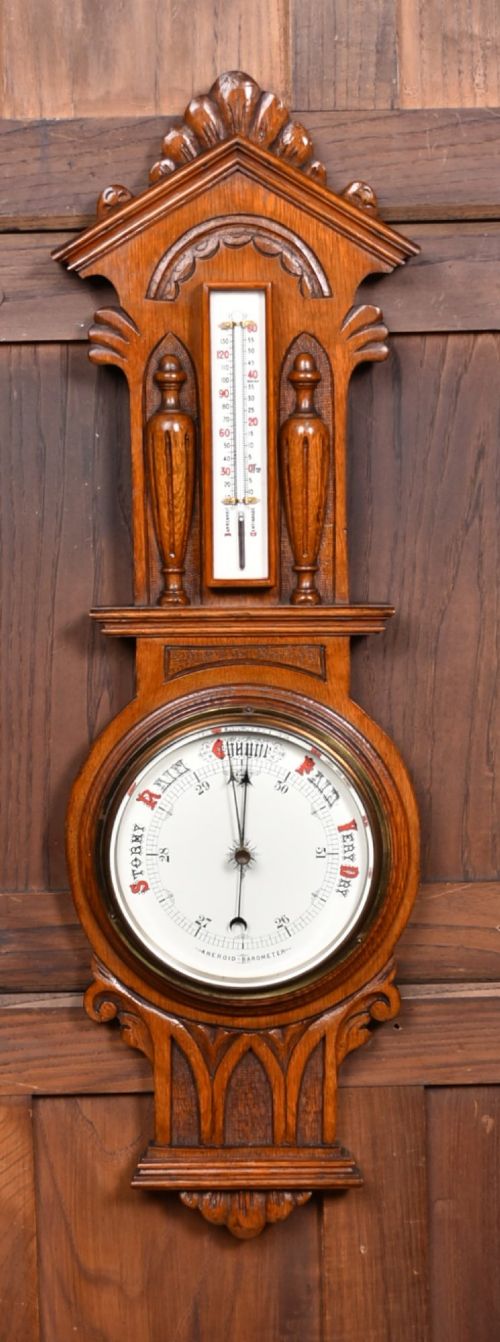
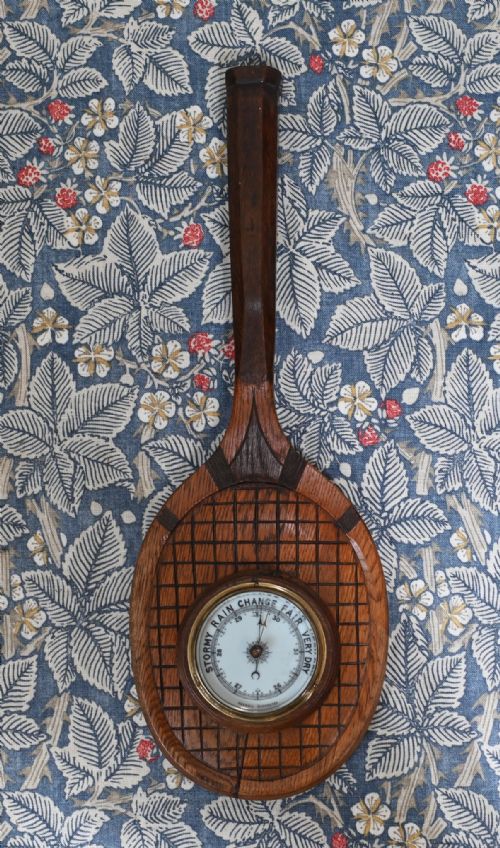
A carved oak wall barometer hangs in hallways and studies to measure atmospheric pressure, combining practical weather tracking with decorative woodwork. The pieces seen on this page emerge primarily from the Victorian and Edwardian eras, alongside Black Forest and Art Nouveau examples.
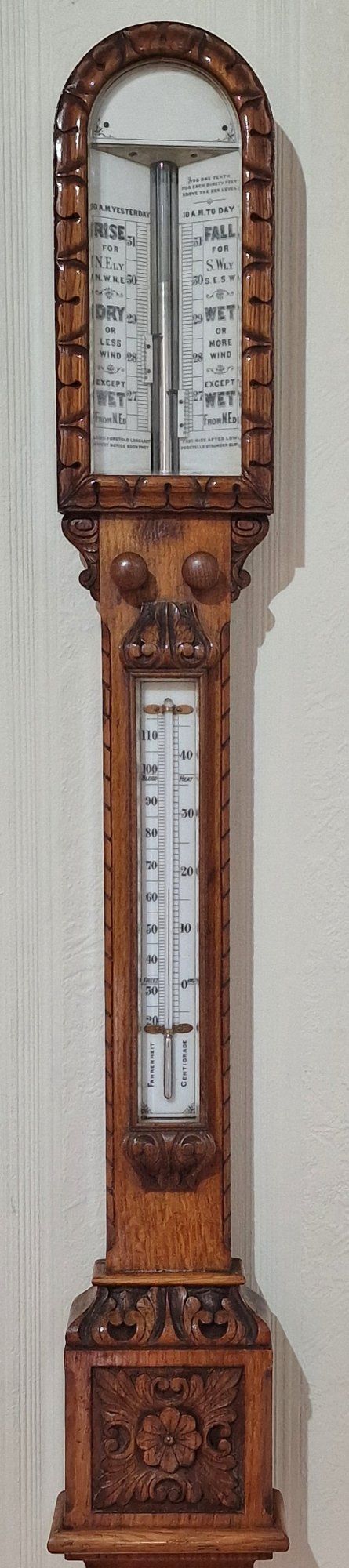
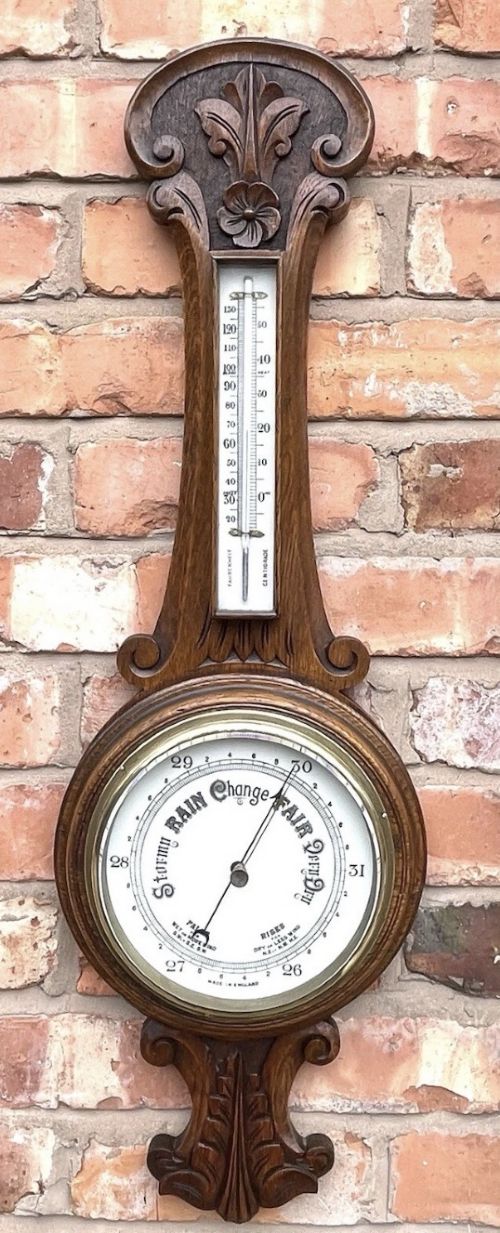
Most items take the banjo or stick format, frequently housing a thermometer alongside the main dial. Cases feature geometric designs, turned details, or elaborate naturalistic carvings depicting birds and foliage.
Origins span English workshops and continental European centres, with domestic pieces often bearing the signatures of known opticians and makers.
Materials and Construction
Makers utilised solid oak, walnut, and carved wood for the cases, housing delicate paper, porcelain, or ceramic dials behind protective glass. Internal brass mechanisms drove the aneroid movements, while traditional stick barometers relied on mercury-filled glass columns.
Carvers shaped the timber by hand, applying deep relief work for foliage and animal motifs on Black Forest and Victorian variants. Silvered brass dials received crisp engraved lettering to mark barometric pressure changes clearly.
Carved Oak Wall Barometer Retail Price Guide 2026
Typical asking prices for carved oak wall barometer among the pieces listed under this phrase on Sellingantiques today, from the lower quarter to the upper quarter. They describe what is for sale here now, not the wider market.
The selection spans the nineteenth century through the Edwardian period, touching on Victorian Gothic Revival and Art Nouveau styles.
Distinctions in Quality
Superior examples display crisp, deep relief carving in the timber without softening or damage to the delicate motifs of birds and leaves. The complexity of the case design, from simple geometric oak boxes to elaborate banjo frames, dictates the visual weight of the piece.
The presence of a signed dial from a recognised maker elevates an instrument above unmarked commercial production. Intact mercury tubes or well-preserved aneroid movements with clear silvered dials maintain both historical integrity and decorative appeal.
Hyde & Sons Sleaford·Bramwell & Harbron of Darlington·Negretti & Zambra·W Watson & Sons·J Hughes London·Maple & Co
The Carved Oak Wall Barometer Glossary
- Aneroid barometer
- A barometer that uses a small, flexible metal box called an aneroid cell to measure atmospheric pressure without liquid. This compact mechanism allowed makers to create the popular banjo and wall-hanging shapes found in domestic interiors.
- Stick barometer
- A tall, vertical instrument containing a glass tube filled with mercury to measure atmospheric pressure. These pieces rely on a visible column of liquid and often feature a vernier scale for precise reading.
- Banjo barometer
- A wall barometer shaped like a banjo, featuring a circular dial at the top for pressure and a longer lower body that frequently houses a thermometer. This symmetrical silhouette dominated Victorian and Edwardian hallway decoration.
- Black Forest
- A regional style of woodwork originating from the mountainous region of Germany, celebrated for deeply carved animal and botanical motifs. Pieces in this style often incorporate realistic birds and trailing foliage into the oak frame.
- Silvered dial
- A brass clock or barometer face treated with a silver solution to create a matte metallic finish. The markings and numbers are then engraved and filled with dark pigment for legibility.
Carved Oak Wall Barometer: Frequently Asked Questions
How do I read a barometer?
The pointer indicates the current atmospheric pressure, with rising numbers generally predicting fair weather and falling numbers signalling approaching rain. Setting the manual indicator needle over the current reading allows you to track whether the pressure is moving up or down.
Historical instruments often include descriptive weather words like 'Rain', 'Change', and 'Fair' inscribed around the dial face. Comparing the needle position to these traditional markers provides a quick glance at local atmospheric trends.
Where should I hang a wall barometer?
Choose an interior wall away from direct sunlight, radiators, and draughty doors to protect the wooden case and ensure accurate internal readings. Hallways and studies provide stable ambient temperatures and offer a traditional setting for viewing the instrument.
Ensure the wall fixing is secure, particularly with heavier carved oak and mercury-filled stick barometers. Hanging the piece at eye level makes both the weather dial and the accompanying thermometer easy to consult daily.
Are these barometers still accurate?
Many aneroid and mercury barometers retain their mechanical sensitivity and continue to respond to local air pressure changes effectively. Minor calibration adjustments can sometimes be made via a screw on the back if the reading drifts from known local meteorological data.
Instruments with compromised internal capsules or damaged glass tubes may function primarily as decorative wall art rather than reliable weather forecasters. Consulting a specialist restorer can help determine if a non-responsive movement is repairable.
How do I care for carved oak cases?
Dust the carved wooden frame regularly with a soft, dry brush to prevent dirt settling in the deep recesses of the leaf and bird motifs. Avoid using liquid polishes or modern chemical sprays that can build up a dull residue on the aged timber surface.
Applying a traditional beeswax sparingly once or twice a year helps nourish the oak and maintain its natural lustre. Keep the room humidity stable to prevent the timber from warping or splitting over time.