




Carved Oak Table Chair
A carved oak table chair brings heavy timber presence and multi-purpose ingenuity into a room, offering the dual utility of a seat and a surface.
Carved Oak Table Chair
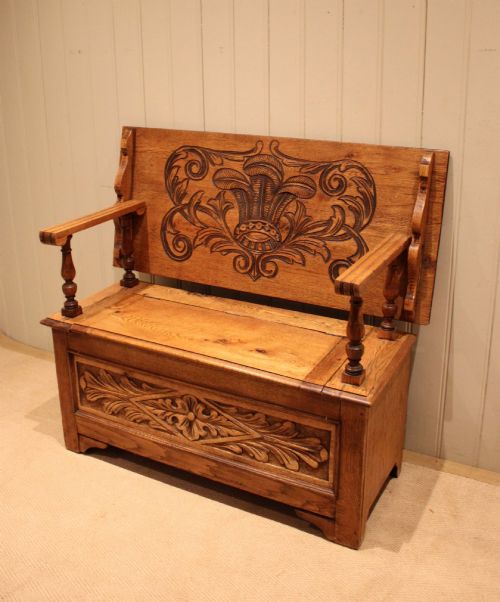
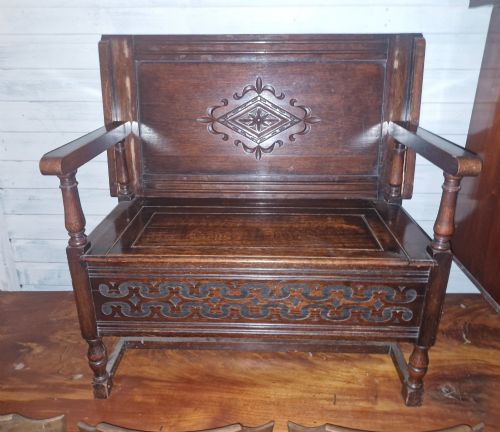
A carved oak table chair typically manifests as a monks bench, a convertible piece that transforms from a seat into a table via a fold-over back. These dual-purpose items range from small hall seats with lift-up storage to substantial armchairs designed for versatile daily use.
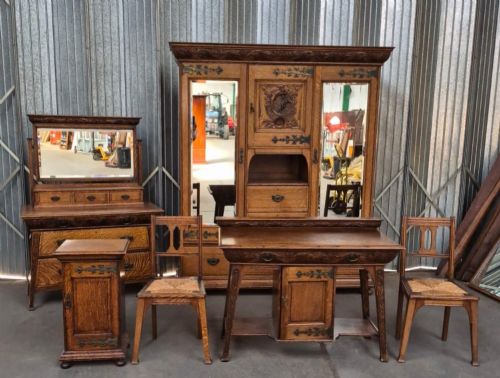
The selections span distinct historical revivals, most notably Jacobean, Elizabethan and Charles II styles, alongside early twentieth-century interpretations from the nineteen-tens and nineteen-twenties. Buyers encounter pieces equipped with drawers, hinged lids, and panelled construction that echo seventeenth-century joinery.
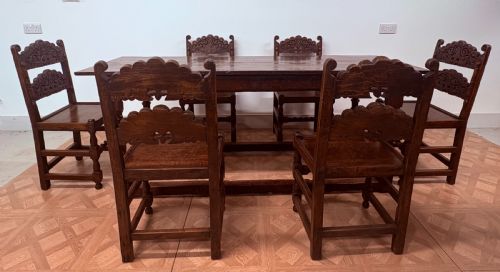
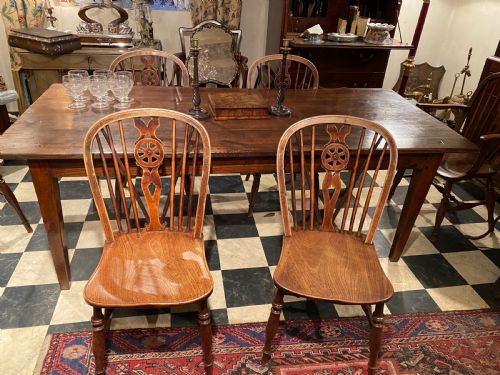
Beyond the standard monks bench, related forms appear across the inventory, including refectory dining sets with high-back chairs, hall benches, and modular parlour suites. Solid oak forms the primary structural foundation for these heavy domestic furnishings.
How they were made
Makers utilised solid oak, sometimes specified as golden or dark oak, relying on its dense grain for durability and weight. Structural joints frequently employed traditional pegged mortise and tenon construction to withstand the mechanical stress of folding tabletops and lifting seats.
Carving serves as the principal decorative technique, featuring relief patterns executed across backrests, panels, and friezes. Secondary materials such as iron and brass hardware provide functional hinging and support, while rush, cane, fabric, and upholstery appear on associated seating components.
Monks benches let you convert your hallway seat into a makeshift card table simply by giving the back a friendly shove.
What varies in quality
The distinction between tiers rests upon the crispness and depth of the timber carving, alongside the structural integrity of the pivoting mechanisms. Pieces executed with hand-carved relief work and well-fitted draw leaves or tilting backs represent superior craftsmanship compared to simpler, later revival variants.
Timber selection dictates the overall presence, with figured or pollard oak exhibiting superior grain patterns over plain utility boards. The integration of secondary elements like functioning iron hinges, fitted drawers, and intact upholstery further separates standard production from finer workshop output.
Waring
The Carved Oak Table Chair Glossary
- Monks bench
- A dual-purpose seating item featuring a hinged back that folds flat over the arms to form a table surface. This form frequently incorporates a storage compartment beneath the seat.
- Draw leaf table
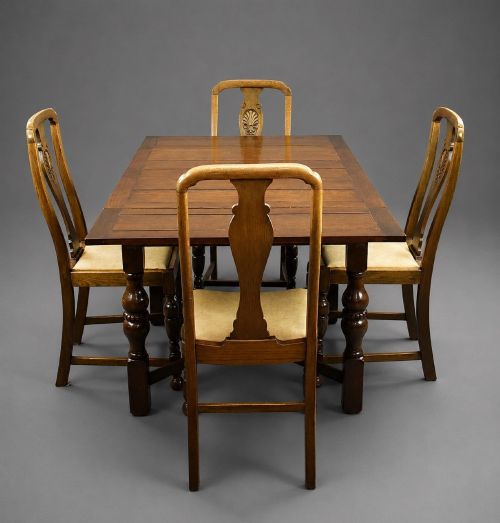
- A dining table equipped with sliding extension leaves stored beneath the main top that pull out to lengthen the surface. This mechanism allows the table to expand without removing the central top.
- Refectory table
- A long, narrow dining table traditionally used in communal halls and supported by substantial legs connected by floor-level stretchers. The evidence shows these paired with matching carved dining chairs.
- Jacobean Revival
- A nineteenth and twentieth-century style imitating the geometric mouldings, heavy turned legs, and strapwork carving of early seventeenth-century English furniture. Pieces in this style utilise dark or golden oak to replicate older joinery.
- Pollard oak
- Timber sourced from trees that have been pollarded, producing a heavily knotted and highly figured grain pattern. This decorative wood appears on high-end revival dining furniture.
Carved Oak Table Chair: Frequently Asked Questions
What is a monks bench used for?
A monks bench serves as a dual-purpose item of furniture that functions as a high-backed seat or chair during the day. The backrest pivots downward to rest upon the arms, creating a flat table surface for reading or dining.
Many examples also include a lift-up seat or an integrated drawer beneath the base for storing household goods. This space-saving design made them practical additions to hallways and smaller rooms.
How do I identify a revival piece?
Revival pieces are identified by their revival style labels, such as Jacobean, Elizabethan, or Charles II, combined with twentieth-century manufacturing indicators. The inventory contains items explicitly dated from the Edwardian era through the nineteen-thirties that imitate seventeenth-century aesthetics.
Examine the timber condition, tool marks, and hardware fixings to distinguish between an authentic period piece and a later interpretation. Makers during the nineteenth and twentieth centuries frequently utilised solid oak and deep carving to emulate older forms.
Are these chairs comfortable for daily dining?
Dining chairs associated with these sets typically feature high wooden backs with carved panels or upholstered inserts. Their comfort depends on whether the specific set includes padding, fabric, or rush seating.
While refectory sets are built for communal dining, individual table chairs vary from rigid solid oak backs to cushioned versions. Buyers often pair these sturdy chairs with refectory or draw-leaf tables for a matched dining room setup.
What woods are used in these pieces?
Solid oak serves as the predominant material across almost all listings, occasionally specified as golden oak, dark oak, or pollard oak. This dense hardwood provides the necessary structural strength for heavy tables and convertible benches.
Secondary materials are integrated selectively, including brass and iron for functional hardware, alongside cane, rush, and fabric for upholstery. The heavy reliance on oak ensures a consistent appearance throughout the dining sets and hall seats.