
Carved Oak Study Desk
A carved oak study desk brings substance and utility to a room, offering robust construction and rich grain.
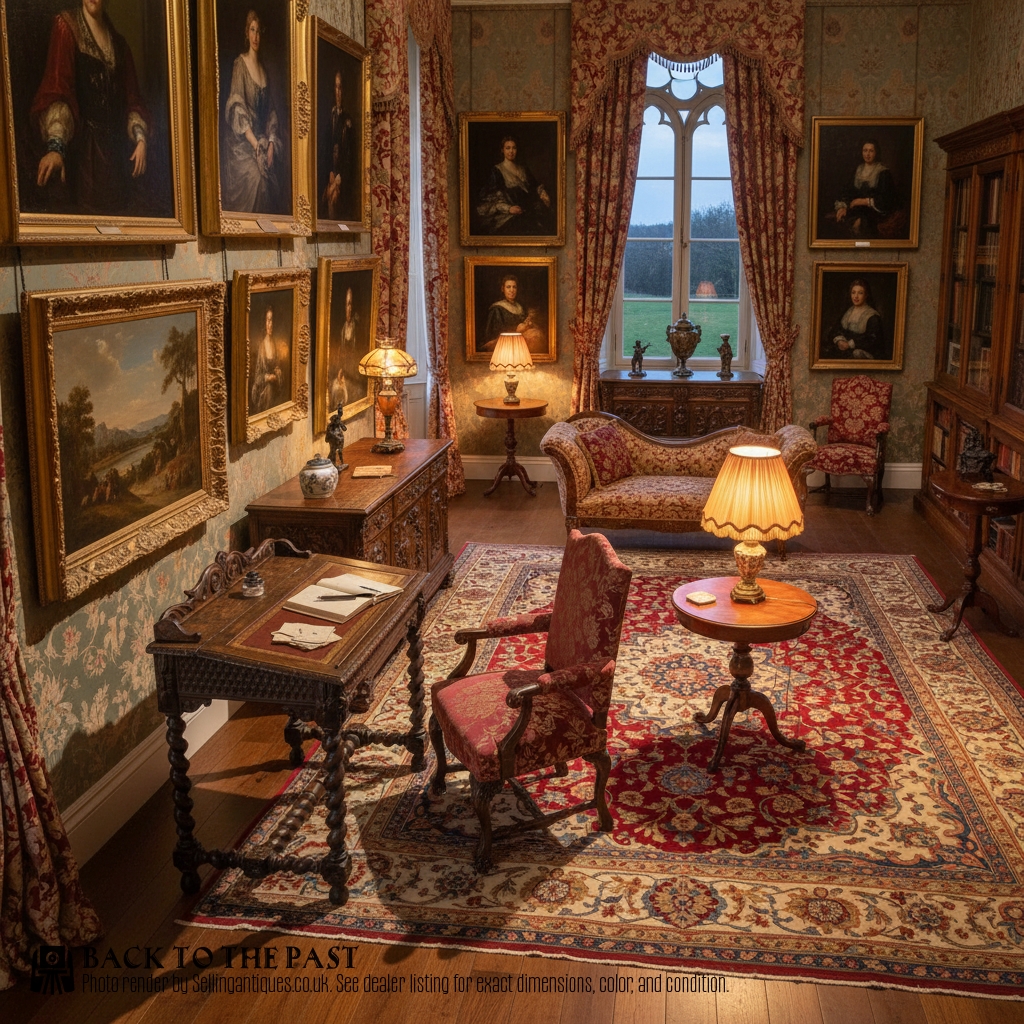
What these pieces are
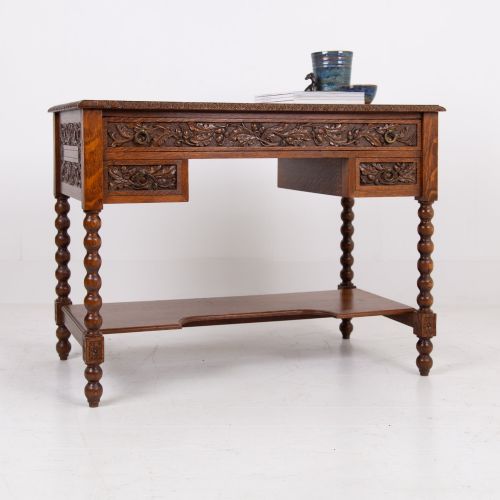
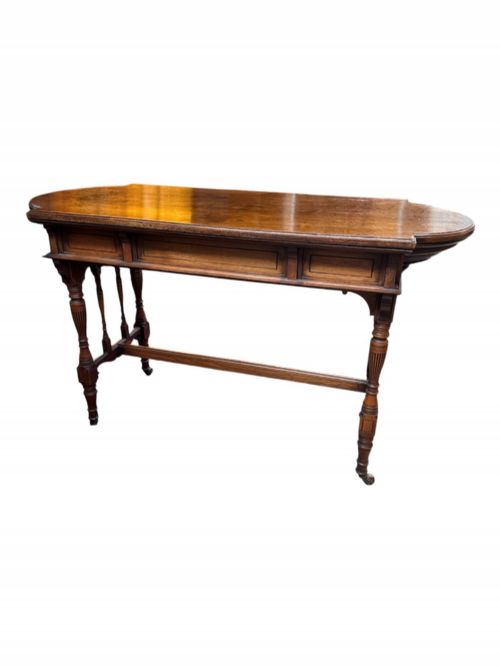
A carved oak study desk is a substantial writing surface built from heavy timber, designed for serious work and study. When you search this phrase, you encounter heavy writing tables and pedestal desks originating from periods spanning the nineteenth and twentieth centuries.
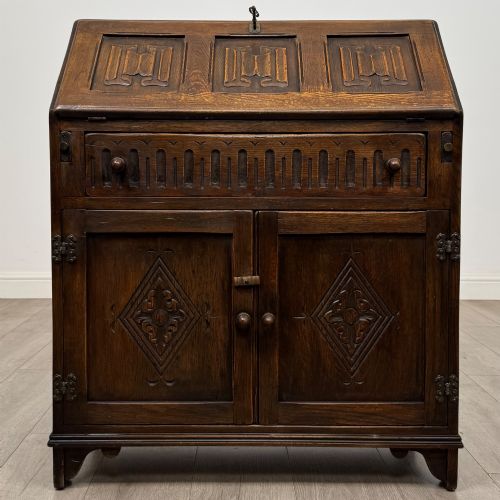
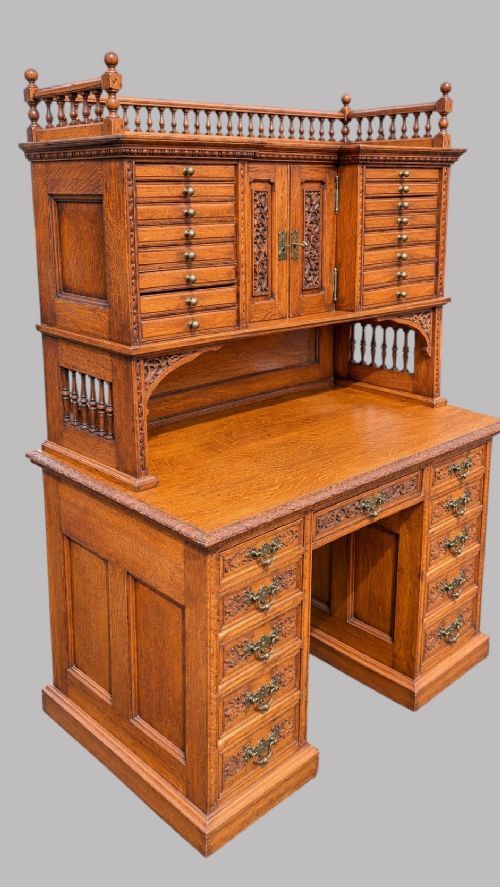
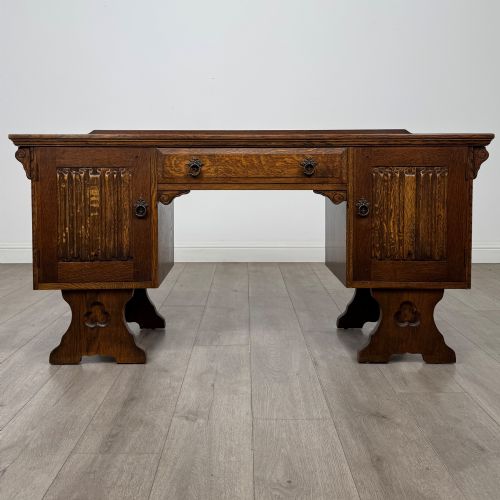
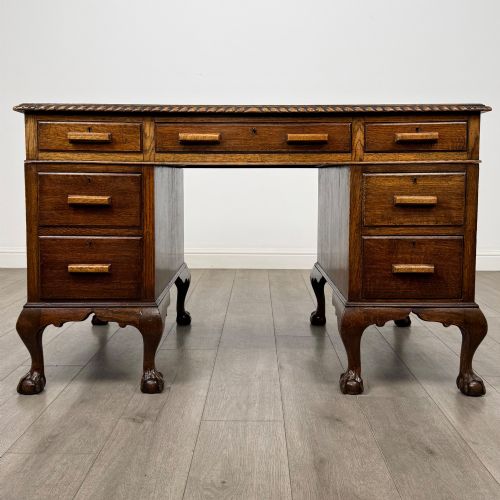
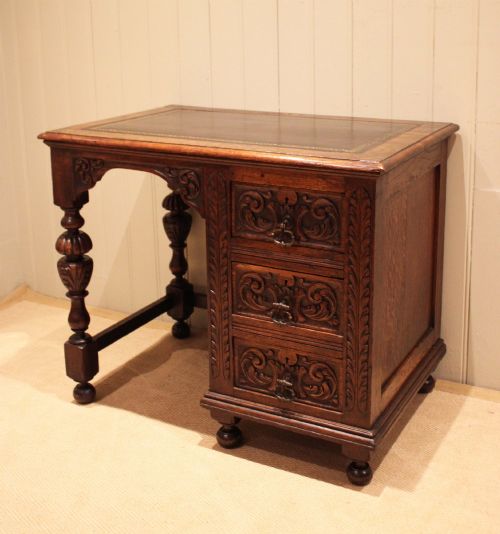
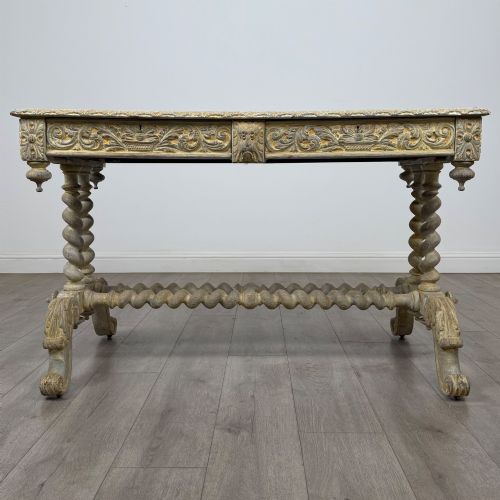
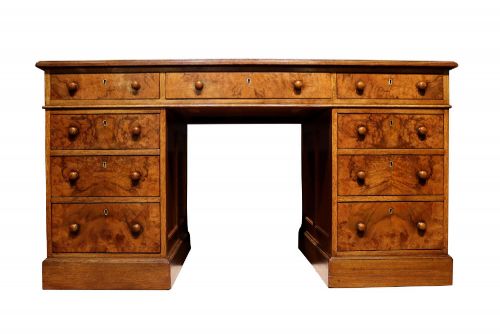
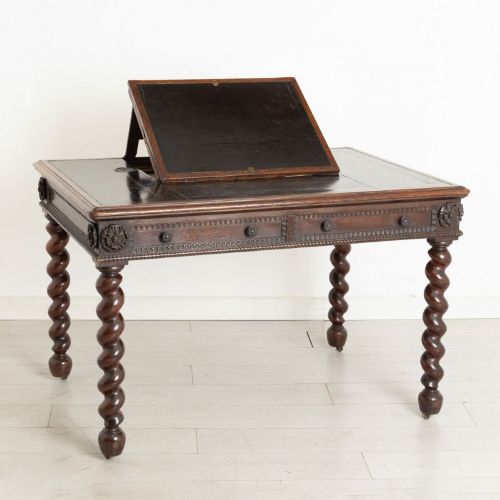
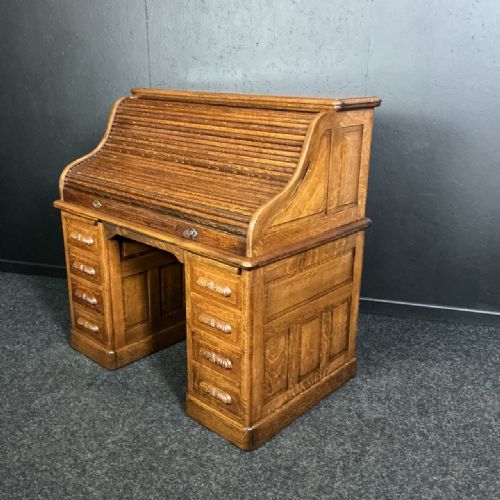
The pieces on this page heavily feature Victorian, Edwardian, and early twentieth-century examples, including specific revivals like Neo-Jacobean and Chippendale styles. Most take the form of large writing tables or pedestal configurations fitted with drawers for storage.
Origins range across the nineteenth century up to nineteen-twenty, showcasing traditional British cabinet-making traditions. Buyers regularly find architectural details and heavy carving defining the structure of these items.
How they were made
Makers utilised solid oak timber as the primary material for the framework, legs, and drawer structures, often selecting quartersawn boards for durability and distinct grain patterns. Cabinet-makers applied hand-carving techniques directly onto the solid wood panels, friezes, and drawer fronts to create deep relief decoration.
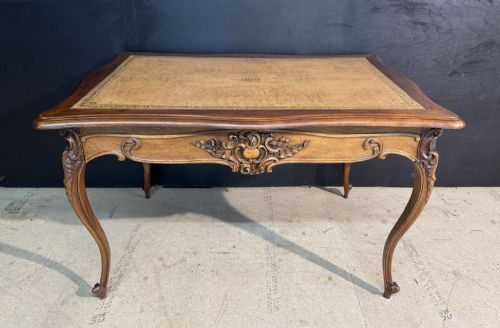
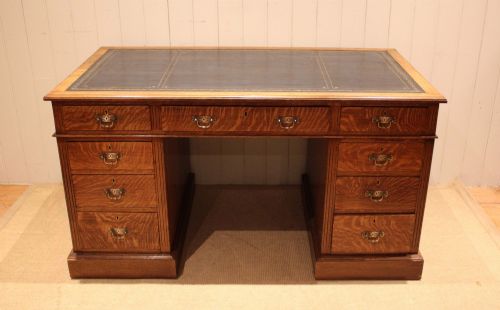
Many examples incorporate fitted leather writing surfaces, inset into the top wood framework with gilt tooling around the perimeter. Functional hardware such as brass handles, key escutcheons, and drawer pulls were fastened securely to complement the dark tones of the oak.
Construction relied on traditional joinery methods including mortise and tenon joints to bear the weight of heavy pedestal and writing table designs. Surfaces received hand-applied finishes to protect the timber while accentuating the natural figure of the oak.
Retail Price Guide 2026
Typical UK retail prices for carved oak study desk, calculated from the Sellingantiques database of over a million retail prices indexed since 2003. This retail price guide relies exclusively on Sellingantiques data; no external sources or auction records are used, so the figures do not describe the wider market.
Listings feature oak, leather, and brass across Victorian, Edwardian, and nineteenth-century periods.
What varies in quality
The depth and crispness of the hand-carved detail separate ordinary production from superior workshop output, distinguishing standard joinery from artisan execution. Finer pieces display deeply undercut foliage, strapwork, and mouldings executed with deliberate control rather than shallow machine routing.
Material selection dictates the visual weight and longevity of the desk, with quartersawn oak exhibiting superior stability and tighter medullary rays. The integration of secondary materials, such as heavy-gauge brass hardware and carefully tooled leather inserts, elevates the overall execution.
Structural proportion and the retention of original fitted components define the standing of a desk within its period. Examples bearing documented workshop stamps or refined architectural styling hold greater historical coherence than generic utilitarian pieces.
Edwards & Roberts
The Carved Oak Study Desk Glossary
- Pedestal desk
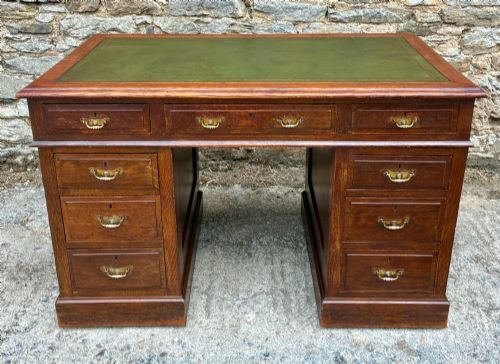
- A heavy writing table supported by two banks of drawers resting on the floor. This form provides substantial storage beneath the main writing surface.
- Writing table
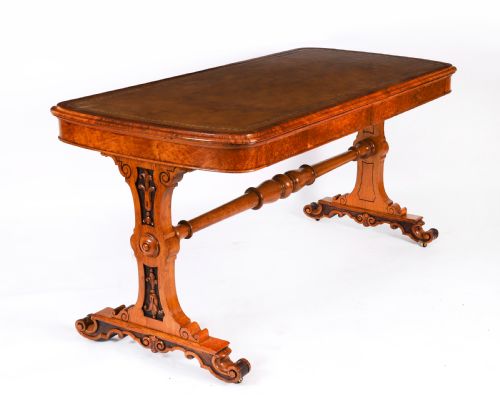
- A freestanding table designed primarily for correspondence, typically featuring one or more drawers beneath the top. Unlike pedestal desks, these rest entirely on legs.
- Neo-Jacobean
- A nineteenth-century revival style mimicking seventeenth-century English furniture. It is characterised by heavy proportions, geometric paneling, and elaborate carved ornamentation.
- Quartersawn oak
- Timber cut radially from the log, producing a distinct striped grain pattern known as medullary rays. This method yields exceptionally stable boards resistant to warping.
- Escutcheon
- A protective plate surrounding a keyhole, frequently cast in brass on these desks. It prevents the surrounding wood from wearing down through repeated use of the key.
Frequently Asked Questions
What is a pedestal desk?
A pedestal desk is a heavy piece of furniture featuring two separate stacks of drawers that support the main writing surface. This configuration offers substantial enclosed storage while maintaining a formal presence in a study.
The design allows the user to sit comfortably in the centre with drawers positioned securely on either side for papers and implements.
How do I care for leather tops?
Leather writing surfaces require gentle dusting and occasional treatment with specialist leather balms to prevent drying and cracking. Avoiding direct sunlight helps preserve the colour and the gilded tooling around the edges.
Using a blotter when writing prevents ink stains and excessive wear on the vintage hide.
Are these desks difficult to move?
Because these items are constructed from solid oak, they possess considerable weight and often require two people to relocate safely. Many pedestal designs separate into distinct modular sections, such as two drawer pedestals and a top, to simplify transport.
Checking how the top secures to the base helps determine whether disassembly is straightforward before moving.
How do I identify Neo-Jacobean styling?
Neo-Jacobean furniture draws inspiration from seventeenth-century design, featuring dense carving, strapwork, and geometric mouldings. The overall aesthetic feels heavy, dark, and architectural, reflecting nineteenth-century revivals of earlier British periods.
Look for turned legs, deep paneling, and substantial proportions characteristic of this specific historical revival.