
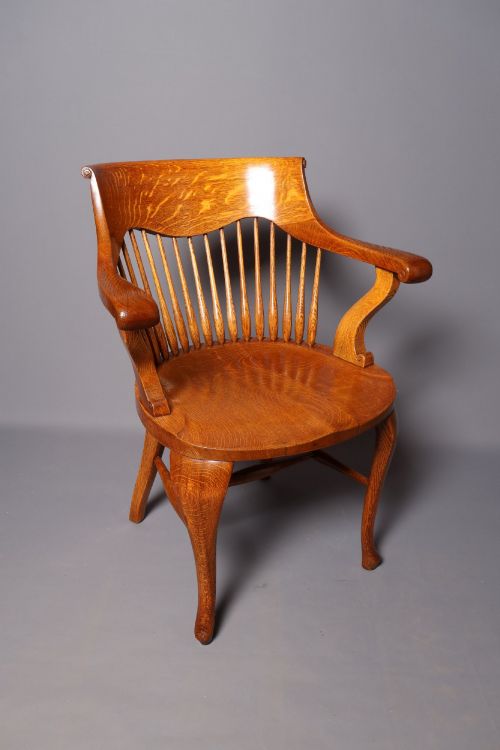


Carved Oak Study Chair
A carved oak study chair brings heavy grain and solid joinery to a home office, offering the endurance that daily work demands.
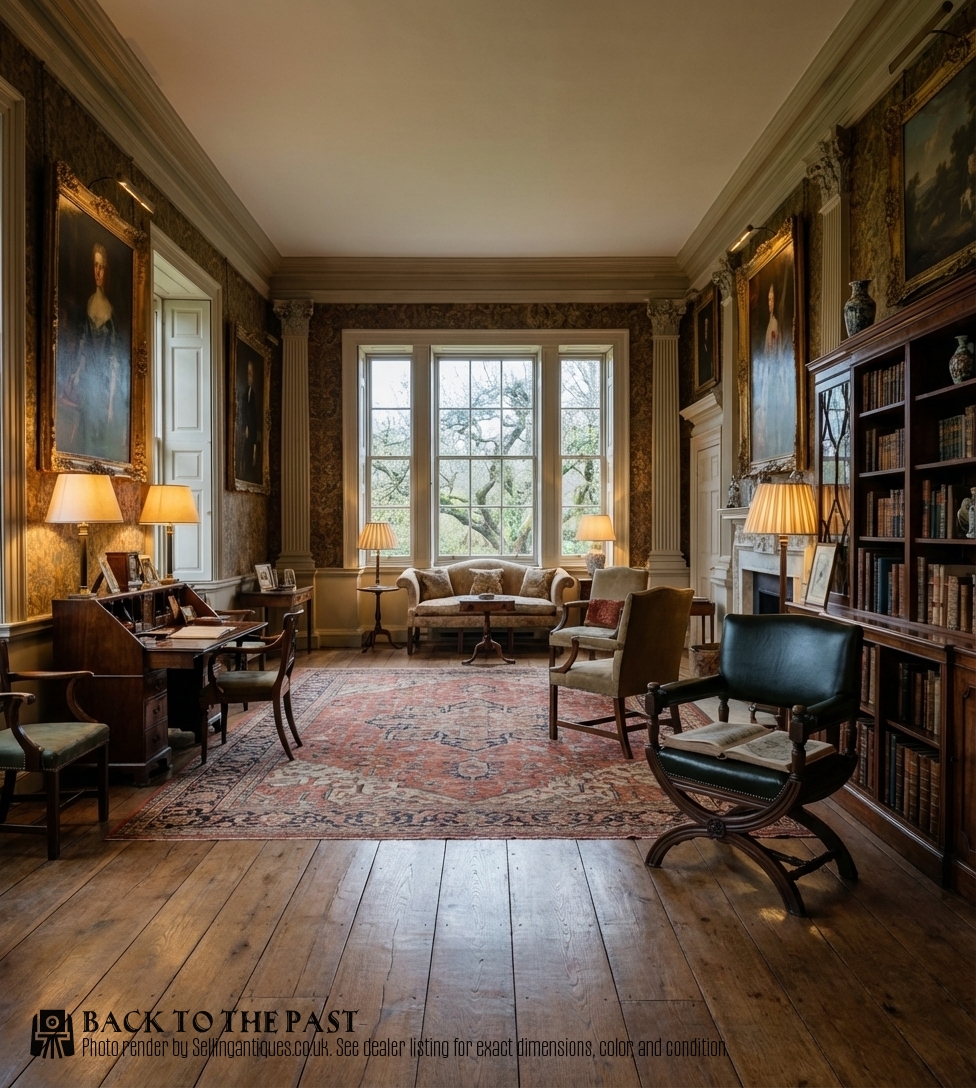
Carved Oak Study Chair
A carved oak study chair is typically a heavy seating piece designed for a desk, library, or office, drawn mainly from the Victorian and Edwardian periods. These chairs often feature robust frames, tall backs, and functional elements such as swivel mechanisms or adjustable heights suited for practical use.
The selections span standard desk chairs, swivel variants, and library armchairs rooted in Revival styles like Jacobean, Gothic, and Carolean. Buyers meet pieces shaped by the 19th and early 20th centuries, showing distinct regional tastes through turned legs, carved crest rails, and upholstered pads.
Beyond standard seating forms, the grouping includes elbow chairs and X-framed designs alongside occasional artistic depictions in oil paintings. The core focus remains firmly on solid oak structures built to endure heavy daily sitting in a study or library setting.
What varies in quality
Quality rests upon the depth of the carving and the selection of the timber, where dense golden oak commands greater presence than plain hardwood. The crispness of Revival motifs, from Gothic tracery to Carolean scrolls, defines the standard of the workshop.
Functional hardware also sets pieces apart, distinguishing simple stationary elbow chairs from sophisticated swivel mechanisms with adjustable iron screws. The integrity of original leather upholstery and the tightness of the frame joinery complete the measure of the piece.
One listed canvas captures a seventeenth-century style chair keeping watch beside a discarded sword.
Gillows·Bruce James Talbert·A W N Pugin
The Carved Oak Study Chair Glossary
- Gothic Revival
- A design movement drawing inspiration from medieval architecture, featuring pointed arches, trefoils, and heavy carved tracery.
- Bergere
- A closed armchair with a wooden frame where the sides and back are filled with woven cane.
- Swivel
- A rotating seat mechanism mounted on a central spindle, allowing the user to turn without moving the base.
- Carolean Revival
- A style echoing the ornate, richly carved furniture of the reign of Charles II, marked by scrolls and crown motifs.
- Elbow chair
- A term for an armchair with shorter arms that fit neatly beneath a desk or table.
Carved Oak Study Chair: Frequently Asked Questions
Are these chairs comfortable for daily work?
Many examples feature ergonomic considerations of their era, including curved wooden backs, supportive elbow rests, and padded leather seats designed for long hours at a desk.
Heavier library armchairs with buttoned leather provide substantial cushioning, though seat heights and stationary angles differ from modern office seating.
How do I identify a Gothic Revival design?
Gothic Revival pieces display architectural motifs such as pointed arches, quatrefoils, and heavy linear mouldings carved directly into the solid oak frame.
These chairs often project a solemn, vertical character with dark finishes and imposing crest rails.
Did swivel desk chairs exist in the Victorian era?
Victorian cabinetmakers produced functional swivel desk chairs utilising central iron screws and wooden or metal spider bases for office environments.
These pieces combined traditional carved oak frames with newly industrialised rotating mechanisms.
How do I care for the leather upholstery?
Leather panels require gentle cleaning with appropriate conditioning balms to maintain flexibility and prevent the dry cracking common in older hides.
Avoiding direct sunlight and excessive heat preserves both the leather and the surrounding oak framework.