


Carved Oak Storage Server
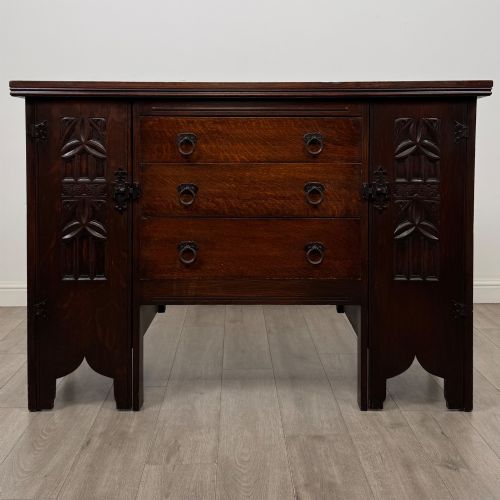
A carved oak storage server provides substantial utility and presence, bringing historic craft and timber into a room.
Carved Oak Storage Server
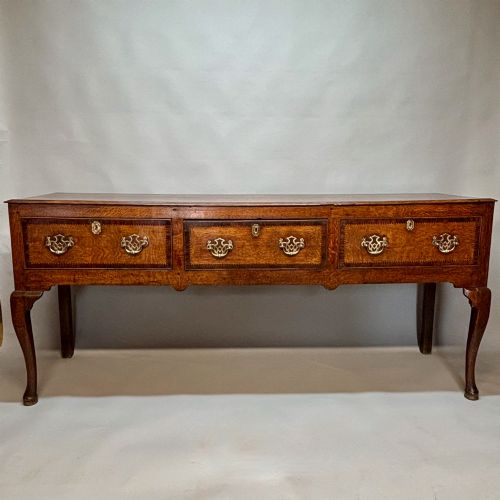
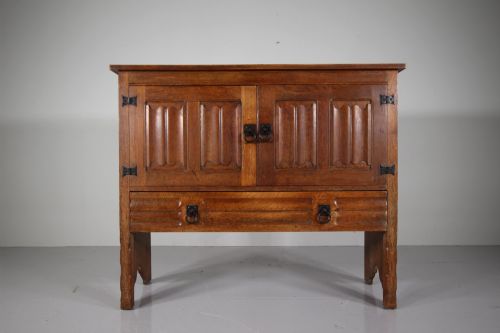
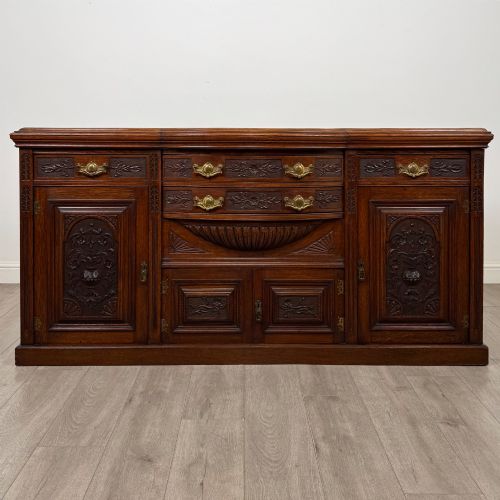
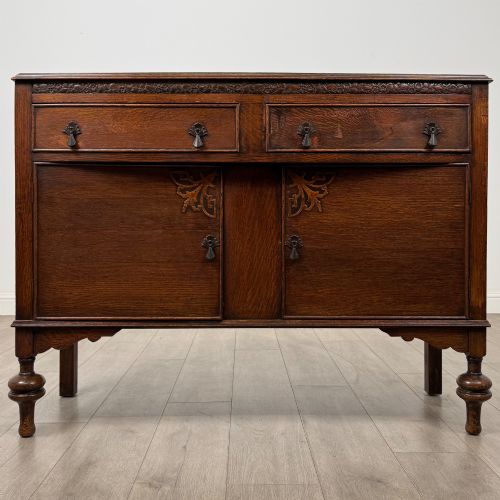
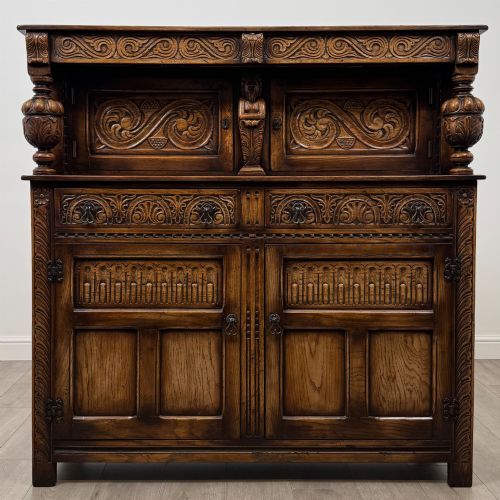
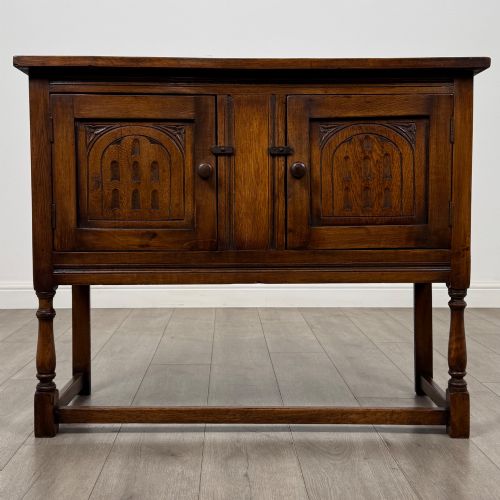
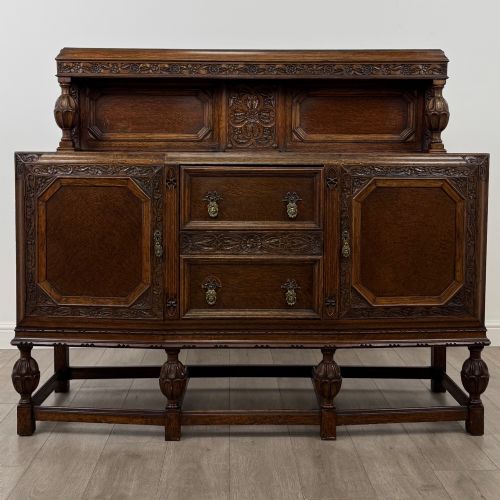
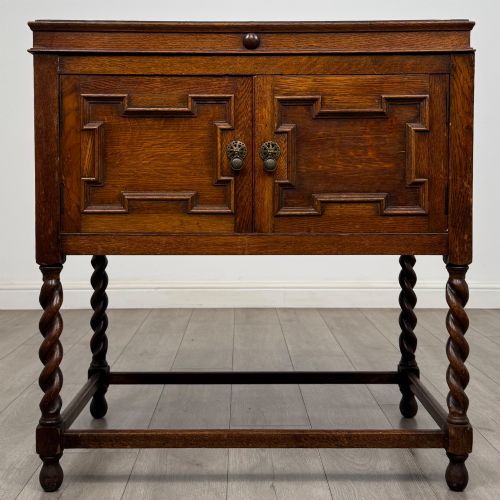
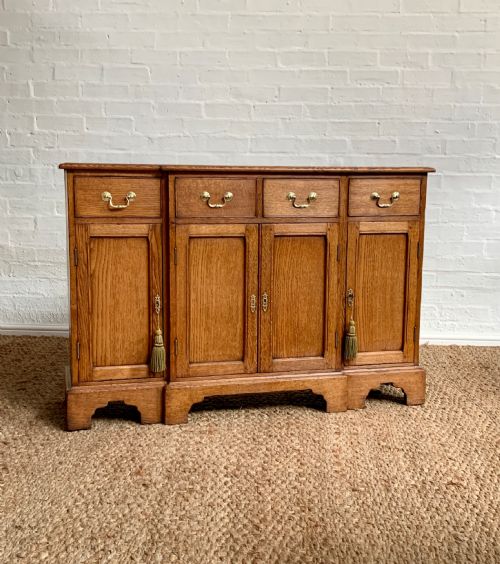
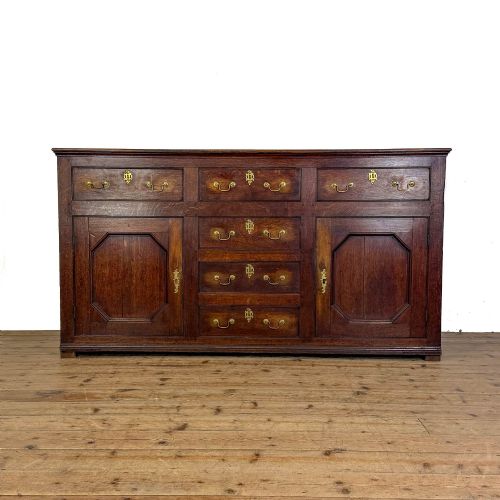
A carved oak storage server encompasses heavy timber furniture designed for utility, spanning centuries of domestic life. When searching for a carved oak storage server, buyers encounter forms ranging from low dresser bases to substantial court cupboards and sideboards.
The material record on this page shows pieces originating from the seventeenth century through to the Edwardian period and the early twentieth century. Common stylistic expressions include Jacobean revival, Gothic revival, Georgian, and Arts and Crafts interpretations.
Dressers, sideboards, and side cabinets dominate the selection, offering generous surface space alongside enclosed storage. These items served as central pieces in dining rooms and halls for holding plate, linen, and provisions.
What varies in quality
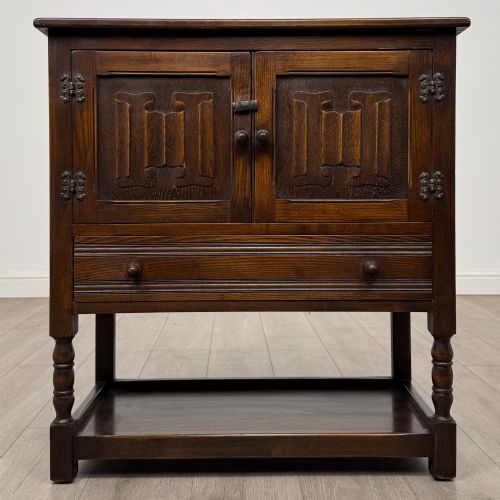
The crispness and depth of hand-carved detail distinguish the better examples from simpler production. Relief work executed with sharp chisels demonstrates higher workshop skill than shallow mechanical stamping.
Timber selection and grain figure also determine standing, with quarter-sawn oak showing distinct medullary rays. Original hardware, intact panel construction, and stable timber movement mark superior survival over time.
Listings span from the 17th century to the 1930s, featuring oak alongside brass, marble, and fruitwood marquetry inlay.
Maple and Co
The Carved Oak Storage Server Glossary
- Court cupboard
- A heavy enclosed piece of furniture featuring an upper section recessed above a lower cupboard or base. They often display elaborate carved strapwork and baluster supports.
- Dresser base
- An open or enclosed table-like storage unit equipped with drawers and lower cupboards. These formed the lower portion of traditional kitchen and dining room dressers.
- Linenfold
- A style of carved wooden panelling that resembles folded fabric, popular during the Tudor and revival periods. The design creates a tactile texture across flat cabinet doors.
- Marquetry
- The art of applying decorative pieces of veneer to a structure to form geometric or floral patterns. Fruitwood inlays provide contrasting tones against the dark oak background.
Carved Oak Storage Server: Frequently Asked Questions
What is a carved oak storage server used for?
These items provide surface display and enclosed storage for dining ware, linens, and household items. They function effectively in modern dining rooms and hallways as focal storage furniture.
Their robust timber construction handles everyday domestic use while maintaining historical character.
How do I identify a 17th century style piece?
Seventeenth century style pieces often feature heavy geometric moulding, strapwork carving, and turned supports. Look for pegged joints and dark patinated oak surfaces that imitate earlier periods.
Revival pieces from the Victorian and Edwardian eras frequently recreated these robust proportions.
Are these sideboards made of solid oak?
The listings on this page consist largely of solid oak construction, sometimes paired with fruitwood inlay or marble tops. Pollard oak also appears on specific Victorian examples.
Metal hardware in brass and iron supports the heavy doors and drawers.
Where should I place a dresser base?
Dresser bases suit dining rooms, kitchens, or large hallways where their length and depth can be accommodated. They provide ample top surface alongside deep drawers and cupboards.
Keep them away from direct heat sources to protect the historic oak timber.