

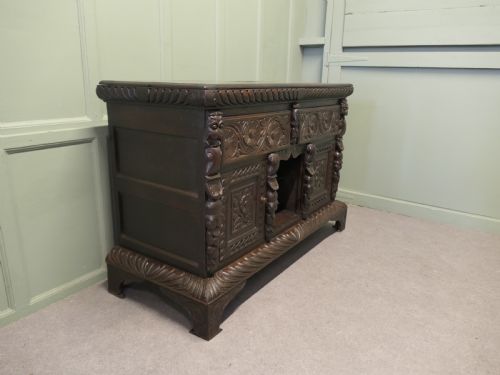


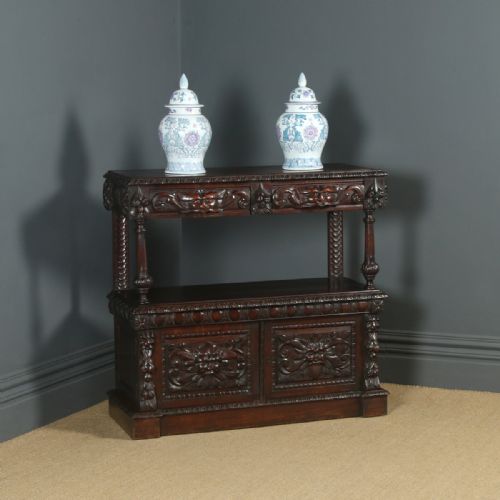


Green Man Oak Sideboard
A green man oak sideboard brings Victorian carving and rich timber character straight into a room.

Green Man Oak Sideboard
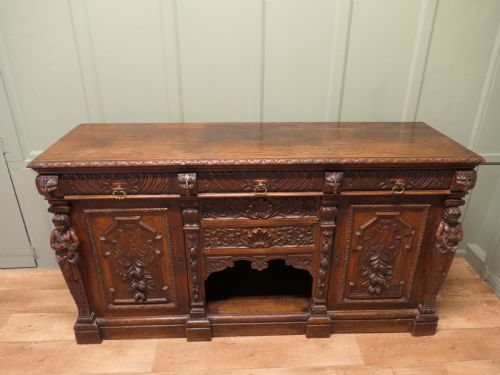
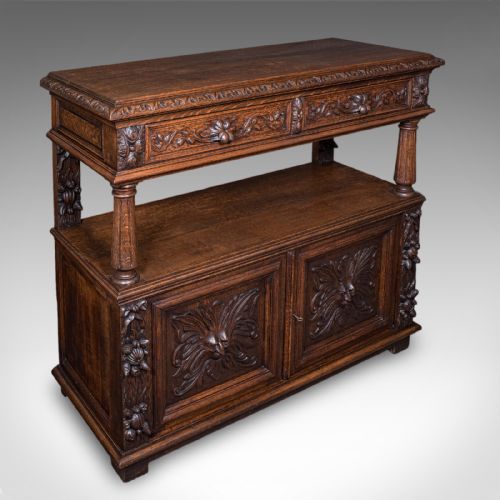
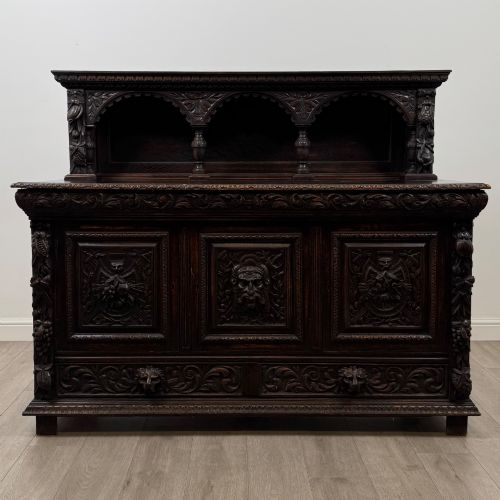
When you search for a green man oak sideboard, you are looking at substantial storage furniture dominated by foliate mask carvings. These pieces emerge primarily from the Victorian period, spanning the nineteenth century with revivals in Gothic, Renaissance and Jacobean tastes.
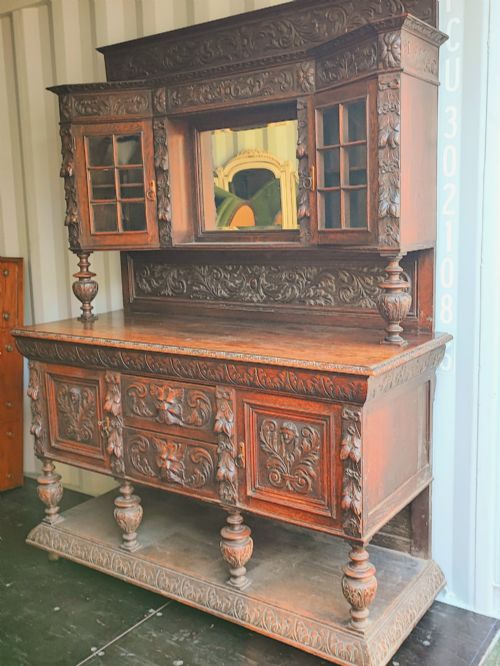
The forms on this page range from large Scottish servers and heavy buffets to compact dresser bases, side cupboards and console tables. Oak remains the definitive timber across every item, frequently paired with brass hardware and bevelled glass mirrors.
How they were made
Metal fittings such as brass drop handles and hinges complement the dark timber, whilst structural additions like bevelled glass plates appear in taller buffet backs and mirror frames.
Listings show these sideboards appearing in styles including Victorian Gothic Revival, Jacobean Revival and Victorian Renaissance Revival.
What varies in quality
The depth and animation of the wood carving dictate the distinction between standard production and master craftsmanship. Sharply undercut foliage and expressive facial details indicate superior artistic execution.
Timber selection and structural proportion also separate ordinary examples from exceptional ones. Denser grain figures, well-figured panels and balanced proportions demonstrate better workshop standards.
The Green Man Oak Sideboard Glossary
- Green Man
- A sculptural motif showing a human face surrounded by or sprouting from foliage, symbolising rebirth. It appears frequently on nineteenth-century revival furniture.
- Buffet
- A low sideboard or serving table designed for dining rooms to display plate and store utensils. Victorian iterations often incorporate heavy tiers and carved backboards.
- Dresser Base
- The lower section of a kitchen or dining room dresser, featuring drawers and cupboards beneath a flat top. These pieces often serve independently as sideboards.
- Bevelled Glass
- Mirror or window glass with edges cut and polished at an angle to catch the light. This technique adds decorative depth to upper sideboard cabinets.
Green Man Oak Sideboard: Frequently Asked Questions
What periods do these sideboards come from?
The pieces listed and archived here date predominantly from the Victorian era, spanning the nineteenth century. Specific production dates cluster around the middle and late decades of that century.
Craftsmen working during these periods drew heavily on earlier historical vocabularies, particularly Gothic and Renaissance styles, to create heavily ornamented storage furniture.
How were these sideboards used originally?
Dining rooms formed the primary setting for these large storage pieces, where they functioned as servers for food and storage cupboards for tableware. Households utilised the flat top surfaces for displaying silver, glass and serving dishes.
Taller variations with mirrors and shelves allowed families to showcase prized decorative objects above the main serving counter.
What wood are these pieces made from?
Solid oak serves as the primary material across all listed and sold pieces. The timber provides the structural integrity required to support deep, sculptural relief carving.
Cabinet makers sometimes highlighted the natural grain through dark polishing or, in rarer instances, bleaching techniques to alter the tone of the wood.