

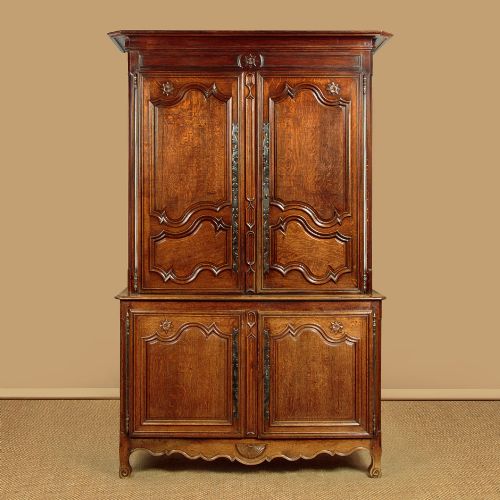
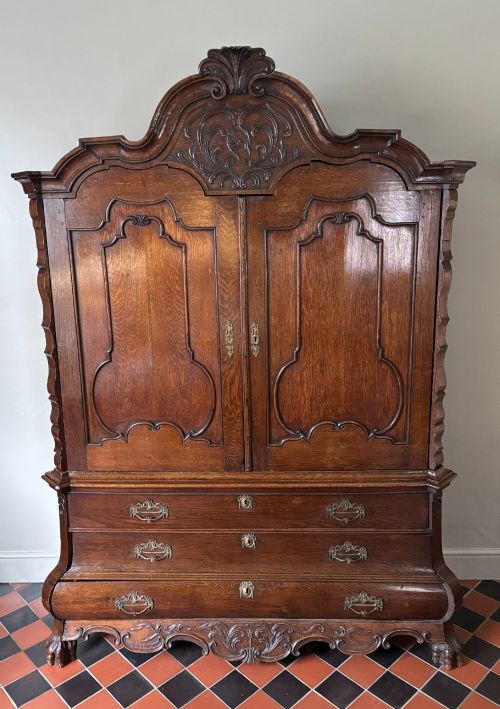
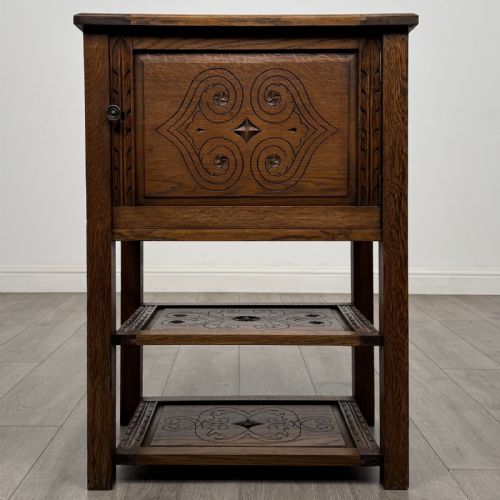
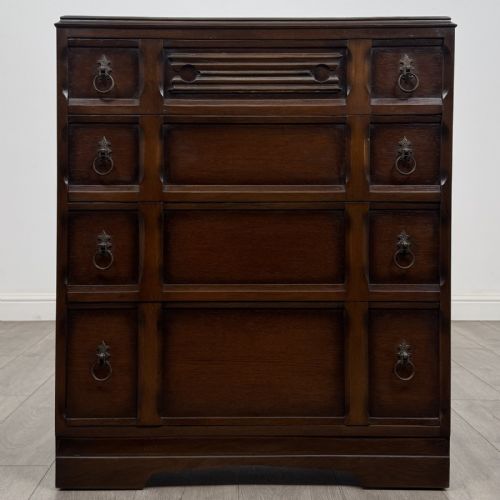
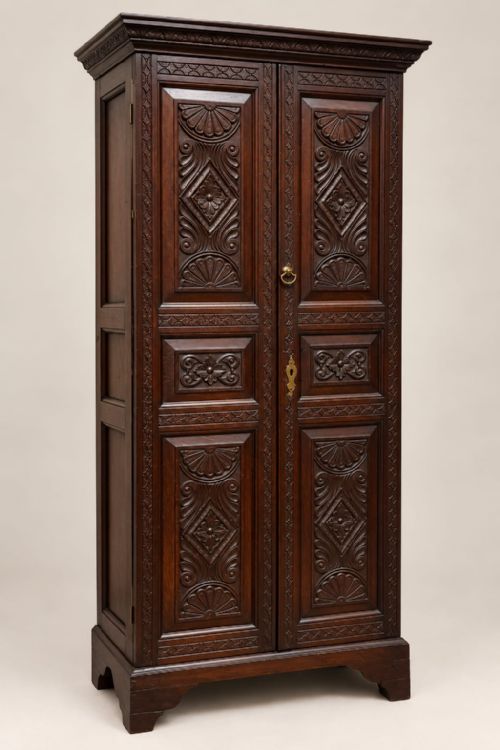
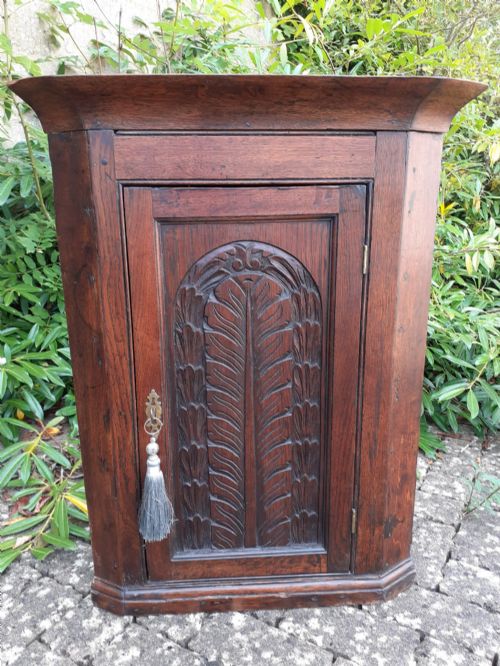
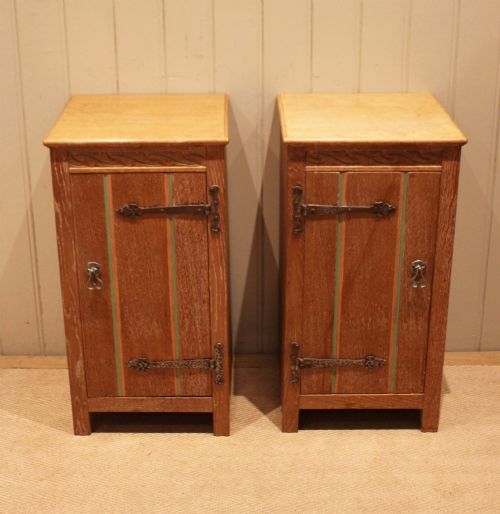
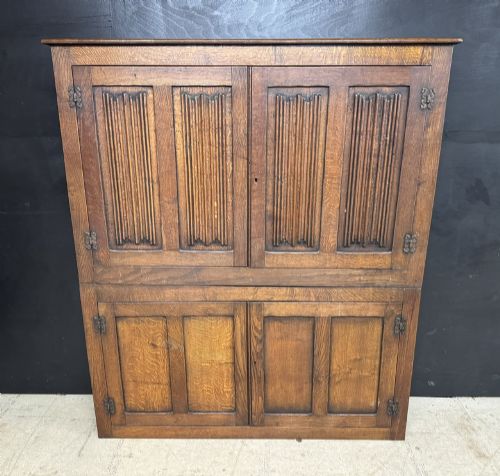
Carved Oak Storage Cabinet
A carved oak storage cabinet brings robust timber and historic carving into daily domestic life.
Carved Oak Storage Cabinet
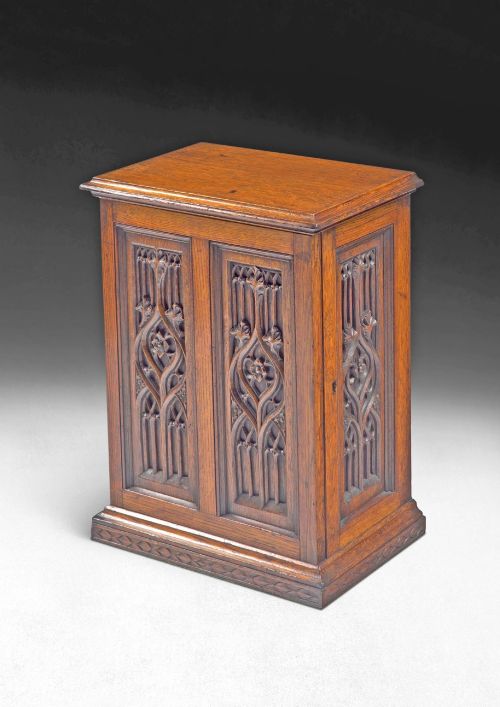
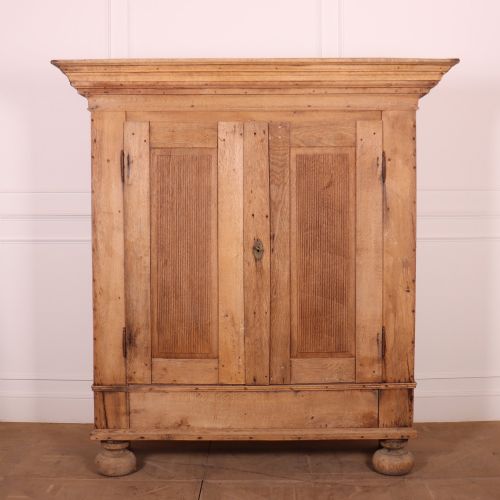
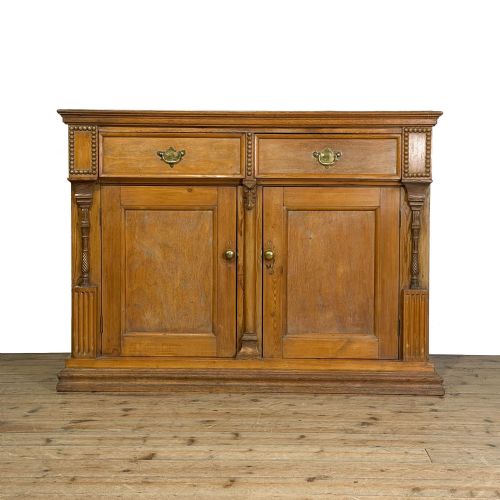
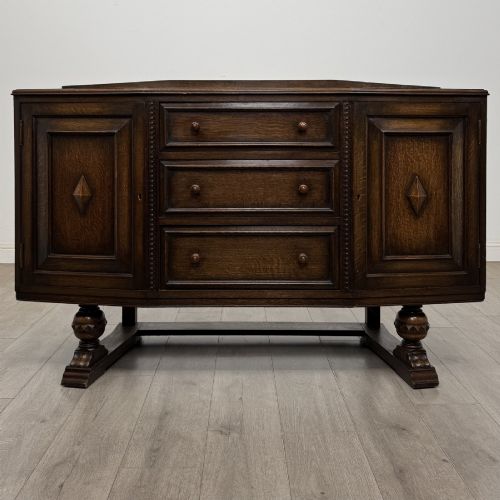
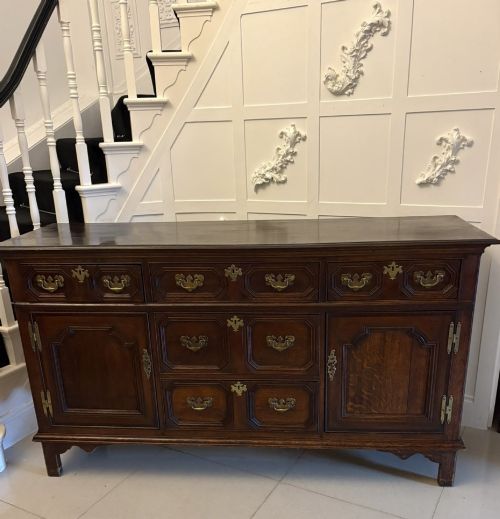
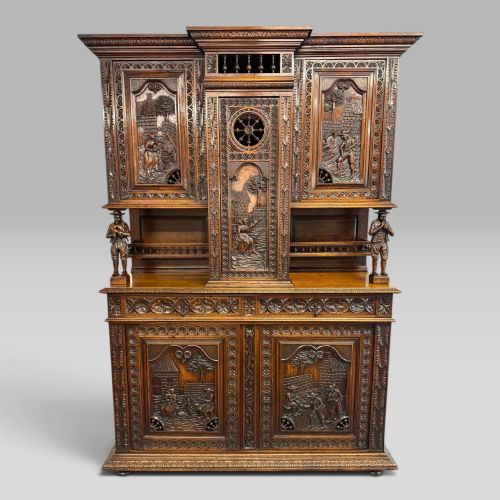
A carved oak storage cabinet spans centuries of domestic joinery, appearing in forms from tall court cupboards and armoires to low bedside chests and corner units. When you search for a carved oak storage cabinet, you encounter diverse domestic containers designed to hold household goods, linens or books.
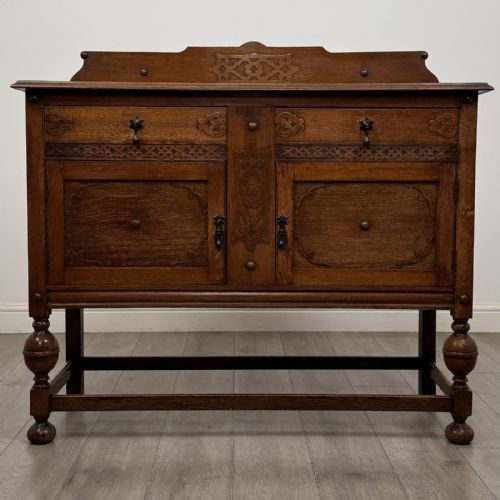
Edwardian cupboards and twentieth-century variations emerge most frequently on this page, often displaying traditional motifs like linenfold panels or revival styling. Earlier seventeenth and eighteenth-century examples survive in smaller numbers, offering joined construction and heavier timber proportions.
Materials and construction
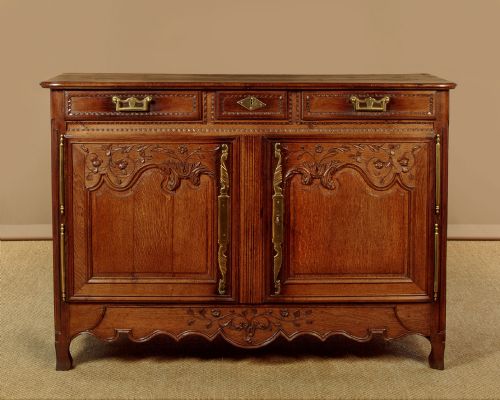
Makers relied principally upon solid oak, selected for its density and striking grain pattern, sometimes complemented by secondary timbers or bleached finishes. Metal hardware in brass and iron appears frequently on hinges, escutcheons and drop handles.
Traditional joinery methods governed the assembly of panels, frames and drawers, utilising pegged mortise and tenon joints rather than modern adhesives. Carved surface ornamentation was executed by hand, creating relief patterns ranging from geometric strapwork to organic foliage.
Carved Oak Storage Cabinet Retail Price Guide 2026
Typical asking prices for carved oak storage cabinet among the pieces listed under this phrase on Sellingantiques today, from the lower quarter to the upper quarter. They describe what is for sale here now, not the wider market.
Listings span eight distinct periods, led by Edwardian and seventeenth-century pieces alongside Victorian and eighteenth-century examples.
Judging the standard
Depth of carving and crispness of detail separate standard production from exceptional work, particularly in revival pieces where surface decoration can appear mechanical or flat. The choice of timber grain and the integrity of the original joints dictate the structural success of each piece.
Hardware originality and the survival of unblemished interior surfaces influence the overall character of the cabinet. Pieces retaining their original locks, hinges and fittings demonstrate greater architectural cohesion than those altered over time.
The Carved Oak Storage Cabinet Glossary
- Court cupboard
- A heavy enclosed storage piece from the sixteenth or seventeenth century, often featuring an upper recessed section supported by turned posts. These items formed the status centre of early dining rooms.
- Linenfold
- A carved panel moulding imitating the appearance of folded fabric in vertical pleats. This decorative motif appears frequently on Tudor and Jacobean revival cupboards.
- Armoire
- A large freestanding wardrobe or storage cupboard with doors, originating in France. They provide substantial interior capacity with adjustable shelving or hanging space.
- Enfilade
- A long sideboard or cabinet with multiple doors in a continuous line. This form originated in grand European interior design for serving and storage.
- Joined oak
- Furniture constructed using interlocking timber frames secured with wooden pegs rather than nails. This method accommodates seasonal wood movement.
Carved Oak Storage Cabinet: Frequently Asked Questions
How do I date a carved oak cabinet?
Dating relies on examining construction methods, tool marks and the style of surface carving. Seventeenth-century examples typically display hand-pegged joints and irregular hand-cut panels, whereas Edwardian revival pieces exhibit machine-sawn timber and standardised hardware.
Secondary woods inside drawers and the degree of timber oxidation provide further chronological clues. Comparing the decorative motifs against known historical periods helps narrow the decade of manufacture.
Where should I place an oak cabinet at home?
These cabinets suit hallways, living rooms and dining spaces where their substantial presence anchors the interior scheme. Ensure the chosen spot avoids direct heat sources and strong sunlight, which can dry out and split historic oak timber.
Allow sufficient clearance for doors to open fully without striking adjacent walls or furniture. Corner cabinets offer a practical solution for utilising dead space in smaller rooms while maintaining traditional character.
How do I care for antique oak furniture?
Maintain the timber by applying traditional beeswax sparingly to nourish the grain and preserve the surface sheen. Avoid liquid polishes containing silicone, which can penetrate open oak pores and damage the finish permanently.
Keep indoor humidity levels stable to prevent the solid oak panels from warping or cracking. Dust regularly with a soft, dry cloth to prevent particulate accumulation in carved recesses.
What does bleached oak mean?
Bleached oak refers to timber that has undergone a chemical lightening process to reduce the natural dark or golden brown hue. This treatment yields a paler, more neutral Scandinavian or contemporary appearance while retaining the underlying wood grain.
Bleaching appears across various periods including the twentieth century and mid-century modern interventions. It offers buyers an alternative aesthetic that blends more readily into bright, contemporary interior schemes.