


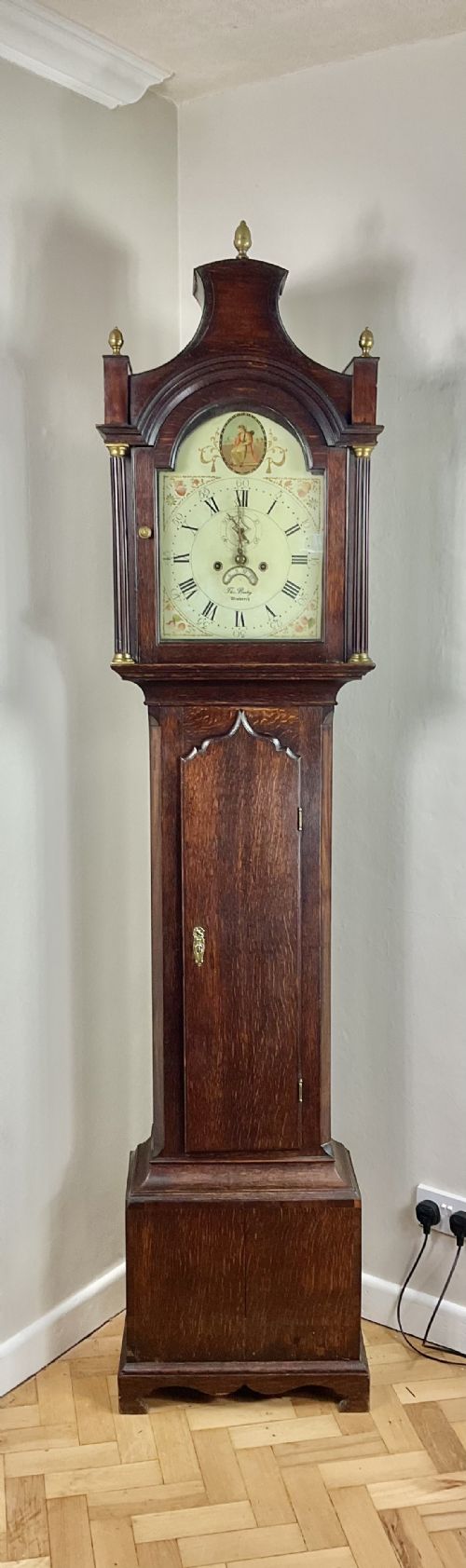


Carved Oak Standing Clock
A carved oak standing clock brings the steady rhythm of past centuries into a room, anchoring the space with substantial timber and brass.
Carved Oak Standing Clock
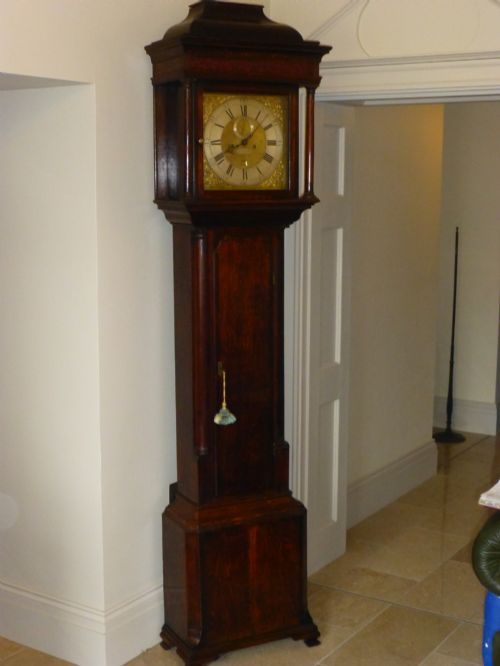
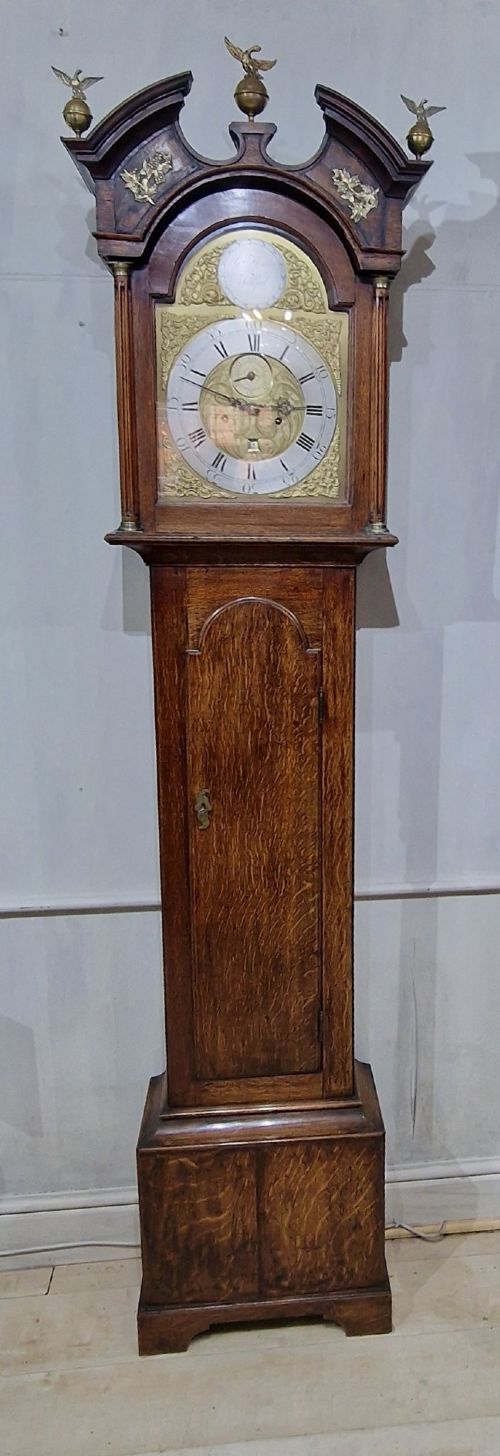
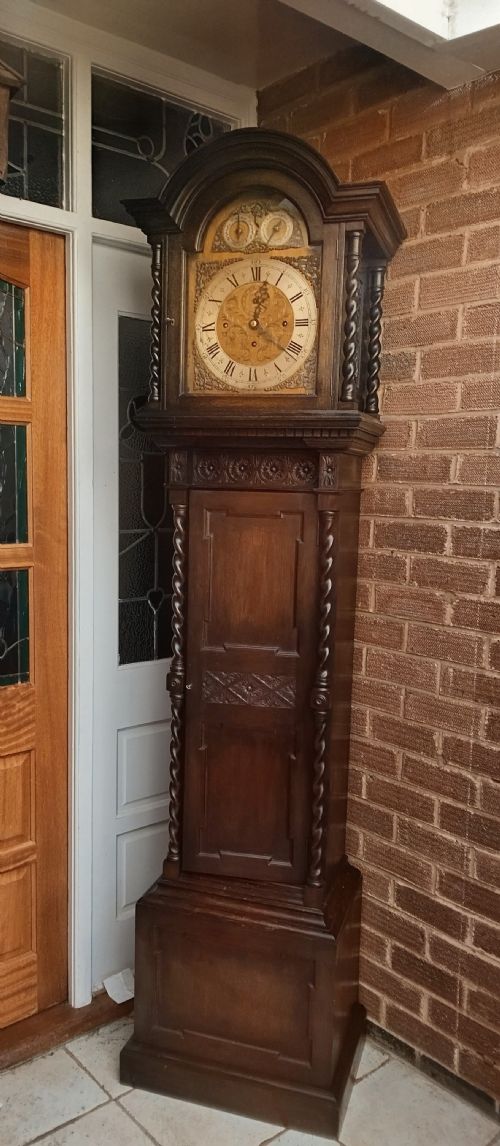
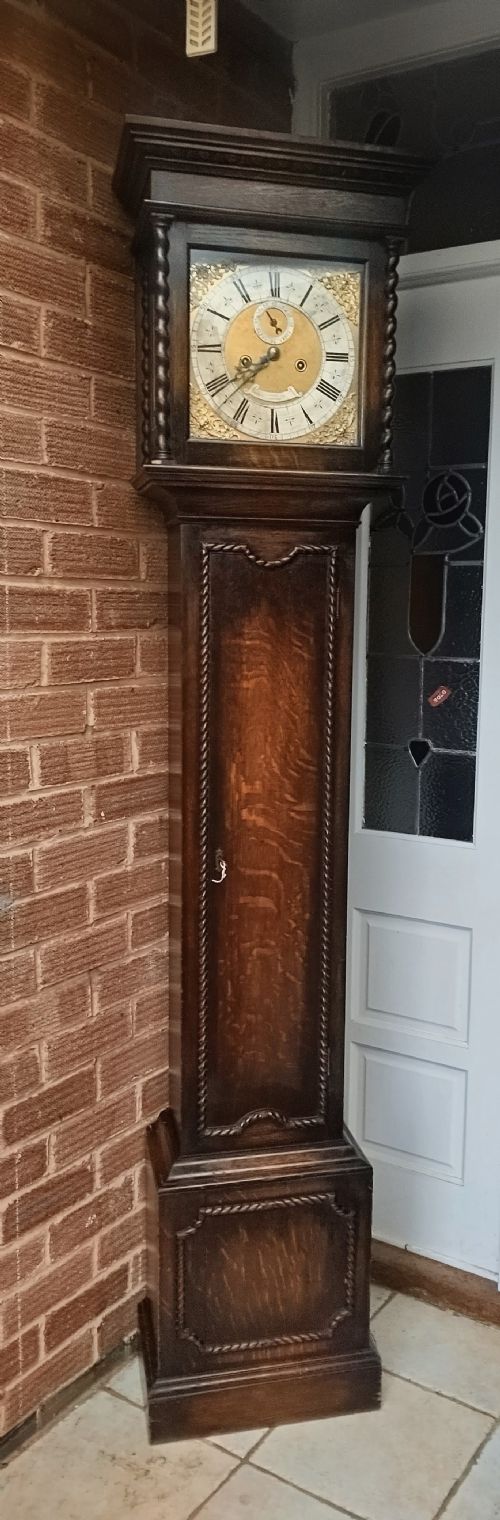
A carved oak standing clock is primarily represented on this page by longcase clocks, grandfather clocks, and smaller variants often called grandmother clocks. These timepieces span the Georgian and Victorian periods, alongside later twentieth-century interpretations.
The versions most frequently met combine solid oak cases with brass dials, appearing in both restrained provincial styles and heavily carved revivals. Buyers encounter tall floor-standing models designed to house pendulum movements and weights, reflecting centuries of domestic horology.
Materials and construction methods
Makers built these clock cases predominantly from solid oak, sometimes pairing the timber with walnut, mahogany, or burr veneers on dials and door panels. Joinery techniques involved pegged tenons and panel construction to accommodate the natural movement of large boards of timber over time.
The internal mechanics rely on brass for gear trains, dials, and bezels, whilst iron and steel form the springs, weights, and arbors. Glass protects the dial face, fitted within hinged doors that allow access for winding and regulation.
Carved Oak Standing Clock Retail Price Guide 2026
Typical asking prices for carved oak standing clock among the pieces listed under this phrase on Sellingantiques today, from the lower quarter to the upper quarter. They describe what is for sale here now, not the wider market.
One remarkably specific Victorian case goes beyond standard floral motifs to depict a king carved directly into the timber.
Distinctions in craftsmanship and design
Quality separates cases with crisp, deep hand-carving from those with shallow machine work or later applied decoration. The crispness of the foliage, figures, or geometric patterns carved directly into the oak timber reveals the hand of a skilled artisan.
The integration of the movement within the wooden case further defines the hierarchy, where robust mechanical movements with engraved brass dials and well-fitted doors outclass simpler, later adaptations. Proportions also matter, as well-balanced trunk dimensions indicate a maker who understood architectural harmony.
Richard Corless of Stockport·James Hendrie Falkirk·David Craig Ford Path head·Samuel Young Nantwich and Bunbury·Robert Darling Melrose·Hugh Lough Penrith·J Hadruen Kendal·Smith Macclesfield
The Carved Oak Standing Clock Glossary
- Longcase clock
- A tall pendulum clock enclosed in a wooden case that stands directly on the floor. These pieces generally measure over six feet in height and house weights suspended by cords or chains.
- Grandfather clock
- A popular alternative term for a tall longcase clock, typically featuring an eight-day movement. The name gained widespread usage following the popular nineteenth-century song.
- Grandmother clock
- A smaller version of the longcase clock, standing significantly shorter than standard grandfather clocks. They frequently house smaller movements designed for more compact domestic spaces.
- Dial
- The face of the clock upon which the hours and minutes are indicated. These components are frequently constructed of brass, sometimes featuring engraved details, silvered chapter rings, and moonphase apertures.
- Fusee
- A conical pulley used in clock movements to maintain an equal pull on the gear train as the mainspring unwinds. This mechanism ensures more accurate timekeeping throughout the duration of the winding cycle.
Carved Oak Standing Clock: Frequently Asked Questions
How do I wind a longcase clock?
Wind the clock using the crank key provided, inserting it into the winding holes on the dial face to draw up the weights. Care must be taken not to overwind the movement, stopping as soon as resistance is felt.
Ensure the pendulum is stationary before attempting to wind, and handle the weights gently if accessing them through the waist door.
Where should I place a standing clock?
Position the clock against a sturdy interior wall away from direct sunlight, central heating vents, and damp areas. Oak timber and antique mechanical movements are sensitive to rapid fluctuations in temperature and humidity.
Ensure the floor is completely level so the pendulum swings with an even beat, preventing the clock from stopping.
How do I tell an 18th-century clock from a Victorian revival?
Examine the construction of the oak case and the style of the brass dial for period clues. Eighteenth-century examples often display simpler, structural joinery with vernacular carving, whereas Victorian revival pieces frequently feature heavy, exuberant relief carving inspired by Jacobean or continental styles.
The layout of the dial, the hand shapes, and the secondary woods inside the trunk also provide clear indicators of the era of manufacture.
What is the difference between an eight-day and a thirty-hour movement?
An eight-day movement requires winding approximately once a week, utilising two or three weights suspended on lines. These systems are typically more complex and often include striking mechanisms.
Thirty-hour movements require daily winding and generally feature simpler gear trains driven by a single weight or spring.