




Carved Oak Slope Box
These carved oak slope box examples offer sturdy domestic storage and writing surfaces rooted in centuries of vernacular British craftsmanship.
Carved Oak Slope Box
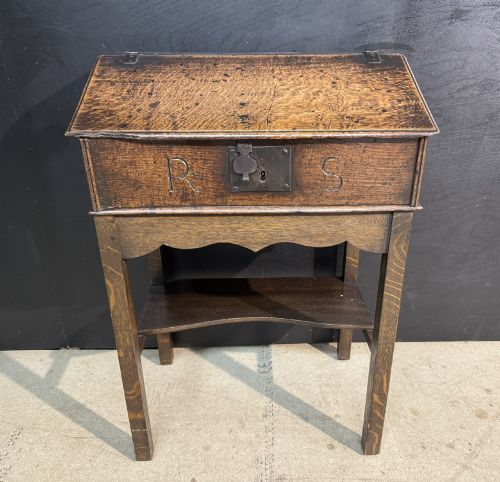
A carved oak slope box is a practical desktop container designed for storage and correspondence, frequently encountered from the seventeenth and eighteenth centuries. These pieces serve as portable writing surfaces or secure repositories for household documents, bibles, and deeds.
The selections span distinct periods including the seventeenth century, eighteenth century, and Victorian eras, alongside styles such as Jacobean, Georgian, and English Country Oak. Buyers most frequently meet vernacular oak examples displaying carved friezes, slant fronts, or internal drawers.
Materials and construction methods
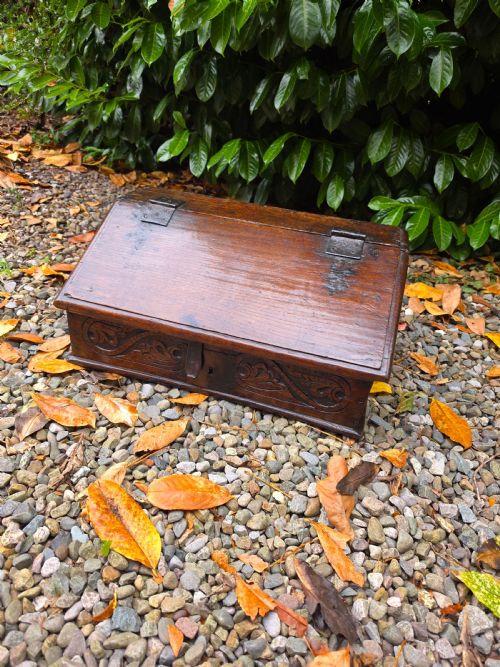
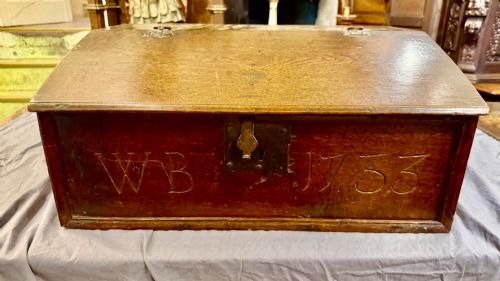
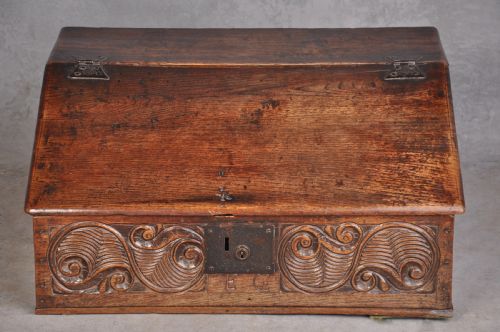
Makers utilised solid timber construction, primarily employing native oak augmented by iron hinges, brass fittings, and occasional decorative inlay work using holly and bog oak. The surfaces display hand-carved ornamentation, including floral motifs, geometric patterns, and owner initials.
Joinery techniques from the earlier periods rely on pegged frames and robust boards built to withstand daily use. Later nineteenth-century iterations incorporate secondary storage functions like coal boxes alongside traditional desk formats.
Current listings feature oak as the primary timber, complemented by iron, brass, holly, and bog oak across seventeenth and eighteenth-century periods.
Distinctions in construction and ornament
The quality of a carved oak slope box rests upon the crispness of the hand-carved friezes and the integrity of the original timber boards. Superior examples retain their early iron or brass hardware and internal fittings without extensive timber replacement.
Proportion and surface patination further separate standard domestic pieces from finer regional variants. The depth of the relief carving and the presence of documented dates or initials provide tangible markers of distinction.
The Carved Oak Slope Box Glossary
- Bible Box
- A sturdy container traditionally built to store a family Bible and important household documents. These boxes often feature sloping lids that double as reading desks.
- Slant Front
- An angled lid configuration designed to provide an ergonomic writing surface. This feature directs water or ink runoff away from the main compartment.
- Frieze
- A decorative horizontal band carved directly into the wooden panels of the box. Such bands frequently display running guilloche or scrolling floral patterns.
- Bog Oak
- Subfossil oak timber preserved in peat bogs that turns a dark, rich colour. Makers utilised this dense material for contrasting inlay work.
- Jacobean
- A seventeenth-century design style characterised by heavy rectilinear forms and deep geometric relief carving. Pieces from this period often display dark patination.
Carved Oak Slope Box: Frequently Asked Questions
What were carved oak slope boxes used for?
These boxes provided a secure, portable place to store valuable texts, deeds, and writing materials in domestic settings.
The sloping lid allowed the owner to use the top as a convenient writing desk when placed upon a table or stand.
How do I date a carved oak slope box?
Dating relies on examining the construction methods, the style of the hand-carving, and any visible hinge hardware.
Earlier pieces from the seventeenth century typically show pegged board construction and robust ironwork, while later examples incorporate finer inlay or Victorian adaptations.
Are these boxes heavy?
Solid oak construction makes these boxes substantial in weight despite their portable desk format.
They were built to remain stable on a table while bearing the pressure of a writer's hand.
Do all slope boxes have internal compartments?
Many examples feature internal stationary drawers or partitioned sections beneath the sloping lid for inkwells and quills.
Simpler variants offer a single open cavity for larger volumes such as bibles.