
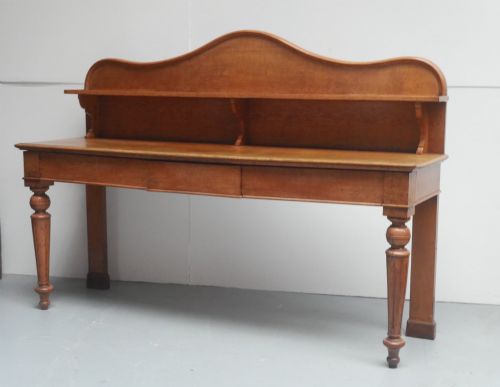

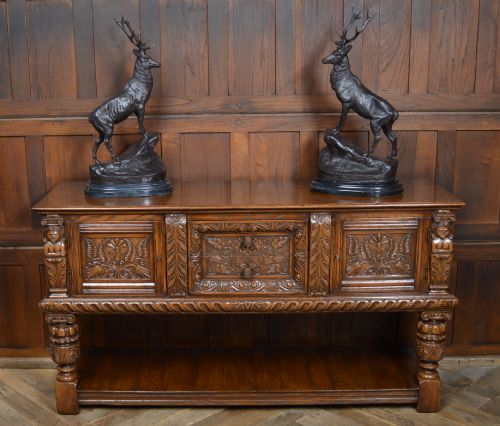


Carved Oak Sideboard Shelf
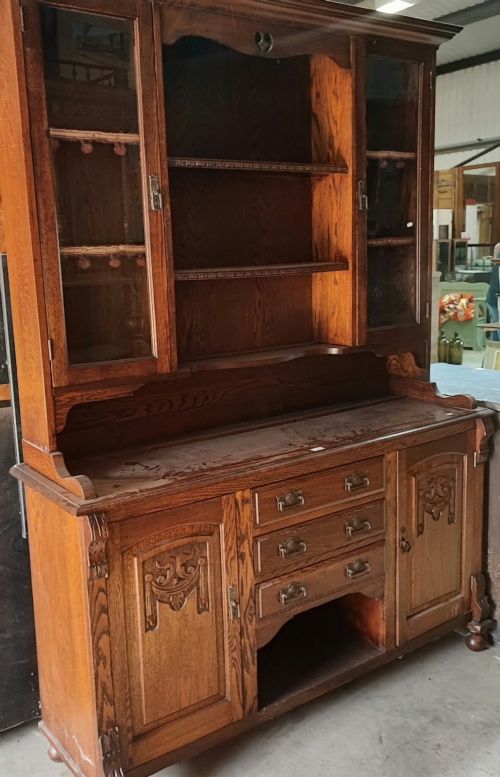
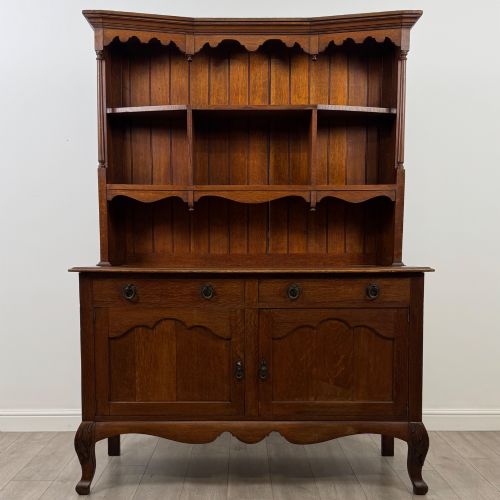
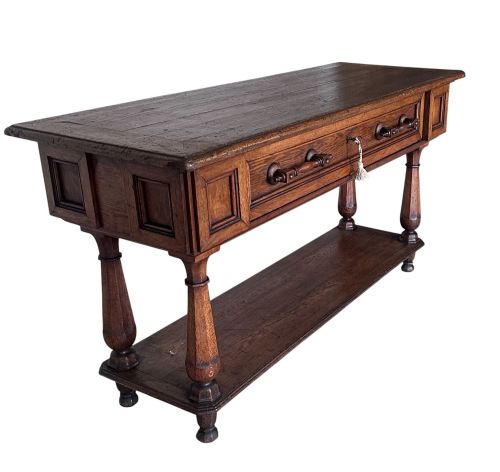
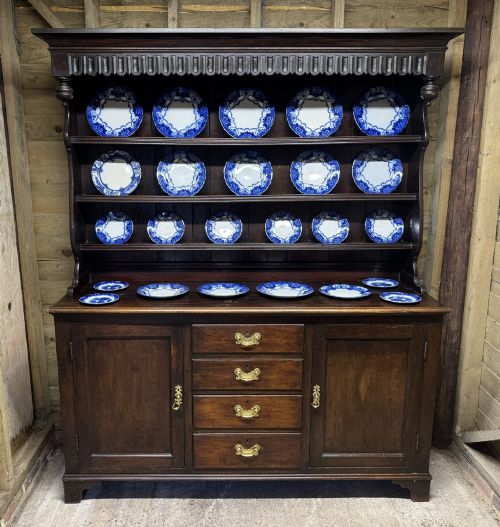
A carved oak sideboard shelf anchors a dining room or hall with deep timber grain, period carving and sturdy utility.
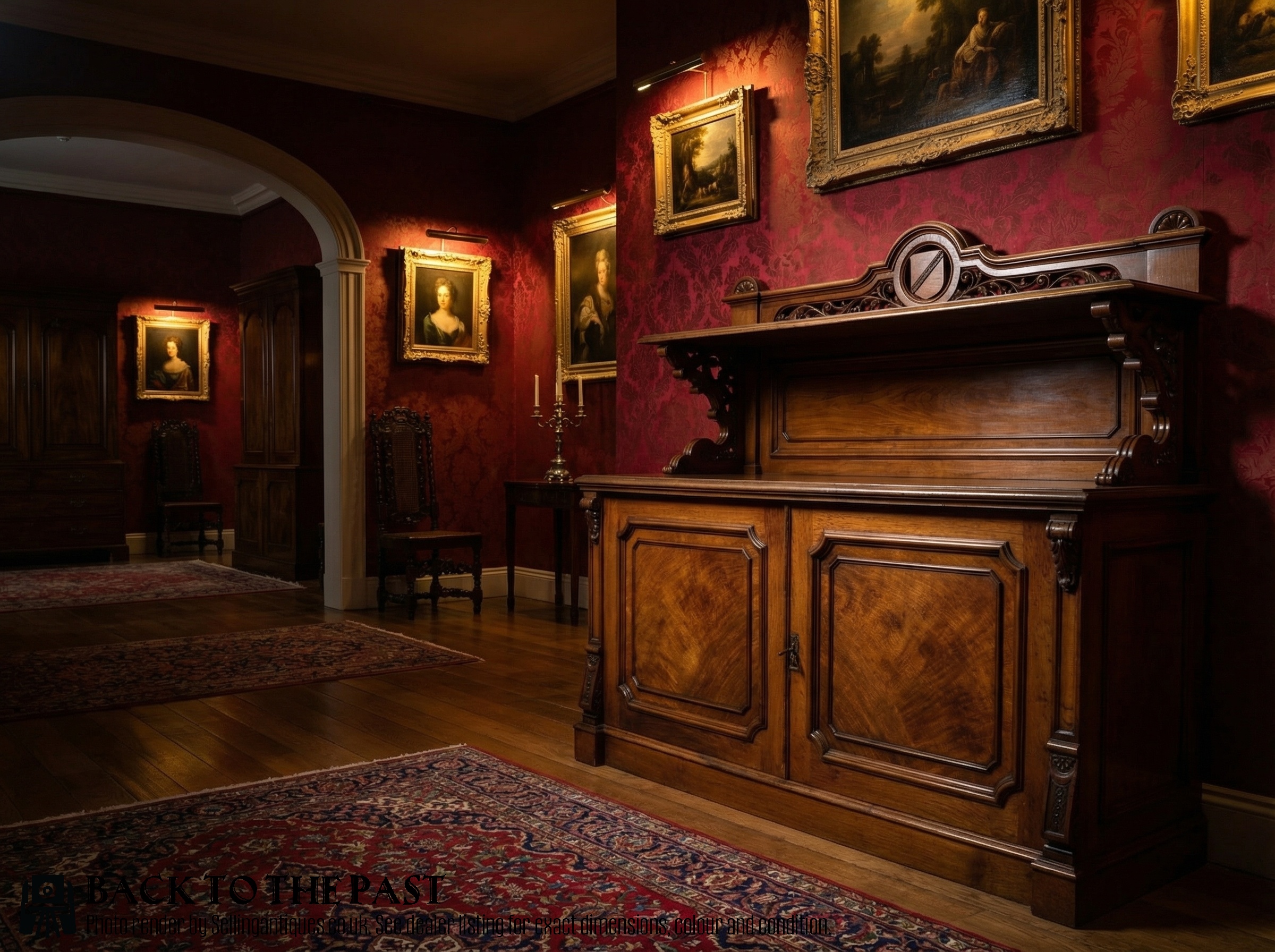
Carved Oak Sideboard Shelf
A carved oak sideboard shelf brings together substantial timber storage and upper display ledges across various regional and historic traditions. When searching for a carved oak sideboard shelf, buyers encounter substantial dining furniture pieces, buffet bases with top shelves, and dresser tops designed to hold plate collections or display items.
The pieces on this page span from the nineteenth century through the Edwardian era, taking forms such as Welsh dressers, server tables, and buffet sideboards. Oak is the primary medium, supported by styles ranging from Jacobean revival and Victorian to English country and Aesthetic Movement.
Originating largely from British and French workshops, these items serve as both practical storage units and architectural focal points in a room. Their forms vary from compact hall tables to large two-part display cabinets with integrated shelving.
How they were made
Makers utilised solid oak, occasionally selecting figured pollard oak or tiger oak to emphasise the natural grain of the wood. Panels were joined using traditional framing techniques, while shelves and surface tops were designed to bear the weight of heavy ceramics and glass.
Carving was executed by hand, displaying motifs such as Gothic tracery, geometric Jacobean patterns, or simpler rustic mouldings. Metal hardware in brass and iron, along with occasional ceramic inserts and marble tops, completed the construction of these robust items.
Some nineteenth-century dressers arrived with space carved specifically for the family pewter, ensuring the Sunday roast had proper company.
What varies in quality
Quality in a carved oak sideboard shelf rests upon the crispness of the timber carving and the selection of the wood itself, with tiger oak and pollard oak commanding attention for their distinct figures. Superior examples exhibit harmonious proportions between the lower sideboard base and the upper shelf structure.
The integrity of the original joints, the depth of the colour in the oak, and the presence of period brass or iron hardware distinguish finer cabinetmaking from simpler utilitarian work. The integration of decorative elements like marble tops or glazed doors further elevates certain pieces above standard vernacular designs.
John Moyr Smith·Krieger of Paris
The Carved Oak Sideboard Shelf Glossary
- Pot board
- An open lower shelf beneath a dresser base or sideboard, traditionally used for storing pots and heavy kitchen utensils. This feature appears frequently in vernacular English and Welsh country furniture.
- Pollard oak
- Timber taken from trees that have been pollarded, producing a dense, highly figured grain pattern with knot clusters. Cabinetmakers utilised this wood for decorative veneer and prominent panels on Victorian sideboards.
- Welsh dresser
- A large kitchen or dining room piece combining lower storage cupboards or drawers with an upper framework of open shelves. These structures serve to display ceramic plates and pewter.
- Aesthetic Movement
- A late nineteenth-century design style that emphasised visual beauty over narrative subject matter, often incorporating Japanese influences and clean structural lines. Pieces from this movement display refined carving and distinct artistic hardware.
- Tiger oak
- Oak timber exhibiting distinctive medullary ray figuring that resembles tiger stripes when quarter-sawn. This material was favoured in Victorian and Edwardian cabinetmaking for its striking visual texture.
Carved Oak Sideboard Shelf: Frequently Asked Questions
How do I style a sideboard shelf?
Use the upper shelf to display ceramic plates, glassware, or framed artwork, arranging items by height and colour to maintain visual balance.
Keep the lower surface uncluttered, perhaps adding a small lamp or a bowl to complement the heavy oak timber without overwhelming the space.
Are these pieces solid oak?
Most items listed feature solid oak construction, occasionally incorporating specialised timber variants like pollard oak or tiger oak for visual impact on doors and panels.
Secondary woods may appear in less visible areas such as drawer linings or backing boards, which was standard practice in period cabinetmaking.
Where were these sideboards made?
The pieces originate from various regions including England, Scotland, Wales, and France, reflecting distinct local cabinetmaking traditions and rural styles.
French workshops often contributed marble-topped buffets, while British makers produced regional dresser bases and Arts and Crafts side cabinets.
How do I care for antique oak?
Maintain the timber by dusting regularly with a soft, dry cloth and applying a traditional beeswax polish sparingly to nourish the grain.
Position the furniture away from direct heat sources and strong sunlight to prevent the oak from drying out or splitting over time.