
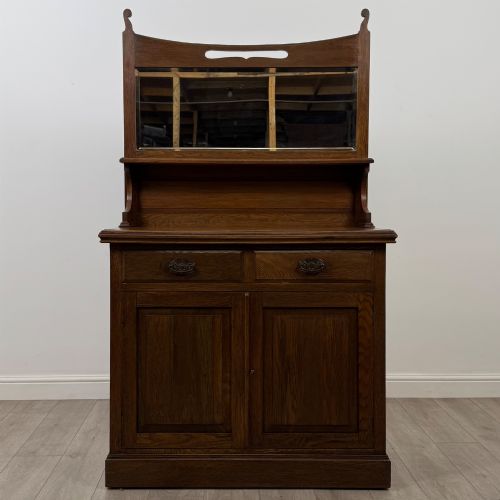
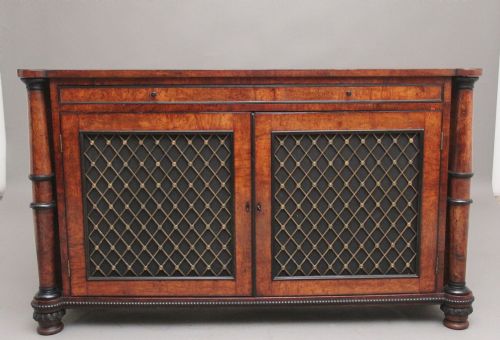
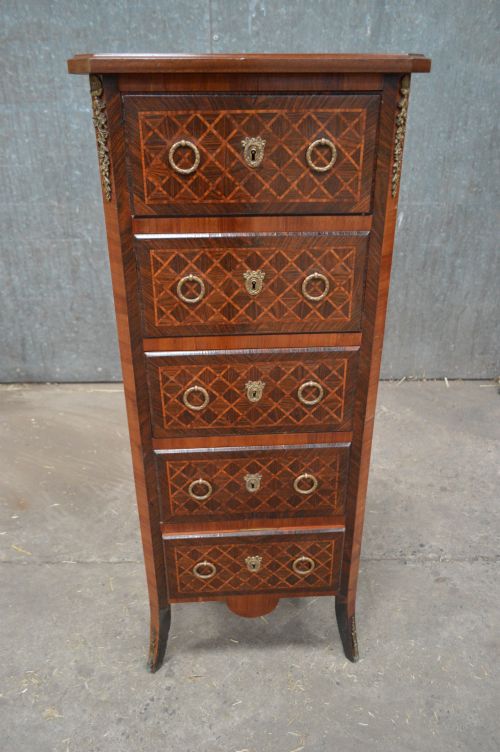
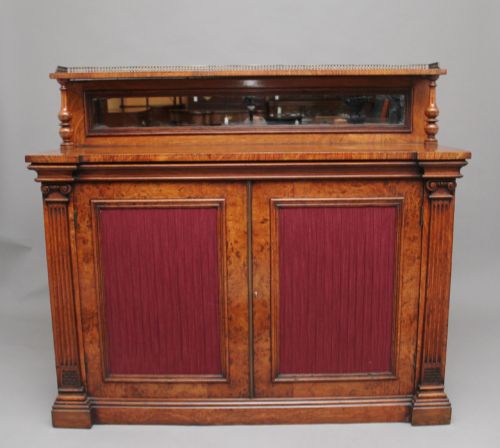


Brown Oak Chiffonier
A brown oak chiffonier brings rich, figured timber and practical storage into a room, making it a firm favourite for traditional interiors.
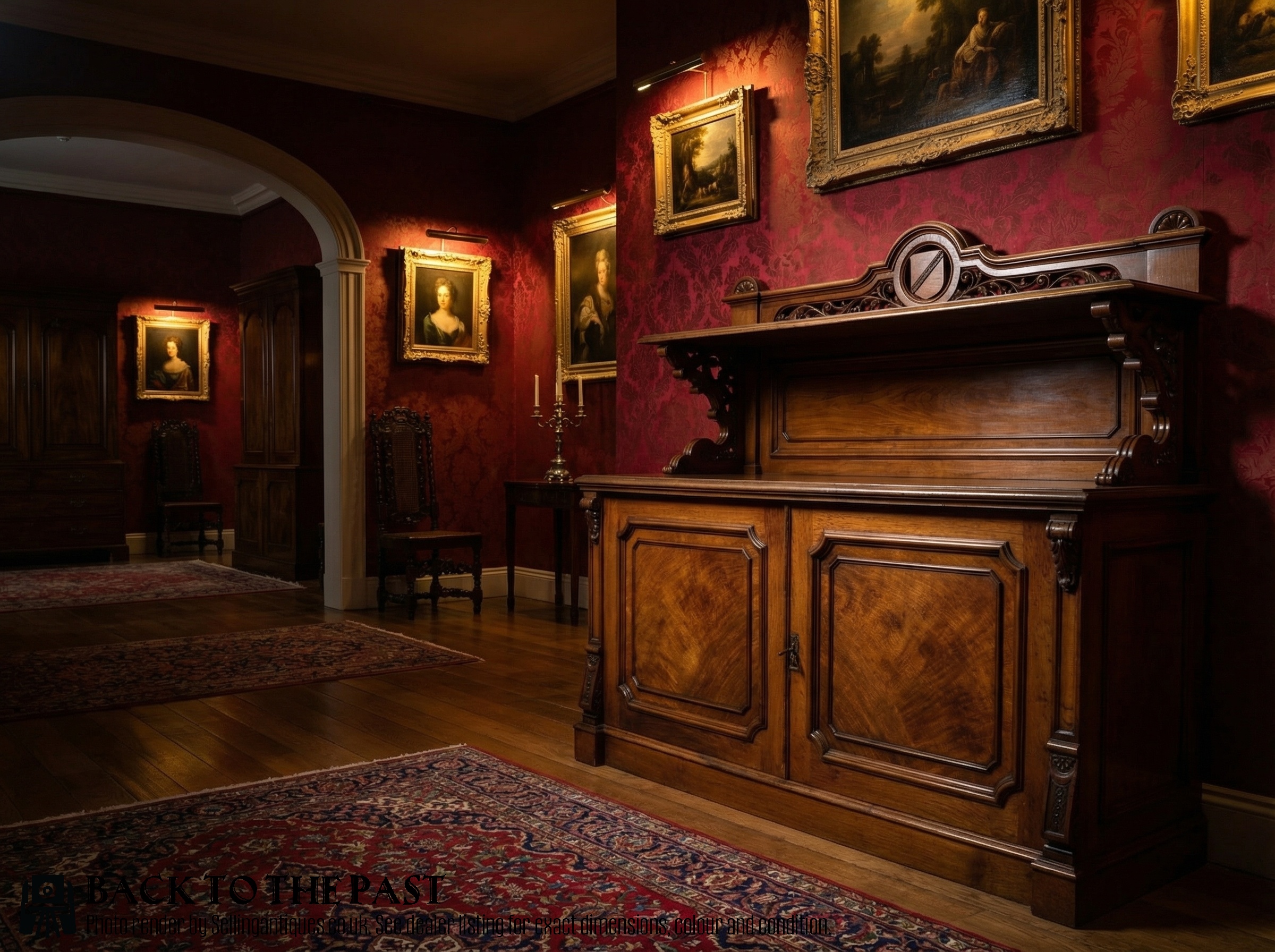
Brown Oak Chiffonier
When you search for a brown oak chiffonier, you encounter low cabinets, sideboards, and side cabinets designed for domestic utility. The pieces seen here span the 19th Century, Regency, Victorian, and Edwardian periods.
You are most likely to meet Victorian and 19th-century examples featuring pollard oak and standard oak. These low storage items frequently incorporate top shelves, mirrors, or small cabinets above the main surface.
The forms range from compact side cabinets to larger mirror-backed sideboards and buffets. They serve as functional display and storage furniture with distinct regional and period characteristics.
Materials and construction
Cabinet makers utilised solid oak and figured timber such as pollard oak to build these pieces. Brass and glass often appear as secondary materials for handles, fittings, and cabinet doors.
Selected examples incorporate contrasting woods like ebony, kingwood, and rosewood for decorative inlay and parquetry. Carved details and mirror backs appear on larger Victorian iterations, while simpler constructions define the Arts and Crafts pieces.
Brown Oak Chiffonier Retail Price Guide 2026
Typical asking prices for brown oak chiffonier among the pieces listed under this phrase on Sellingantiques today, from the lower quarter to the upper quarter. They describe what is for sale here now, not the wider market.
Listings span the 19th Century, Regency, Victorian, and Edwardian periods, utilising oak, pollard oak, brass, and glass.
Judging quality in brown oak furniture
Quality rests primarily in the figuring of the timber and the depth of the oak grain. Richly patterned pollard oak surfaces demand greater skill from the cabinet maker than plain timber.
The sophistication of secondary details, such as parquetry work or contrasting ebony stringing, separates standard storage from superior examples. Structural harmony between the lower cabinet and any added mirror back or top shelf dictates the overall success of the piece.
The Brown Oak Chiffonier Glossary
- Pollard oak
- Oak timber taken from a tree that was pruned at a height above livestock reach, producing a dense, highly figured grain pattern. This timber is prized for its decorative swirling movement.
- Parquetry
- Geometric wood inlay work forming a mosaic pattern on furniture surfaces. It appears on French transitional and 19th-century pieces.
- Chiffonier
- A low sideboard or cabinet featuring shelves or a small superstructure on top. It evolved during the 19th century to hold silver, glass, or books.
- Buffet
- A sideboard or low cabinet used for serving food or storing dining room ware. Victorian examples often incorporate heavy carving and multiple doors.
Brown Oak Chiffonier: Frequently Asked Questions
What is a brown oak chiffonier used for?
These cabinets provide surface display space and enclosed storage for dining rooms or living areas.
Their shelves and cupboards hold tableware, books, and decorative objects while adding rich timber tones to the interior.
How do I date a brown oak cabinet?
Dating relies on observing construction methods, timber choice, and stylistic markers such as Victorian carving or Arts and Crafts simplicity.
Periods represented in the evidence range from the Regency era through to Edwardian times.
What is pollard oak?
Pollard oak comes from trees pruned specifically to create a dense, highly textured grain.
This figured wood is frequently found on 19th-century cabinets and sideboards.
How do I care for antique oak furniture?
Maintain the wood by keeping it away from direct heat sources and sudden humidity changes.
Regular dusting and occasional application of appropriate wax help preserve the finish of the oak.