




Carved Oak Saint Figures
These carved oak saint figures bring centuries of devotional art into the room, offering tangible pieces of medieval and later religious history.
Carved Oak Saint Figures
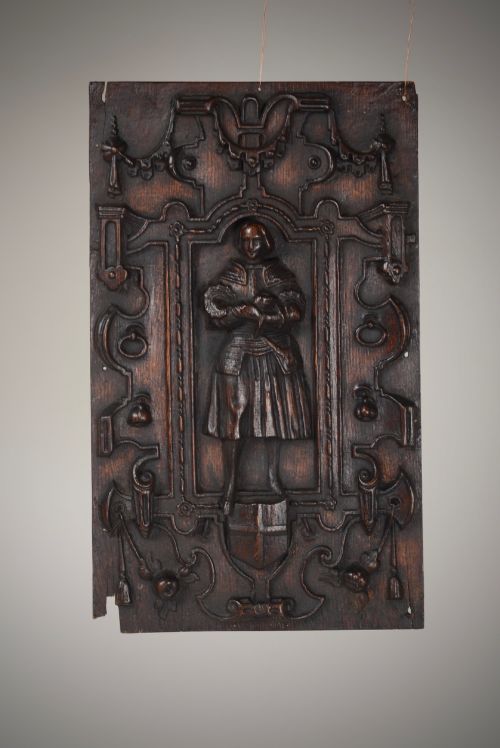
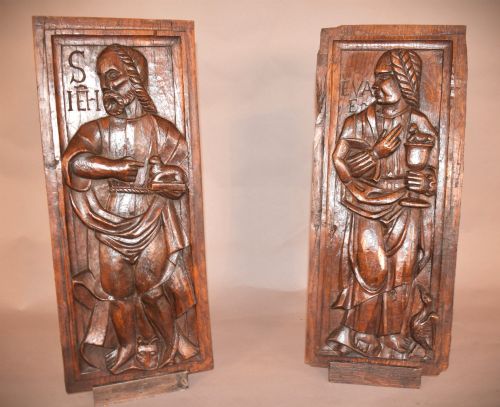
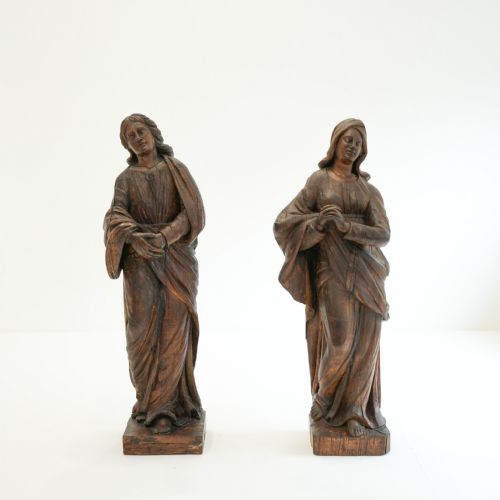
When you search for carved oak saint figures, you encounter devotional sculptures spanning from pre-16th century examples to later revivals. These works take the form of standing statues, architectural fragments, and detailed relief panels depicting venerated figures.
The selection ranges from early Flemish carvings and German saints to 17th-century panels and 19th-century interpretations. Many pieces originate from continental workshops, reflecting regional ecclesiastical traditions across centuries.
Subjects include specific figures such as Joan of Arc, St. Paul, Saint Jerome, and the Virgin, alongside anonymous donors and angels. Each piece bears the marks of its original liturgical or domestic devotional context.
How they were made
Maker-carvers worked primarily in oak and hardwood, using chisels and gouges to shape solid timber into complex sculptural forms. Tool marks often remain visible beneath the surface, revealing the direct hand of the woodworker.
Surfaces were frequently finished with paint, gilding, or metal elements to enhance the visual impact of the garments and halos. Over centuries, these polychrome layers have worn down or survived in fragments, showing the original treatment of the wood.
Object forms range from complete freestanding statues and pairs to wall panels and sculptural fragments.
What varies in quality
The integrity of the timber and the preservation of original surface treatments also define the standing of a piece. Intact groupings and well-maintained panels retain more of their historical context.
Franz Keller
The Carved Oak Saint Figures Glossary
- Polychrome
- Painted decoration applied to wood sculpture. This surface treatment was standard for medieval figures to give a lifelike appearance.
- Relief
- Sculpture carved from a flat background panel rather than fully in the round. These panels often formed parts of larger altarpieces or church furnishings.
- Gothic Revival
- A 19th-century architectural and artistic movement that emulated medieval forms. Works from this period deliberately recreated earlier styles.
- Anna Selbdritt
- An iconographic representation showing Saint Anne, the Virgin Mary, and the Christ Child together. This subject appears frequently in late medieval wood carvings.
- Fragment
- A surviving portion of a larger sculptural ensemble or architectural element. Many early pieces now exist as isolated components from dismantled altars.
Carved Oak Saint Figures: Frequently Asked Questions
How do I identify a 15th-century saint?
Early pieces often display distinct late Gothic drapery styles and tool work consistent with medieval timber preparation. Regional origins in Germany or Flanders frequently accompany these pre-16th century examples.
Attributes and iconography, such as specific vestments or accompanying symbols, help narrow down the identity of the depicted saint and the likely period of creation.
Were these figures painted originally?
Most historical religious figures received layers of paint, gesso, and sometimes gilding to enrich their appearance in dimly lit churches. Traces of this original pigment often survive within the recesses of the carved wood.
Later conservation or natural stripping has left some pieces with bare oak surfaces. Examining the wood under magnification reveals remnants of these early decorative layers.
How were these statues displayed?
Sculptures of this scale typically stood within church altarpieces, on rood screens, or inside private domestic chapels for daily devotion. Architectural panels were integrated directly into church furniture or wall paneling.
Their original placement dictated the viewpoint, meaning many figures are carved with greater detail on the front while the backs remain simpler or flat.
How should I care for old oak?
Keep wooden sculptures away from direct heat sources and sudden humidity changes to prevent the timber from splitting. Stable indoor conditions protect both the oak substrate and any surviving paint or gilding.
Dust the surface gently with a dry, soft brush rather than using liquid cleaning products or polishes. Allowing the wood to age naturally preserves its historical patina.