
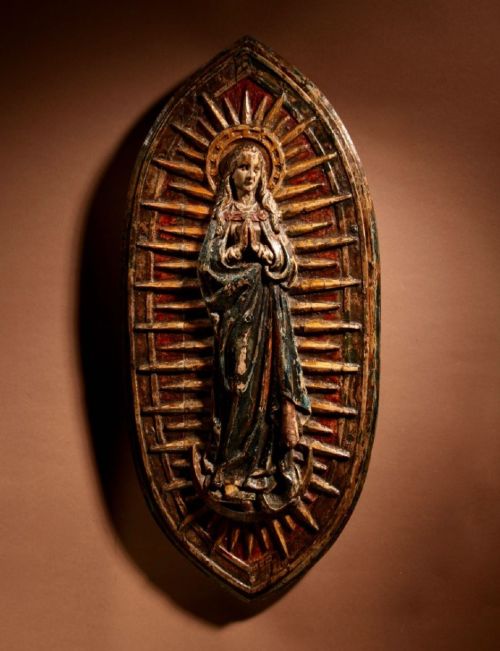
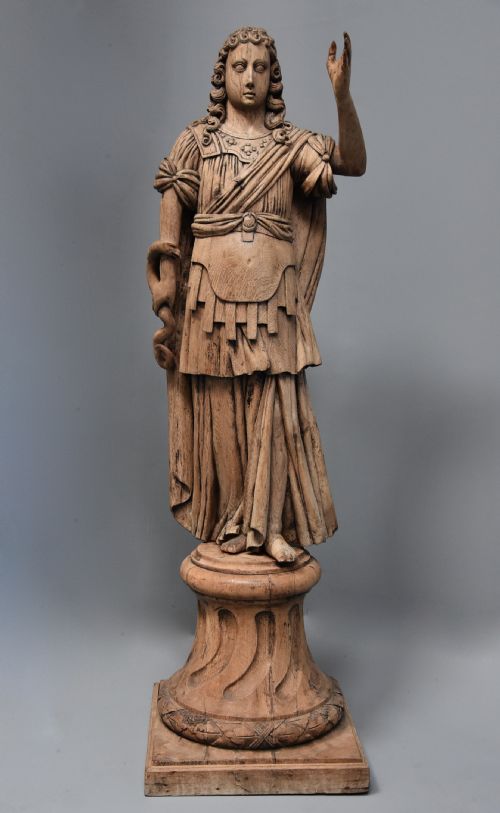
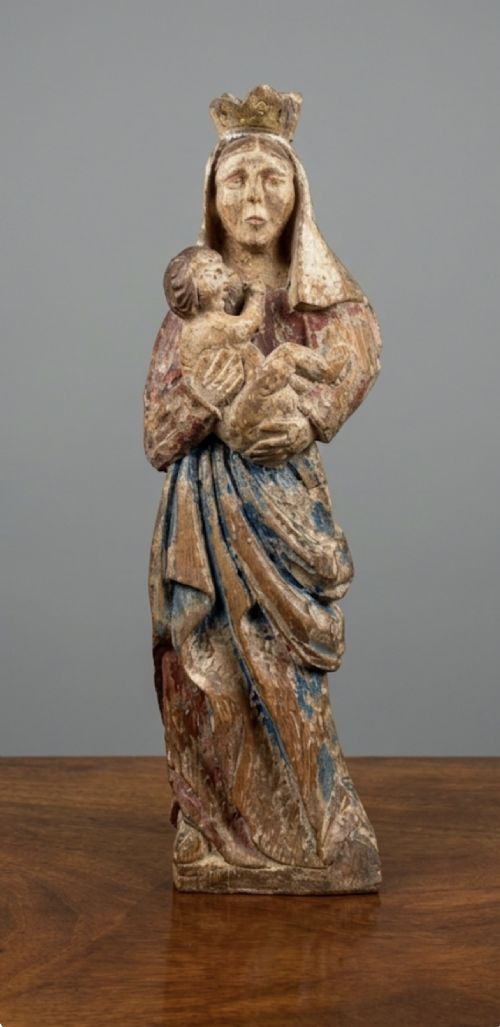


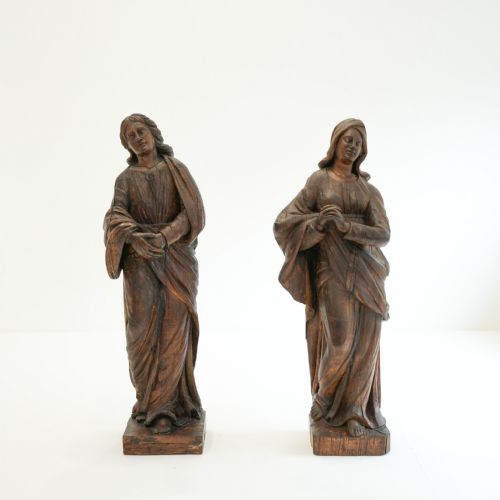


Carved Oak Religious Statue
These pieces are carved oak religious statue examples that bring centuries of devotional art and craftsmanship into your home.
Carved Oak Religious Statue
A carved oak religious statue represents figures such as the Virgin Mary, saints, and biblical scenes derived from European church and altarpiece contexts. These sculptures range from pre-sixteenth century Gothic carvings to nineteenth-century revival works.
The inventory on this page spans early Flemish and German groups, French Renaissance fragments, and eighteenth-century continental figures. Buyers encounter both single devotional images and fragments from larger altarpieces.
Forms include standing saints, Madonna and child groups, and relief panels depicting biblical figures. Their origins stretch across Germany, France, and the Low Countries.
Materials and methods
Carvers shaped these pieces primarily from solid oak and other woods using chisels and gouges to build deep relief and three-dimensional form. Timber selection prioritised dense heartwood capable of holding fine facial details and drapery folds.
Many surfaces retain traces of gesso, polychrome paint, and gold leaf applied to enrich the visual impact of the sculpture. These applied finishes interact with the aged grain of the wood beneath.
Several figures share sanctuary with unexpected companions, including serpents, half moons, and watchful cherubs lingering at their feet.
Factors determining quality
The refinement of the carving, particularly in the rendering of facial expressions and the natural fall of drapery, separates high-status workshops from simpler vernacular production. Mastery of proportion and anatomical structure indicates the skill of the original hand.
The survival of original surface treatments such as polychrome paint or gilding contributes significantly to the integrity of a piece. Depth of relief and the complexity of the compositional grouping also elevate the standing of the work.
Franz Keller
The Carved Oak Religious Statue Glossary
- Polychrome
- Decoration consisting of several colours applied to the surface of wood or gesso. It often survives in fragments on medieval church figures.
- Altarpiece
- A structured work of art set above and behind an altar, from which many central panels and carved figures originate. These complex structures contained numerous individual saintly figures.
- Gesso
- A plaster mixture used as a smooth base for paint and gold leaf on wooden sculptures. It provides the preparatory layer for fine surface decoration.
- Gothic
- A medieval art style spanning the twelfth to the sixteenth centuries, characterised by pointed arches and naturalistic figurative sculpture. Pieces from this era show distinct liturgical solemnity.
- Relief
- A sculptural technique where figures project from a flat background surface rather than standing completely in the round. Altarpiece panels frequently utilise high relief.
Carved Oak Religious Statue: Frequently Asked Questions
What periods do these statues come from?
The pieces originate from various eras, spanning pre-sixteenth century Gothic work through to the nineteenth-century Gothic Revival. Many examples date specifically to the sixteenth and eighteenth centuries.
Craftsmen from different European regions produced these works across hundreds of years, reflecting changing stylistic influences from Renaissance to Baroque periods.
Where were these sculptures originally displayed?
Most of these figures belonged to churches, chapels, and monastic foundations across Europe, often forming parts of larger altarpieces or wall shrines.
Some functioned as independent devotional objects for private prayer within domestic spaces or communal religious settings.
How should I care for a wooden religious statue?
Keep the sculpture away from direct sunlight, heat sources, and rapid fluctuations in humidity to protect the aged oak and any surviving polychrome paint.
Dust the surface gently with a dry, soft brush rather than using liquids or cleaning agents that might damage historical finishes.
How can I tell a medieval carving from a later revival piece?
Examination of tool marks, wood shrinkage patterns, and the wear on the material helps distinguish older hand-carved surfaces from nineteenth-century revival work.
Stylistic conventions in drapery and facial carving also provide clear indicators of whether a piece belongs to the medieval period or later movements.