
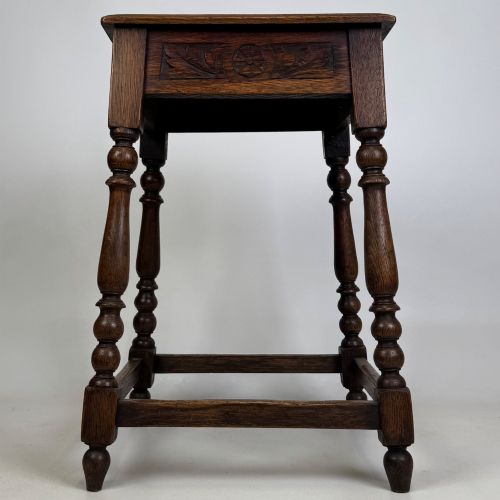
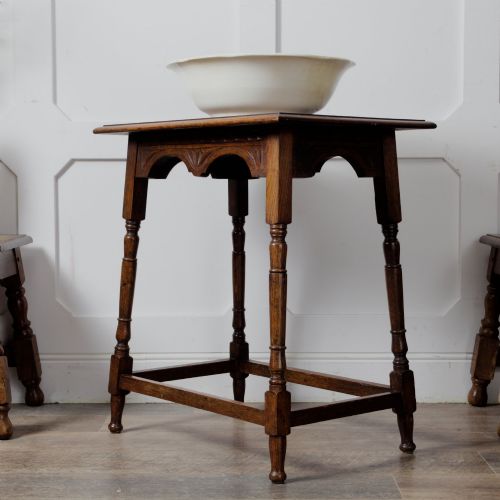
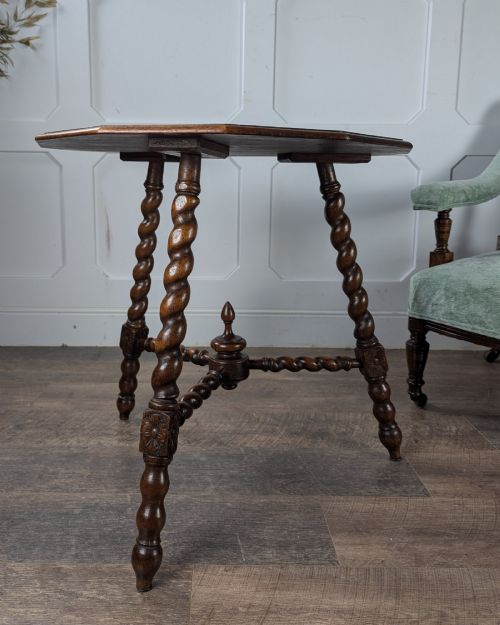
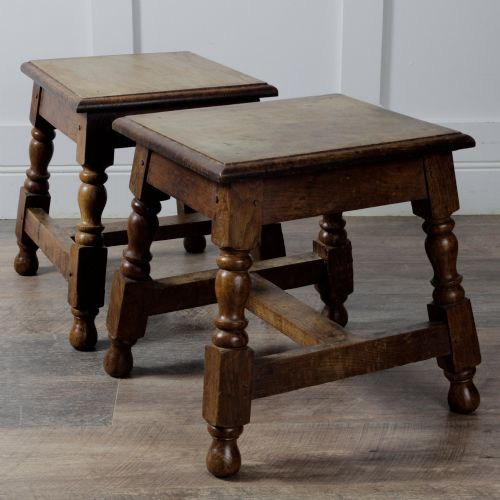
Carved Oak Plant Table
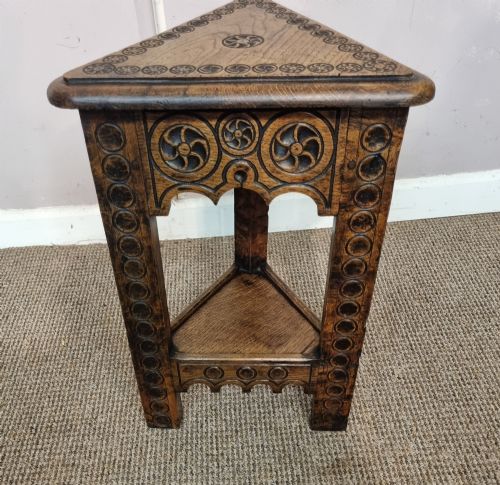
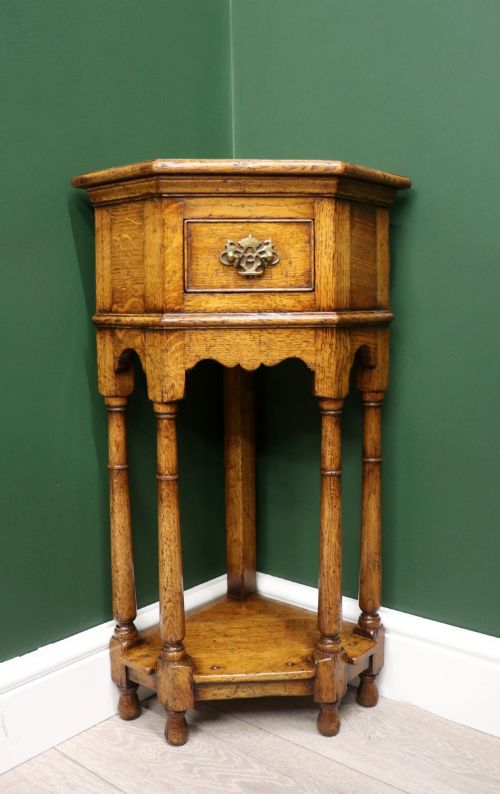
These carved oak plant tables bring solid timber and carved detail to a corner, most frequently found in Edwardian and Victorian forms.
Carved Oak Plant Table
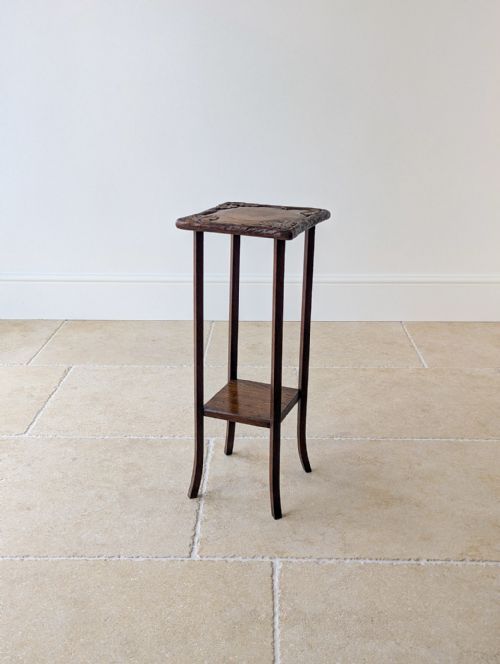
A carved oak plant table serves to elevate botanicals or display decorative objects upon a sturdy surface. The selection spans the nineteenth and twentieth centuries, encompassing the Victorian and Edwardian periods as well as the 1900, 1910, 1920, and 1930 decades.
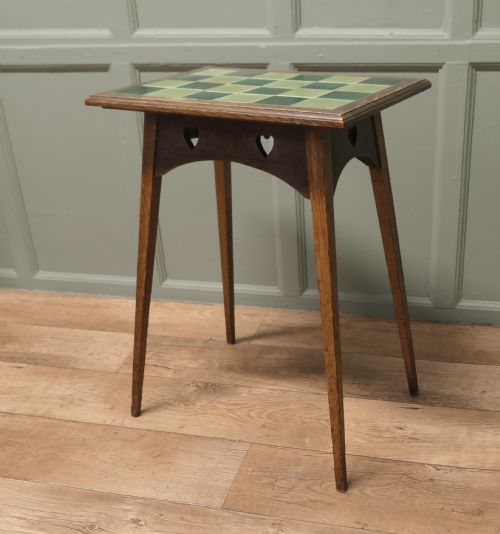
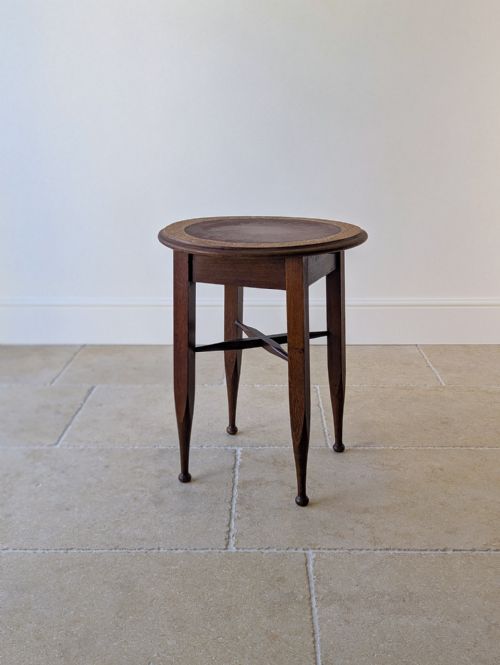
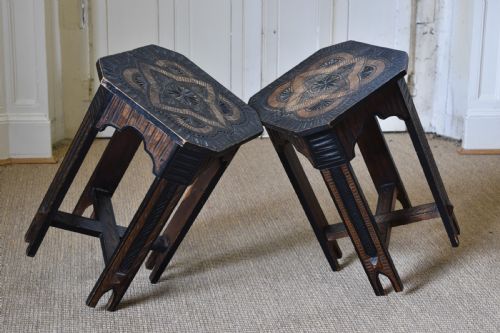
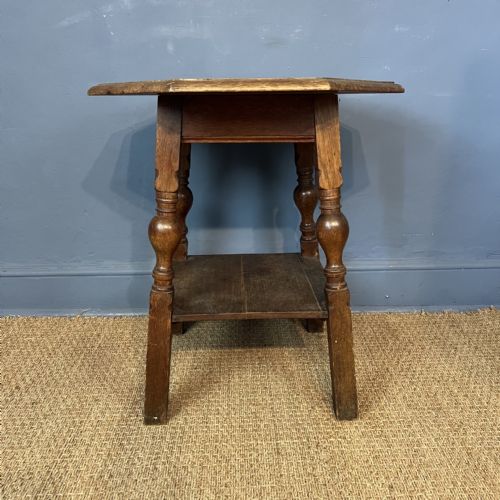
The forms extend beyond standard stands to include side tables, occasional tables, joint stools, tripods, torchere stands, and two-tier designs. These pieces frequently draw upon Jacobean Revival, Arts and Crafts, and Gothic Revival styles.
Buyers meet sturdy solid timber construction most often on this page, alongside occasional variations in walnut, brass, stained wood, and ebonised wood. The origins align with English country and period workshops rather than mass production.
How they were made
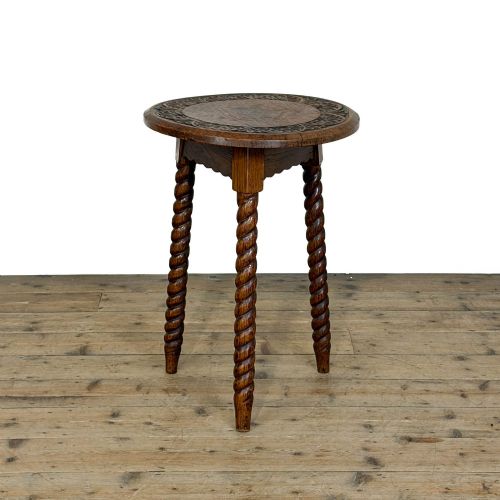
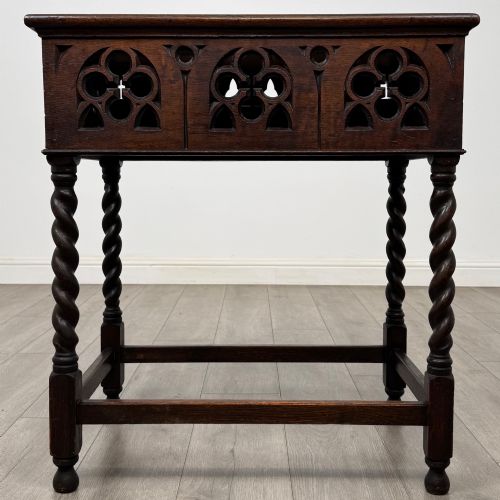
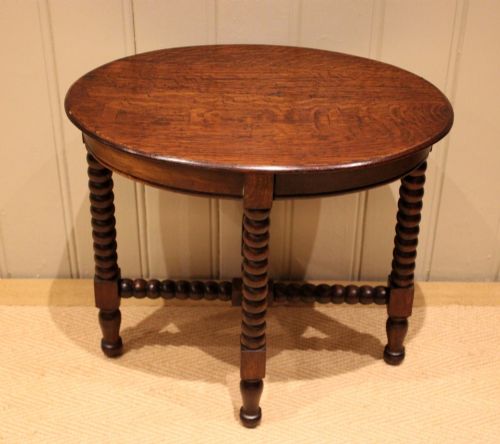
Makers utilised solid oak and hardwood, shaping timber with hand tools to produce jointed frames and turned supports. Barley twist, bobbin turned, and tripod legs provide structural stability while displaying the grain of the wood.
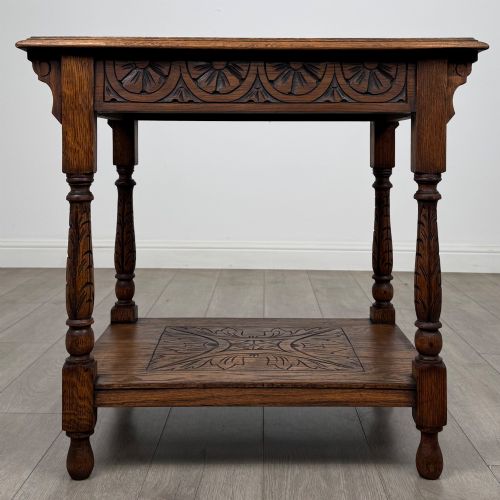
Surface ornamentation relies on chip carving, relief carving, and panel joints rather than applied veneers. Brass elements appear selectively on fittings, while occasional marble inserts or canework augment the primary timber structure.
The inventory spans the Victorian and Edwardian periods, stretching from the 1850s through to the 1930s.
What varies in quality
The depth and crispness of the carving dictate the distinction between standard production and superior craftsmanship. Hand-carved relief work exhibits sharper definition and greater individuality than machine-routed patterns.
Timber selection and joint integrity determine structural endurance. Solid oak with traditional jointing retains stability far better than secondary hardwoods assembled with modern metal fixings.
Liberty and Co·Gillows
The Carved Oak Plant Table Glossary
- Barley twist
- A turned wooden column resembling a spiralling rope. This decorative leg style appears frequently on Victorian and Edwardian side tables and plant stands.
- Arts and Crafts
- A design movement prioritising traditional craftsmanship and honest construction. Pieces from this period often display exposed joints and simple carved details.
- Gothic Revival
- An architectural and decorative style incorporating medieval motifs. Look for trefoil cut-outs, pointed arches, and heavy structural timbers.
- Torchere
- A tall stand designed to hold a light or a plant. These slender items lift displays to eye level.
- Joint stool
- A sturdy wooden seat constructed with mortise and tenon joints. They double effectively as low display surfaces.
Carved Oak Plant Table: Frequently Asked Questions
What is a carved oak plant table used for?
These tables provide a raised, stable platform for heavy ceramic pots, ferns, and floral displays inside domestic rooms. They place foliage at a deliberate height to catch light in corners or beside windows.
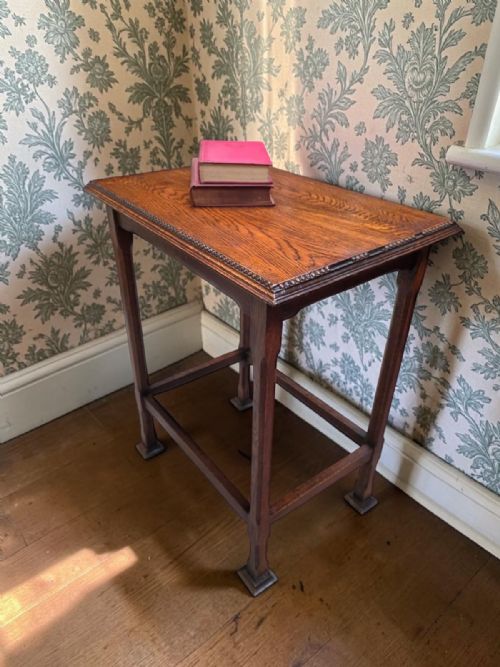
Beyond botany, buyers utilise them as occasional surfaces for lamps, books, or small decorative objects in sitting rooms and hallways.
How do I date an antique oak plant stand?
Examine the construction methods, tool marks, and hardware to establish a reliable period of manufacture. Hand-cut joints and uneven timber boards typically indicate nineteenth-century work, whereas uniform machine milling points towards the Edwardian era or the 1920s.
Stylistic markers also help narrow the age. Heavy Gothic revival details and dense chip carving often align with Victorian production, while cleaner Arts and Crafts lines usually suggest the turn of the twentieth century.
Are these tables made of solid oak?
The listings on this page consist predominantly of solid oak and hardwood structures. Timber density and weight remain reliable indicators of solid construction across these side tables and plant stands.
Selected examples incorporate secondary materials such as walnut, brass, or stained wood, but oak remains the foundational timber for the vast majority of these pieces.
How do I care for a vintage oak table?
Maintain the timber by applying a natural beeswax polish occasionally to nourish the grain and protect the carved surface from drying out. Avoid placing these stands directly next to active heat sources or in prolonged direct sunlight.
Dust the intricate carved recesses regularly with a soft dry brush to prevent dirt accumulation in the timber grain.