
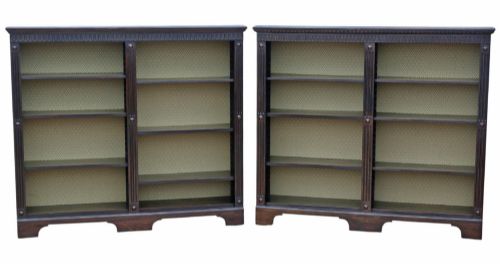
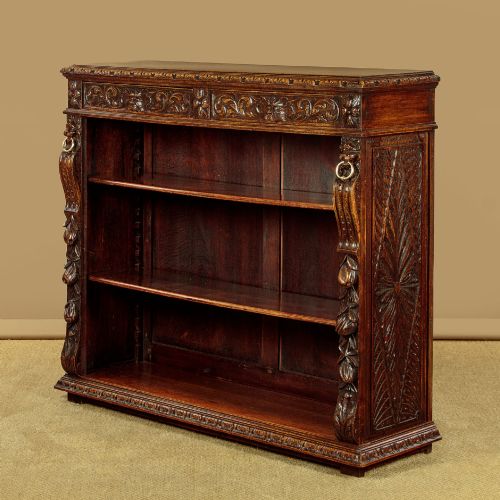
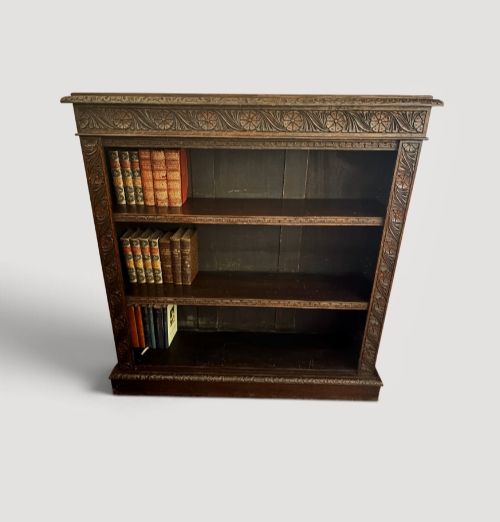
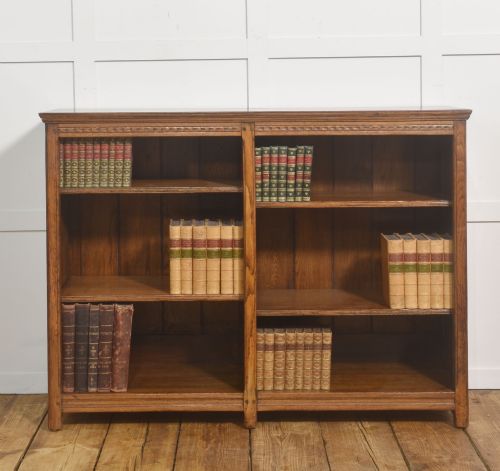
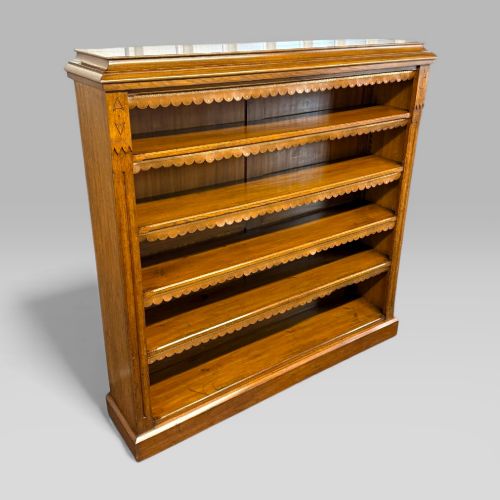
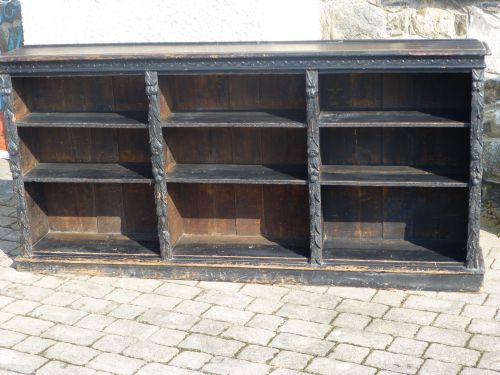
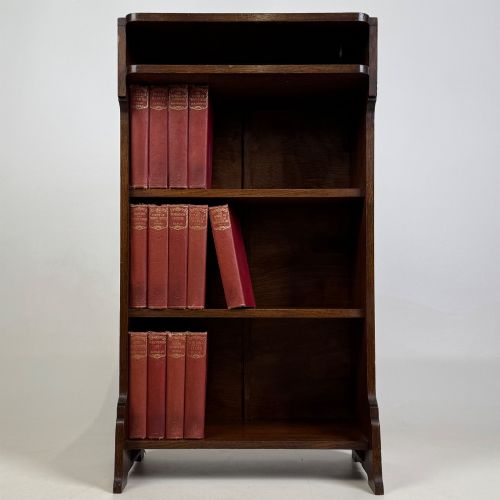
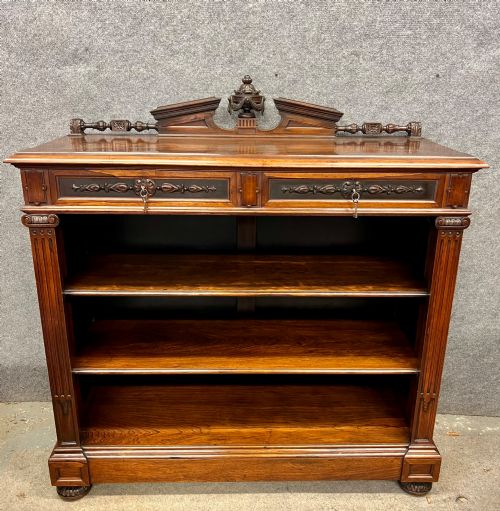




Carved Oak Library Shelving
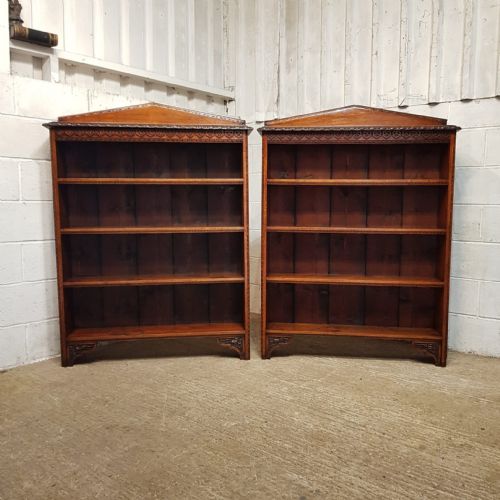
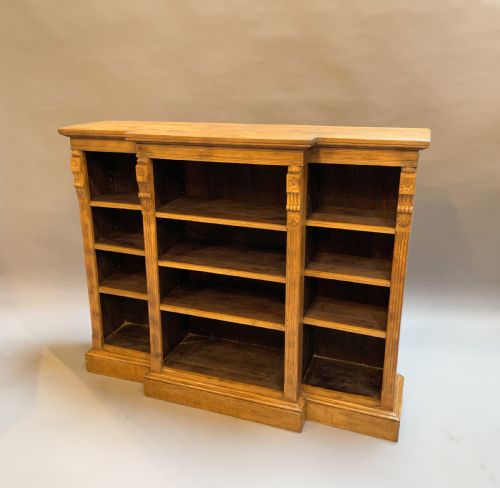
Carved oak library shelving brings substantial presence and heavy timber grain to a room, holding centuries of books with architectural authority.
Carved Oak Library Shelving
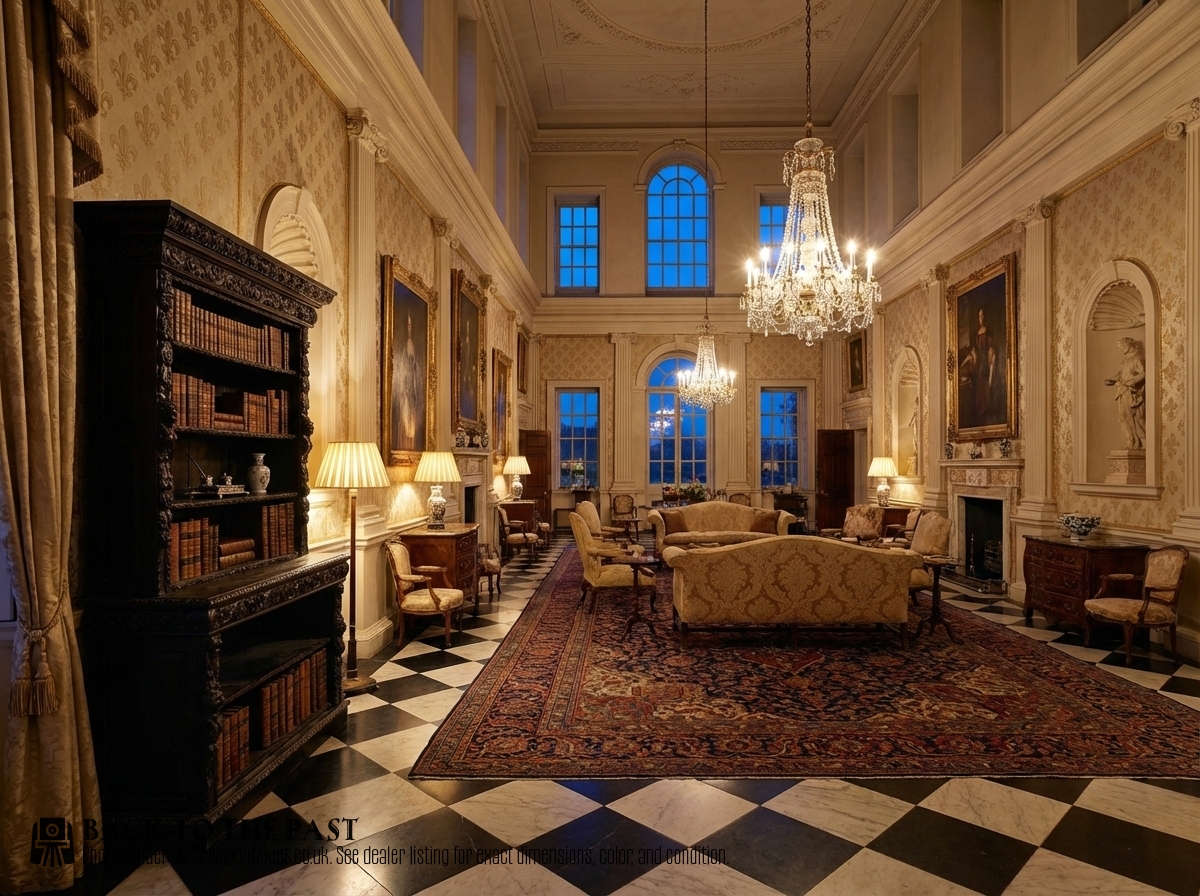
Carved oak library shelving spans sturdy open bookcases and architectural cabinets designed for heavy domestic or institutional book storage. You will most frequently encounter nineteenth-century Victorian and Edwardian examples featuring open fronts and adjustable shelves.
The materials used across these pieces rely primarily on solid oak, occasionally augmented by ebonised finishes, walnut accents, brass hardware, and delicate wood inlay. Styles range widely from austere Gothic Revival and robust Jacobean Revival to ornate Renaissance Revival and Aesthetic Movement designs.
Origins stretch from eighteenth-century French ateliers to British country houses and workshops, with many items taking the form of low dwarf bookcases or tall breakfront library fittings. These utilitarian yet decorative items served functional scholarly purposes in period interiors.
Materials and Construction
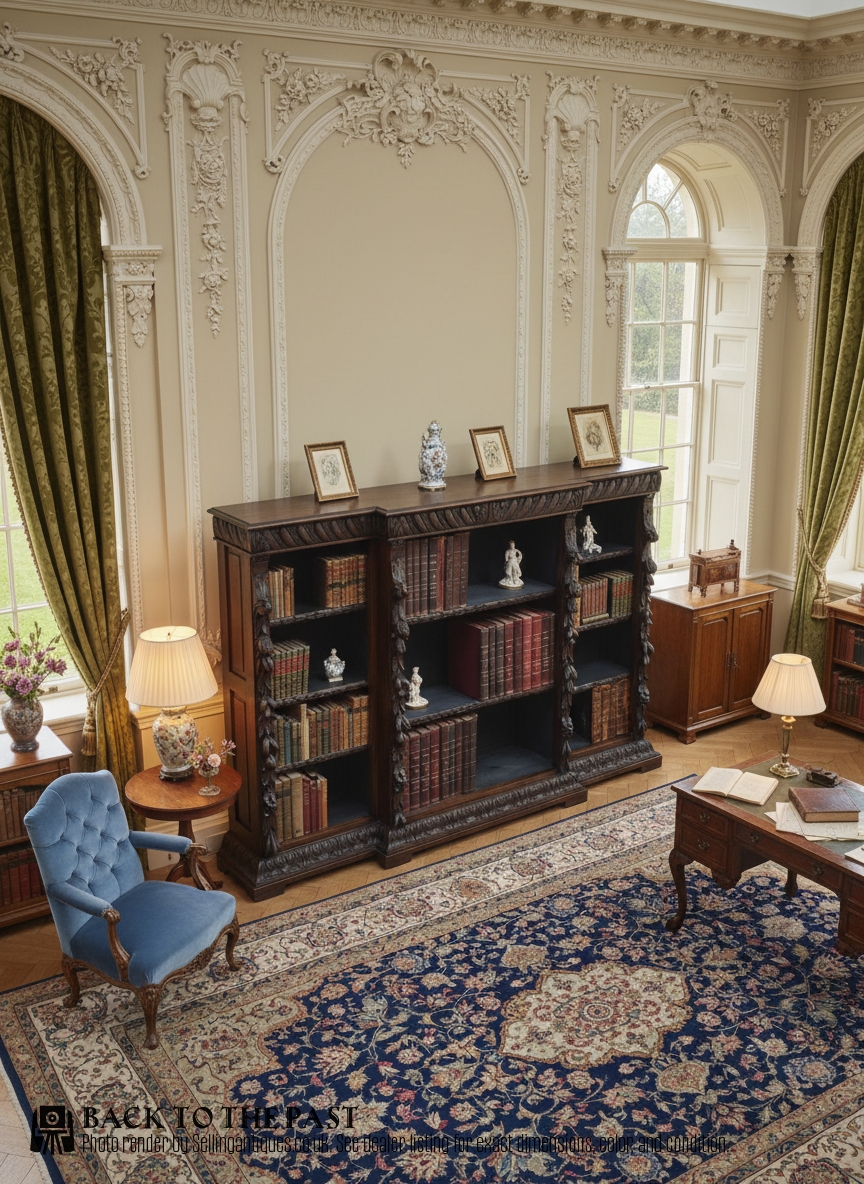
Makers constructed these bookcases using solid timber frames, frequently applying rich carved ornamentation directly into the dense oak grain. Hand-cut joinery and heavy timber panels provided the structural integrity required to support extensive rows of heavy volumes.
Surfaces often received specialised treatments, such as ebonising or bleaching, alongside occasional brass mounts and subtle wood inlay work. Adjustable shelf mechanisms utilised simple wooden supports or metal tracks embedded within the uprights.
Design influences span Victorian, Edwardian, Gothic Revival, Jacobean Revival, Aesthetic Movement, and Renaissance Revival aesthetics.
Distinctions in Quality
The upper tier of these pieces displays superior timber selection, showing carefully matched golden oak grain and deeply undercut architectural carving executed by skilled hands. Finer examples integrate complex breakfront proportions or specific revival styling rather than plain industrial utility.
Proportion and scale dictate the hierarchy of these items, where grand country house proportions and balanced architectural detailing separate bespoke commissions from simpler commercial productions. The presence of documented workshop origins or integrated secretaire drops further elevates the standing of a piece.
Waring and Gillows·Richard Bridgens·Gillows
The Carved Oak Library Shelving Glossary
- Breakfront
- A piece of furniture where the central section projects forward from the flanking wings. This configuration creates architectural depth in large library rooms.
- Dwarf bookcase
- A low piece of furniture designed to sit beneath dado height, keeping windows unblocked. These items often feature open shelves for easy access.
- Ebonised oak
- Timber treated with a dark chemical stain or finish to imitate ebony. This technique was popular during the nineteenth century for dramatic contrast.
- Gothic Revival
- A design movement inspired by medieval architecture, notable in furniture through pointed arches and tracery. It brings ecclesiastical gravity to domestic shelving.
- Adjustable shelves
- Shelves that can be moved vertically to accommodate books of varying heights. This practical system relies on internal slots or movable pegs.
Carved Oak Library Shelving: Frequently Asked Questions
What periods do these bookcases cover?
The available pieces span largely across the nineteenth century, including Victorian and Edwardian eras, alongside occasional eighteenth-century French examples.
Earlier iterations lean towards robust Gothic and Renaissance revivalism, while later Edwardian items offer simpler forms.
Are the shelves adjustable?
Many examples feature adjustable shelves designed to accommodate books of varying heights and formats.
This functionality allowed private libraries to reorganise growing collections without commissioning new cabinetry.
What styles are most common?
Victorian and Gothic Revival pieces dominate the selection, bringing heavy architectural carving and dark timbers to domestic spaces.
You will also encounter Aesthetic Movement, Jacobean Revival, and occasional French country house aesthetics.