



Heavy Carved Oak Bookcase
A heavy carved oak bookcase is a substantial piece of vernacular and revival furniture built to anchor a serious library.
Heavy Carved Oak Bookcase
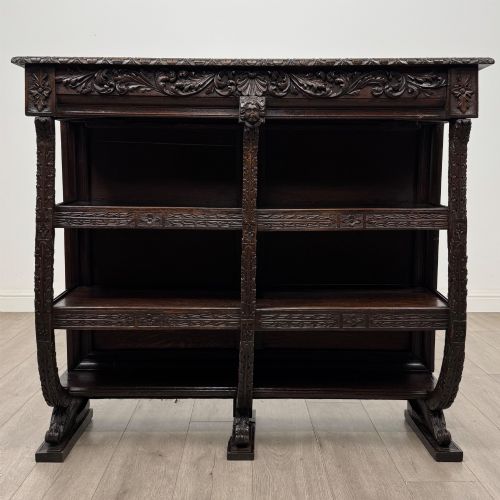
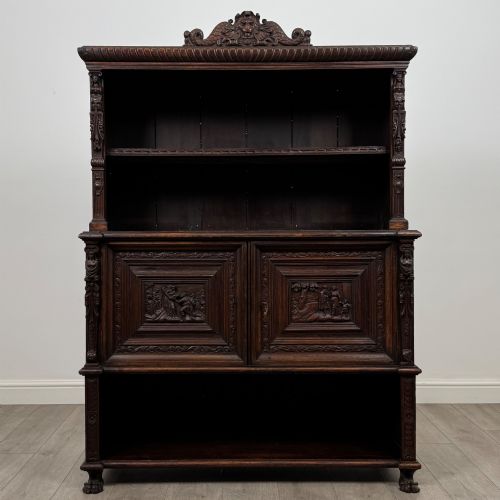
A heavy carved oak bookcase is typically encountered in Victorian and Edwardian iterations, spanning from the latter half of the nineteenth century into the early twentieth century. These library and country house pieces emerge in distinct architectural formats, including monumental breakfront designs, tall open configurations, and two-door cupboards.
The styles appearing across these pieces lean heavily into revivalist aesthetics, drawing directly from Gothic and Renaissance Revival vocabularies. Such forms serve primarily to display and protect large volumes within domestic or institutional studies.
How they were made
Construction relies fundamentally on solid oak timbers, chosen for their structural strength and capacity to bear deep relief carving. Subsidiary materials such as glass, brass hardware, and lead appear selectively for glazing and structural reinforcement.
The joinery supports generous shelf loads, often incorporating adjustable shelving systems within open fronts or enclosed cabinet spaces. Exterior surfaces receive intricate hand-chiselled ornamentation characteristic of nineteenth-century revival craftsmanship.
Heavy Carved Oak Bookcase Retail Price Guide 2026
Typical asking prices for heavy carved oak bookcase among the pieces listed under this phrase on Sellingantiques today, from the lower quarter to the upper quarter. They describe what is for sale here now, not the wider market.
One recorded piece carries the specific provenance of Miskin Manor, tying nineteenth-century library joinery to a named Welsh country house.
What varies in quality
Quality diverges notably in the ambition of the architectural design and the depth of the carved enrichment. Monumental scale and documented provenance, such as specific library associations, elevate particular examples above standard domestic production.
The execution of the relief carving separates routine workshop output from finer cabinet work. Crispness in the manual detailing of Renaissance and Gothic motifs dictates the overall distinction of a piece.
The Heavy Carved Oak Bookcase Glossary
- Breakfront
- A piece of furniture having a central section that projects forward from the flanking wings. This configuration creates architectural depth in large library bookcases.
- Renaissance Revival
- A nineteenth-century design movement borrowing motifs from sixteenth-century European architecture. It manifests in heavy oak furniture through symmetrical relief carving and robust classical proportions.
- Gothic Revival
- An architectural and decorative style drawing inspiration from medieval ecclesiastical buildings. Pieces in this idiom utilise pointed arches, tracery, and dark timber.
- Open bookcase
- A shelving unit without doors designed for immediate access to working volumes. These pieces frequently feature adjustable internal shelves.
Heavy Carved Oak Bookcase: Frequently Asked Questions
How do I care for a heavy oak bookcase?
Maintain stable relative humidity in the room to prevent the solid oak from splitting or warping over time. Dust regularly with a dry cloth and apply traditional beeswax sparingly to nourish the timber.
Keep the piece away from direct heat sources and strong sunlight, which can dry out the wood and fade the finish. Ensure that heavy book loads are distributed evenly across the shelves to avoid sagging.
Are the shelves adjustable?
Many library bookcases from the Victorian and Edwardian periods incorporate adjustable shelving mechanisms to accommodate volumes of varying heights. These systems typically utilise wooden bearer strips or brass shelf supports.
When inspecting an open front or cabinet bookcase, check whether the original adjustment peg system remains intact. This feature adds considerable practicality for modern book storage.
What is the difference between open and closed bookcases?
Open bookcases provide immediate visual access to book spines and allow for quick retrieval of working volumes. They are traditionally suited to active home studies and private libraries.
Closed bookcases, featuring wooden or glazed doors, offer greater protection against dust and light exposure. These enclosed variants often incorporate lower cupboard storage beneath the main shelving tiers.
How do I identify a Renaissance Revival piece?
Renaissance Revival furniture relies on classical architectural vocabulary translated into heavy carved oak. Look for symmetrical compositions, pilasters, and dense strapwork or foliate carving.
These pieces often date from the latter half of the nineteenth century and project a substantial, architectural presence within a room.