
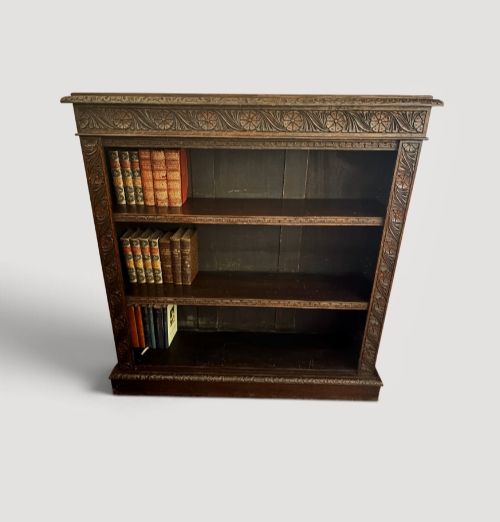
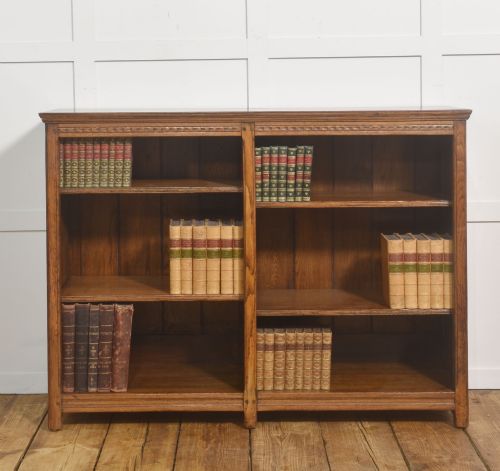
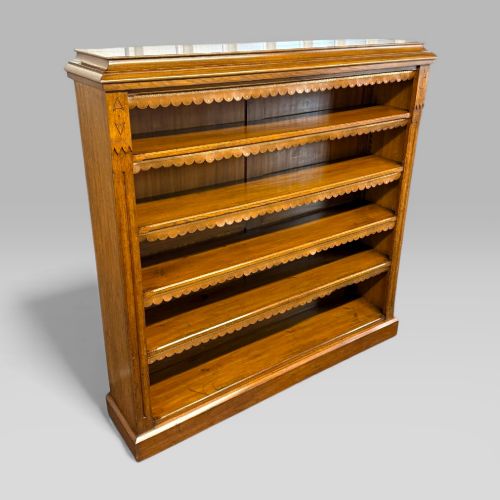
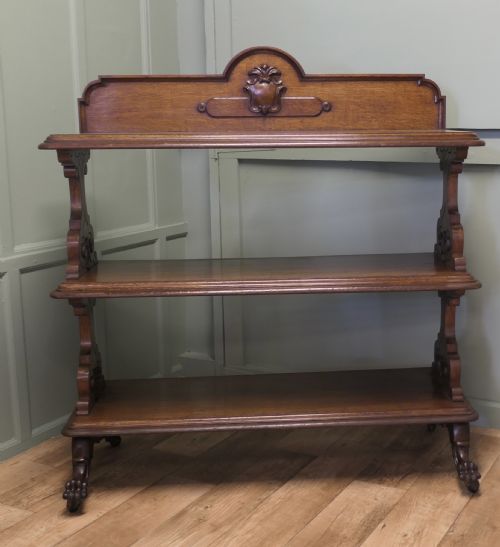
Carved Oak Shelving
Carved oak shelving brings substantial timber grain and traditional joinery directly into daily domestic life.
Carved Oak Shelving
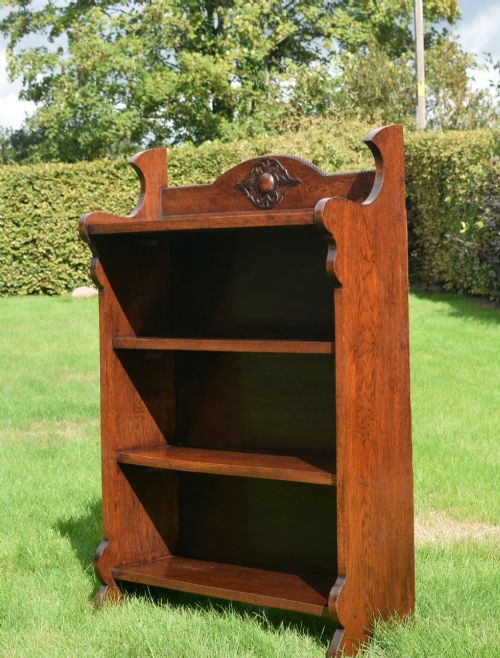
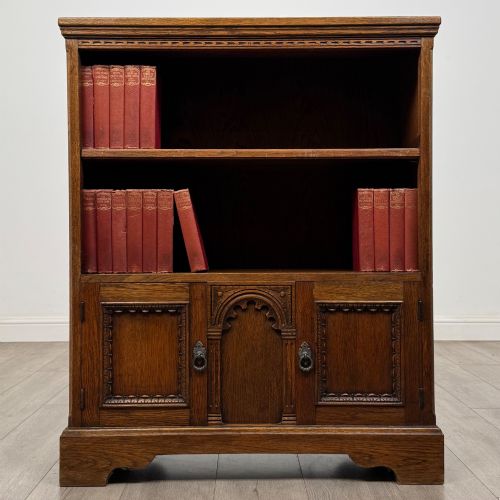
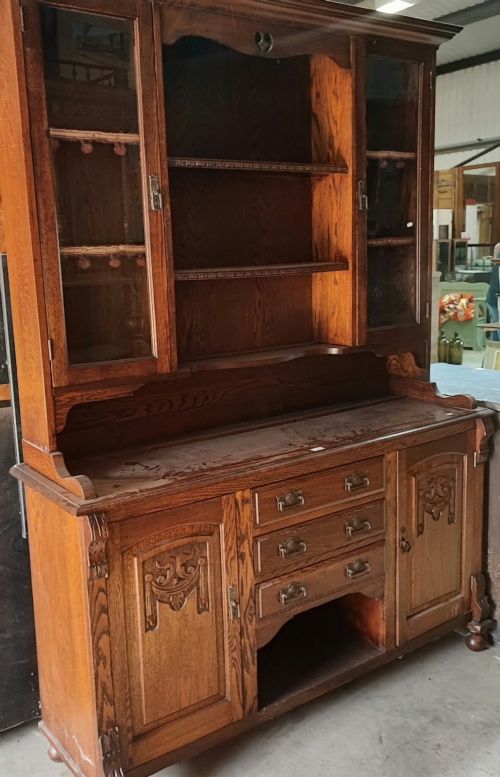
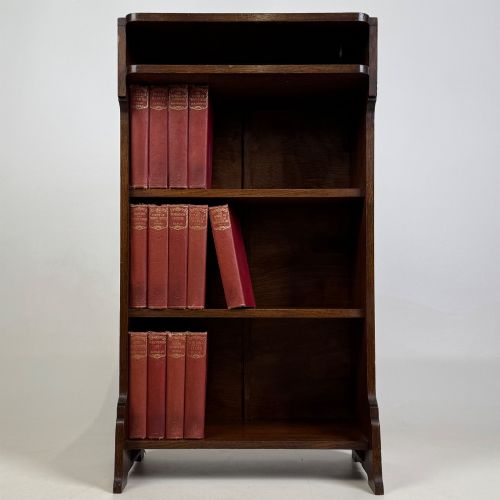
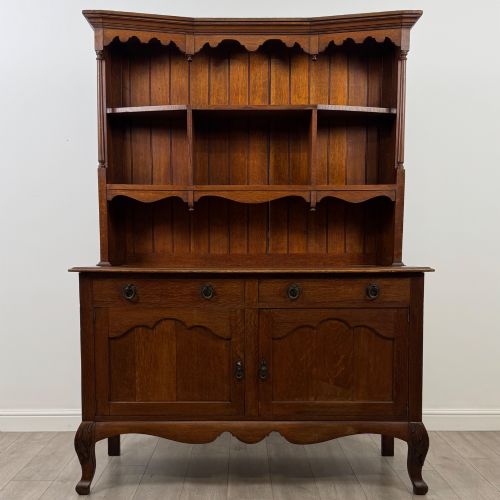
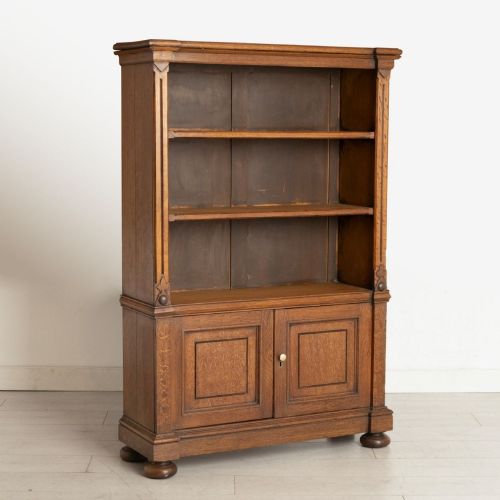
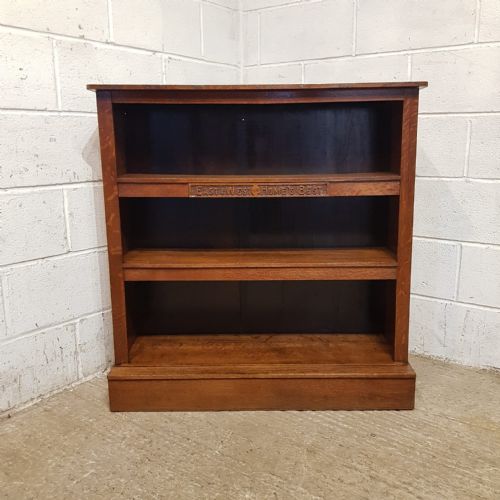
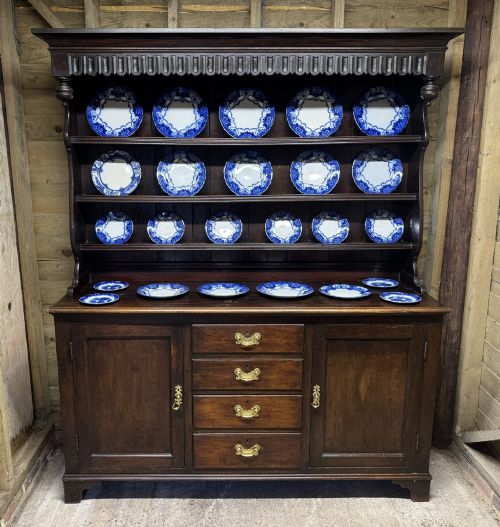
Carved oak shelving encompasses functional storage units designed to hold books and display objects within domestic interiors. Buyers searching for carved oak shelving encounter open bookcases, wall hanging shelves, and large library pieces spanning multiple decades. The pieces originate from periods including the Victorian era, the Edwardian years, and the early twentieth century.
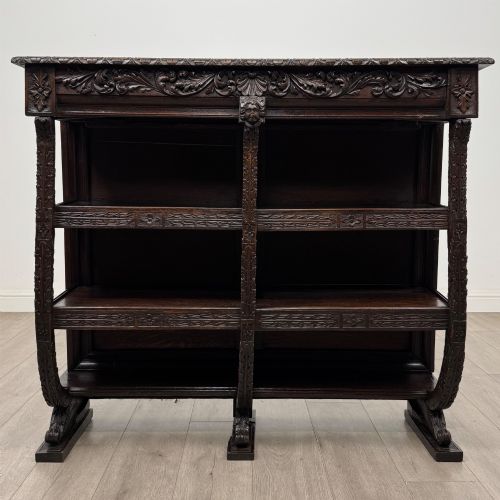
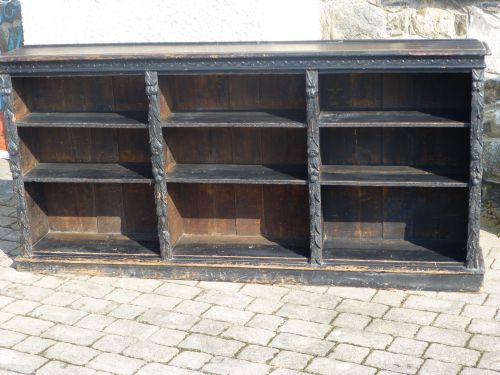
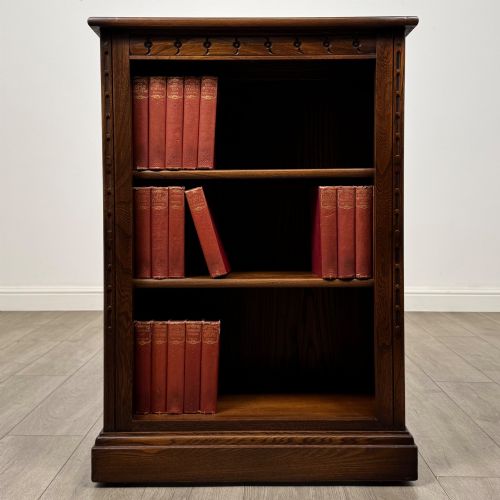
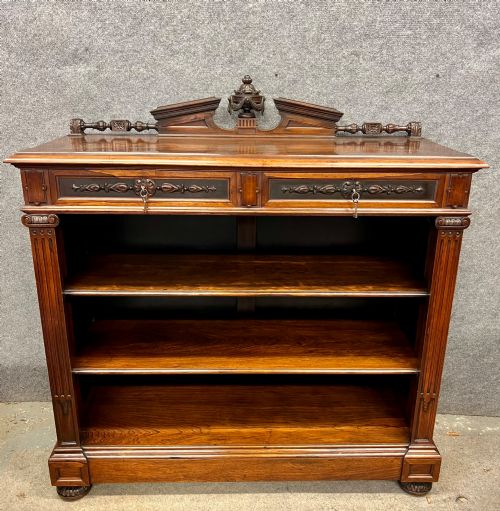
The most common forms on this page are open bookcases and wall shelves built from solid timber. These items often feature carved details such as foliage, strapwork, or figural motifs like the green man. Pieces range from compact dwarf bookcases to large breakfront library furniture.
Makers and designers from the nineteenth and early twentieth centuries drew upon historical idioms, producing works in Gothic Revival, Jacobean Revival, and Arts and Crafts styles. The resulting furniture merges storage utility with ornamental woodwork suited to period and traditional rooms.
Materials and construction methods
Makers utilised solid oak alongside tiger oak and golden oak variants to construct these storage items. Timber selection dictated the visual weight and grain pattern of each piece, while auxiliary woods such as beech occasionally appeared in internal or structural components.
Cabinet makers employed traditional joinery techniques, incorporating adjustable shelving mechanisms and moulded cornices. Carving was executed by hand directly into the timber, ranging from low relief geometric patterns to deep sculptural ornamentation on friezes and stiles.
The listings include pieces from the Victorian, Edwardian, Georgian, and Art Deco styles, constructed in oak, mahogany, walnut, and brass.
Distinctions in craftsmanship
The calibre of a piece depends on the depth and crispness of the timber carving and the selection of figured oak boards. Finer examples display meticulous hand-chiselled details and well-balanced proportions across breakfront or open formats.
Construction integrity separates standard utility furniture from superior library editions. Robust internal framing, properly fitted adjustable shelf brackets, and stable timber seasoning determine the longevity and structural class of the shelving.
The Carved Oak Shelving Glossary
- Breakfront
- A cabinet design where the central section projects forward from the flanking outer sections. This arrangement adds architectural depth to large bookcases.
- Green Man
- A sculptural architectural motif depicting a human face carved with leaves, vines, or branches sprouting from the mouth. It appears frequently on nineteenth-century revival woodwork.
- Tiger Oak
- Oak timber quarter-sawn to reveal prominent medullary rays that create a striped pattern resembling tiger markings. Cabinet makers utilised this figure for decorative impact.
- Aesthetic Movement
- A late nineteenth-century design current that emphasised visual beauty over narrative subject matter. Furniture from this ethos often combined ebonised finishes with carved detail.
Carved Oak Shelving: Frequently Asked Questions
What periods do these pieces span?
The listings span from the early nineteenth century through the Victorian and Edwardian eras into the nineteen-thirties. Examples include William IV pieces alongside Arts and Crafts and Gothic Revival items.
Most items date from the Victorian period and the early twentieth century, reflecting the popularity of heavy timber furniture during those decades.
Are the shelves adjustable?
Many of the open bookcases feature adjustable shelving systems to accommodate books of varying heights. These mechanisms use traditional wooden supports or metal tracks.
Fixed shelves also appear, particularly in older wall hanging units and specific cabinet formats.
How do I identify Gothic Revival pieces?
Gothic Revival items display architectural motifs drawn from medieval buildings, such as pointed arches, tracery, and heavy linenfold panelling. These elements are carved directly into the oak framework.
Such pieces often date from the Victorian era when architects and cabinet makers revived medieval design principles.
What is ebonised oak?
Ebonised oak is timber treated with a chemical stain or pigment to darken the surface and simulate costly ebony wood. This finish appeared frequently on Aesthetic Movement furniture.
The dark surface provided a high-contrast background for carved ornamentation and gilded details.