

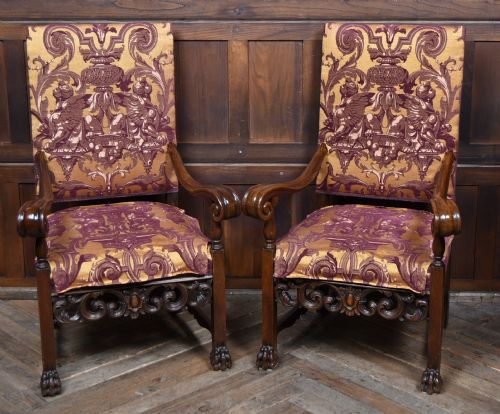
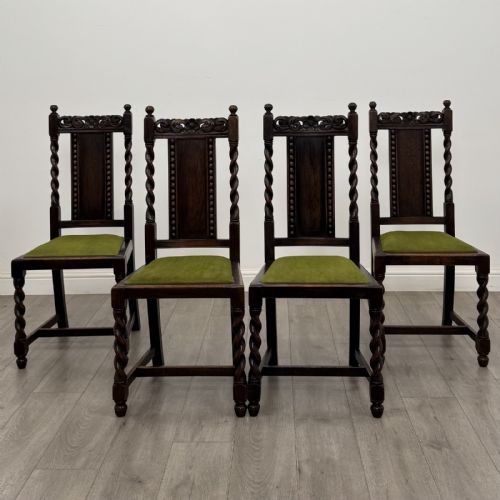
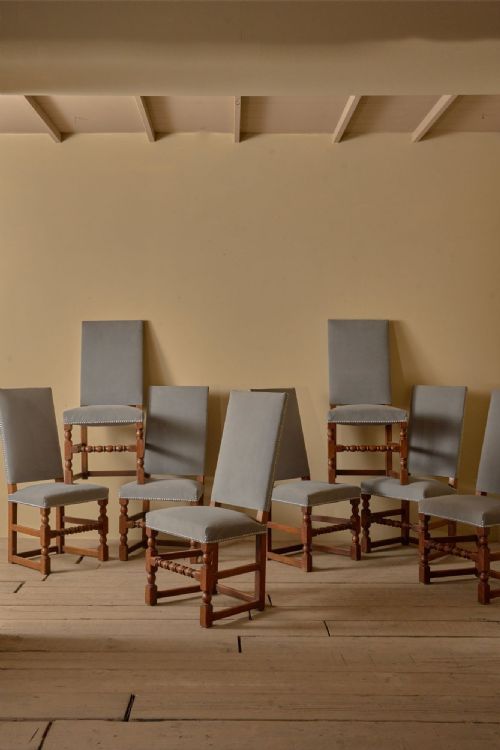
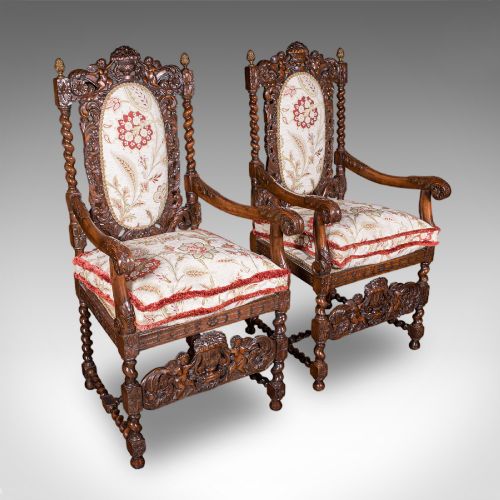
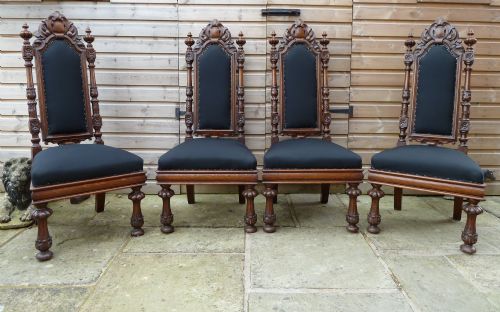
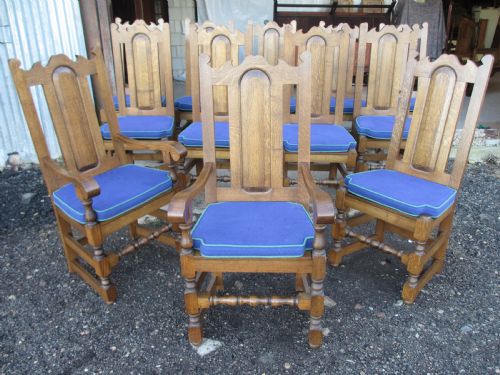
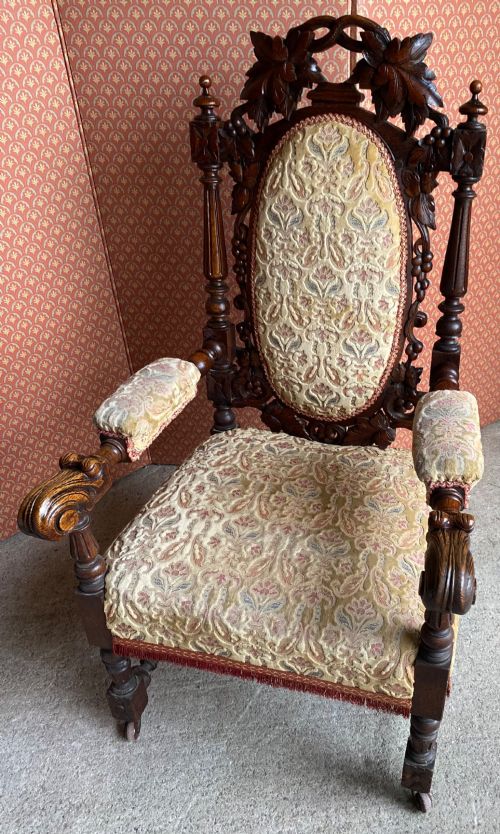
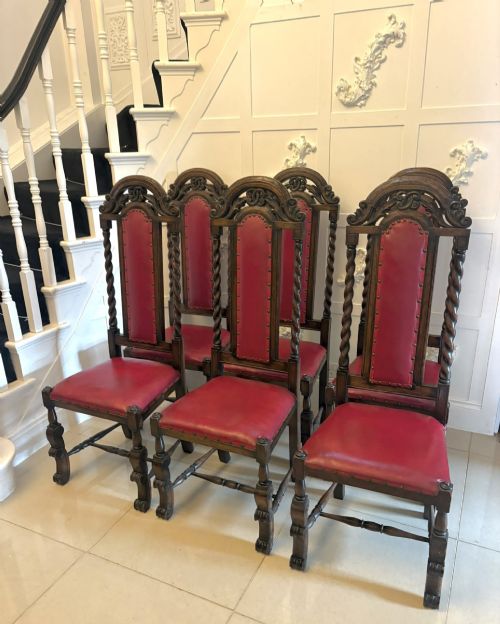
Carved Oak High Back Chair
A carved oak high back chair brings architectural presence and heavy timber construction into a room, offering both sturdy seating and period character.
Carved Oak High Back Chair
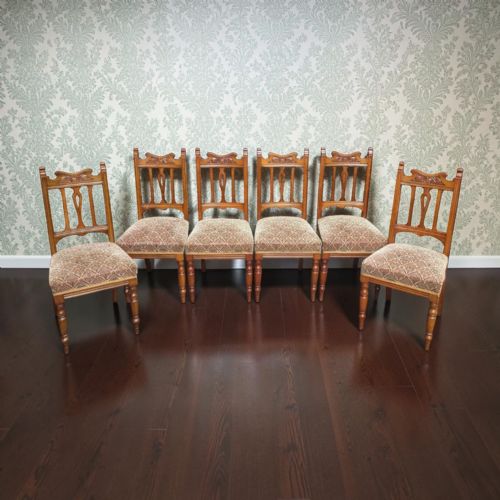
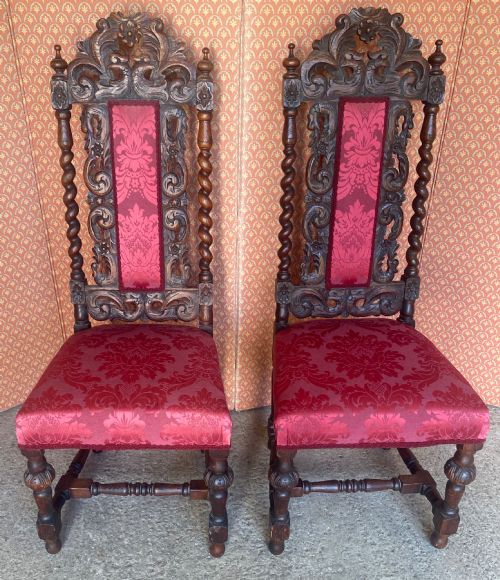
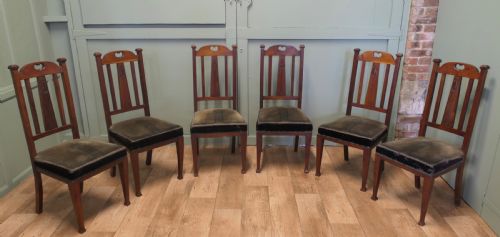
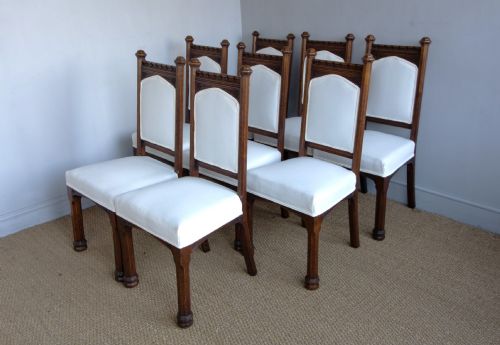
Buyers seeking a carved oak high back chair encounter pieces primarily spanning the nineteenth century through the early twentieth century, alongside revivals drawing on earlier vernacular forms. These heavy wooden seats appear across multiple iterations, ranging from single baronial armchairs to complete dining sets in revival styles.
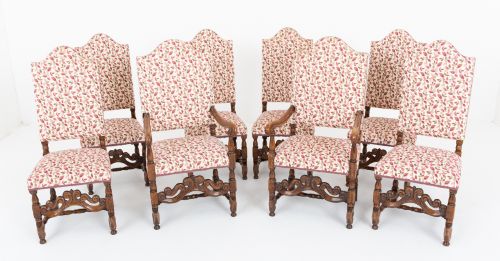
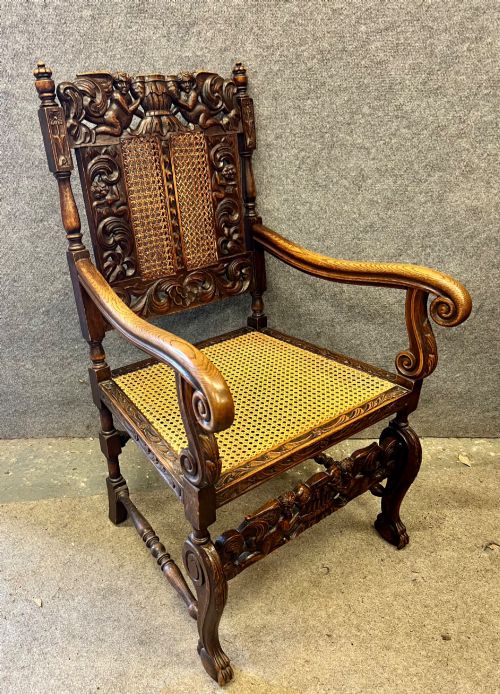
The selections available here lean heavily into Victorian, Edwardian, and specific revival idioms such as Jacobean, Gothic, and Carolean. Forms vary from sturdy hall chairs and office desk seats to expansive throne chairs and dining suites.
Origin points span English regional workshops, Scottish makers, and continental traditions, often incorporating functional adjustments like cane panels or upholstered pads. The dominant presence on this page is the nineteenth-century revival dining chair or armchair, built to emulate earlier centuries with deep relief carving.
Materials and construction
Construction relies primarily on solid oak, chosen for its density and capacity to hold deep chisel work, complemented by supplementary materials such as brass fixings, cane work, and embossed leather or velvet upholstery. Joinery typically employs traditional mortise and tenon methods, secured with wooden pegs.
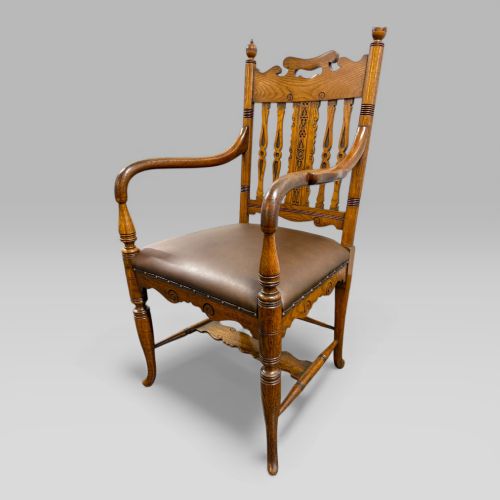
Carving is executed directly into the timber frame, most visibly along the high backrests, crest rails, and stiles, utilising techniques like strapwork, foliage, and geometric punch work. Turning lathes shape subsidiary elements such as barley twist stretchers and spindle supports.
Carved Oak High Back Chair Retail Price Guide 2026
Typical asking prices for carved oak high back chair among the pieces listed under this phrase on Sellingantiques today, from the lower quarter to the upper quarter. They describe what is for sale here now, not the wider market.
Listings on this site include oak, mahogany, leather, and cane across Victorian, Edwardian, and various revival periods.
Evaluating craftsmanship and integrity
Quality rests upon the crispness of the hand-carved detail and the structural honesty of the timber frame. Superior examples display deep, deliberate chisel marks rather than shallow, machine-routed impressions, and utilise dense, quarter-sawn oak with visible medullary rays.
The integrity of the joinery dictates durability, separating robust originals from loose frames weakened by poor repairs or dry conditions. Original surface patination, developed through decades of handling and wax polish, distinguishes fine pieces from those stripped down and overly refinished.
Gillows·Bruce James Talbert·M. D. Miller & Sons
The Carved Oak High Back Chair Glossary
- Carolean
- A style reflecting the English restoration period of the seventeenth century, known for ornate scrolling woodwork, crown motifs, and cane panels. Pieces of this design often reappear in later revival furniture.
- Baronial
- A descriptive term applied to heavy, imposing furniture with medieval or Tudor pretensions, featuring exaggerated scale and deep relief carving. These seats suit large halls and formal dining spaces.
- Barley twist
- A decorative turning technique resembling a twisted rope, carved or lathed into wooden chair legs and stretchers. This motif gains popularity during the seventeenth century and sees a major revival in Victorian seating.
- Crest rail
- The top horizontal member of a chair back, frequently shaped, carved, or branded with maker details. In high back designs, this section bears the most prominent decorative carving.
- Stile
- The upright vertical side post of a chair back framing the central panel or splat. These members provide the primary structural support for the elevated height.
Carved Oak High Back Chair: Frequently Asked Questions
How do I style a high back chair at home?
Place a single carved oak high back chair as an accent piece in a hallway, study, or corner where its architectural silhouette remains visible. Avoid pushing it against a wall that obscures the detailed carving on the reverse of the tall crest rail.
Pair dining sets with a simple refectory table to let the rhythmic repetition of the high backs stand out without visual clutter. Ensure the room has adequate floor space, as these substantial timber frames dominate smaller layouts.
Are these chairs comfortable for daily sitting?
Many high back designs prioritise upright posture and formal presentation over relaxed lounging, reflecting the domestic habits of their period of origin. Supportive upholstery or loose squabs frequently mitigate the rigidity of the straight wooden back.
Armchairs and upholstered variants offer more cushioning, while narrow hall chairs suit short-term seating rather than prolonged reading or desk work. Check the seat height against your table to ensure proper ergonomic alignment.
How do I date a revival oak chair?
Examine the tool marks left on the underside and interior frame components, as machine-sawn timber indicates a nineteenth or twentieth-century date regardless of the revival style. Hand-cut peg holes and irregular chamfers suggest older construction methods.
Compare the style of the carving and turning against known Victorian and Edwardian revival catalogues, which often replicated seventeenth-century models with distinct nineteenth-century proportions. Wear patterns on the foot feet and stretchers also reveal the true age of the timber.
Can I reupholster a vintage oak chair?
Traditional upholstery methods using webbing, horsehair, and traditional tacks suit older frames better than modern foam padding, preserving the correct profile. Retaining existing leather or fabric layers when structurally sound maintains historic integrity.
Select replacement textiles such as heavy velvet, embossed leather, or woven tapestry that match the historical weight of the piece. Consult a specialist restorer if the frame requires dismantling to access inner webbing frames.