





Gothic Revival Arm Chair
These gothic revival arm chair examples are heavy timber seats built to echo medieval halls, offering deep historical character to a modern study.
Gothic Revival Arm Chair
A gothic revival arm chair brings medieval mass and architectural detail into nineteenth-century domestic spaces. These seats draw heavily from ecclesiastical and baronial precedents, utilising sturdy frames and imposing silhouettes.
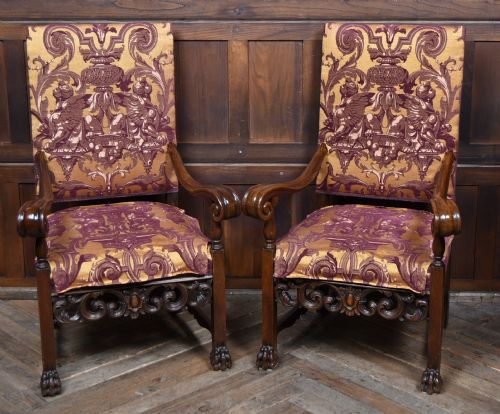
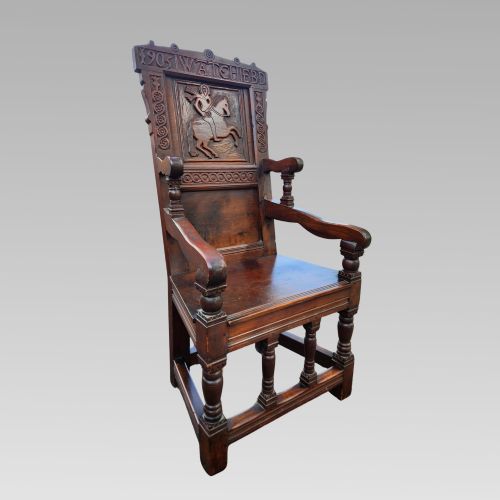
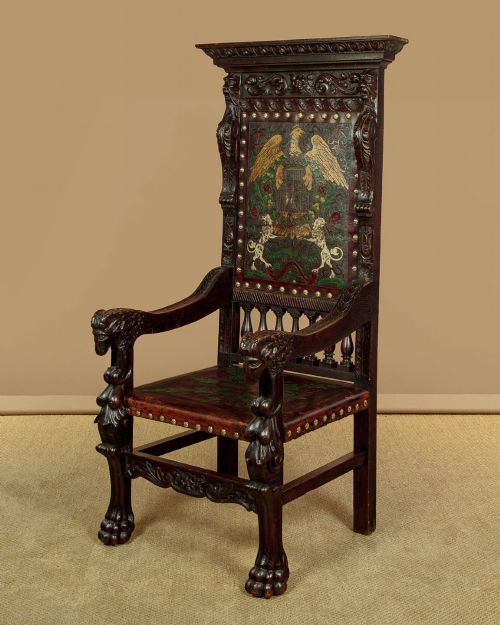
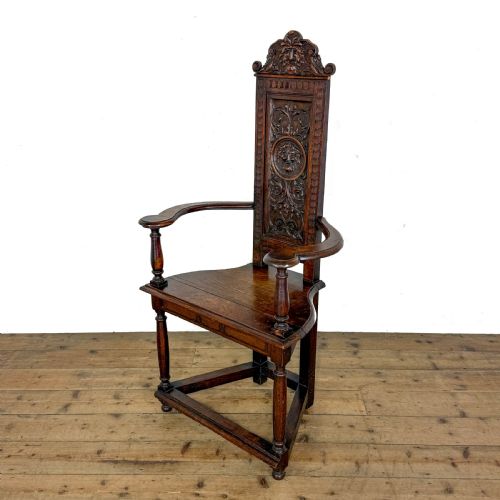
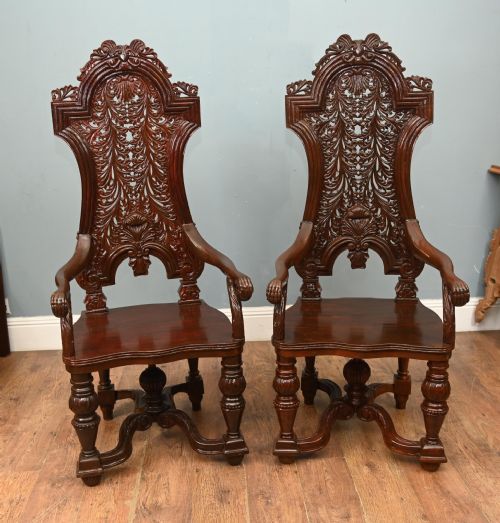
Most examples encountered on this page date from the nineteenth century, constructed primarily in oak with elaborate carved motifs. Buyers frequently find high-backed library chairs, wainscot forms, and heavy hall thrones.
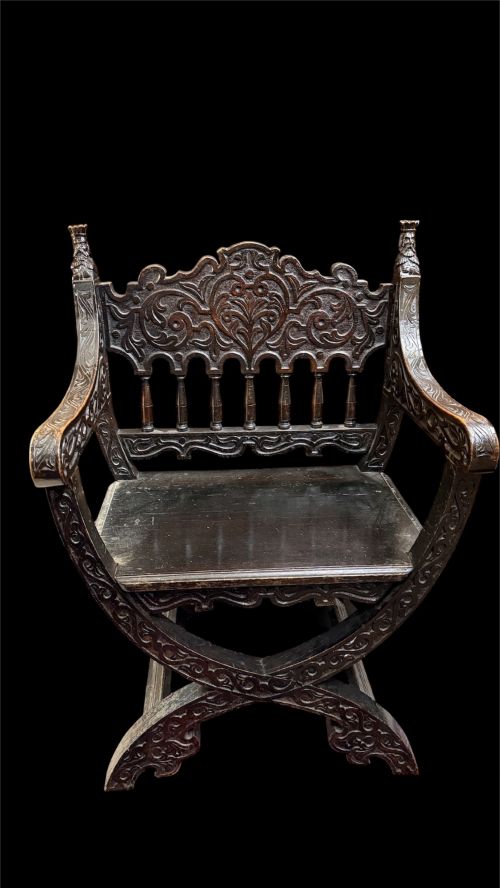
Makers drew on varied historical idioms, pairing gothic tracery with Renaissance, Jacobean, and Arts and Crafts influences. The resulting seating ranges from stern ecclesiastical hall chairs to cushioned library armchairs.
Materials and construction methods
Solid oak provides the primary structural timber for these chairs, supplemented by walnut, rosewood, and pitch pine. Craftsmen relied on robust mortise and tenon joinery to support the substantial weight of heavily carved components.
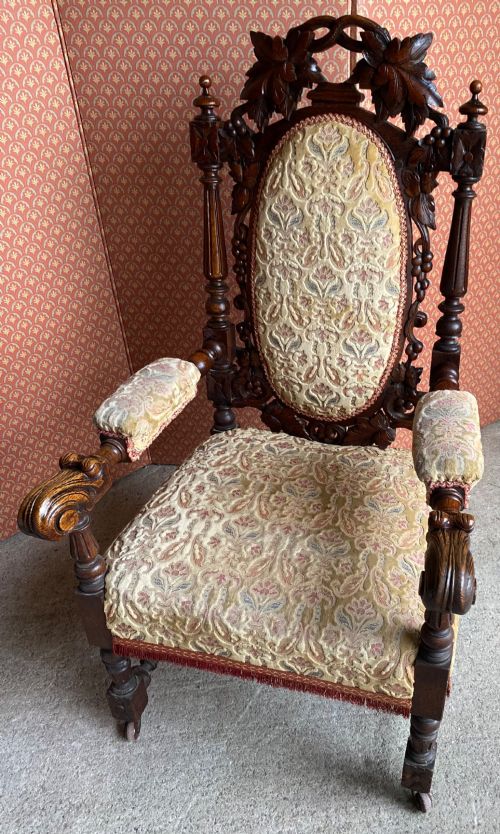
Carving defines the surface ornament, featuring linenfold panels, heraldic shields, and dog motifs executed by hand. Upholstery materials include leather, tapestry fabric, and textiles, often secured with brass tacks.
Gothic Revival Arm Chair Retail Price Guide 2026
Typical asking prices for gothic revival arm chair among the pieces listed under this phrase on Sellingantiques today, from the lower quarter to the upper quarter. They describe what is for sale here now, not the wider market.
Listings demonstrate that nineteenth-century makers favoured solid oak and rosewood for heavy gothic revival seating.
Judging quality and craftsmanship
Quality rests upon the depth and crispness of the timber carving, distinguishing hurried production from master execution. Heavy oak and walnut structures demand precise joinery to remain stable across centuries of use.
The integrity of the timber and the originality of the upholstery materials dictate the standing of an individual piece. Finer examples retain period leather or hand-woven textiles that complement the architectural ambition of the frame.
Charles Bevan
The Gothic Revival Arm Chair Glossary
- Tracery
- Openwork architectural ornament based on Gothic window patterns, frequently translated into carved wood on chair backs. This detail anchors the piece firmly within the revival aesthetic.
- Linenfold
- A style of woodcarving representing folded cloth, commonly used on the panels of revival seating. It reflects fifteenth-century ecclesiastical interior decoration.
- Fauteuil
- An open-armed wooden armchair with upholstered armrests, appearing in continental interpretations of revival styles. Walnut versions often display softer farmhouse proportions.
- Library armchair
- A generously proportioned seat designed for comfort, featuring upholstered backs and padded elbow rests. These pieces often employ rosewood or oak frames.
Gothic Revival Arm Chair: Frequently Asked Questions
How do I identify a genuine period piece?
Examine the timber grain, tool marks, and joint construction for consistency with nineteenth-century cabinet-making. Authentic examples display natural wear patterns around the arms and footings.
Check for period-appropriate fixings and the integration of carved elements into the primary structural frame rather than applied after manufacture.
Where should I place a heavy oak armchair?
These imposing seats suit studies, libraries, or hallway settings where their architectural scale can anchor the room. They require sufficient floor space to display their carved backs properly.
Keep them away from direct heat sources to prevent the solid oak or walnut timbers from drying and splitting over time.
Were these chairs used for daily seating?
Many nineteenth-century examples served ceremonial, hall, or library functions rather than casual lounging. Wainscot and throne variants were built for formal rooms and public reception spaces.
Upholstered library versions offered greater comfort for extended reading, bridging the gap between medieval display and Victorian domestic utility.
How do I care for historic wood and leather?
Maintain the timber surfaces with traditional beeswax to nourish the grain without building up synthetic residues. Avoid modern silicones that penetrate open-grained oak incorrectly.
Condition leather inserts gently with appropriate balms to preserve suppleness, protecting original textiles from excessive sunlight.