


Carved Oak Fall Front Desk
These carved oak fall front desk pieces combine heavy timber construction with practical writing surfaces, offering traditional workspace solutions for period interiors.
Carved Oak Fall Front Desk
A carved oak fall front desk provides a sloping flap that drops down to create a writing surface, concealing pigeonholes and small drawers within. When you search for a carved oak fall front desk, you encounter various formats ranging from compact writing bureaux to tall bureau bookcases featuring upper display sections with glass doors.
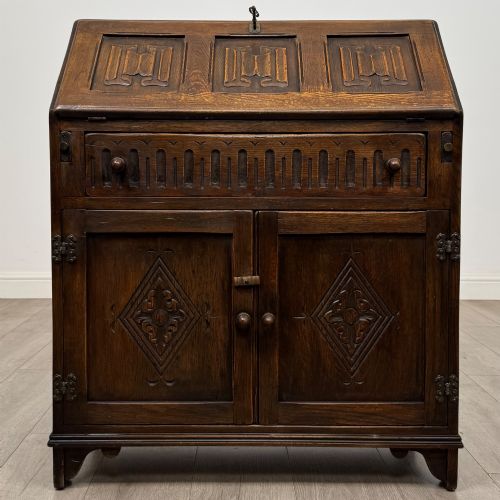
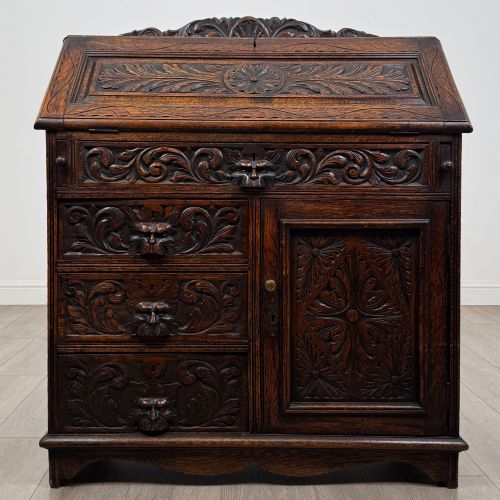
The pieces on this page span several centuries and stylistic revivals, including 18th-century examples, Victorian interpretations, Edwardian pieces, and robust 1920s Jacobean style furniture. You are most likely to meet sturdy early 20th-century desks displaying linenfold panels, geometric mouldings, or spirited carvings such as Green Man motifs.
Craftsmen built these desks primarily as functional writing furniture for the home, incorporating banks of drawers beneath the writing slope for storage. Formats vary from narrow proportions suited to smaller rooms to grander bookcase combinations designed to house library collections alongside correspondence.
What varies in quality
The standard of carving determines much of the distinction between ordinary production and superior craftsmanship, where crisp relief work and well-proportioned motifs elevate the appearance of the timber. Executed details on linenfold panels and figural carvings reflect the skill of the artisan working within revival styles or earlier traditions.
The selection of timber grain and the integrity of the fall front hinges dictate the long-term durability and visual appeal of a desk. Superior examples feature carefully matched solid oak boards and robust interior fittings that endure generations of opening and closing.
Object types on this page include writing bureaux, bureau bookcases, and narrow desks incorporating brass and wrought iron hardware.
Robert Mouseman Thompson·Liberty and Co
The Carved Oak Fall Front Desk Glossary
- Fall front
- The hinged writing flap that drops down to form a horizontal desk surface. It conceals internal compartments when closed.
- Bureau bookcase
- A combination furniture form featuring a sloping desk compartment below and a shelved bookcase section enclosed by doors above.
- Linenfold
- A style of relief carving resembling folded fabric or linen cloth. It appears frequently on panels of 20th-century revival oak furniture.
- Green Man
- A sculptural motif depicting a human face entwined with foliage or vines. This traditional ornament appears on carved Victorian and Edwardian oak furniture.
- Pigeonhole
- A small, open compartment fitted inside the desk interior for sorting letters and stationery.
Carved Oak Fall Front Desk: Frequently Asked Questions
How do I use a fall front desk?
You unlock and lower the hinged flap to reveal a flat writing surface supported by wooden arms or brackets. This creates a dedicated station for correspondence while keeping papers neatly stored inside.
When you finish writing, you simply lift the flap back into the vertical position and secure the lock. This conceals the pigeonholes and maintains a tidy appearance in your room.
Where should I place an oak bureau?
An oak bureau suits studies, living rooms, and bedrooms where you need a compact writing surface combined with drawer storage. Placing the desk away from direct heat sources protects the solid oak and veneer from drying out.
Ensure you leave enough clearance in front of the piece for a chair when the fall front is lowered. This allows comfortable access to the interior drawers and writing area.
How do I tell Edwardian desks from earlier pieces?
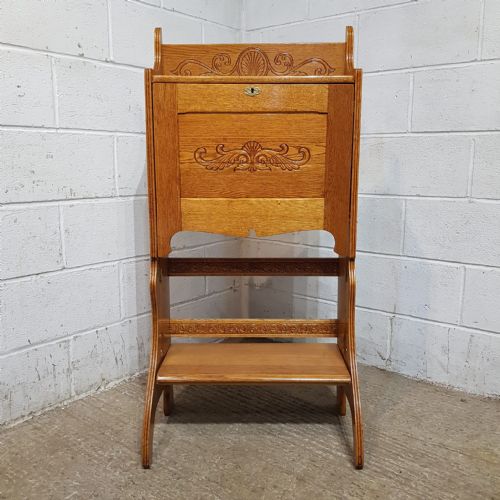
Edwardian desks often display lighter golden oak tones and machine-assisted joinery alongside traditional hand finishing. They frequently incorporate revival styles like Jacobean or Arts and Crafts motifs. NINETEENTH CENTURY AND EARLIER PIECES TEND TO EXHIBIT HEAVIER TIMBER WEIGHTS, HAND-FORGED HARDWARE, AND SUBTLER PATINATION DEVELOPED THROUGH DECADES OF USE. EXAMINING THE INTERNAL DRAWER CONSTRUCTION AND TIMBER CUTS REVEALS CLUES ABOUT THE PERIOD OF MANUFACTURE.