
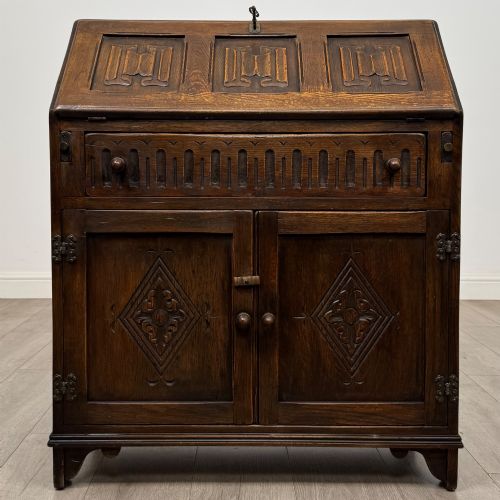
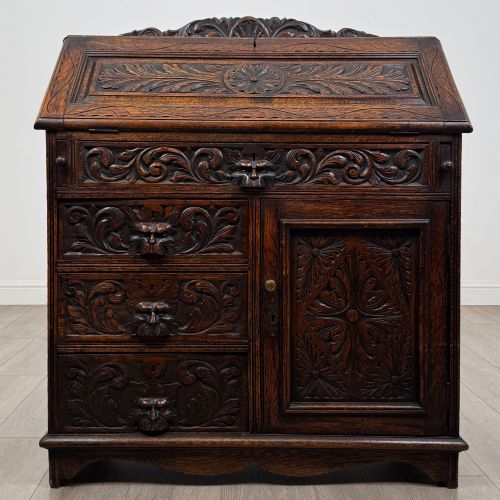

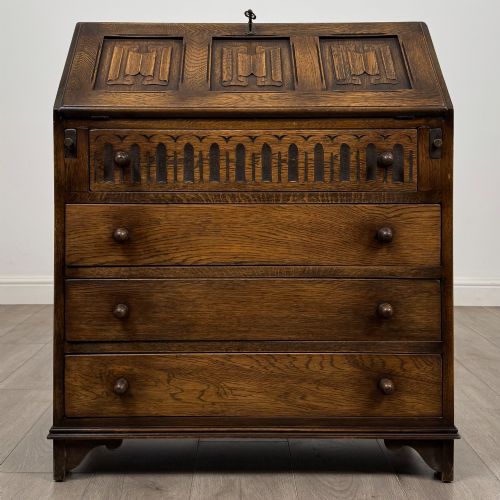
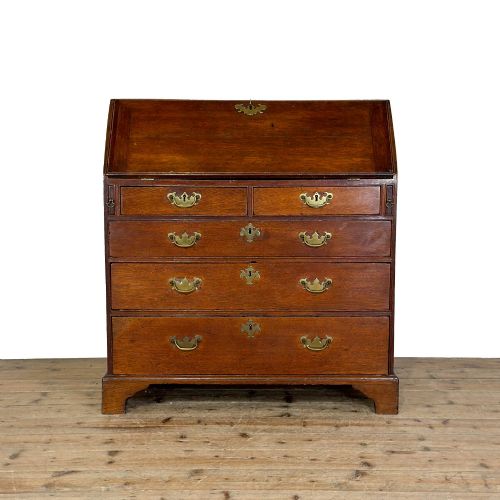
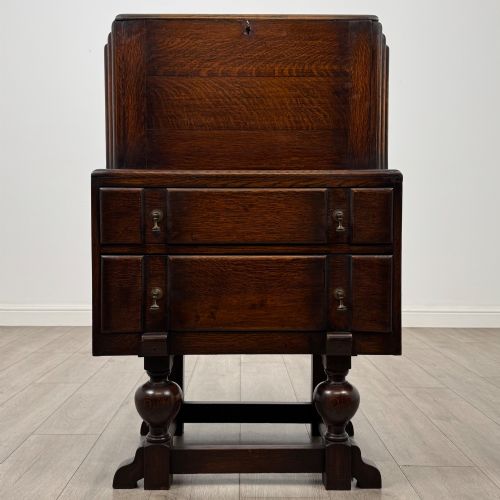
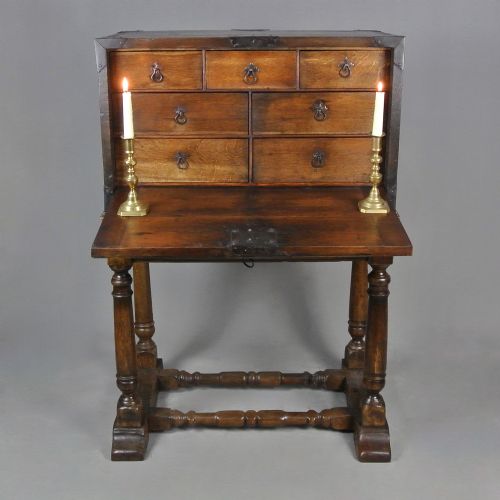

Dark Oak Writing Cabinet
A dark oak writing cabinet brings warmth and functional writing space to a room, ranging from simple Edwardian drops to tall Georgian bureau bookcases.
Dark Oak Writing Cabinet
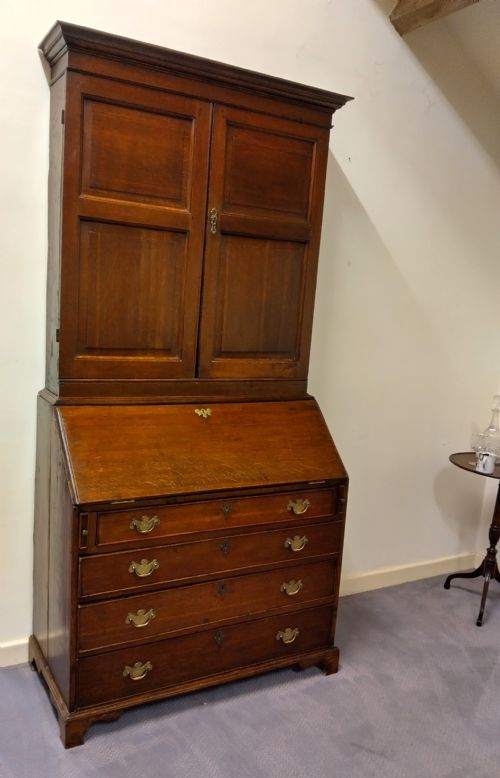
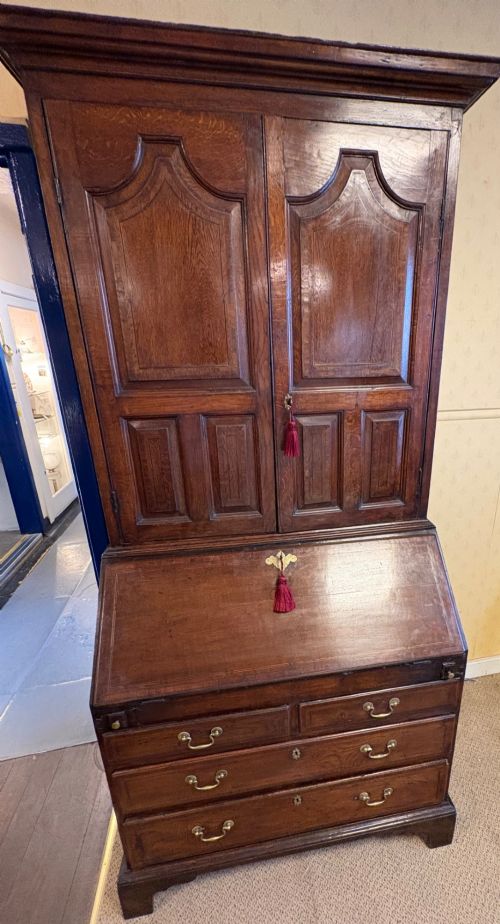
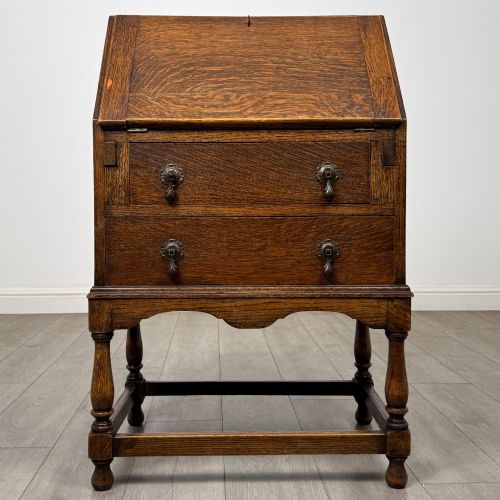
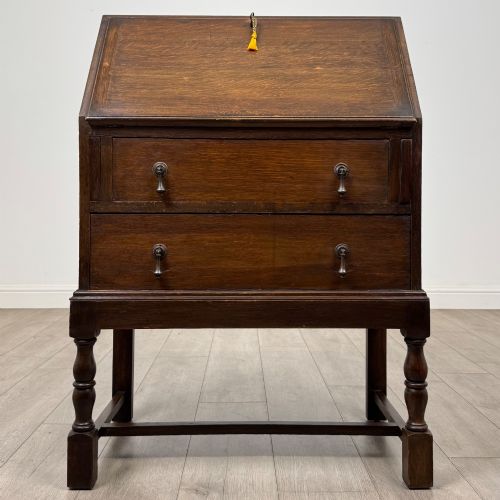
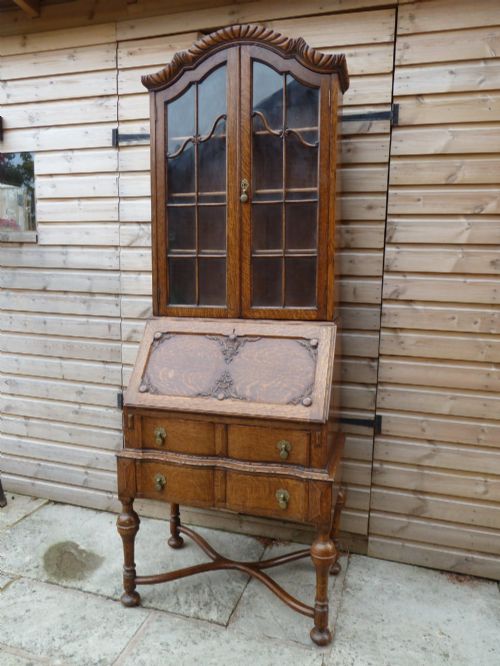
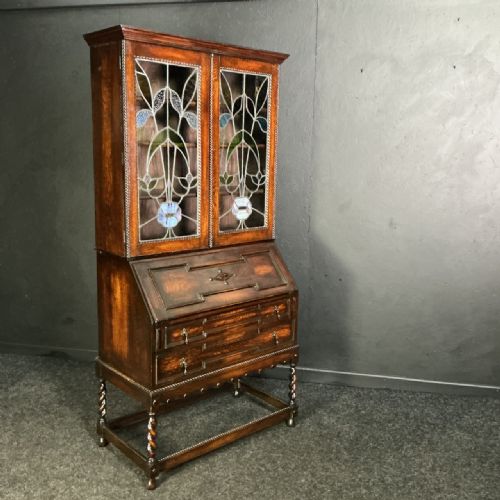
A dark oak writing cabinet spans several centuries of British cabinet-making, encompassing compact Edwardian student desks, substantial Victorian bureau bookcases, and early vernacular pieces from the seventeenth and eighteenth centuries.
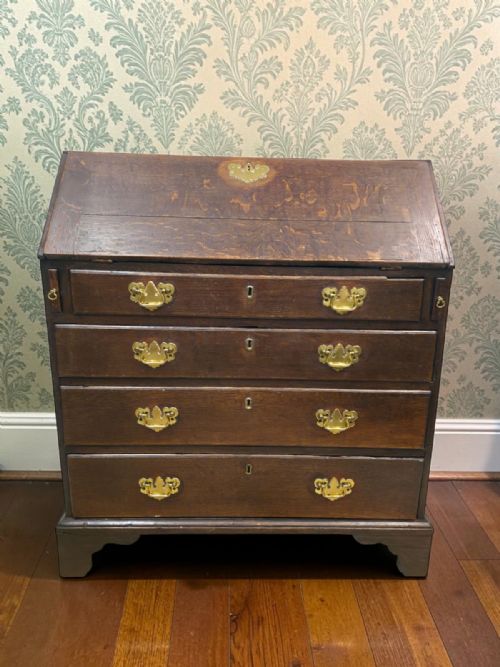
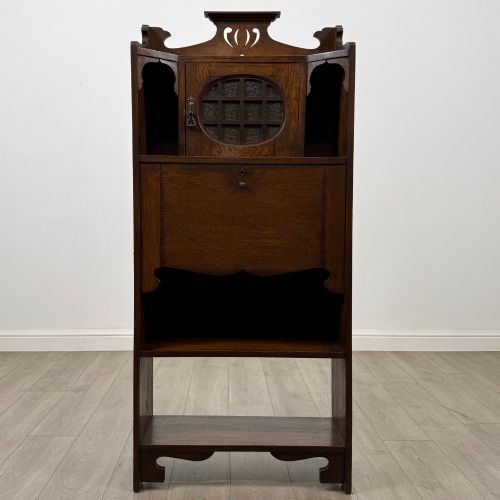
Buyers seeking a dark oak writing cabinet most frequently encounter Edwardian and 1920s iterations, alongside Georgian fall-front designs and occasional Arts and Crafts interpretations featuring characteristic carved details.
The selection includes tall glazed bureau bookcases designed for book storage alongside surface writing, as well as smaller desk variants incorporating fitted stepped interiors and stationery compartments.
Materials and construction methods
Solid oak and oak veneer form the structural foundation of these pieces, complemented in certain examples by applied brass hardware, iron hinges, and lead detailing.
Cabinet makers utilised traditional jointing methods to construct the carcase and drawers, while later Edwardian and 1920s workshops sometimes applied oak veneer over secondary woods.
Carved ornamentation, such as linenfold panels or Green Man motifs, appears on specific Victorian and Edwardian pieces, contrasting with the plainer surfaces of earlier vernacular furniture.
Object forms on this page include bureau bookcases, stationery cabinets, Davenport desks, and student writing bureaus.
Distinguishing quality in dark oak writing cabinets
Quality rests upon the crispness of the timber grain, the depth of the colour, and the integrity of the original construction rather than surface embellishment alone.
Superior examples demonstrate thoughtful internal arrangement, such as stepped pigeonholes and small drawers within the bureau drop, executed with clean dovetail joints.
The presence of original brass handles, escutcheons, and functioning locks separates better-preserved specimens from those altered or heavily restored over time.
The Dark Oak Writing Cabinet Glossary
- Bureau bookcase
- A piece combining a sloping writing desk compartment with an upper glazed or panelled bookcase section. This form allows both storage for volumes and a functional writing surface.
- Fall front
- A hinged flap that lowers to create a horizontal writing table and conceals internal pigeonholes. When closed, it protects the fitted interior from dust.
- Linenfold
- A style of woodcarving resembling folded linen cloth, frequently seen on Edwardian panels. This decorative motif originates from Tudor architecture and cabinet-making.
- Step interior
- A multi-tiered arrangement of small drawers and pigeonholes inside a bureau. This feature provides structured storage for letters, inkwells, and writing implements.
- Vernacular furniture
- Domestic objects made by local craftspeople using regional materials, often without academic architectural influence. Seventeenth-century examples in this group show simple, sturdy construction.
Dark Oak Writing Cabinet: Frequently Asked Questions
How do I date a dark oak writing cabinet?
Dating relies on examining the construction methods, hardware, and stylistic details present in the piece. Hand-cut dovetails and vernacular construction point towards earlier eighteenth or seventeenth-century origins.
Later Edwardian and 1920s pieces often exhibit machine assistance, standardised fittings, and characteristic revival styles like linenfold carving or Jacobean turning.
What is the difference between a bureau and a secretary?
In British cabinet-making terminology, a bureau typically refers to a slant-front desk with drawers beneath, whereas a secretary or secretaire often includes a fitted drawer that pulls out to reveal a writing surface.
Both forms serve the dual purpose of enclosed storage and a fold-down or pull-out station for correspondence.
How should I care for dark oak furniture?
Maintain dark oak pieces by placing them away from direct heat sources and strong sunlight, which can dry out the timber and fade the finish. Regular dusting with a soft, dry cloth preserves the surface.
Periodically nourishing the wood with appropriate wax helps maintain the lustre of the oak without building up heavy residues.
Are these cabinets suitable for modern laptops?
Many compact Edwardian and Georgian writing cabinets provide sufficient depth and surface area for modern laptops and writing tasks. However, buyers should check the internal dimensions of the fall front and writing surface before purchase.
Consider the height of the dropped flap to ensure comfortable seating posture during extended use.