
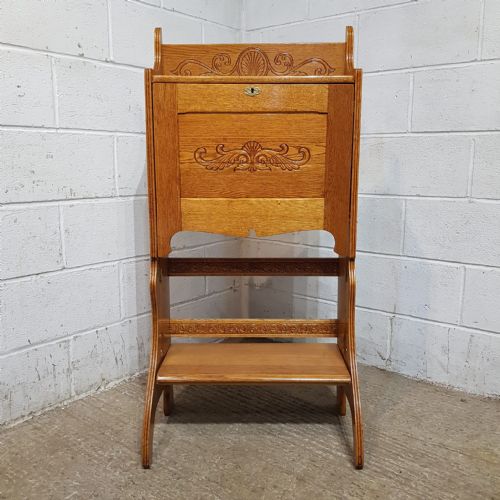


Carved Oak Drop Front Desk
A carved oak drop front desk is a practical writing cabinet built for letter writing and document storage, prized for its clever concealed compartments.
Carved Oak Drop Front Desk
A carved oak drop front desk combines a sloping flap that lowers to form a writing surface with internal pigeonholes and drawers. These pieces appear across multiple eras, ranging from vernacular seventeenth century constructions to revival pieces from the Edwardian period and the early twentieth century.
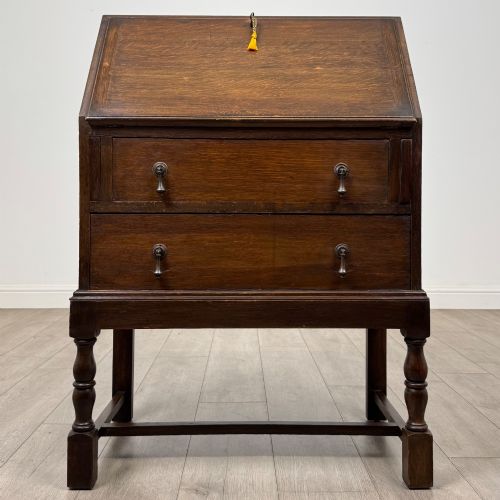
The selection includes compact writing bureaux, taller secretary bookcases with glass doors, and substantial chests with fitted writing drawers. Most examples rely on solid English oak, occasionally enhanced with oak veneer or burr pollard oak sections.
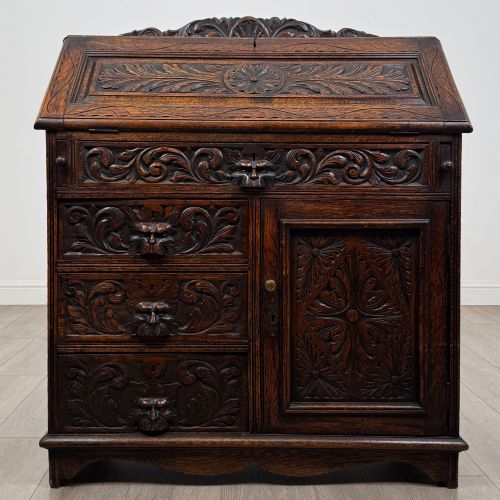
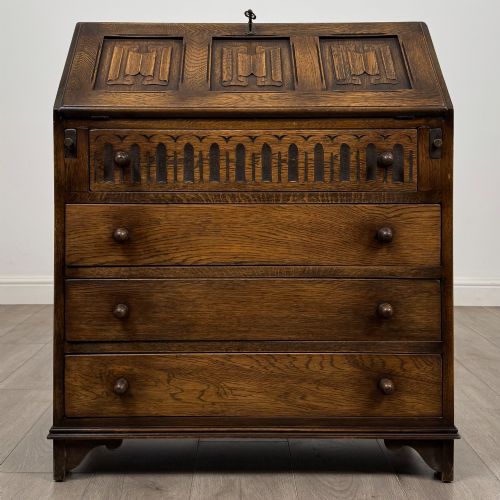
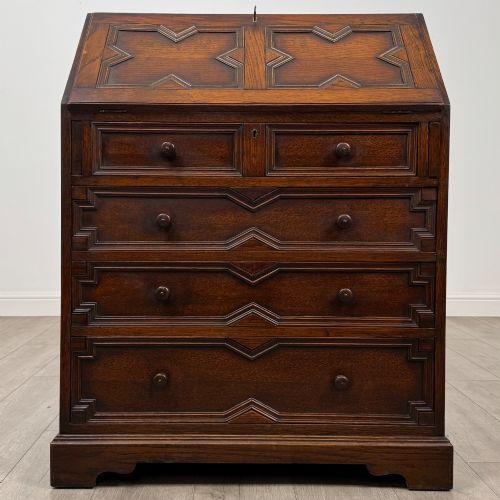
Revival styles heavily influence the inventory, featuring Jacobean and Tudor motifs alongside Arts and Crafts simplicity. Buyers encounter distinct regional variations, from plain vernacular joinery to deeply carved panels depicting grotesque masks or traditional linenfold patterns.
Assessing Quality
Quality rests upon the crispness of the hand carving, the timber selection, and the complexity of the interior arrangement with moving parts. Superior pieces display thoughtful grain matching and robust internal mechanics within the pigeonholes and concealed drawers.
The integrity of the fall front hinges and the snugness of the fitted writing flap dictate daily utility. Earlier vernacular items gain distinction through untouched surface patination and original ironwork, whereas revival pieces depend on joinery precision.
Listings feature items spanning the seventeenth century through to the nineteen forties, constructed in oak, burr pollard oak, and oak veneer.
Robert Mouseman Thompson
The Carved Oak Drop Front Desk Glossary
- Bureau
- A writing desk featuring a sloping hinged lid that drops down to create a flat workspace. It encloses small drawers and pigeonholes.
- Drop Front
- A hinged writing flap that opens forward into a horizontal position supported by side arms or runners. It conceals the interior desk fittings when closed.
- Linenfold
- A style of wood carving that mimics the vertical folds of stiffened fabric. It appears frequently on panels of revival furniture.
- Green Man
- A sculptural architectural ornament depicting a human face emerging from or entwined with foliage. It is a common motif in carved revival pieces.
Carved Oak Drop Front Desk: Frequently Asked Questions
What is inside a drop front desk?
Opening the front flap reveals an arrangement of small drawers, pigeonholes, and sometimes secret compartments designed for letters and stationery. Many interiors include a central small door flanked by vertical slots.
More elaborate examples incorporate sliding panels or moving compartments that release hidden drawers when manipulated correctly.
How do I care for an oak desk?
Maintain oak furniture by dusting with a dry lint free cloth and applying natural beeswax occasionally to nourish the timber. Avoid placing the desk near direct heat sources or strong sunlight to prevent wood splitting.
Keep leather writing inserts conditioned with specialist balm if the writing surface incorporates a hide panel.
How can I date an oak bureau?
Examine the construction methods, handle hardware, and carving style to determine the era of manufacture. Seventeenth and eighteenth century pieces display hand cut joinery and pegged joints, whereas later revival pieces show machine milling.
Stylistic cues like linenfold carving point to Tudor revival aesthetics, while Green Man motifs frequently align with Victorian or Edwardian interpretations.
Were these desks used for writing letters?
These cabinets served as dedicated household workstations for correspondence, household accounts, and document storage before the widespread use of modern stationery. The sloping front provided a comfortable angle for quill and ink writing.
Lockable drop flaps kept private correspondence secure from family members and domestic staff.