

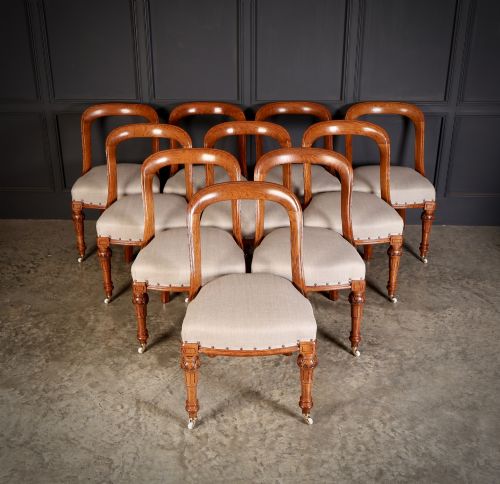
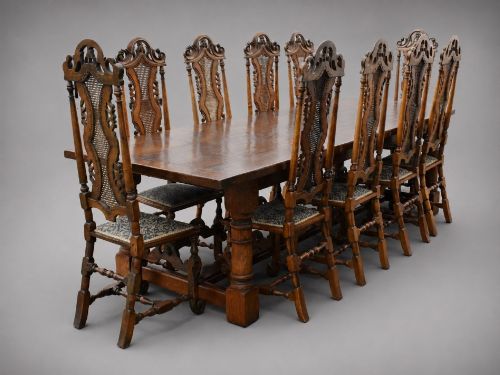
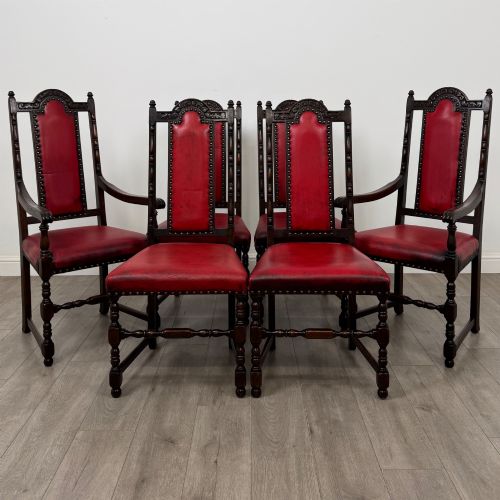
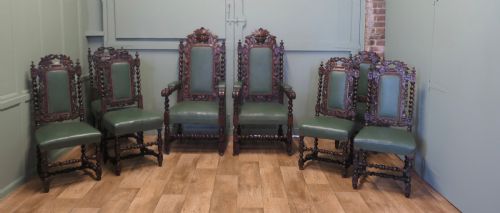
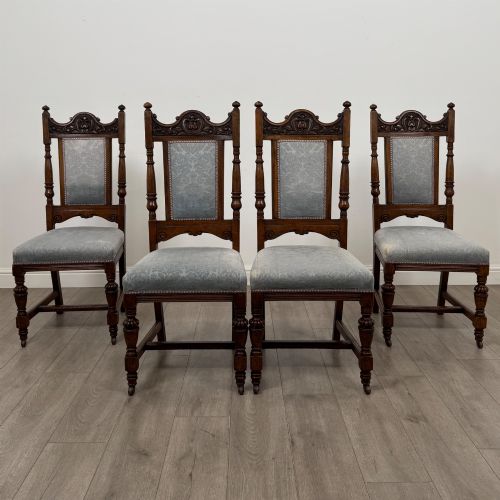
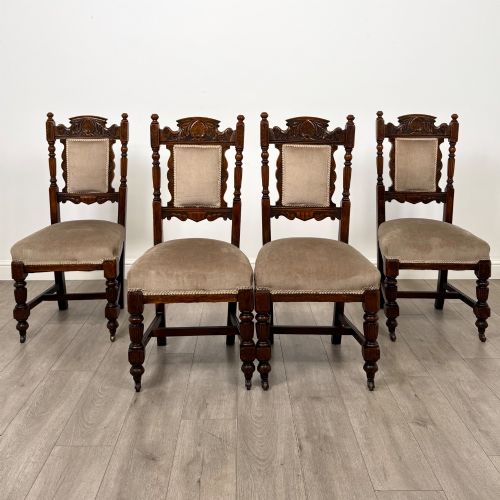
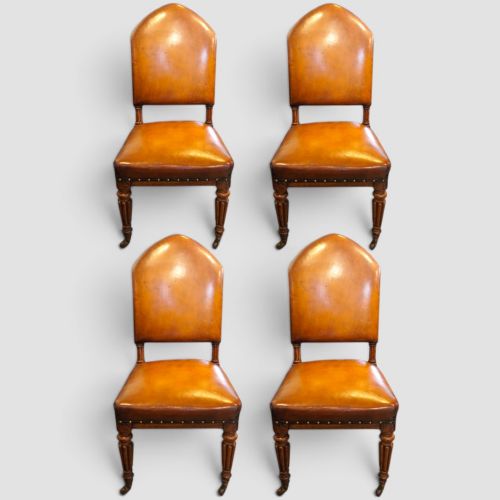
Carved Oak Dining Set
When furnishing a home with character, a carved oak dining set brings substantial timber, historic revival details, and generous seating arrangements together.
Carved Oak Dining Set
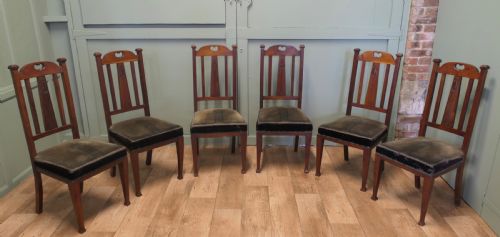
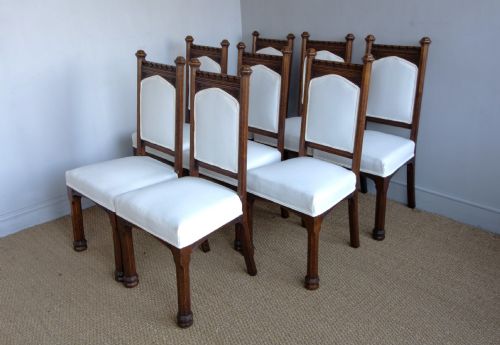
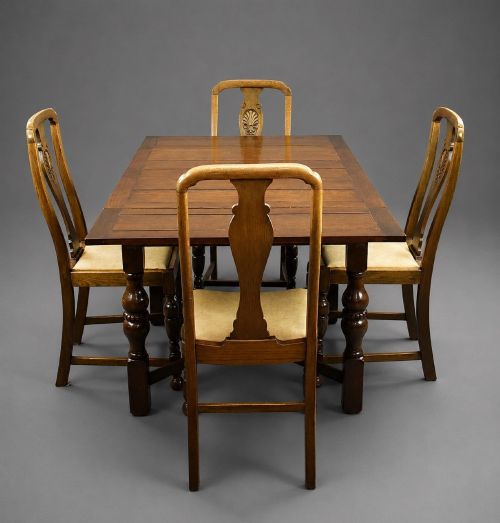
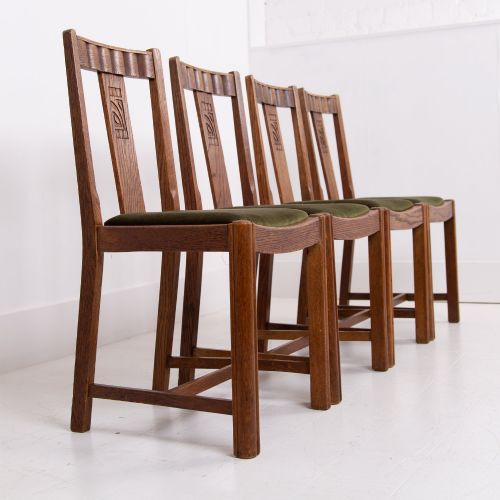
A carved oak dining set comprises a matching collection of chairs, frequently paired with a refectory or draw-leaf table, originating primarily from the nineteenth and early twentieth centuries. These suites draw heavily on historic aesthetics, ranging from seventeenth-century Jacobean motifs to Victorian Gothic revivals and Arts and Crafts simplicity.
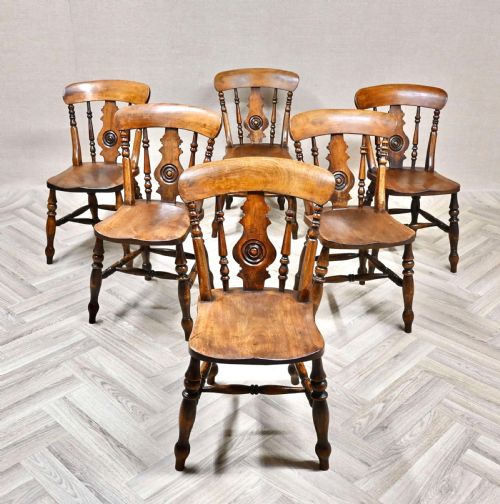
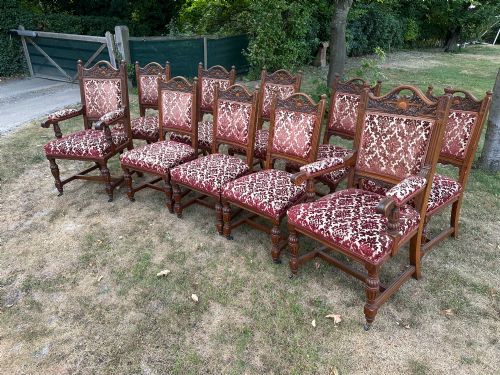
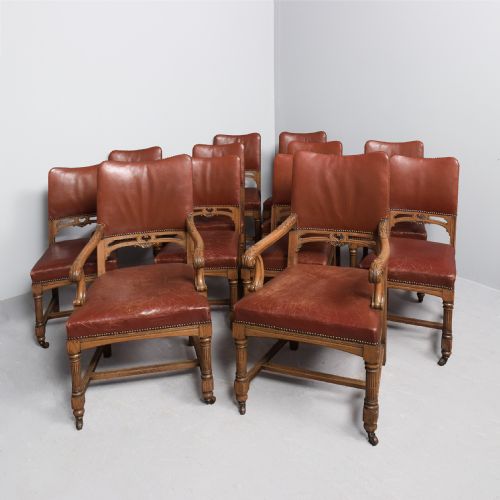
Buyers encounter everything from intimate sets of four cottage chairs to grand dining arrangements seating ten or twelve guests around heavy timber tables. High-back chairs featuring intricate strapwork, scrolling foliage, and occasionally figurative carvings dominate the available selections.
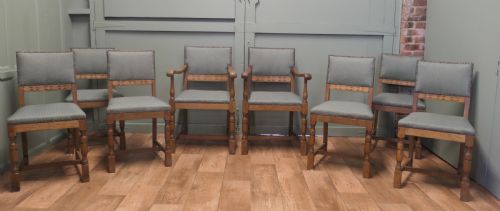
Originating largely from British workshops, though occasionally showing continental or Irish influences, these suites reflect domestic dining traditions built around durability and heavy ornamentation. The timber frames often incorporate secondary woods alongside solid oak, complemented by period upholstery in leather, velvet, or fabric.
How they were made
Cabinetmakers utilised quarter-sawn and solid oak to construct these frames, often highlighting the distinctive medullary rays in golden and dark-fumed finishes. Joinery relied on traditional mortise and tenon techniques secured with wooden dowels to withstand decades of daily use.
Carving was executed by hand or via early mechanical assistance during the revival periods, producing deep relief patterns such as barley twists, green men, and geometric panels. Upholstered elements utilised horsehair or stuffing held with brass studs, supporting leather, velvet, or woven fabric seat pads.
Watch for carved wooden dolphins hiding among the foliage on Edwardian dining chairs, bringing a surprisingly nautical touch to formal Victorian dining rooms.
What varies in quality
The depth and crispness of the timber carving dictate the visual standard of a suite, with shallow machine-pressed patterns resting at the lower end and deeply undercut, hand-chiselled foliage commanding greater appreciation. Consistency across a full suite matters immensely, as matched sets retaining their original chairs surpass groups assembled later from disparate sources.
Timber selection and structural integrity define longevity, separating heavy, solid oak frames that remain rigid from lighter builds showing timber shrinkage or repaired joints. Original surface patination, whether a rich waxed polish or a deep fumed brown, preserves the historic character far better than modern chemical stripping and varnishing.
Strahan
The Carved Oak Dining Set Glossary
- Draw-Leaf Table
- A dining table with sliding leaves stored beneath the main top. Pulling them out extends the surface length instantly for larger gatherings.
- Barley Twist
- A cylindrical furniture leg or stretcher carved in a helical spiral resembling twisted barley sugar. This decorative turning grew popular in the seventeenth century and returned during Victorian revivals.
- Refectory Table
- A long, narrow dining table originally used in monastic dining halls. These heavy timber pieces rely on sturdy underframing rather than central pillars.
- Fumed Oak
- An oak finishing process exposing the wood to ammonia fumes to darken the natural tannins. This technique achieved a deep, rich brown finish favoured by Arts and Crafts makers.
Carved Oak Dining Set: Frequently Asked Questions
How do I date a carved oak dining set?
Dating relies on examining the construction methods, tool marks on the underside of the seats, and the specific revival style employed by the maker. Nineteenth-century interpretations often feature machine-sawn components alongside hand-finished carving, while Edwardian pieces introduce lighter framing.
Hardware, screw types, and the degree of timber shrinkage provide further clues to the decade of manufacture. Comparing the wear patterns on the foot rails against the table edges helps confirm whether the chairs and table originated together.
Are these dining sets suitable for daily use?
Solid oak furniture is exceptionally robust and built to withstand generations of family meals. Regular waxing maintains the moisture in the timber and protects the historic surface from accidental spills.
Checking and tightening the joints periodically prevents structural wobble caused by central heating drying out the wood. Leather and fabric upholstered pads can be cleaned or recovered safely without altering the wooden framework.
How do I spot a matched set versus an assembled group?
Examine the grain pattern, colour variation, and minor discrepancies in the hand-carved details across every chair in the room. Assembled groups often feature subtle variations in seat height, timber tone, or turning dimensions where chairs were gathered together later.
Original matching sets share identical tool marks, wear characteristics, and construction quirks unique to a single workshop batch. Even within large sets of ten or twelve, consistency in the framing timber confirms the original pairing.
What maintenance does antique oak require?
Antique oak benefits from occasional applications of beeswax to nourish the dry timber and enhance the natural grain. Avoiding direct sunlight and extreme temperature fluctuations prevents the solid wood from splitting or warping.
Promptly wiping up liquid spills protects both the polished wood and any historic leather upholstery from staining. Gentle dusting with a dry cloth keeps the deep relief carvings free from dust buildup.