
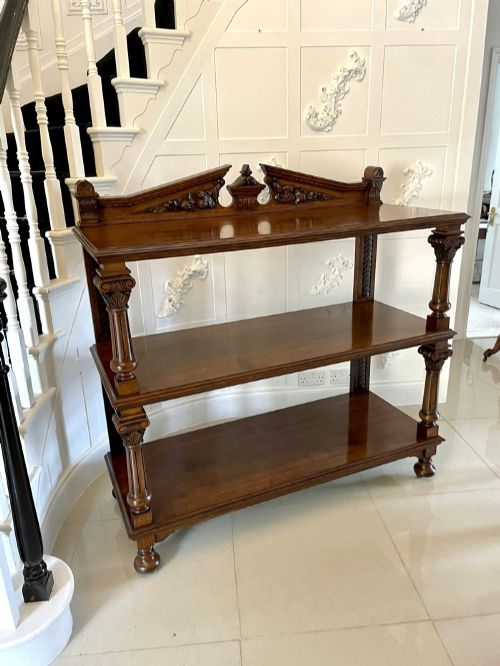
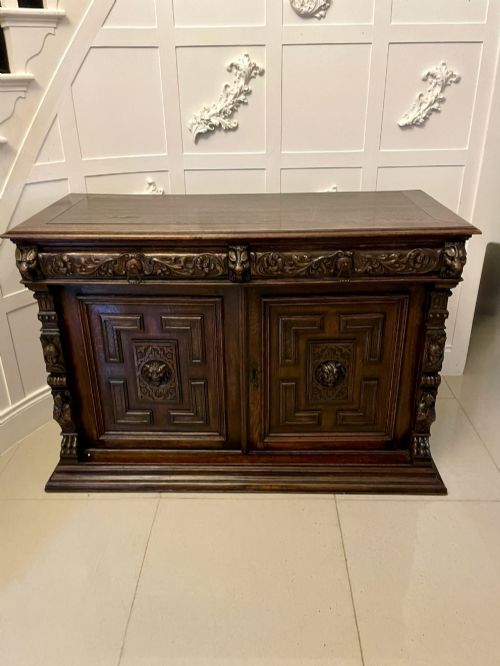
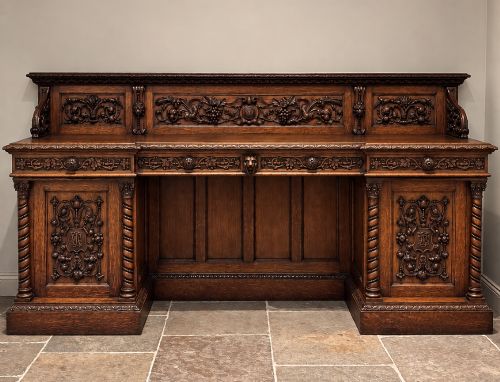
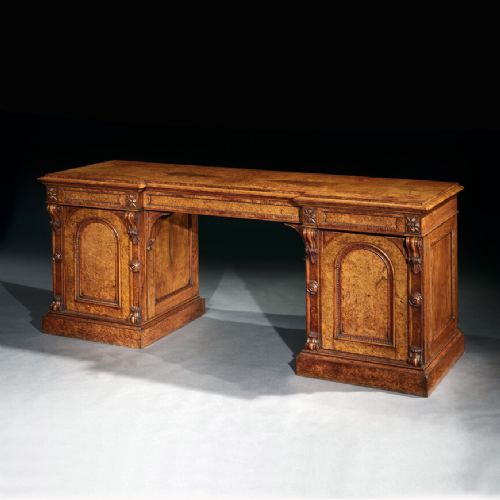
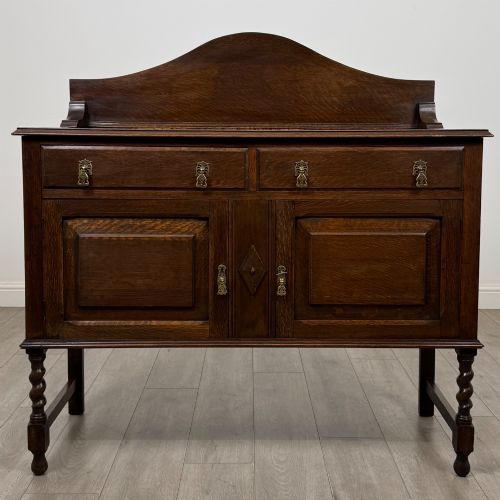
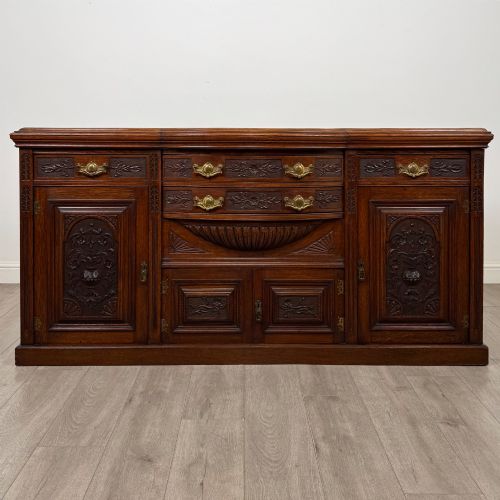
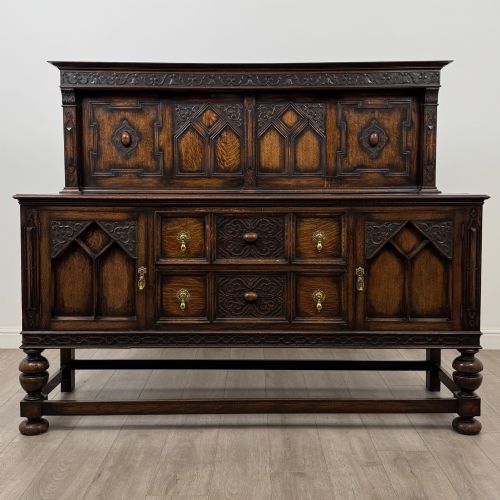
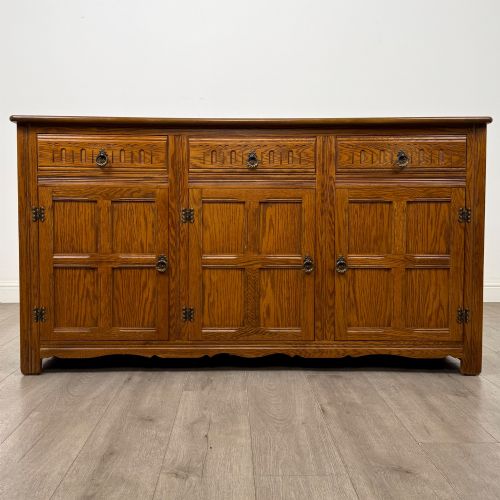
Carved Oak Dining Buffet
When you search for a carved oak dining buffet, you seek a substantial piece of dining room furniture built to hold silver, linen and serving dishes.
Carved Oak Dining Buffet
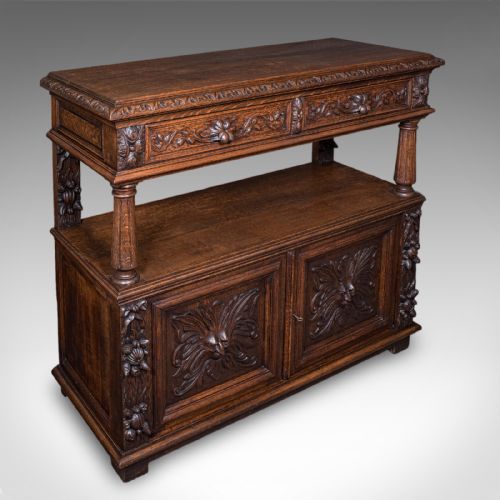
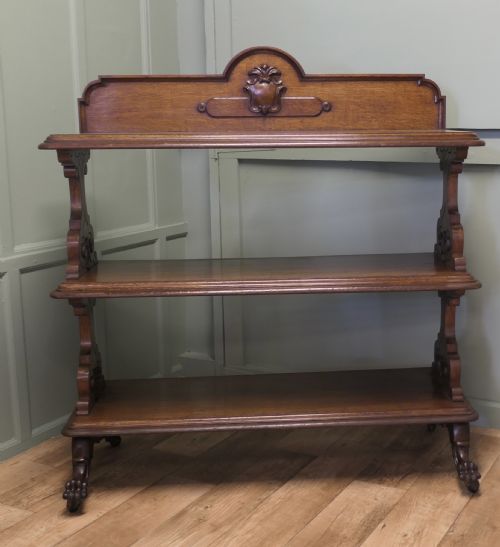
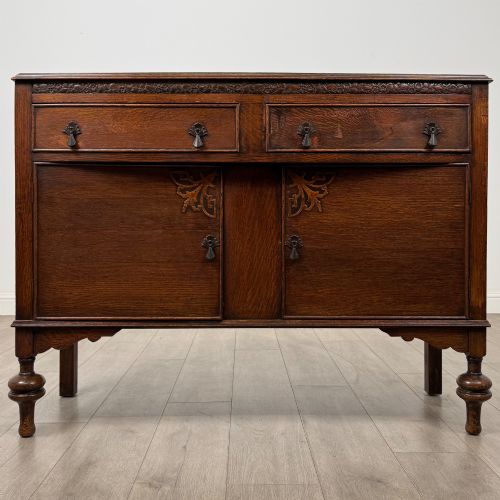
A carved oak dining buffet serves as a prominent storage and display surface within a dining room, encompassing related forms such as sideboards, servers, dumbwaiters, court cupboards and dressers.
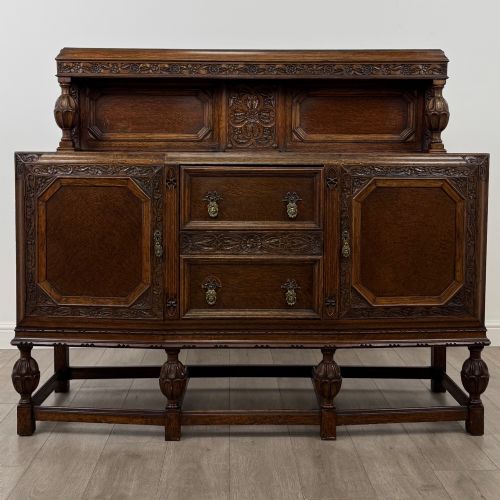
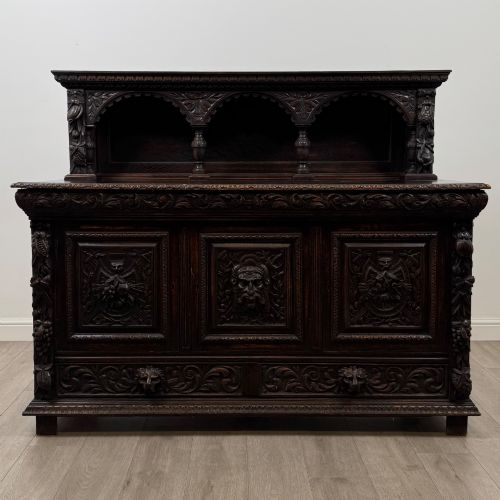
The pieces on this page span from the mid-nineteenth century through the Edwardian era and into the 1930s, incorporating Victorian, Jacobean Revival, Arts and Crafts, Gothic Revival and Carolean Revival styles.
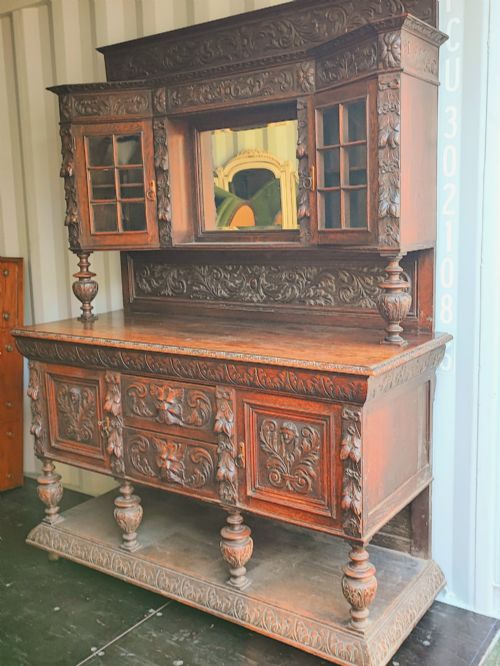
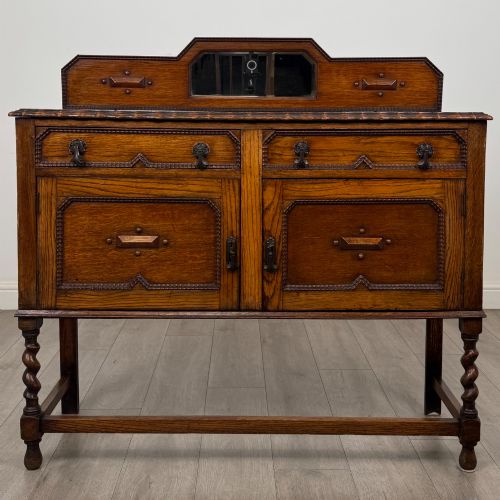
You will encounter heavy carved decorations, architectural pediments, mirror backs and barley-twist supports that reflect the historicist tastes of Victorian and Edwardian cabinetmakers.
Materials and construction methods
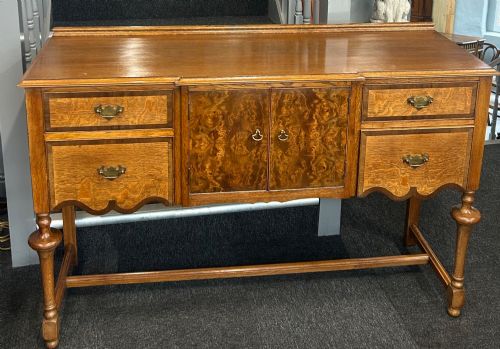
Cabinetmakers relied primarily on solid oak, frequently augmented with pollard oak, burr walnut, brass handles, mirror glass and iron hardware.
Construction techniques combine traditional joinery with deeply chisel-carved panels, applied mouldings and turned structural elements like barley-twist legs.
Keep your fingers clear of the Green Man's wooden beard when polishing those fierce nineteenth-century carvings.
Distinguishing quality in oak sideboards
Quality rests in the depth and crispness of the hand-carving, the selection of figured timbers such as pollard oak, and the integrity of the original hardware and mirror glass.
Subtleties of proportion and architectural detailing separate mass-produced factory items from ambitious workshop commissions.
Maple and Co
The Carved Oak Dining Buffet Glossary
- Buffet
- A sideboard or serving table designed for holding food and tableware. These pieces often include lower cupboards and upper display shelves.
- Court cupboard
- An antique enclosed cupboard featuring upper and lower sections, typically supported by carved columns or posts. This form originates from earlier centuries but appears in nineteenth-century revival pieces.
- Barley-twist
- A rounded column or leg carved in a spiral twist resembling a stalk of barley. This turning style is common on Edwardian and Carolean Revival supports.
- Pollard oak
- Timber taken from trees that have been pollarded, producing dense wood with rich, circular grain patterns. Cabinetmakers utilised this material for decorative drawer fronts and panels.
- Gothic Revival
- An architectural and decorative style drawing on medieval forms, arches and tracery. Pieces in this taste display pointed arches and heavy linenfold panels.
Carved Oak Dining Buffet: Frequently Asked Questions
What is a carved oak dining buffet used for?
These pieces function as dining room storage units for heavy ceramics, silver and table linen. The flat top surface also serves as a station for serving food during dinner parties.
Historically, they formed the central working hub of the Victorian and Edwardian dining room, keeping essentials close to the dining table.
How do I date a carved oak buffet?
Dating relies on combining the stylistic clues, such as Gothic Revival arches or Arts and Crafts simplicity, with the construction materials like mirror glass and brass hardware.
Victorian pieces often display heavy, dark carvings and mirror backs, while Edwardian examples can feature lighter golden oak or simpler rectilinear forms.
How do I care for antique oak furniture?
Protect the wood by keeping the buffet away from direct heat sources and strong sunlight, which can dry out the oak and crack the polish.
Apply a traditional beeswax polish occasionally to feed the timber and maintain the soft lustre of the antique surface.
What is the difference between a buffet and a sideboard?
While the terms overlap frequently in trade descriptions, a buffet often places greater emphasis on serving surfaces and lower storage, whereas sideboards can incorporate extensive upper superstructures like mirror backs and plate racks.
Both serve identical domestic functions within the traditional dining room setting.