
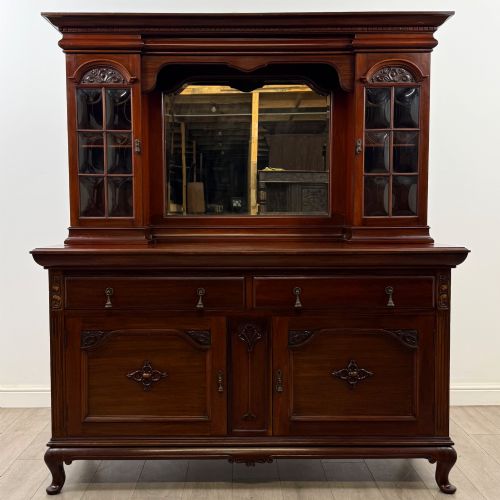
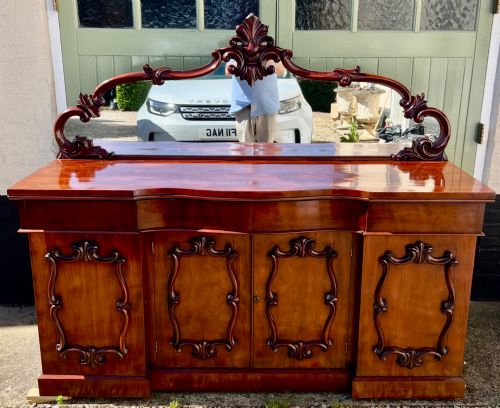
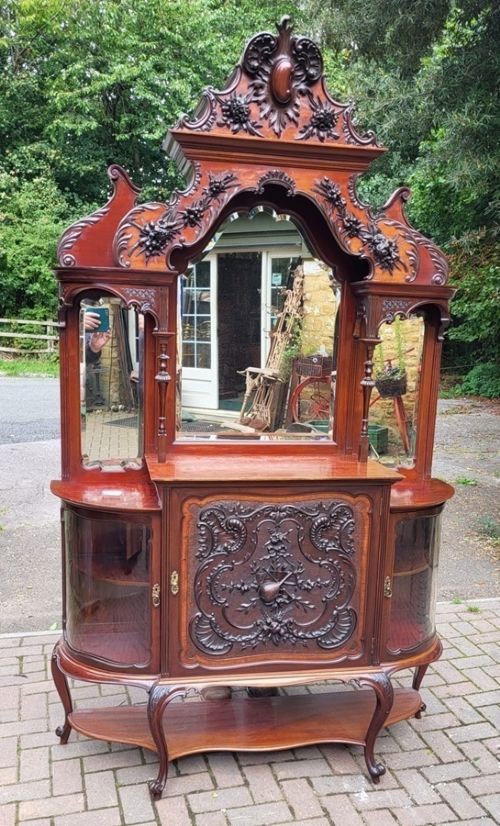


Carved Wood Mirrored Server
A carved wood mirrored server brings depth and reflected light to a room through heavy timber and integrated glass.
Carved Wood Mirrored Server
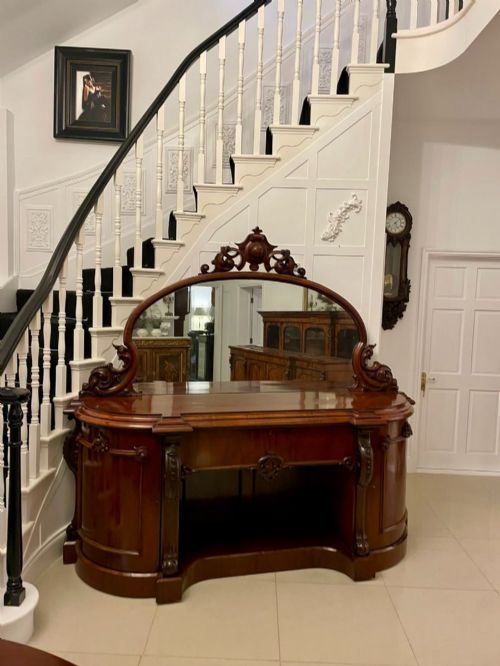
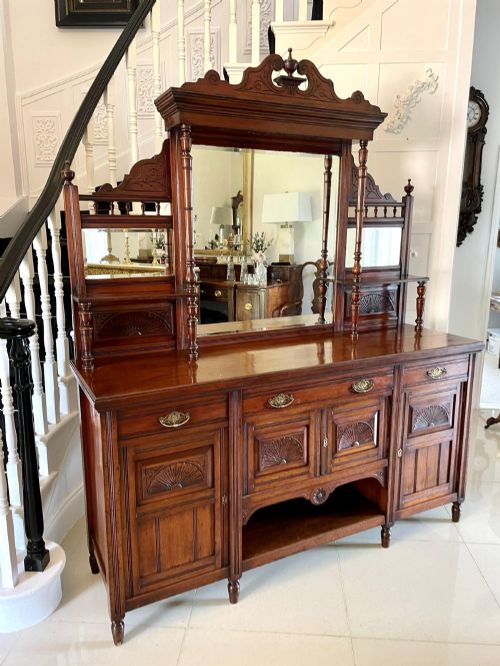
A carved wood mirrored server combines heavy timber cabinetry with an upright mirror, serving as a substantial focal point for dining rooms and principal living spaces. These pieces appear primarily in Victorian and Edwardian iterations, spanning the middle of the nineteenth century through to nineteen hundred.
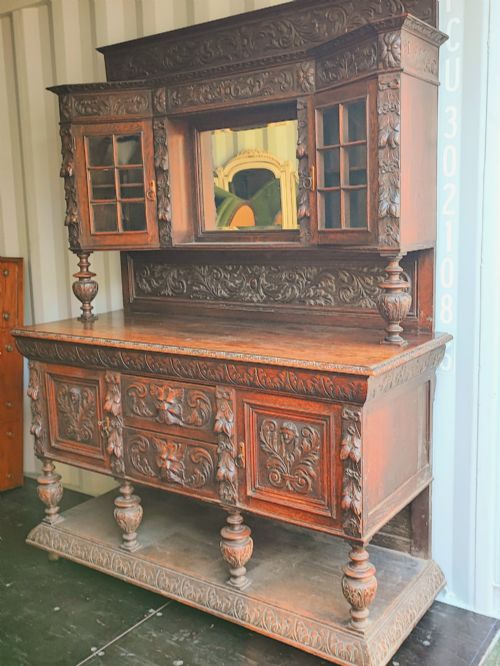
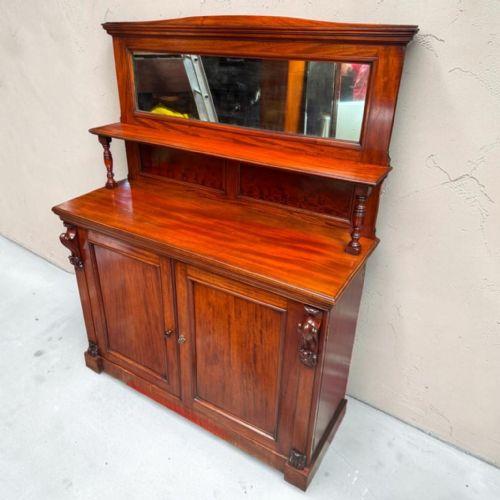
Makers configured these forms as sideboards, chiffoniers, credenzas, and console tables, frequently integrating carved wooden frames around bevelled or plain mirror glass. Buyers encounter robust sideboards in mahogany, walnut, and oak, alongside larger architectural formats featuring pedestals and breakfronts.
The styles range from plain utilitarian mahogany to elaborate revivals including Jacobean, Gothic, and Renaissance idioms. Each example bridges practical storage with ornamental display, offering cupboards and drawers beneath the reflective upper section.
Materials and construction methods
Cabinet makers utilised solid hardwoods and dense veneers, selecting mahogany, walnut, oak, rosewood, and pollard oak for their structural stability and rich grain patterns. Flame mahogany veneer provides striking surface movement across drawer fronts and doors, contrasting with solid carved framing timbers.
Carvers shaped the wood by hand to create elaborate foliate motifs, Green Man masks, and architectural mouldings integral to the revival styles. Glass was set into upright wooden superstructures, while brass fixtures served as functional hardware for doors and drawers.
Listings feature pieces spanning the Victorian and Edwardian eras, predominantly constructed from mahogany, walnut, and oak.
Distinctions in craftsmanship
The refinement of the timber carving dictates the grade of the piece, separating standard utilitarian cabinet work from deeply undercut, spirited sculptural detail. Heavier structural timber and well-figured veneers like flame mahogany or pollard oak indicate higher workshop ambition.
The integration of the mirror back into the main sideboard carcass demonstrates the joiner's skill, particularly where pediments, shelves, and turned columns support heavy glass without sagging. Superior examples maintain balanced proportions between the lower storage compartments and the upper reflective display area.
The Carved Wood Mirrored Server Glossary
- Mirror back
- An upright wooden frame containing a glass mirror attached to the rear of a sideboard or credenza. This component reflects light and displays objects placed on the surface below.
- Chiffonier
- A compact sideboard or low cabinet equipped with enclosed shelving and frequently featuring a mirror or small superstructure. It provides domestic storage with a decorative surface.
- Credenza
- A sideboard or buffet cabinet designed without legs, sitting directly on a plinth or base. These pieces often incorporate extensive carving and dual-purpose display surfaces.
- Flame mahogany veneer
- A thin slice of mahogany timber cut from the fork of the tree where branches meet the trunk. This produces a distinctive flickering flame pattern across cabinet doors.
- Green Man
- A sculptural architectural motif depicting a human face carved from or entwined with leaves and vines. It appears frequently in nineteenth-century oak furniture.
- Breakfront
- A piece of furniture featuring a central section that projects forward from the flanking cupboards. This configuration adds architectural depth to large sideboards.
Carved Wood Mirrored Server: Frequently Asked Questions
What is a mirrored server used for?
A mirrored server functions as both a storage cabinet for dining ware and a display surface for silver or ceramics. The integrated mirror brightens the room by reflecting light and surrounding interior elements.
Historically placed in dining rooms or grand hallways, these pieces held serving dishes and provided a dramatic backdrop during formal meals. Today they serve similar functional storage roles while anchoring large wall spaces in living areas.
How do I identify a Victorian mirrored server?
Victorian mirrored servers typically feature dense hardwoods like mahogany and walnut, heavy carved ornamentation, and upright mirror superstructures. Stylistic cues include revival motifs drawn from Gothic, Jacobean, and Renaissance architecture.
Construction methods such as hand-cut dovetails in drawers and substantial proportions help confirm nineteenth-century origins. Makers of this era favoured dark, polished timbers combined with bevelled mirror glass.
Where should I place a mirrored server?
Position these heavy items against a sturdy wall in a dining room, large hallway, or spacious living room where their proportions will not overwhelm the space. Ensure the floor is level to support the substantial weight of timber and glass.
Consider the position of windows and light sources so the mirror reflects natural light or an attractive part of the room rather than a blank wall.
How do I care for carved wood and mirror glass?
Dust the carved wooden surfaces regularly with a soft, dry cloth to prevent dirt accumulation in the recessed details. Apply natural beeswax periodically to nourish the timber and maintain the polish without building up residue.
Clean the mirror glass using a mild glass cleaner applied to a cloth rather than sprayed directly onto the glass, preventing moisture from seeping into the wooden frame or silvered backing.