

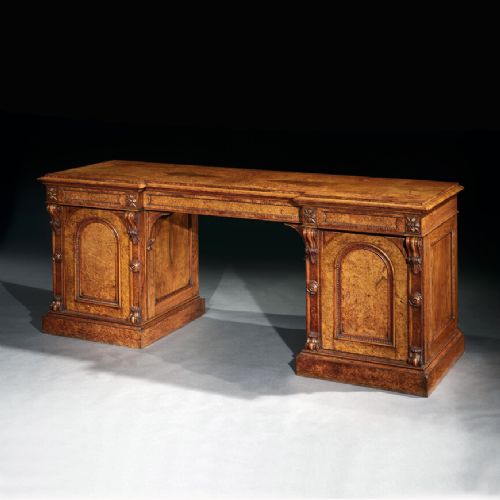
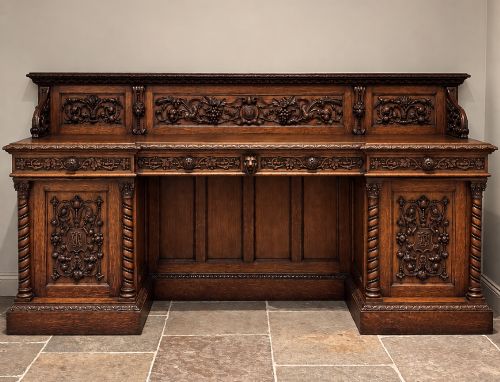


Carved Oak Pedestal Sideboard
These carved oak pedestal sideboard examples are substantial Victorian and later dining room pieces built to anchor a formal interior.
Carved Oak Pedestal Sideboard
When you search for a carved oak pedestal sideboard, you are looking at substantial storage furniture designed for the dining room, typically featuring pedestals flanking a central section. The pieces you are most likely to meet on this page date from the Victorian period, spanning the nineteenth century, alongside later twentieth-century interpretations.
The surviving examples frequently display architectural details, mirrored backs, and geometric or figural carvings rooted in the Gothic Revival, Baroque, and Renaissance Revival styles. Alongside full pedestal sideboards, the evidence includes related side cabinets, double pedestal formats, and breakfront designs that serve the same domestic function.
How they were made
The primary material across these listings is solid and figured oak, often selected for deep graining and enhanced with contrasting timbers such as pollard oak, walnut, and mahogany. Cabinet makers utilised brass hardware for handles and mountings, alongside bevelled mirror glass fitted into large architectural backboards.
Construction techniques rely heavily on heavy timber framing, structural joinery, and relief carving executed by hand. Certain examples incorporate specimen wood inlay or surface treatments such as bleaching to alter the natural tone of the timber.
Carved Oak Pedestal Sideboard Retail Price Guide 2026
Typical asking prices for carved oak pedestal sideboard among the pieces listed under this phrase on Sellingantiques today, from the lower quarter to the upper quarter. They describe what is for sale here now, not the wider market.
Listings span the Victorian period through to 1930, uniting heavy Gothic Revival oak with occasional French Art Deco desks.
What varies in quality
The distinction between standard examples and those of exceptional quality lies in the depth and ambition of the timber carving, alongside the choice of secondary woods. Pieces utilising pollard oak veneers or intricate specimen wood inlay sit at the upper end of the range.
Proportion and structural ambition also dictate standing, with grand mirrored backboards and architectural pediments marking out pieces produced for important Victorian dining rooms against more utilitarian variants.
Étienne Kohlmann
The Carved Oak Pedestal Sideboard Glossary
- Pedestal
- A structural support column or housing positioned beneath the main counter surface, offering enclosed cupboard storage. These form the defining side units of the pedestal sideboard.
- Gothic Revival
- An architectural and decorative style drawing on medieval ecclesiastical forms, characterised by pointed arches, trefoils, and heavy carved mouldings. It appears frequently among Victorian oak pieces.
- Pollard Oak
- Timber taken from trees that have been pollarded, producing a highly figured, clustered grain pattern prized by cabinet makers for decorative door panels.
- Breakfront
- A piece of furniture where the central section projects forward from the flanking pedestals or cabinets, creating a stepped facade.
- Specimen Wood Inlay
- The technique of fitting small geometric pieces of contrasting natural timbers into a surface to create decorative patterns or pictorial motifs.
Carved Oak Pedestal Sideboard: Frequently Asked Questions
What is a pedestal sideboard?
A pedestal sideboard is a large dining room storage unit featuring two substantial cupboards or pedestals connected by a lower central counter or drawer section. These pieces often include high backboards with integrated mirrors.
They were developed during the nineteenth century to store heavy dining silver, linens, and serving platters within formal dining spaces.
How do I date a carved oak sideboard?
Dating relies on identifying stylistic markers such as Victorian Gothic Revival details, Renaissance Revival motifs, or later Art Deco lines. The presence of original brass hardware, mirror glass types, and secondary timbers like mahogany also helps establish the period.
Most examples on record span the nineteenth century, though occasional twentieth-century pieces appear in the archive and current listings.
Where were sideboards placed?
These sideboards were positioned against a primary dining room wall, functioning as both a serving station during meals and a display surface for silver and glassware. Their grand proportions required substantial room dimensions.
Today, they serve a similar anchor role in large dining rooms or open-plan living areas, offering deep storage capacity.
What woods are used in these pieces?
Oak serves as the primary structural and visible timber across the majority of these listings, often finished in natural dark tones or bleached surfaces. Cabinet makers also incorporated walnut, mahogany, and pollard oak for contrast and decorative effect.
Interior framing and secondary sections may utilise alternative timbers suited to hidden structural work.
Are mirror backs original?
Many Victorian examples incorporate large mirror backboards framed by carved oak pediments and columns. These glass sections were integrated into the initial design to reflect light and display decorative objects placed on the serving ledge.
Inspection of the rebate and surrounding timber framing helps confirm whether the mirror glass and its housing remain undisturbed from the period of manufacture.