

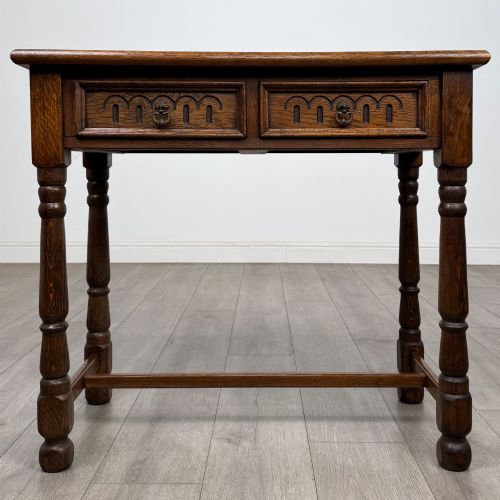
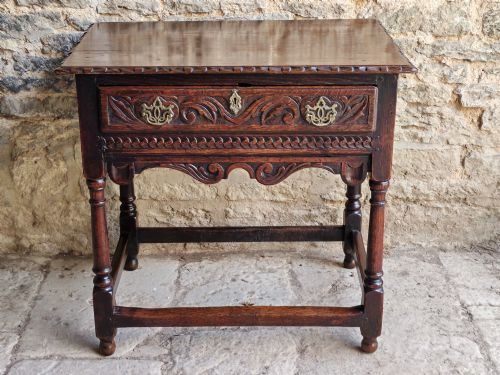
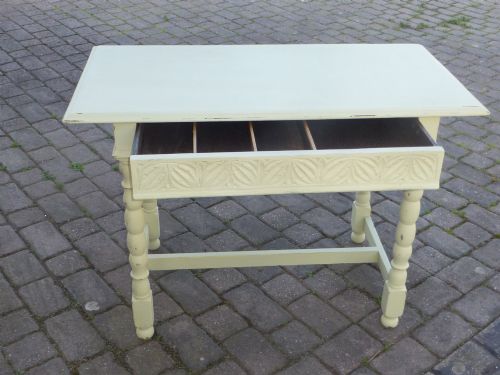
Carved Oak Console Desk
A carved oak console desk brings sturdy historic character and practical writing space into a hallway or study.
Carved Oak Console Desk
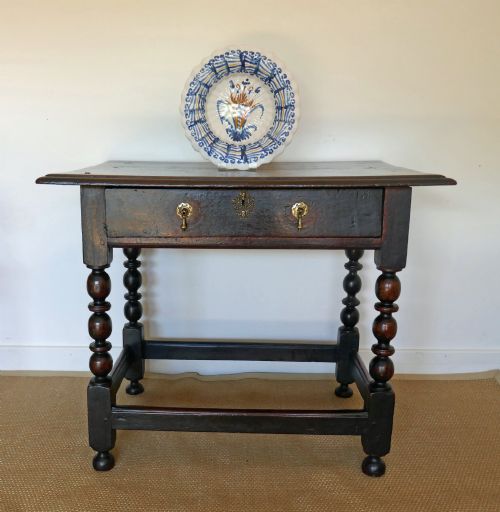
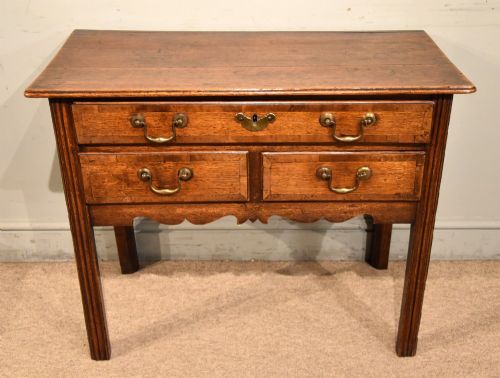
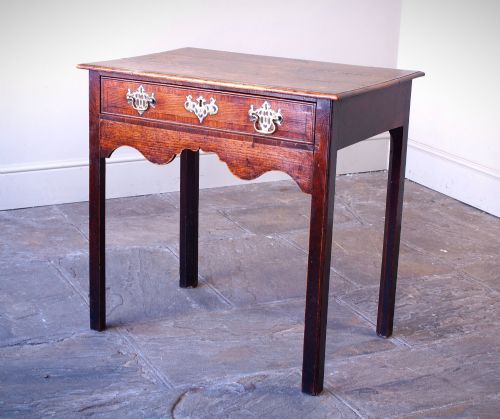
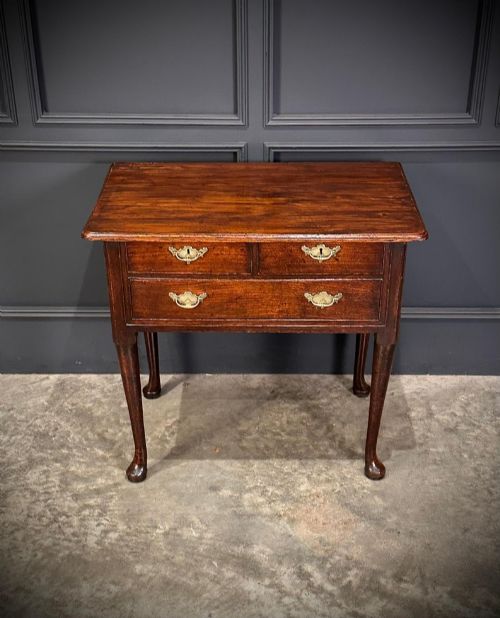
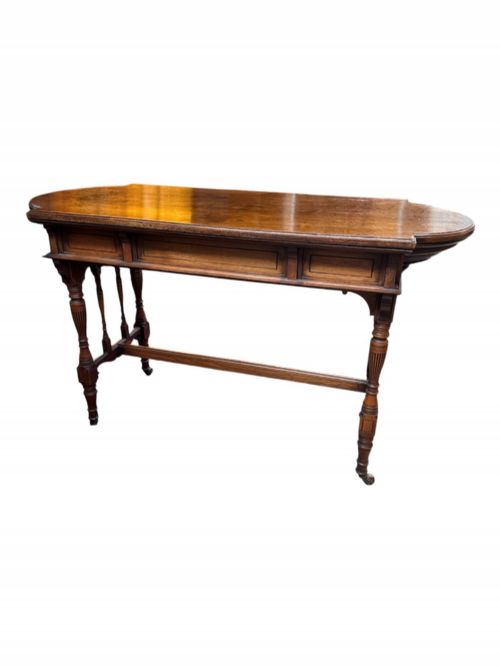
A carved oak console desk combines the narrow profile of a side or hall table with the functional surface of a writing table, often fitted with drawers. Buyers searching this phrase encounter examples stretching from the seventeenth century through the Victorian era and into the early twentieth century.
The material palette leans heavily on oak, alongside occasional pollard oak, burr oak, walnut, fruitwood, and wrought iron or brass hardware. Regional influences vary from English country house pieces and Welsh lowboys to Spanish rustic designs and French Gothic Revival interpretations.
Materials and construction methods
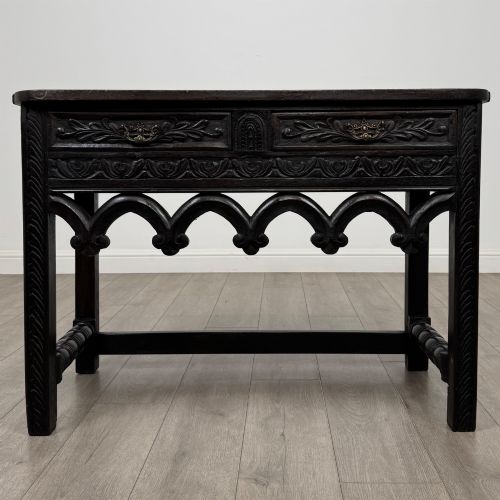
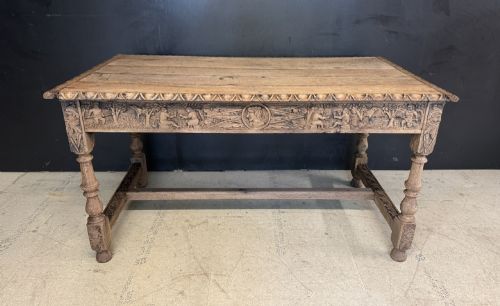
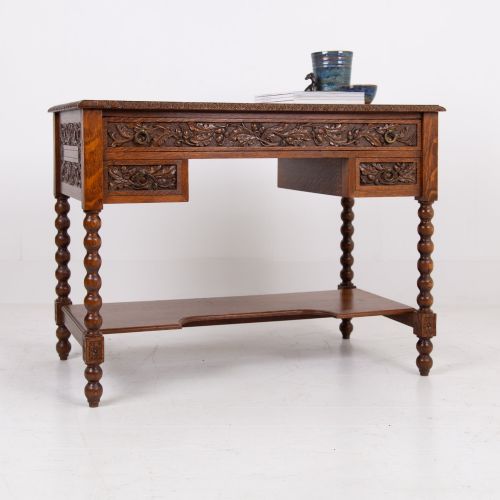
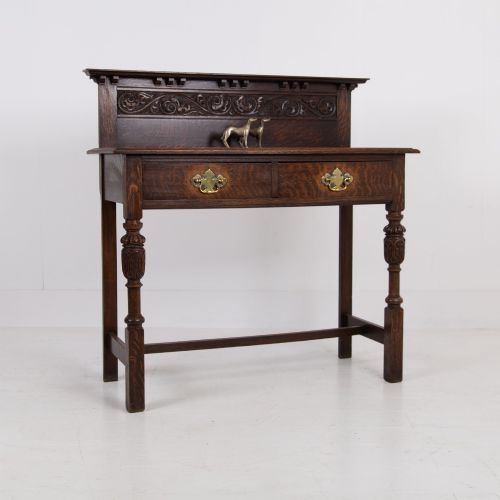
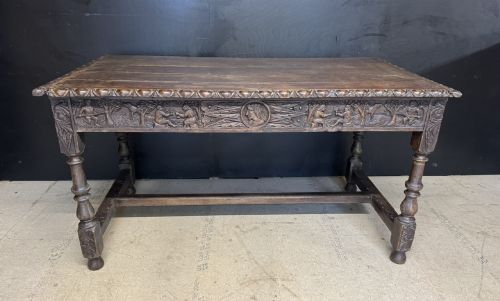
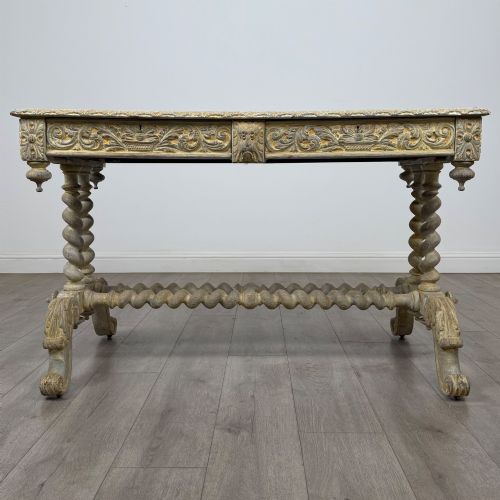
Cabinetmakers constructed these tables using solid timber, frequently utilising quarter-sawn oak to expose the characteristic medullary rays. Carved ornamentation, such as Greenman motifs, strapwork, and geometric paneling, was executed entirely by hand with gouges and chisels.
Drawer construction typically involves hand-cut dovetails and solid secondary timbers, while stretcher bases or turned legs provide structural stability to the heavier nineteenth-century and seventeenth-century formats.
Oak dominates the material record, supported by regional variations in walnut, fruitwood, and decorative burr oak timbers.
Distinctions in execution and survival
Quality rests in the crispness of the hand-carved detail and the integrity of the timber, where dense grain and rich surface patination elevate a piece far above simpler utility items. The depth of relief work and the restraint or exuberance of the regional style dictate the visual weight of the desk.
Original hardware, untouched timber surfaces, and structurally sound joinery separate pieces that have retained their historical character from those heavily altered or clumsily restored over centuries of domestic use.
The Carved Oak Console Desk Glossary
- Lowboy
- A small oak or fruitwood table with drawers, commonly produced in the eighteenth century and used as a writing or dressing table.
- Console table
- A table designed to stand against a wall, frequently utilised in hallways or reception rooms.
- Greenman
- A sculptural architectural ornament depicting a human face disgorged from foliage, popular on Victorian Gothic Revival carvings.
- Pollard oak
- Timber taken from trees that have been pollarded, producing a highly figured and knotted grain pattern prized for decorative veneers.
- Stretcher
- A horizontal wooden rail connecting the legs of a table to improve rigidity and overall strength.
Carved Oak Console Desk: Frequently Asked Questions
How do I use a console desk in a modern room?
These narrow tables slide easily into hallways, behind sofas, or against quiet study walls where floor space is limited. Their shallow depth provides a convenient surface for correspondence without blocking pathways.
Pairing the desk with a simple chair or leaving it bare with a table lamp lets the historic carved timber act as a focal point in the interior.
How do I tell an 18th-century piece from a Victorian copy?
Seventeenth and eighteenth-century examples display tool marks, hand-cut joinery, and natural surface wear consistent with age and hand tools. Timber shrinkage and patination develop organically over hundreds of years of daily use.
Victorian Gothic Revival pieces often feature heavier, deeper relief carving, machine-sawn elements in hidden areas, and darker applied finishes typical of nineteenth-century revivalism.
What is the difference between a lowboy and a console desk?
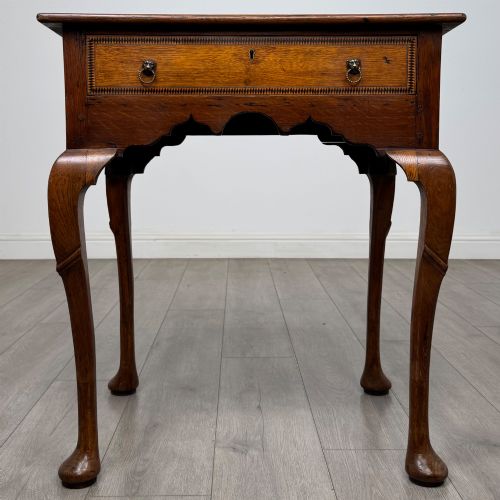
A lowboy is traditionally a small, low table featuring one to three drawers, originating strongly in the Georgian period as a multi-purpose dressing or writing stand. Console desks are engineered specifically to stand flush against a wall.
Many listings use the terms interchangeably based on proportions, but lowboys generally display more elegant cabriole or slender turned legs.
How should I care for antique oak furniture?
Maintain the timber by keeping it away from direct heat sources and sudden humidity shifts that cause wood to split. Dust regularly with a dry cloth and apply a quality beeswax sparingly when the surface feels dry.
Avoid modern liquid silicone polishes, as they build up over time and dull the natural lustre of the historic oak grain.