

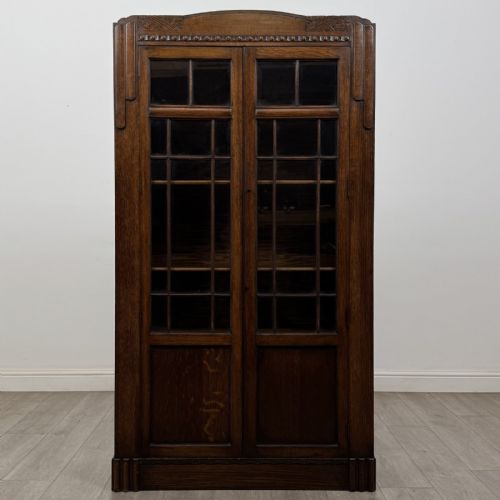
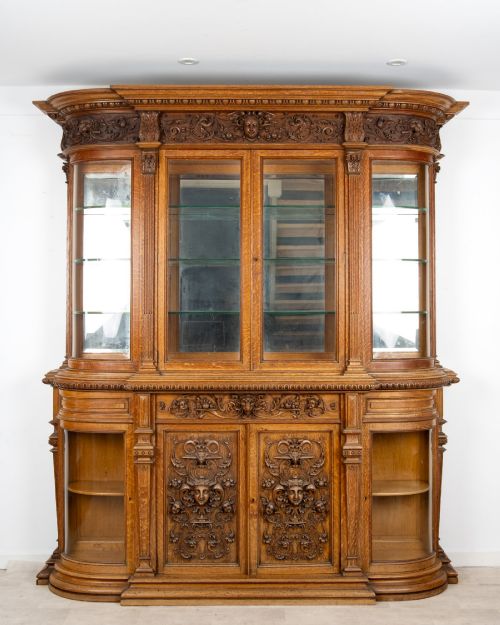
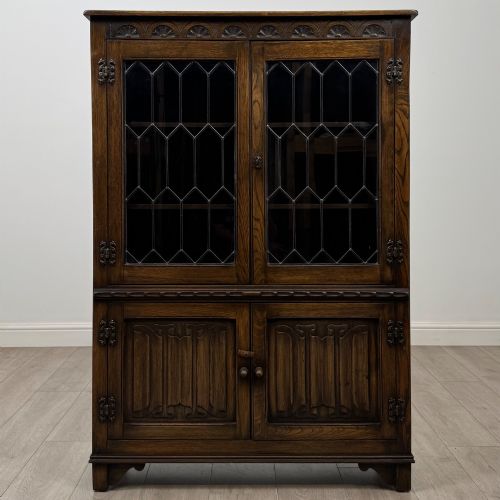
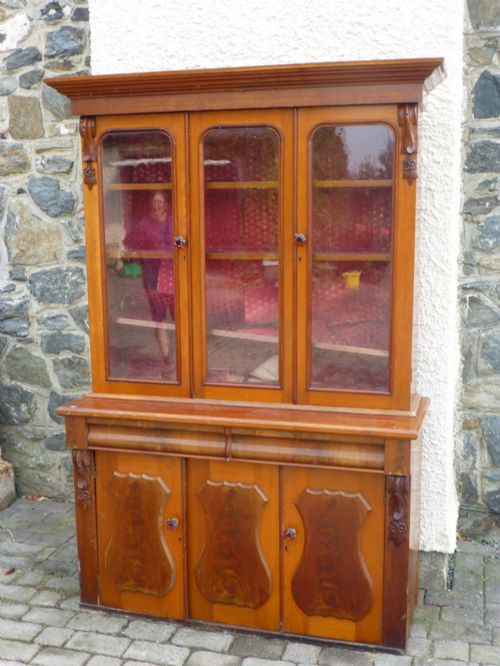
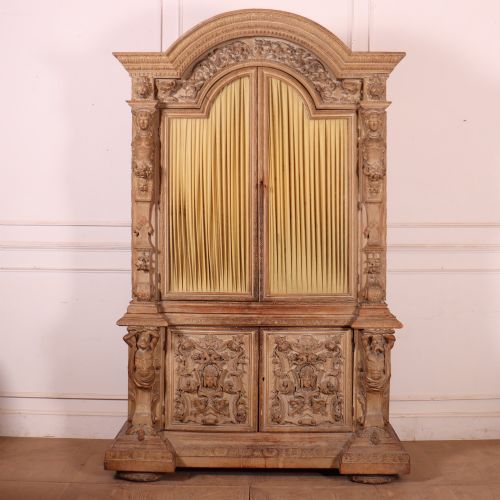


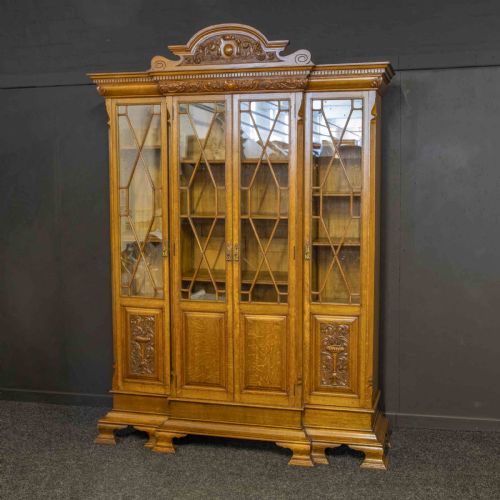


Carved Oak China Cabinet
A carved oak china cabinet brings robust timber and glazed display space into a room, offering both storage and a traditional focal point.
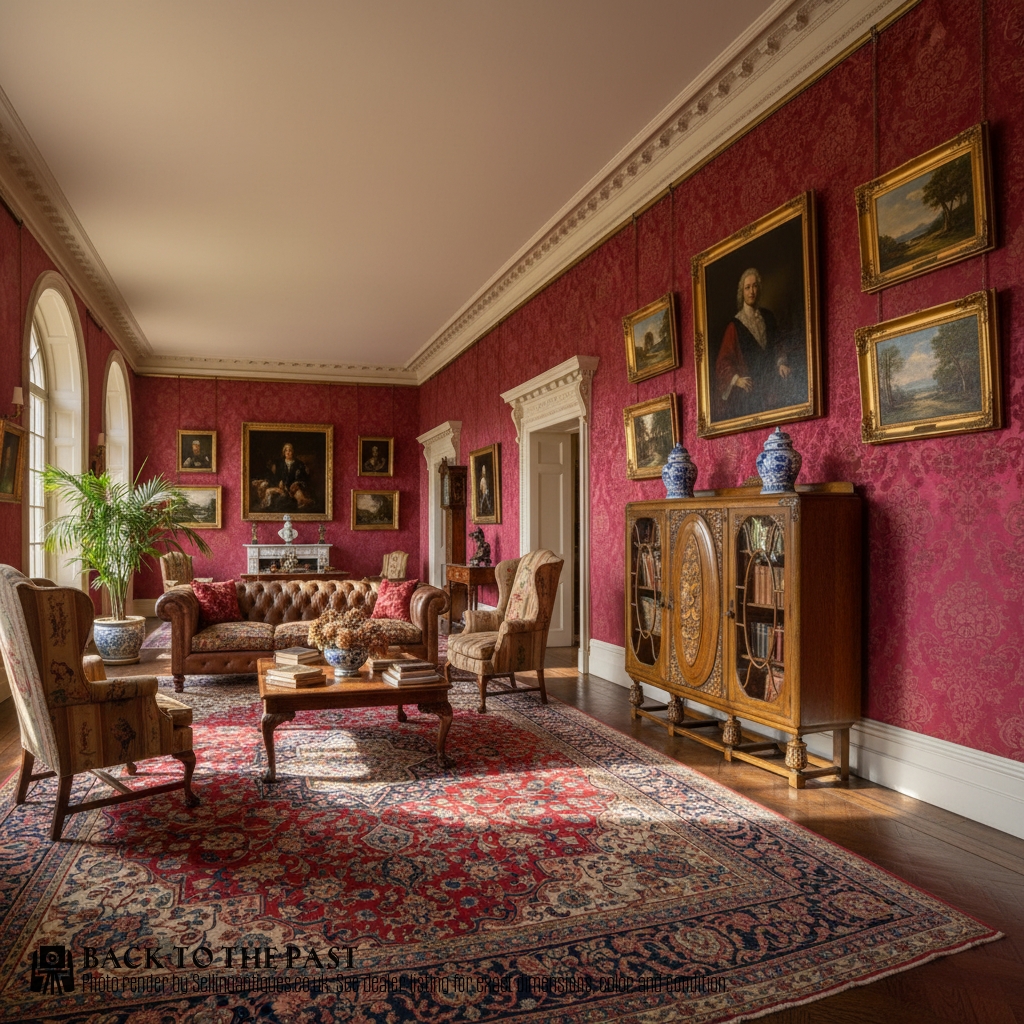
Carved Oak China Cabinet
A carved oak china cabinet encompasses display cabinets, bookcases, dressers, corner cabinets, and vitrines found across several centuries. These pieces originate from periods including the 18th century, Georgian era, Victorian era, Edwardian period, and the early 20th century.
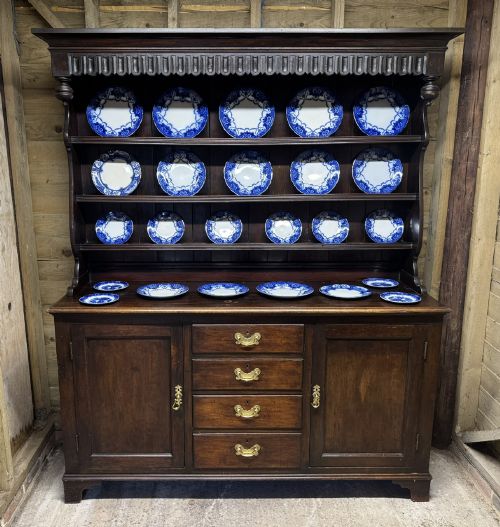
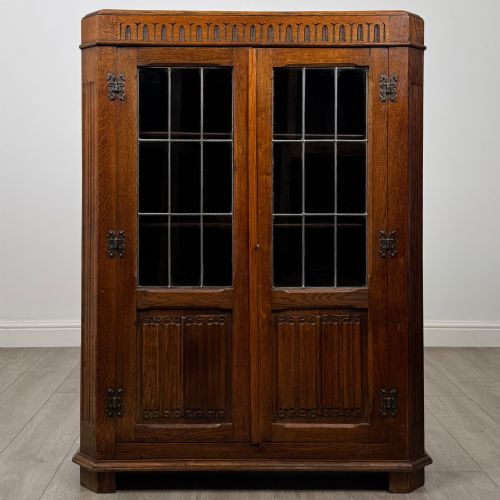
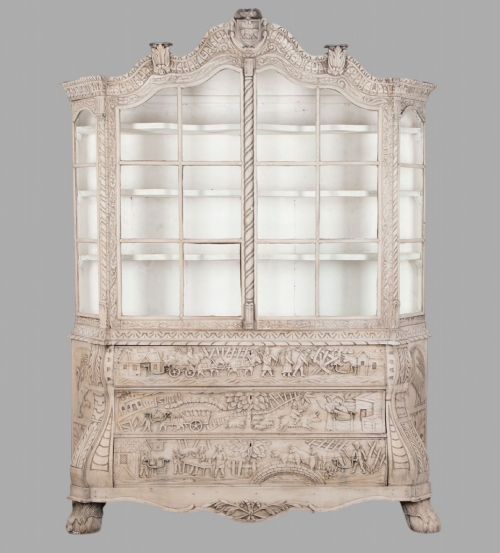
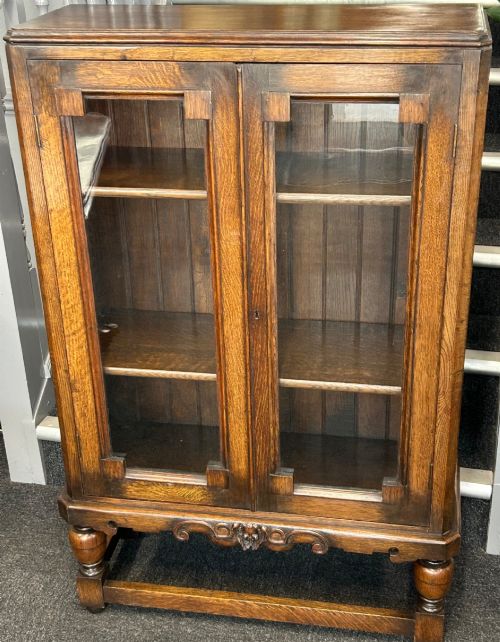
The version most commonly met on this page is the Edwardian or Victorian display cabinet or bookcase, frequently featuring glazed doors and substantial timber construction. Regional variations such as Welsh dressers and Dutch bombé cabinets also appear among the selections.
Makers and workshops applied diverse historical Revivals to these cabinets, incorporating Tudor, Jacobean, Gothic, and Dutch Rococo influences. The resulting furniture ranges from tall two-part library bookcases to compact corner cupboards designed for domestic use.
Standards of Execution
The distinction between ordinary and superior pieces rests on the depth and clarity of the carving work. Crisp relief work on panels and cornices reflects greater skill than shallow machine milling.
Proportion and timber selection heavily influence the overall standard of a cabinet. Dense, well-figured oak boards and balanced architectural facades separate exceptional examples from simpler utility furniture.
Carved Oak China Cabinet Retail Price Guide 2026
Typical asking prices for carved oak china cabinet among the pieces listed under this phrase on Sellingantiques today, from the lower quarter to the upper quarter. They describe what is for sale here now, not the wider market.
Listings span multiple eras from the 18th century through to the Edwardian period, utilising oak alongside glass, brass, and mahogany.

The Carved Oak China Cabinet Glossary
- Glazed
- Fitted with glass panes to enclose shelves while permitting visibility of the interior. This treatment protects contents from dust.
- Breakfront
- A cabinet design where the central section projects forward from the flanking wings. This configuration adds architectural depth to large bookcases.
- Linenfold
- A style of carved wooden panelling that resembles folded fabric or parchment. It appears frequently on Tudor and Jacobean Revival furniture.
- Vitrine
- A glass-sided display cabinet designed specifically for showing porcelain or curiosities. These pieces often stand on slender legs or moulded bases.
- Bombe
- A swollen or bulging convex shape found on the lower sections of certain continental cabinets. This contour requires advanced woodworking skill to execute.
Carved Oak China Cabinet: Frequently Asked Questions
Where should I place a carved oak cabinet?
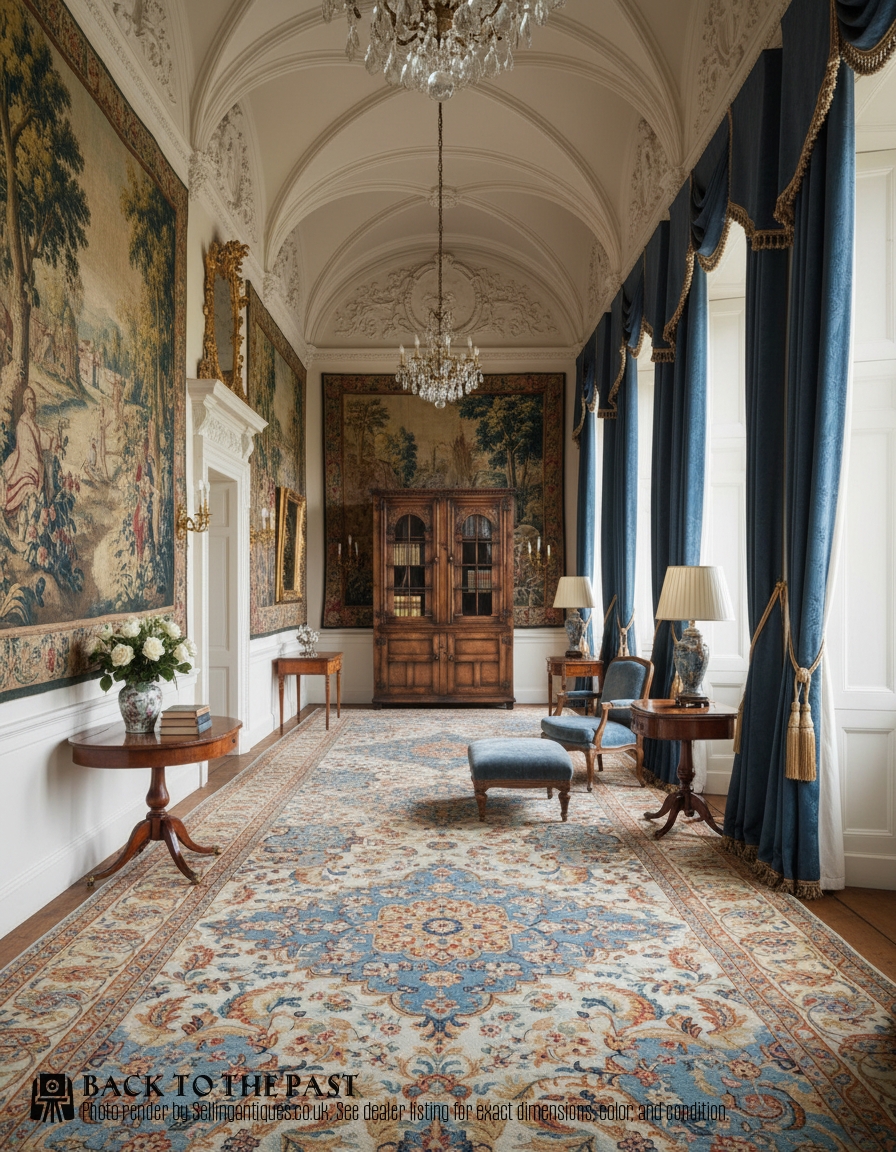
These cabinets suit dining rooms, libraries, or living spaces where glazed shelving allows the display of ceramics or books while protecting them from dust.
Because many examples are substantial, measuring available floor space and ceiling height ensures the piece commands the room appropriately without blocking natural light.
How do I identify a Victorian oak cabinet?
Victorian pieces often display darker finishes, heavy proportions, and robust carved ornamentation drawing on Gothic or Renaissance revival styles. Tiger oak figuring and deep mouldings frequently characterise the timber.
Checking the interior construction, drawer linings, and glass type helps confirm the mid-to-late nineteenth-century period of manufacture.
Are these cabinets made in two sections?
Larger bookcases, dressers, and display units commonly separate into an upper glazed cabinet and a lower cupboard or drawer base. This modular construction aided transport in older houses.
When positioning the furniture, checking that both sections seat evenly on one another maintains the structural stability of the piece.
How do I care for antique oak timber?
Routine maintenance involves dusting with a dry, soft cloth and occasionally applying traditional beeswax to nourish the wood surface. Avoiding direct sunlight prevents the oak from drying out.
Keeping the furniture away from sudden temperature fluctuations and moisture sources protects both the solid timber and the original joinery.