



Carved Oak Chiffonier
These carved oak chiffonier pieces combine sturdy timber with practical storage, offering a traditional centrepiece for a dining room or hall.
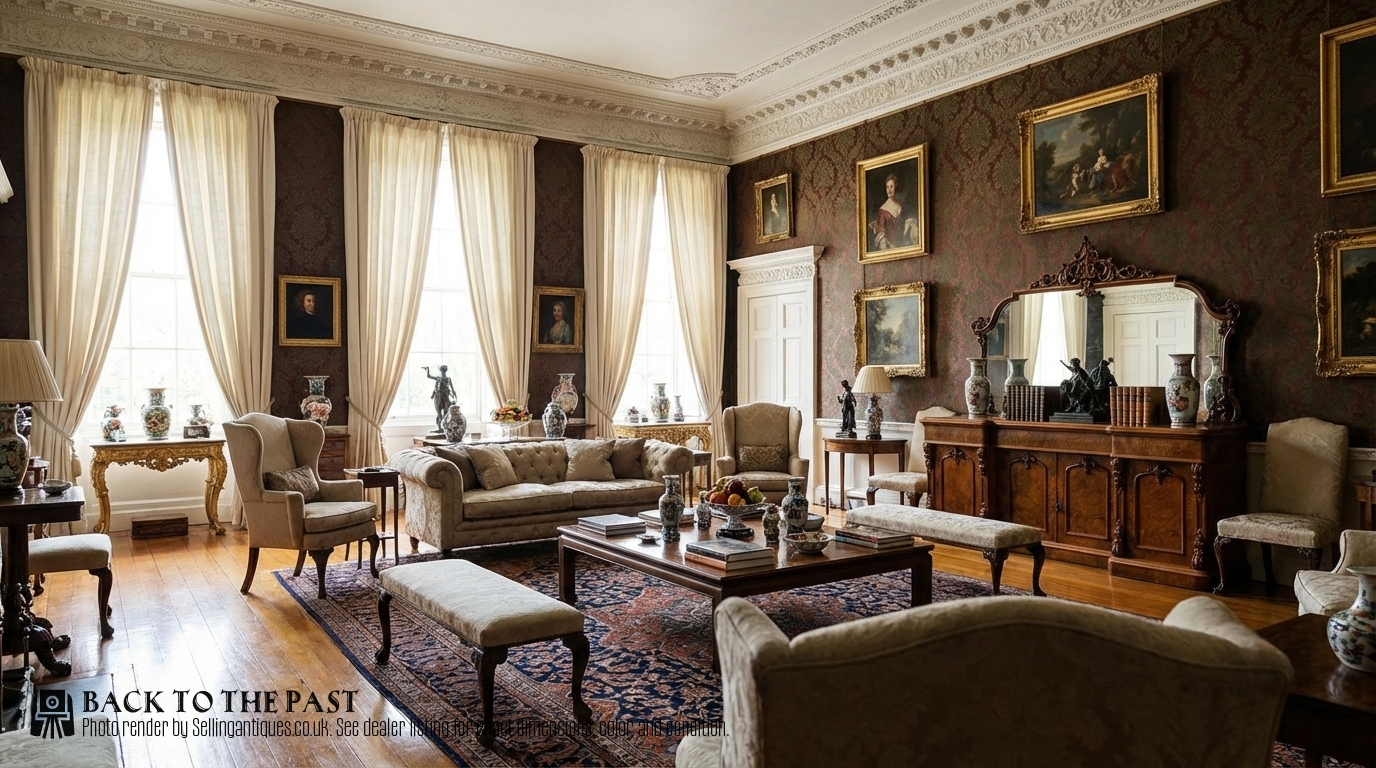
Carved Oak Chiffonier
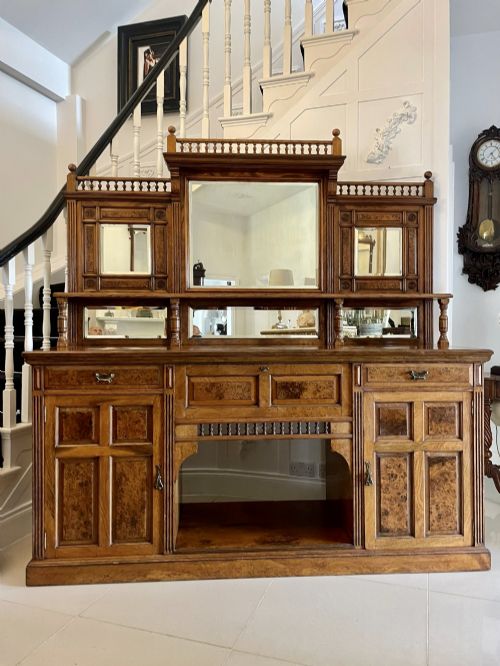
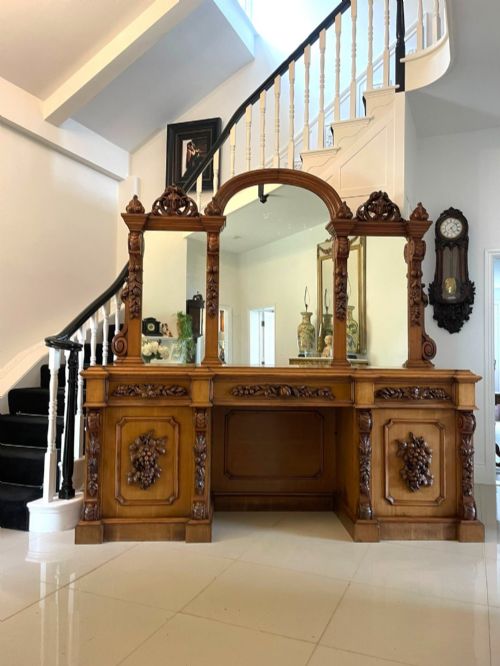
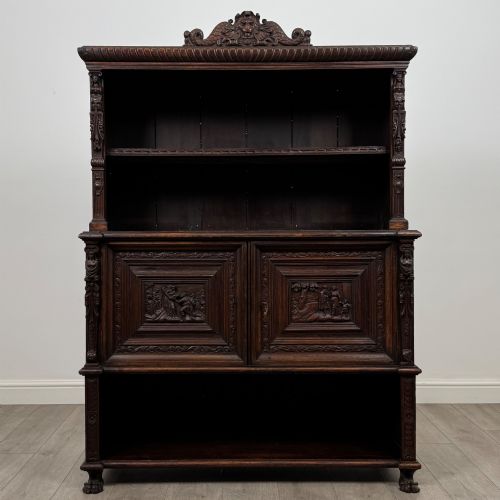
When you search for a carved oak chiffonier, you are looking at substantial nineteenth-century timber storage furniture that bridges the gap between a sideboard and a low cabinet. These pieces frequently appear from the Victorian and Edwardian periods, often featuring carved ornamentation upon the doors or mirror backs.
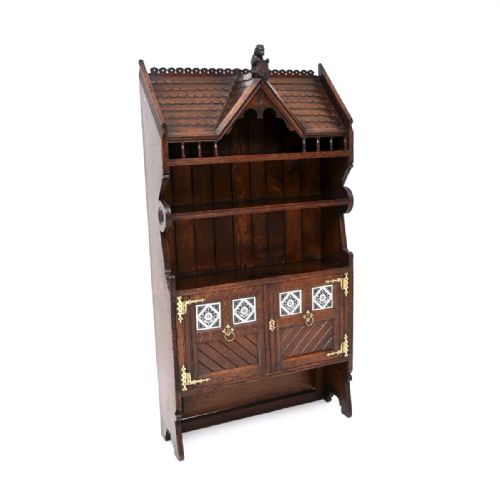
You will encounter various formats on this page, ranging from compact side cupboards to grand mirror-backed sideboards with top shelves. The forms span Victorian Renaissance Revival and Arts and Crafts movements, alongside simpler English utility designs from the early twentieth century.
The underlying timber changes across the selection, moving from plain oak to pollard oak, burr oak, and golden oak. Many incorporate glass doors, brass hardware, or mirror glass panels to lighten the heavy wood presence.
What varies in quality
The degree of hand carving determines much of the distinction between standard production and exceptional examples, with crisper relief work and balanced symmetry marking out the finer pieces. Timber selection also dictates the tier, particularly where highly figured pollard oak or burr oak veneers are matched across multiple doors.
Structural integrity relies on the retention of original backboards, heavy brass fittings, and intact mirror glass without foxing. Subtle differences in the proportion of the top shelf or the depth of the lower cupboard separate straightforward utility from ambitious revival cabinet work.
Carved Oak Chiffonier Retail Price Guide 2026
Typical asking prices for carved oak chiffonier among the pieces listed under this phrase on Sellingantiques today, from the lower quarter to the upper quarter. They describe what is for sale here now, not the wider market.
Listings feature oak, pollard oak, and burr oak alongside brass, copper, and mirror glass elements.
The Carved Oak Chiffonier Glossary
- Pollard oak
- Timber taken from trees that were cut close to the trunk to encourage dense, highly figured branch growth. This grain appears heavily mottled and marbled.
- Burr oak
- Wood harvested from tree growths that produce swirling, knotty patterns within the grain. It was sliced into decorative veneers for prominent door panels.
- Mirror back
- An upright wooden frame fitted with a mirror plate, attached to the rear of a sideboard or chiffonier. It reflects light and displays objects placed on the surface below.
- Arts and Crafts
- A movement prioritising visible construction, simple utility, and honest materials over machine-made ornamentation. Pieces in this style often display straightforward joinery and hammered metal details.
Carved Oak Chiffonier: Frequently Asked Questions
What is a chiffonier?
A chiffonier is a low dining room cabinet or sideboard, usually featuring a combination of cupboards below and shelving or a mirror back above. It developed during the nineteenth century as a versatile piece for storing china, linen, and dining accessories.
These pieces sit lower than traditional tall cupboards, making the surface useful for serving food or displaying decorative objects in domestic interiors.
How do I date a carved oak chiffonier?
Dating relies on examining the style of the carving, the choice of timber figure, and the presence of mirrors or gallery shelves. Victorian examples often show heavier Renaissance Revival motifs or tall mirror backs, while Edwardian and Arts and Crafts versions lean towards lighter golden oak and simpler linear forms.
Internal construction details, such as the type of drawer joints and the character of the brass or copper hardware, also help anchor the piece to a specific decade.
Where should I place a chiffonier?
A chiffonier fits naturally in a dining room, living room, or a wide hallway where its low profile and storage capacity can be fully utilised. The surface provides a practical stage for lamps, ceramics, or books, while the enclosed cupboards keep clutter out of sight.
Because many versions include mirror glass or tall upstands, positioning them against a solid wall away from direct dampness preserves both the wood and the silvering on the glass.
How do I care for antique oak furniture?
Maintaining antique oak involves keeping the timber away from direct heat sources and sudden humidity changes that can cause wood to split or warp. Regular dusting with a dry or barely damp cloth prevents grime build-up on the carved surfaces.
Applying a traditional wax polish occasionally nourishes the grain and protects the finish without leaving a synthetic film on the carved panels.