
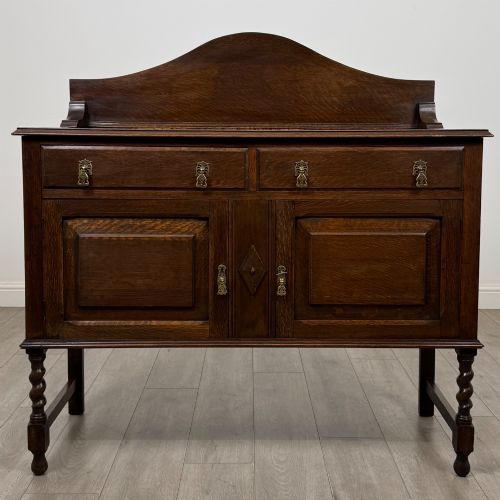
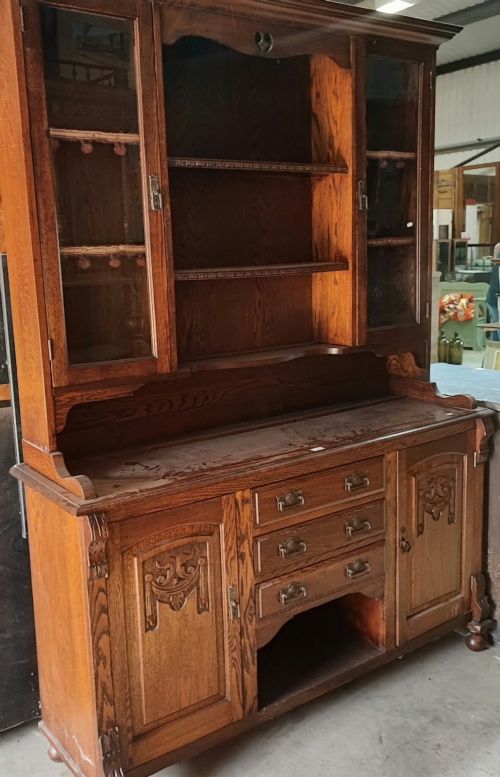
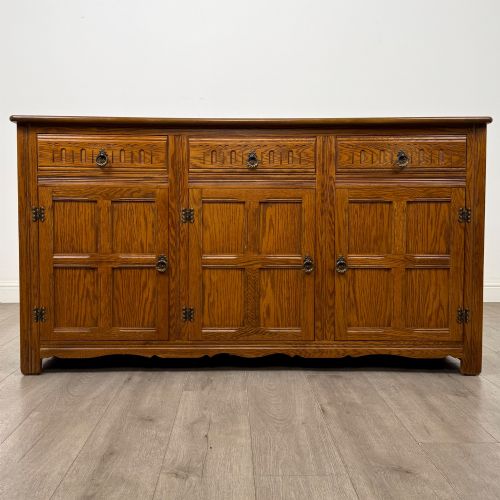
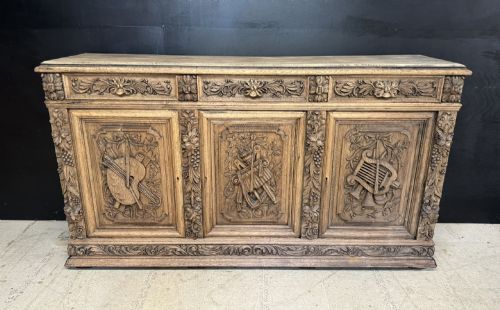
Carved Oak Buffet Cabinet
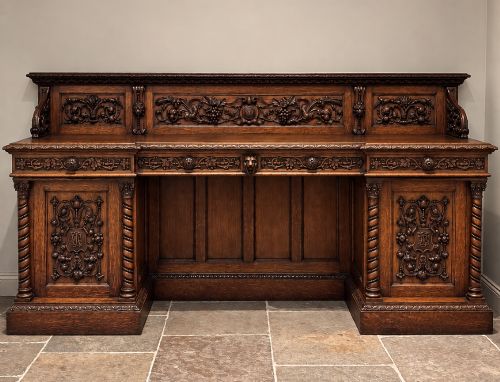
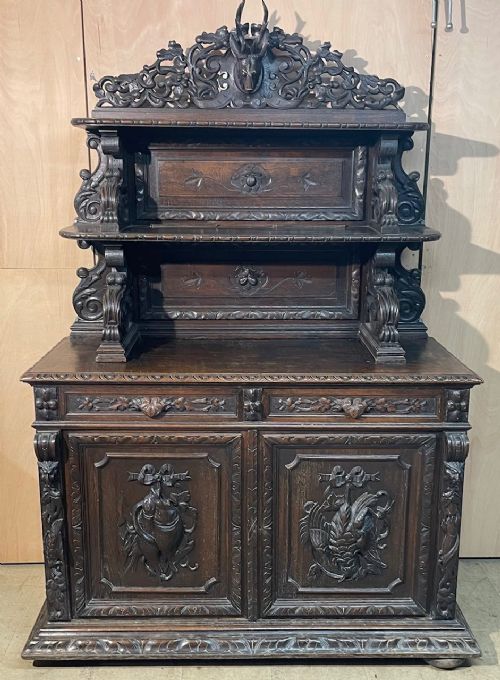
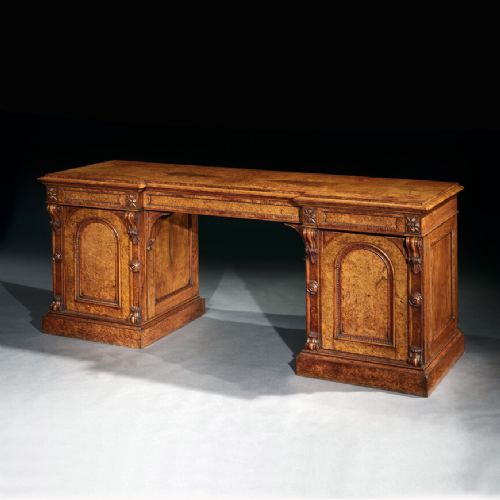
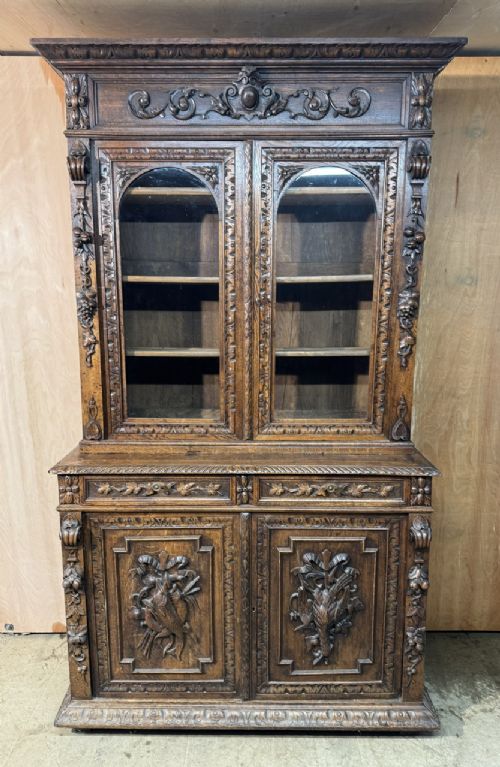
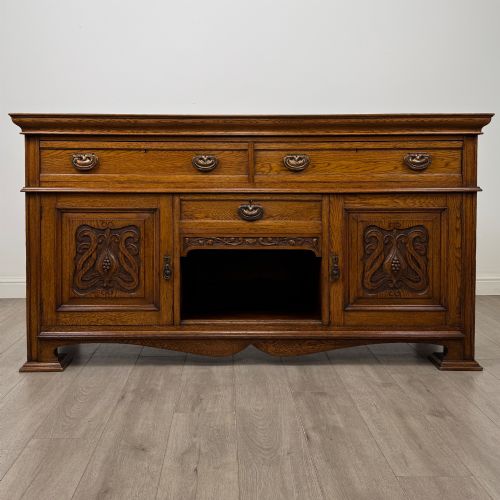
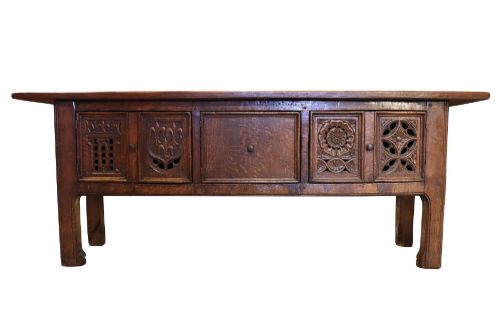
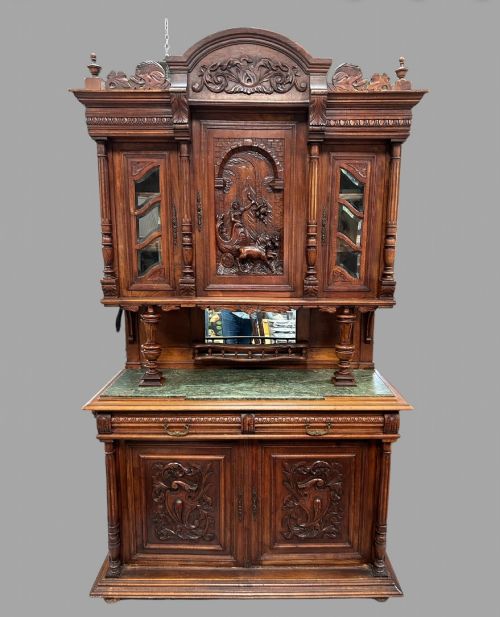
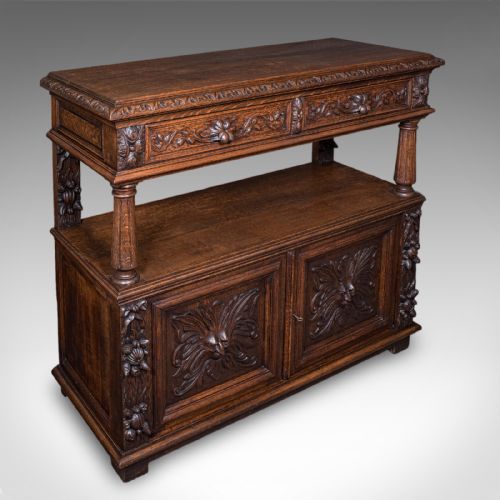
These carved oak buffet cabinet pieces combine heavy storage with sculptural relief, offering a sturdy timber presence that anchors a dining room or hall.
Carved Oak Buffet Cabinet
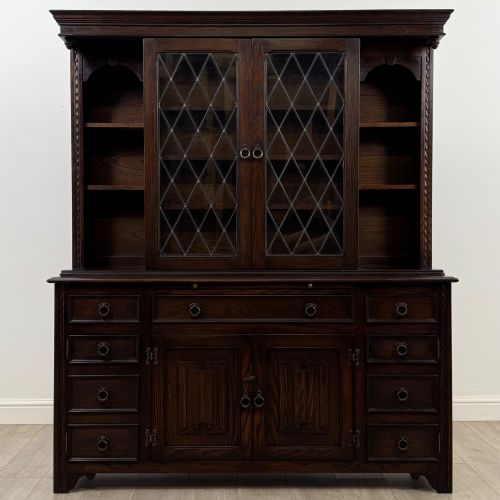
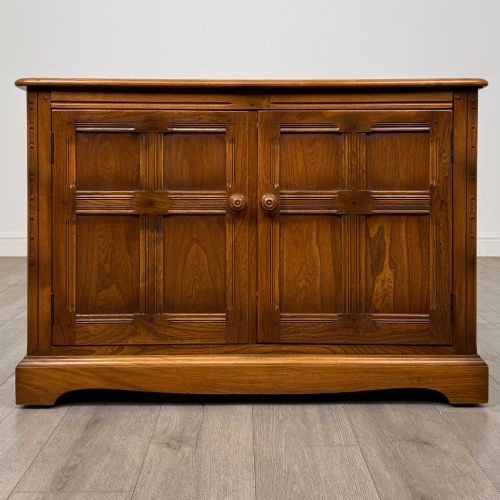
A carved oak buffet cabinet is a heavy timber storage form found across several periods, most commonly appearing as Victorian, Edwardian, or nineteenth century examples on this page. These pieces serve as sideboards, court cupboards, and enfilades, combining enclosed lower cupboards with display surfaces or upper tiers.
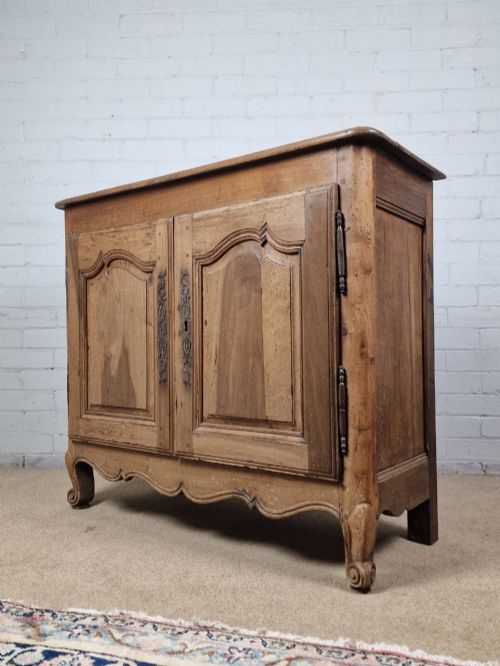
The styles span Jacobean Revival, Gothic Revival, and Arts and Crafts movements alongside French provincial and Renaissance interpretations. Buyers encounter everything from simple golden oak Edwardian cupboards to heavily carved nineteenth century hunting cabinets and eighteenth century regional buffet deux corps.
How they were made
The primary material is oak, sometimes seen as pollard oak, tiger oak, or golden oak, complemented by brass, iron, and glass hardware. Construction relies on heavy timber framing, pegged joints, and panelled doors.
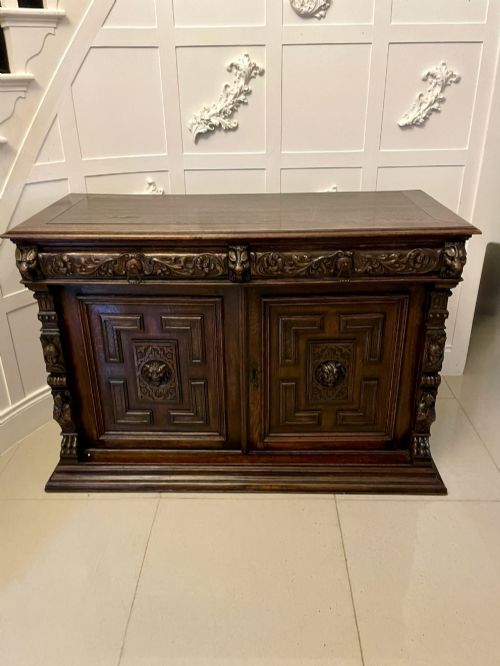
Carving is central to the decoration, executed by hand with deep relief motifs, geometric mouldings, and turned elements such as barley twists. Secondary woods and burr walnut appear in select areas depending on the regional workshop tradition.
The listings span from the seventeenth century through to the Edwardian period, executed primarily in oak with brass and iron hardware.
What varies in quality
The distinction between ordinary and superior pieces rests on the depth and execution of the carving, the selection of figured timber, and the integrity of the original construction. A finer cabinet displays crisp, deep relief work and well-matched grain rather than flat, mechanical stamping.
Proportion and hardware also separate the tiers of craftsmanship, where authentic period brass handles and balanced architectural mouldings elevate a simple storage unit into a striking architectural form.
Ambrose Heal for Heal & Son
The Carved Oak Buffet Cabinet Glossary
- Court cupboard
- A traditional English two-tiered wooden cabinet used for storing food and displaying plate, often featuring recessed upper doors.
- Enfilade
- A suite of rooms or a long piece of furniture with a series of continuous doors, frequently applied to French oak buffet pieces.
- Pollard oak
- Timber taken from trees that have been pollarded, producing a dense, highly figured wood grain prized for decorative panels.
- Barley twist
- A type of woodturning shaped like a spiral helix, popular in seventeenth century furniture and later revival pieces.
Carved Oak Buffet Cabinet: Frequently Asked Questions
What is a carved oak buffet cabinet?
A carved oak buffet cabinet is a heavy wooden storage piece featuring carved ornamentation, functioning as a sideboard or serving station in dining spaces.
These cabinets combine cupboards and display surfaces, appearing across revival styles from the seventeenth century onwards.
How do I style a buffet cabinet?
You style these heavy timber pieces by balancing their visual weight with simpler surroundings, using the top surface for lamps, ceramics, or serving ware.
They anchor dining rooms and hallways, providing substantial enclosed storage for tableware and linens.
How do I tell periods apart?
Periods are distinguished by carving styles and construction methods, such as the geometric mouldings of earlier revivals compared to the cleaner lines of Arts and Crafts pieces.
Examining the timber grain, hardware, and jointing techniques helps confirm whether a piece belongs to the seventeenth, nineteenth, or twentieth century.
Were these used for dining?
These cabinets served primarily for storing and serving food, holding dining utensils, and displaying silver or pewter vessels.
Their robust construction allowed them to handle the heavy demands of large households over centuries of daily use.