
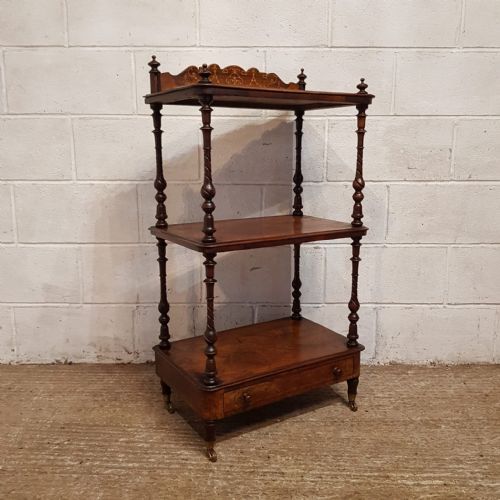
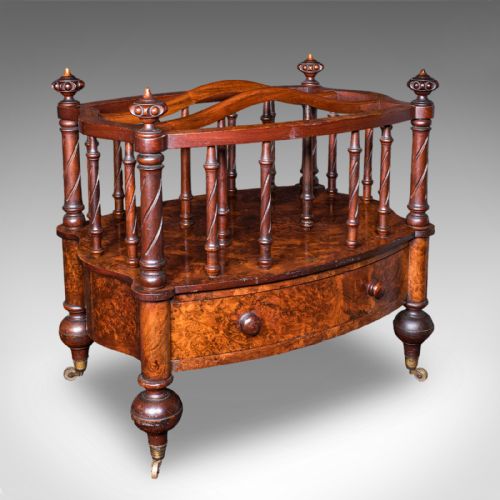


Carved Music Stand Drawer
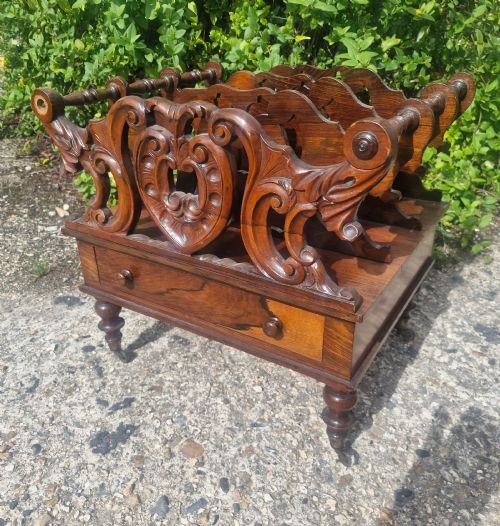
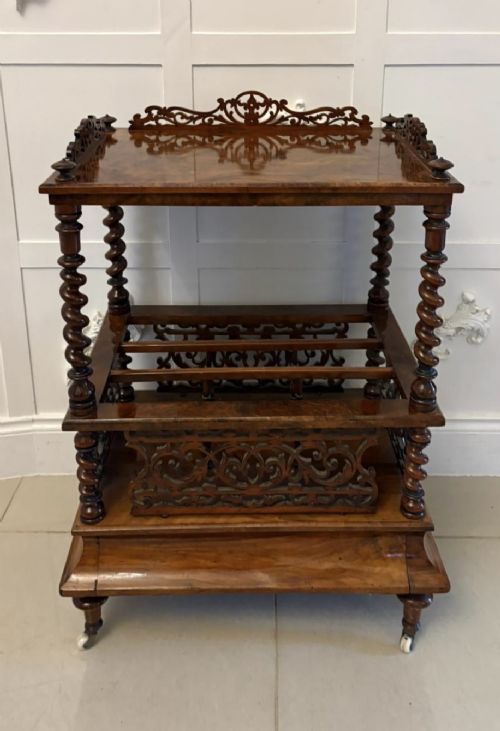
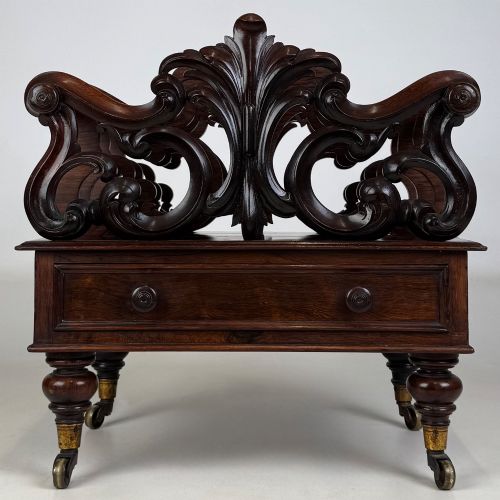
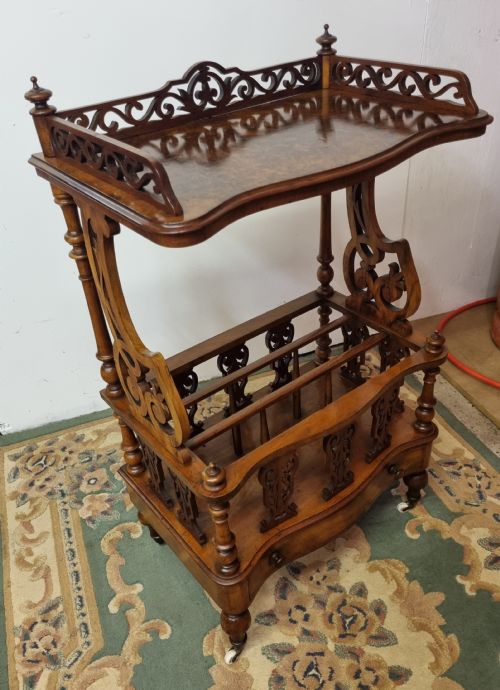
These carved music stand drawer pieces are elegant nineteenth-century furniture items designed to hold folios and newspapers.
Carved Music Stand Drawer
A carved music stand drawer search covers nineteenth-century canterburys, music cabinets, and magazine racks spanning Georgian, Regency, William IV, and Victorian periods.
Most pieces met on this page are rosewood, mahogany, or burr walnut canterburys and music stands featuring integrated storage compartments and lower drawers.
Forms range from serpentine-shaped tables and pierced scroll divisions to fall-front cabinets and whatnots.
How they were made
Craftsmen utilised rich timbers such as rosewood, mahogany, satinwood, and burr walnut, often shaping the wood with carved foliate details and wreath motifs.
Metal elements like brass appeared alongside ceramic, porcelain, and glass components to finish handles, castors, and decorative mounts.
Joinery techniques united turned uprights, slatted divisions, and dovetailed drawer boxes to create stable furniture for holding sheet music and periodicals.
Some nineteenth-century makers evidently expected musicians to need a drawer for their feathers.
What varies in quality
The refinement of the carving sets individual examples apart, distinguishing simple turned supports from deeply sculpted Prince of Wales feathers and intricate foliate designs.
The choice of timber grain governs visual appeal, with highly figured burr walnut and richly grained rosewood commanding stronger presence than plain mahogany.
Structural complexity influences distinction, separating straightforward open rack frames from sophisticated pieces combining cabinets, fall-fronts, and fitted lower drawers.
Gillows of Lancaster
The Carved Music Stand Drawer Glossary
- Canterbury
- A low multi-tier stand fitted with upright divisions for holding sheet music, newspapers, or folios, usually featuring a small drawer below. This form originated in the eighteenth century and remained popular throughout the Victorian era.
- Serpentine
- A curved line of furniture shaping that undulates outward and inward, resembling a snake's movement. This contour appears on the edges and tops of finer nineteenth-century cabinets and canterburys.
- Fall-front
- A hinged panel that drops forward to open a cabinet compartment rather than pulling outward as a conventional drawer. Such mechanisms provide access to internal shelving for papers and music books.
- Etagere
- A set of open shelves for displaying small objects, often incorporated into multi-functional stands and whatnots. These pieces utilise slender vertical supports to create an airy tiered silhouette.
Carved Music Stand Drawer: Frequently Asked Questions
What is a carved music stand drawer used for?
These pieces served as dedicated furniture for storing sheet music, periodicals, newspapers, and portfolios in nineteenth-century drawing rooms and parlours.
The lower drawer provided enclosed storage for smaller accessories, loose leaves, or writing materials while the upper dividers kept folios upright and sorted.
How do I identify a Regency period piece?
Regency items typically display classical restraint, linear forms, and dark timbers like rosewood or mahogany with minimal brass accents and precise joinery.
Maker attribution and proportion often point toward the early decades of the nineteenth century before the more ornate Victorian styles emerged.
Are these stands suitable for modern magazines?
The vertical divisions accommodate standard contemporary periodicals, newspapers, and art books quite naturally alongside historical sheet music.
Placing them beside seating areas provides practical open storage while maintaining a decorative period aesthetic in the room.
What is the difference between a canterbury and a music cabinet?
Canterburys generally feature open slatted or pierced vertical divisions designed for immediate access to sheet music and current reading materials.
Music cabinets enclose the contents behind solid or glazed doors and fall-front panels, offering greater protection for bound volumes and delicate folios.