
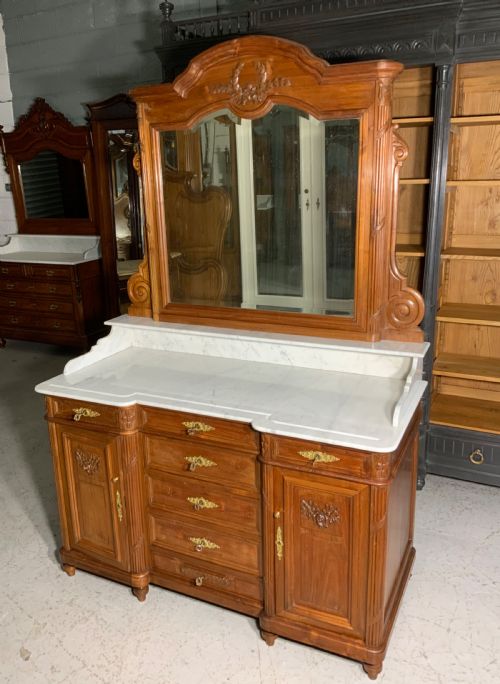
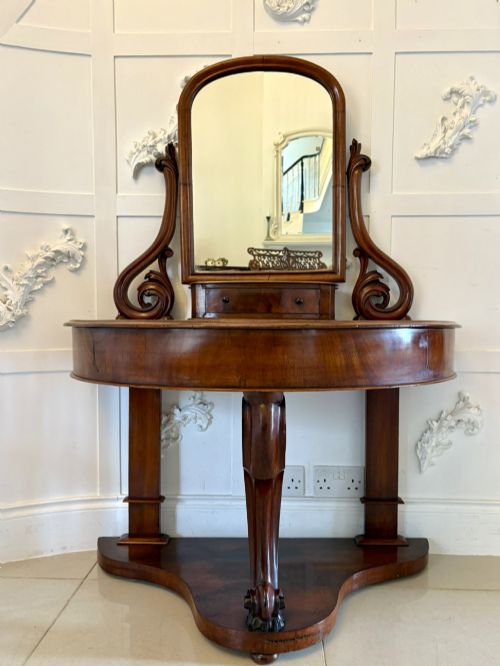
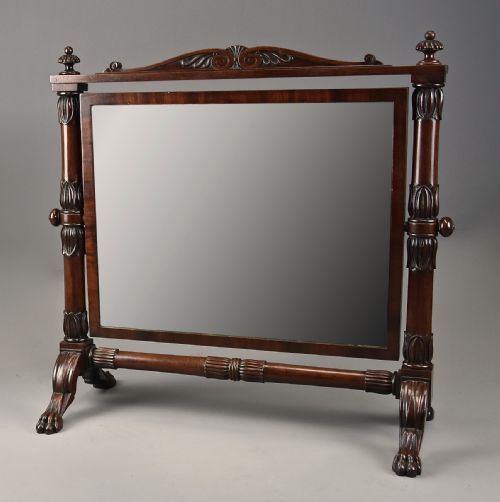
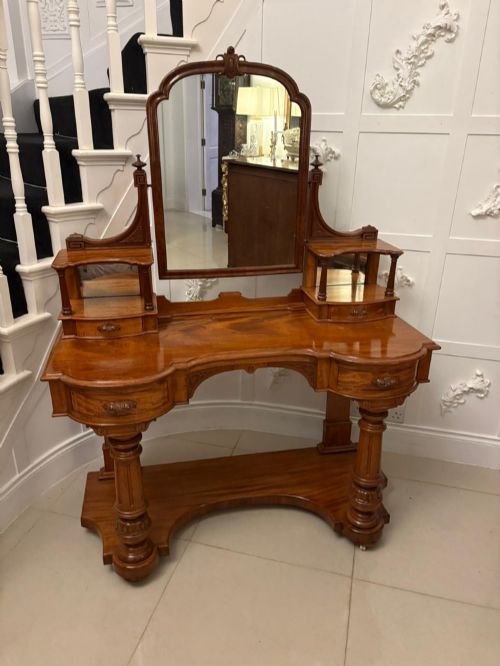
Carved Mirror Dressing Table
A carved mirror dressing table brings centuries of fitted bedroom craftsmanship into daily use.
Carved Mirror Dressing Table
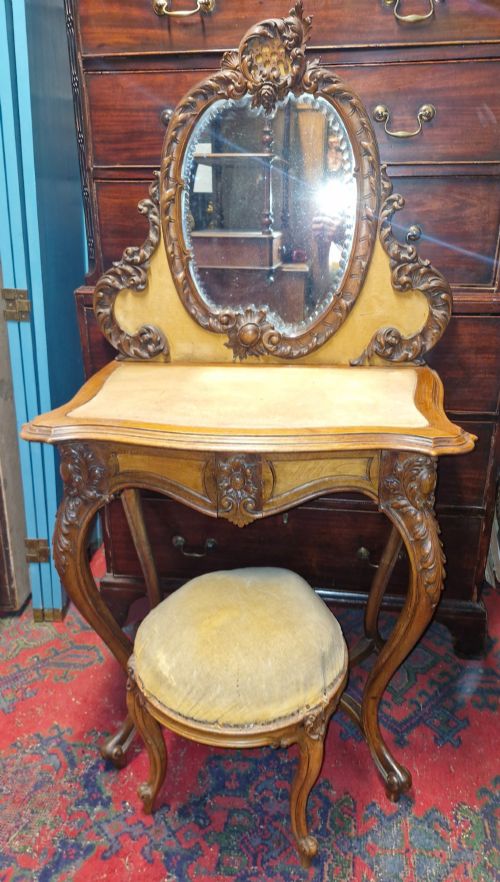
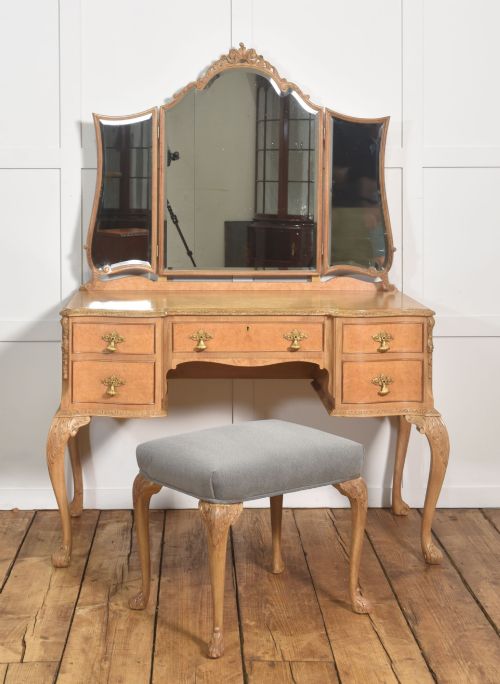
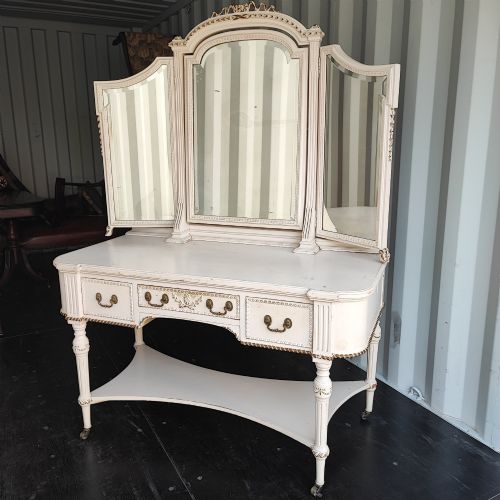
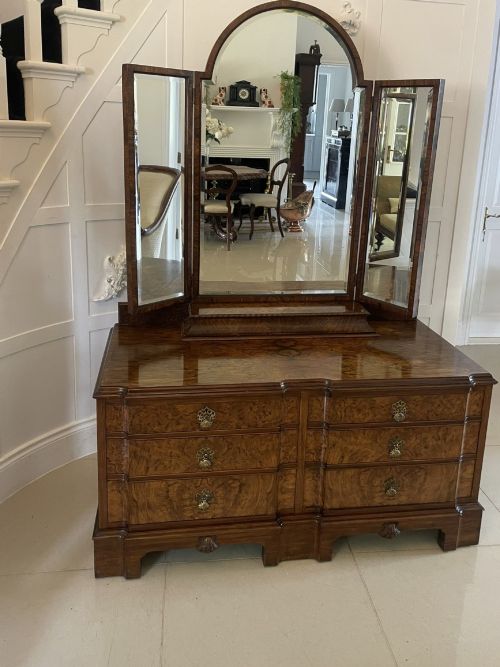
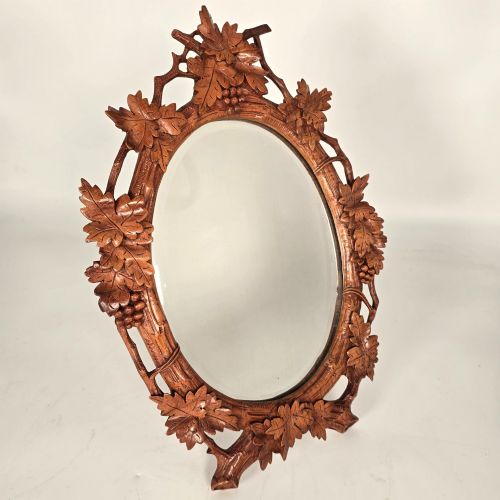
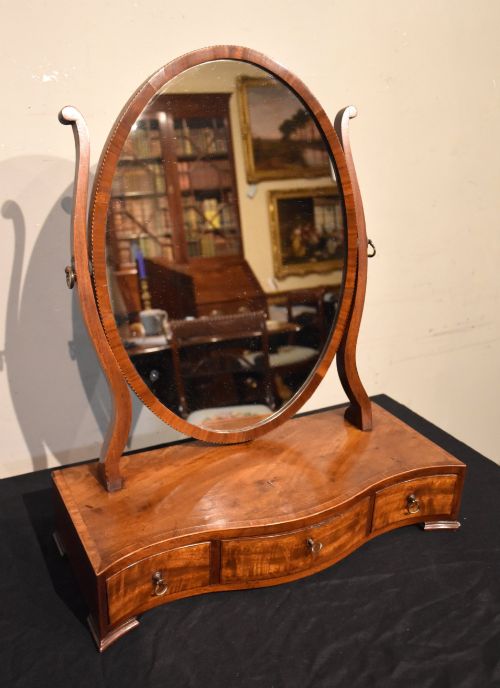
A carved mirror dressing table combines a timber vanity base with an integrated swinging or fixed glass plate, emerging frequently in Victorian and Edwardian iterations. These pieces range from substantial mahogany Duchess forms with multiple drawers to lighter walnut and oak designs set with stools.
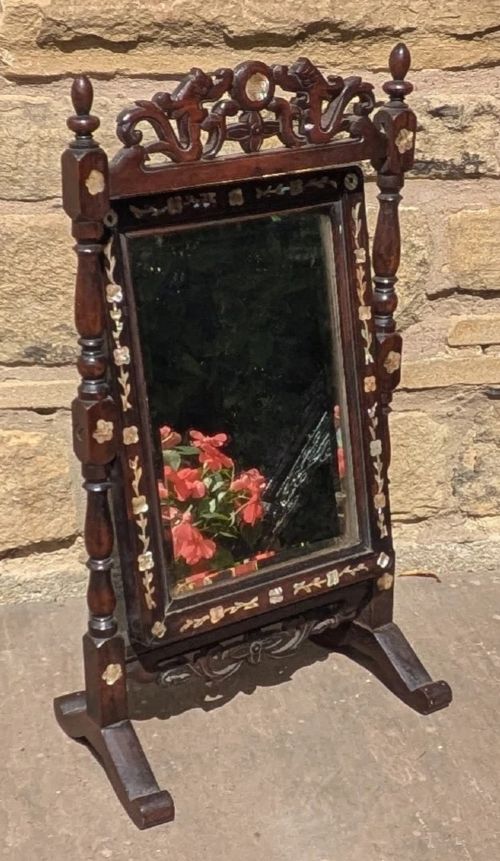
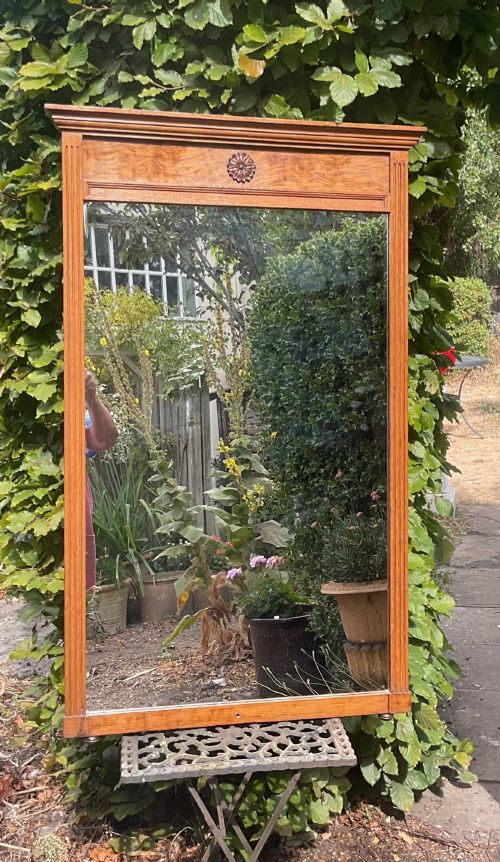
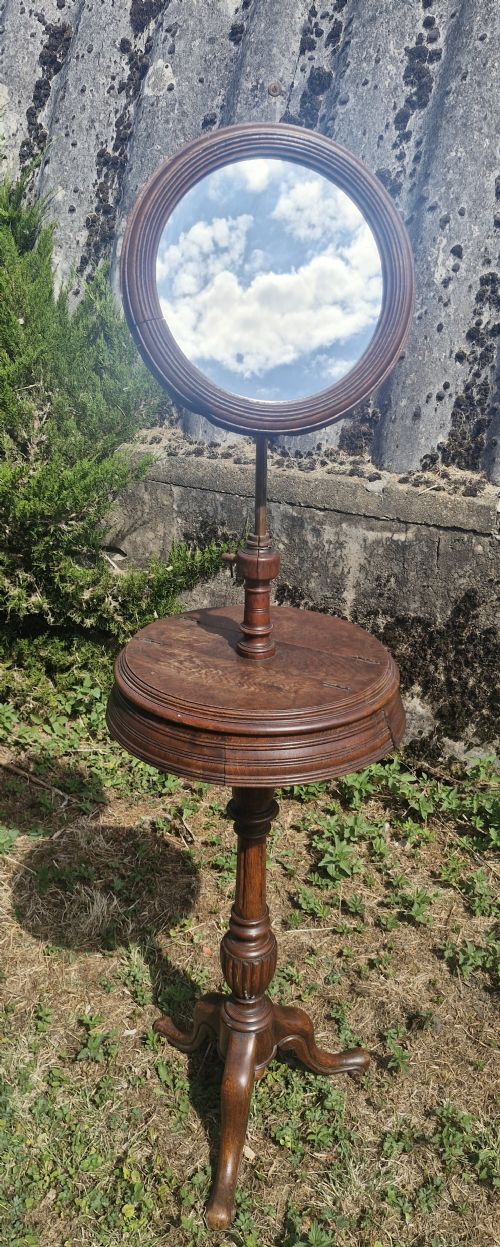
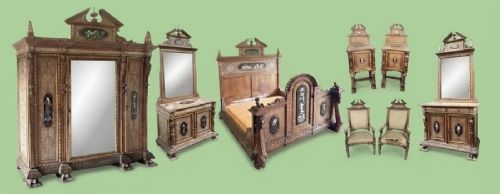
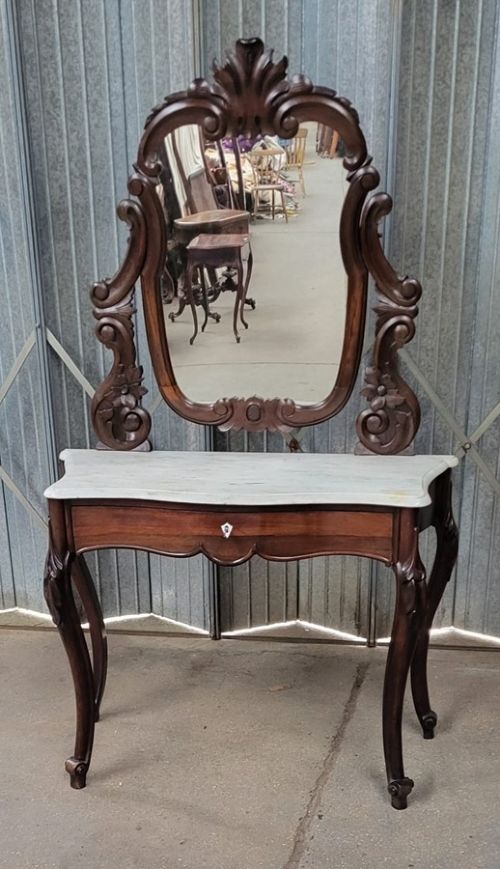
Buyers encounter variations spanning simple tabletop swing glasses to grand triple-mirror suites. The selection includes specific regional idioms such as French Rococo revival curves and Arts and Crafts golden oak constructions.
Materials and Construction
Cabinetmakers utilised dense hardwoods including mahogany, walnut, burr walnut, and oak to build the primary carcass and support frames. Selected pieces incorporate brass hardware, marble tops, and detailed lime wood or giltwood carving.
The mirror plates utilise traditional silvered glass held within adjustable swing frames or standing upright on supportive pedestals. Joinery methods reflect period standards, pairing solid timbers with decorative veneers.
Listings feature mahogany, walnut, burr walnut, and oak alongside marble and brass elements.
Assessing Craftsmanship
Quality rests in the depth and crispness of the hand carving applied to the timber frames and drawer surrounds. Finer examples display carefully matched burr walnut or flame mahogany veneers across expansive surfaces.
The structural integrity of the mirror support arms and the clarity of the original bevelled glass plates distinguish superior workshop output from simpler utilitarian furniture.
P and MA Nicholson·Maples of London and Paris·Waring and Gillows·Shapland and Petter
The Carved Mirror Dressing Table Glossary
- Duchess dressing table
- A large Victorian vanity featuring a central pivoting mirror flanked by smaller drawers or trinket boxes above a tiered base.
- Swing mirror
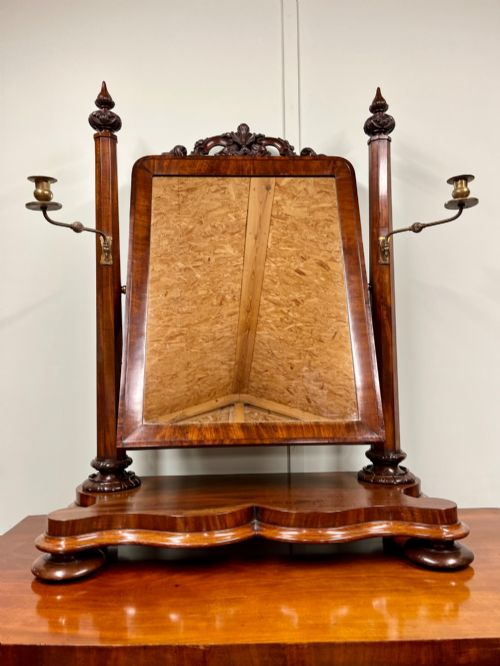
- A glass plate mounted on vertical pivots between two upright posts, allowing the user to tilt the angle of reflection.
- Burr walnut
- A decorative timber veneer taken from the growth growths of the walnut tree, prized for its swirling, intricate grain patterns.
- Giltwood
- Timber that has been coated with a thin layer of gold leaf or gesso paint to create a luminous decorative surface.
Carved Mirror Dressing Table: Frequently Asked Questions
What is a duchess dressing table?
A duchess dressing table is a large Victorian form distinguished by a central mirror and numerous small trinket drawers. These pieces often feature curving supports and ample surface area.
They were designed for formal bedrooms as both a practical vanity and an impressive decorative focal point.
How do swing mirrors attach?
Swing mirrors attach to the main table via vertical wooden arms fitted with adjustable brass pivot screws. This mechanism lets the user tilt the glass forward or backward.
The supporting uprights often feature carved scrollwork or small accessory boxes at their base.
Which woods are most common?
Mahogany, walnut, and oak appear most frequently across these vanity pieces. Makers often selected burr walnut or flame mahogany for visible drawer fronts and table tops.
Lighter oak versions are frequently associated with later Arts and Crafts or Edwardian workshops.
How should I care for the mirror plate?
Original silvered mirror glass requires gentle cleaning with a soft cloth and mild glass cleaner, avoiding harsh chemicals around the antique wooden frame. Care must be taken to protect the historic backing from moisture.
The pivot screws should be checked periodically to ensure the glass remains secure within its frame.