


Carved Marquetry Frame
These carved marquetry frame pieces bring together intricate wood inlay and solid construction, offering a practical way to add period character to any room.
Carved Marquetry Frame
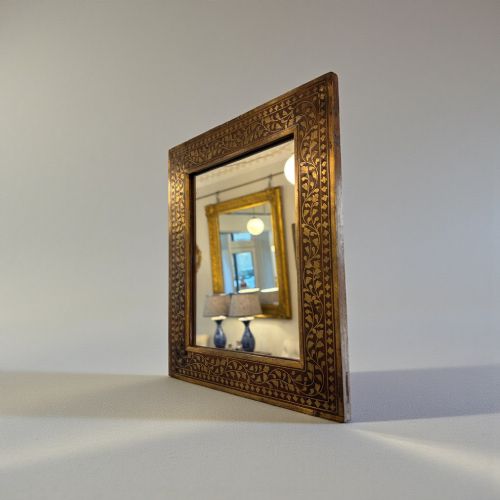
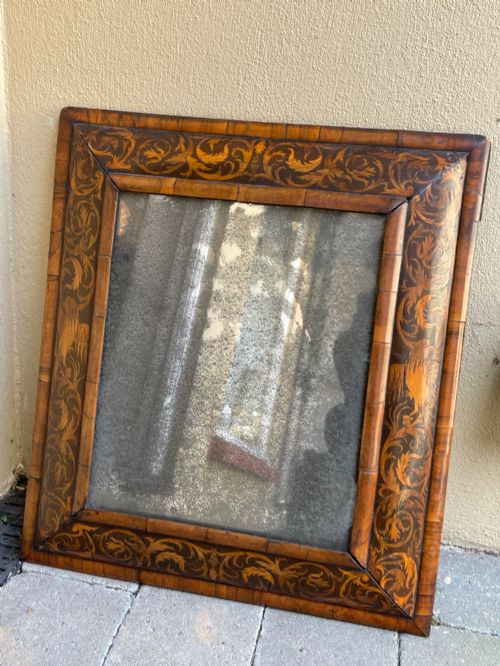
A carved marquetry frame centres on detailed patterned wood veneers fitted closely together to form decorative scenes or geometric motifs. These pieces appear across various forms, most commonly as wall mirrors and overmantel mirrors from the Edwardian period and the nineteenth century.
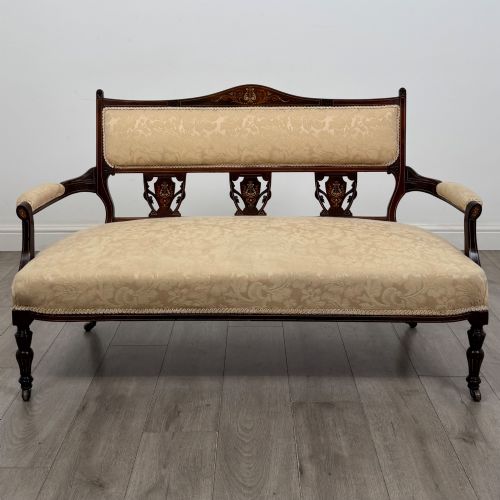
Buyers will also encounter related seating and clocks incorporating similar woodwork, reflecting styles from William and Mary designs up to Edwardian and Arts and Crafts pieces. The selection spans wall mirrors, armchairs, and bedroom suites, giving domestic interiors a distinct period presence.
How they were made
Craftsmen shaped these items using foundational timbers such as walnut, mahogany, and beech wood as a stable base for decorative surface work. Skilled hands applied contrasting veneers of satinwood and boxwood, sometimes accented with mother-of-pearl.
The decorative surfaces rely on precision cutting where thin slices of wood fit together like a puzzle to form intricate patterns. Frame makers then combined these veneered panels with carved mouldings and fitted glass or upholstery.
Some nineteenth-century frames include hidden compartments for secret love letters.
What varies in quality
The standard of a carved marquetry frame depends heavily on the precision of the veneer work and the crispness of the surrounding woodwork. Finer examples display tight joints between contrasting timbers and smooth, harmonious surface transitions.
Simpler versions rely on basic geometric lines, whereas superior pieces integrate elaborate floral or scroll motifs executed with exceptional depth. The choice of underlying woods and the complexity of the inlay fundamentally determine the overall refinement.
The Carved Marquetry Frame Glossary
- Marquetry
- The art of applying pieces of veneer to a structure to form decorative patterns and pictures. This technique defines the visual character of the woodwork.
- Veneer
- A thin slice of fine wood glued to a base material to provide an ornamental surface. It allows makers to use rich timbers economically.
- Overmantel mirror
- A large looking glass designed to hang directly above a fireplace mantel. These often feature elaborate frames matching the room's woodwork.
- Satinwood
- A durable, yellowish timber often used for contrasting inlay work. Its bright grain catches the light effectively.
Carved Marquetry Frame: Frequently Asked Questions
How do I hang a heavy wooden mirror safely?
Heavy mirrors require secure fixings anchored directly into wall studs or solid masonry using appropriate brackets.
Ensure the hanging wire or integrated D-rings match the total weight of the timber frame and glass.
How should I clean antique marquetry woodwork?
Dust the surface regularly with a soft, dry cloth to prevent dirt from settling into the veneer joints.
Avoid liquid cleaners and apply a quality beeswax sparingly to nourish the timber.
Can these mirrors go in a bathroom?
High humidity and fluctuating temperatures can damage antique wood veneers and cause silvering on old mirror glass to degrade.
Keep them in dry living spaces or hallways to preserve the materials.
What is the difference between marquetry and inlay?
Marquetry covers the entire surface of a wooden base with fitted pieces of veneer to create a picture or pattern.
Inlay involves inserting contrasting materials into pre-cut depressions within a solid wood surface.